Super Enchi Ball Python: Genetics, Breeding Outcomes and Pricing
By HatchLedger Editorial Team · Published 2025-05-24 · Updated Mar 13, 2026
Super Enchi is the homozygous form of Enchi, one of the best color-amplifying co-dominant morphs in ball pythons. Two copies of Enchi produce animals with extreme orange intensification, dramatically reduced dark pigmentation, and vivid pattern contrast. Super Enchis are commercially strong animals that also serve as excellent breeders for building high-value Enchi combo lines.
TL;DR
- The Super Enchi morph is a documented genetic variant in ball pythons with established inheritance pattern and pricing history.
- Co-dominant morphs express visually in single copy and produce a distinct super form in double copy (with exceptions like Spider where the super is non-viable).
- Recessive morphs require two copies to be visually expressed; single-copy carriers (hets) look identical to normal ball pythons.
- Documented het claims backed by parentage records are worth significantly more at resale than unverified possible-het claims.
- Market prices for any given morph are heavily influenced by production volume, demand trends, and whether the morph stacks well with high-value genes.
Super Enchi Genetics
Super Enchi = two copies of the Enchi gene. Produced from Enchi x Enchi pairings:
- 25% normal
- 50% single-gene Enchi
- 25% Super Enchi
Any Enchi x Enchi pairing produces Super Enchis at that 25% rate. The higher your clutch size, the more likely you are to produce a Super in each season.
Super Enchi Appearance
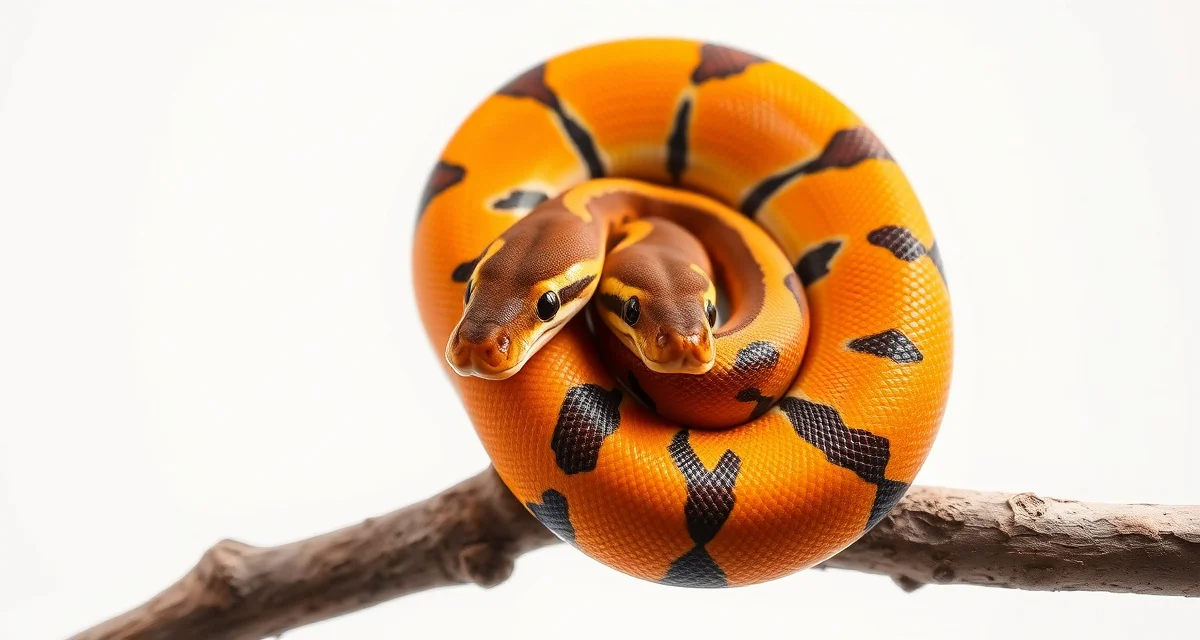
Super Enchis are noticeably more vivid than single-gene Enchis. The orange is much more saturated, the dark brown tones are heavily reduced, and the alien-head pattern is clean and vivid. Some Super Enchis approach near-completely orange coloration with minimal dark elements. They photograph beautifully and are consistently appealing to buyers who want vivid animals without going full albino. Retail: $300-$600.
Super Enchi Combos
- Super Enchi Clown: absolutely stunning, intense orange with clown pattern; retail $1,000-$1,800
- Super Enchi Pied: white-based with deep orange saddles; retail $900-$1,600
- Super Enchi Pastel: amplified color stack; retail $500-$900
- Super Enchi GHI: interesting dark-meets-vivid contrast; retail $600-$1,100
- Super Enchi Banana: extreme color combination; retail $600-$1,000
- Super Enchi Fire: very bright, near-patternless vivid orange; retail $500-$900
Breeding Super Enchi Ball Pythons
Production Strategy
The most efficient Super Enchi production is Enchi x Enchi pairing. With clutch sizes of 5-8 eggs typical for a healthy female, you'll statistically produce 1-2 Super Enchis per clutch while also generating saleable single-gene Enchis and normals.
Many breeders build het recessives into their Enchi x Enchi pairings. Both parents as het Clown means every hatchling, normal, single-gene Enchi, Super Enchi, carries hidden Clown genetics. The Super Enchi het Clown from that pairing is a high-value breeder animal.
Using Super Enchi as a Breeder
Super Enchi x Normal produces 100% single-gene Enchi offspring (no normals). This is useful if you want to load up on Enchis for specific projects. Super Enchi x het Clown produces 50% Enchi het Clown, 50% het Clown, all offspring carry the Clown het.
Track these pairings carefully. A clutch of all-Enchi offspring from a Super Enchi x Normal pairing looks impressive but the animals don't carry the same value as Enchi het Clown if recessive was never introduced.
Breeding Season Notes
Log every lock date, ovulation, and pre-lay shed. Enchi females are typically easy breeders, they tend to be receptive and productive. Incubation: 88-90°F, 88-100% humidity, 55-65 days.
Pricing Super Enchi Ball Pythons
| Animal | Retail Range |
|--------|-------------|
| Super Enchi (female) | $400-$700 |
| Super Enchi (male) | $250-$450 |
| Super Enchi Clown | $1,000-$1,800 |
| Super Enchi Pied | $900-$1,600 |
| Super Enchi Pastel | $500-$900 |
| Super Enchi GHI | $600-$1,100 |
| Super Enchi Banana | $600-$1,000 |
Related Articles
- Super Mojave Ball Python: Genetics, Breeding Outcomes and Pricing
- Super Pastel Ball Python: Genetics, Breeding Outcomes and Pricing
- Super Spider Ball Python: Genetics, Breeding Outcomes and Pricing
- Albino Ball Python: Genetics, Breeding Outcomes and Pricing
FAQ
How is Super Enchi different from single-gene Enchi?
Super Enchi carries two copies of the Enchi gene. The visual difference is substantial, Super Enchis show more saturated orange coloration, heavier reduction of dark tones, and cleaner overall pattern than single-gene Enchis. When bred to a normal, Super Enchi passes one copy of Enchi to every offspring (100% single-gene Enchi offspring from Super Enchi x Normal).
How do professional breeders use Super Enchi in their programs?
Experienced breeders use Super Enchi as a combo production engine. Pairing Super Enchi to het recessive animals ensures every hatchling carries the Enchi gene, raising the floor price of normals and hets in the clutch. Super Enchi females paired with recessive males (visual Clown, visual Pied) produce Enchi visual recessive animals, e.g., Enchi Clown, that command $800-$1,800 at retail.
What is Super Enchi Ball Python: Genetics, Breeding Outcomes and Pricing?
The Super Enchi ball python is the homozygous form of the Enchi co-dominant morph, produced when a ball python inherits two copies of the Enchi gene. It displays extreme orange intensification, dramatically reduced dark pigmentation, and vivid pattern contrast compared to single-gene Enchis. As a visually striking and genetically potent animal, Super Enchis are widely used in combo breeding projects to amplify color in offspring across multiple generations.
How much does Super Enchi Ball Python: Genetics, Breeding Outcomes and Pricing cost?
Super Enchi ball pythons typically range from $150 to $400+ depending on sex, lineage, and combo genes present. Females command higher prices due to breeding value. Clean, single-gene Super Enchis sit at the lower end, while animals stacked with high-demand recessives or co-dominants can push prices significantly higher. Market pricing fluctuates with production volume and trends, so checking current listings on reptile marketplaces gives the most accurate snapshot.
How does Super Enchi Ball Python: Genetics, Breeding Outcomes and Pricing work?
Super Enchi inherits following standard co-dominant genetics. Pairing two Enchi animals yields 25% normals, 50% single-gene Enchis, and 25% Super Enchis. The double dose of the Enchi gene amplifies its visual effects far beyond a single copy — producing animals with intense orange wash, reduced black patterning, and high-contrast scales. This same gene, when combined with other morphs, continues stacking color amplification across offspring.
What are the benefits of Super Enchi Ball Python: Genetics, Breeding Outcomes and Pricing?
Super Enchis offer strong dual utility: they are visually impressive display animals and highly effective breeders. Because every offspring of a Super Enchi inherits at least one Enchi gene, they are guaranteed Enchi producers — making them ideal anchors for building Enchi combo lines. Their color-amplifying properties enhance almost any pairing, and their commercial desirability means Super Enchi offspring tend to sell reliably across experience levels.
Who needs Super Enchi Ball Python: Genetics, Breeding Outcomes and Pricing?
Reptile breeders at any level benefit from working with Super Enchis. Hobbyists gain a visually striking morph with straightforward genetics and predictable breeding outcomes. Intermediate and commercial breeders use them as foundational animals to efficiently produce Enchi combos without needing to track het probabilities. Anyone building a collection around orange-based or reduced-pattern morphs will find Super Enchi an easy, high-value addition to their breeding program.
How long does Super Enchi Ball Python: Genetics, Breeding Outcomes and Pricing take?
Producing Super Enchis follows standard ball python breeding timelines. Females typically reach breeding maturity at 1,500–1,800 grams, usually around 2–3 years of age. Breeding season runs from October through February, with eggs laid roughly 30–60 days post-pairing. Incubation takes approximately 55–60 days at 88–90°F. From first pairing to hatchlings, expect a 6–9 month process depending on when the female ovulates and how quickly she cycles.
Sources
- USARK (United States Association of Reptile Keepers)
- World of Ball Pythons (WoBP genetics reference database)
- Association of Reptilian and Amphibian Veterinarians (ARAV)
- MorphMarket (reptile industry marketplace data)
- Ball Python community genetics documentation
Get Started with HatchLedger
Tracking Super Enchi genetics through multiple generations requires connected records that link parent morphs, clutch outcomes, and het status for every animal in your collection. HatchLedger's genetics engine handles this automatically, making buyer documentation accurate and complete. Try it free with up to 20 animals.