Super Black Pastel Ball Python: Genetics, Breeding Outcomes and Pricing
By HatchLedger Editorial Team · Published 2025-04-18 · Updated Mar 13, 2026
Super Black Pastel, like Super Cinnamon, is a homozygous co-dominant form that comes with a serious welfare consideration. Two copies of the Black Pastel gene produce hatchlings with severe spinal kinking similar to Super Cinnamon. Black Pastel and Cinnamon are allelic, meaning they interact at the same genetic locus. This article covers both the risks and the responsible use of Black Pastel in breeding programs.
TL;DR
- The Super Black Pastel morph is a documented genetic variant in ball pythons with established inheritance pattern and pricing history.
- Co-dominant morphs express visually in single copy and produce a distinct super form in double copy (with exceptions like Spider where the super is non-viable).
- Recessive morphs require two copies to be visually expressed; single-copy carriers (hets) look identical to normal ball pythons.
- Documented het claims backed by parentage records are worth significantly more at resale than unverified possible-het claims.
- Market prices for any given morph are heavily influenced by production volume, demand trends, and whether the morph stacks well with high-value genes.
Super Black Pastel Genetics
Black Pastel is a co-dominant morph. Single-gene Black Pastels are healthy, visually striking animals. Two copies (Super Black Pastel) produce hatchlings with the same severe spinal defects as Super Cinnamon, these animals cannot live normal lives and require euthanasia.
The Allelic Relationship with Cinnamon
Because Black Pastel and Cinnamon sit at the same genetic locus:
- Black Pastel x Cinnamon pairings produce compound animals, some of which may show varying degrees of the same neurological/spinal issues
- These compound animals are sometimes called "Super Cinnamons" regardless of whether they carry Black Pastel or Cinnamon alleles
Pairings to avoid:
- Black Pastel x Black Pastel: 25% Super Black Pastel
- Black Pastel x Cinnamon: compound hatchlings, potential welfare concern
- Anything carrying Black Pastel paired with anything carrying Cinnamon
Single-Gene Black Pastel Appearance
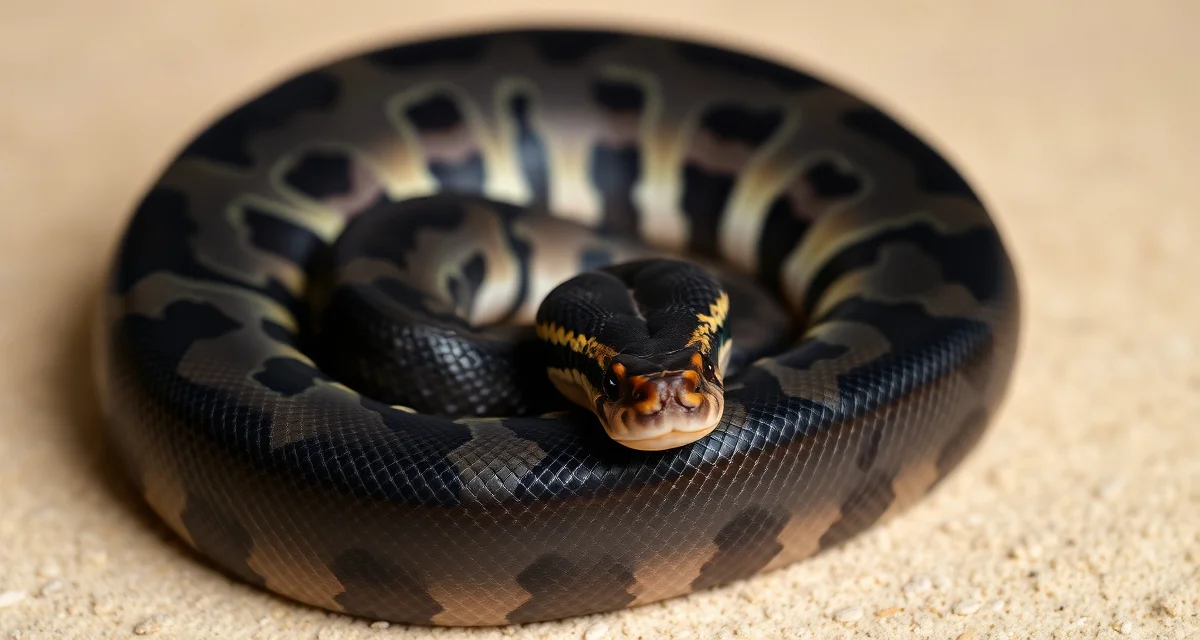
Single-gene Black Pastels are one of the more dramatic-looking co-dom morphs in ball pythons. They show very dark base coloration, deep brown to near-black, with high-contrast alien-head patterning. The pattern is vivid against the dark background. Some Black Pastels have a beautiful purplish or chocolate-black base. Retail: $100-$225.
Black Pastel Combos (Single-Gene Safe Use)
When paired to animals that don't carry Cinnamon or Black Pastel:
- Black Pastel Pastel: vivid contrast, bright Pastel yellow against the dark BP base; retail $200-$400
- Black Pastel Clown: one of the most popular dark-combo recessives; retail $700-$1,400
- Black Pastel Pied: white base with very dark saddles, stunning contrast; retail $700-$1,300
- Black Pastel Enchi: deep orange-brown with intense pattern; retail $350-$600
- Black Pastel GHI: extremely dark animals, near-black; retail $500-$900
- Black Pastel Spider: wobble consideration; very dark with pattern disruption; retail $200-$400
Responsible Black Pastel Breeding
The Simple Rule
Never pair Black Pastel to Black Pastel. Never pair Black Pastel to Cinnamon. All other pairings with Black Pastel are safe from the Super BP risk.
Maintain complete genetic records for every animal in your collection so you never accidentally pair two Black Pastel animals. If you acquire a Black Pastel animal, record it in your system before it ever enters the breeding rotation.
HatchLedger for Lethal Combo Prevention
HatchLedger's breeding planner shows each animal's genetic makeup. Before any introduction, you can see both parents' genes. If you've tagged your animals correctly, the system prevents the situational blindness that leads to accidental Super Black Pastel production.
When you're running 20 pairs in a season and adding new animals mid-season, it's easy to lose track. Software exists precisely to prevent expensive, and ethically distressing, mistakes.
Breeding Season Calendar
Standard ball python protocol: October-March for introductions, 55-65 days incubation at 88-90°F. Log all lock dates, ovulations, and pre-lay sheds.
Pricing Black Pastel Ball Pythons
| Animal | Retail Range |
|--------|-------------|
| Single-gene Black Pastel (female) | $150-$275 |
| Single-gene Black Pastel (male) | $100-$200 |
| Black Pastel Pastel | $200-$400 |
| Black Pastel Clown | $700-$1,400 |
| Black Pastel Pied | $700-$1,300 |
| Black Pastel Enchi | $350-$600 |
| Black Pastel GHI | $500-$900 |
Related Articles
- Black Magic Ball Python: Genetics, Breeding Outcomes and Pricing
- Pastel Ball Python: Genetics, Breeding Outcomes and Pricing
- Super Ghi Ball Python: Genetics, Breeding Outcomes and Pricing
- Super Mojave Ball Python: Genetics, Breeding Outcomes and Pricing
FAQ
What makes Super Black Pastel ball python a welfare concern?
Super Black Pastel (homozygous Black Pastel) hatchlings are born with severe spinal kinking, the same condition seen in Super Cinnamon. They cannot right themselves, move normally, or survive without intervention. Responsible breeders avoid producing them by never pairing two Black Pastel animals and never pairing Black Pastel with Cinnamon-carrying animals.
How do professional breeders use Black Pastel safely?
Experienced breeders pair Black Pastel to animals that don't carry Cinnamon or Black Pastel. Black Pastel x Pastel, Black Pastel x Clown het, Black Pastel x Pied het, all of these are safe pairings that produce healthy, commercially valuable offspring. The key is complete and accurate genetic records for every animal in the collection.
What is Super Black Pastel Ball Python: Genetics, Breeding Outcomes and Pricing?
Super Black Pastel is a homozygous co-dominant ball python morph produced when a snake inherits two copies of the Black Pastel gene. Single-copy Black Pastels are visually striking and healthy, but the super form carries significant welfare risks including severe spinal kinking. Black Pastel is allelic with Cinnamon, meaning both genes interact at the same locus and can produce similar outcomes when combined.
How much does Super Black Pastel Ball Python: Genetics, Breeding Outcomes and Pricing cost?
Single-copy Black Pastel ball pythons typically range from $50–$200 depending on additional genes and lineage. Super Black Pastels are less commonly sold due to welfare concerns, but when they appear on the market prices vary widely. Combos pairing Black Pastel with high-demand recessive or co-dominant genes command premiums. Hets backed by documented parentage records are worth significantly more than unverified possible-het animals at resale.
How does Super Black Pastel Ball Python: Genetics, Breeding Outcomes and Pricing work?
Black Pastel follows co-dominant inheritance. One copy produces a visually distinct Black Pastel; two copies produce the Super form. Breeding a Black Pastel to a normal yields 50% Black Pastels and 50% normals. Pairing two Black Pastels gives 25% normals, 50% Black Pastels, and 25% Supers. Because Black Pastel and Cinnamon are allelic, crossing them produces a Super Cinny-type animal with comparable neurological risks.
What are the benefits of Super Black Pastel Ball Python: Genetics, Breeding Outcomes and Pricing?
Black Pastel is one of the most versatile base morphs in ball python breeding. Single-copy animals stack cleanly with recessive genes like Clown, Pied, and Axanthic to create high-value combos. As a co-dominant, breeders can visually identify carriers without test breeding. This makes it efficient for building complex multi-gene projects and accelerates selective breeding timelines compared to working with purely recessive traits.
Who needs Super Black Pastel Ball Python: Genetics, Breeding Outcomes and Pricing?
Black Pastel suits intermediate to experienced reptile breeders who want a versatile co-dominant gene for multi-morph combo projects. Collectors seeking visually distinct animals benefit from single-copy Black Pastels. Breeders specifically targeting Super Black Pastels should have a strong understanding of the associated spinal kinking risks and welfare obligations before intentionally producing the super form in a breeding program.
How long does Super Black Pastel Ball Python: Genetics, Breeding Outcomes and Pricing take?
Producing a Super Black Pastel requires pairing two Black Pastel animals, which is achievable in a single breeding season. Ball pythons typically incubate for 55–60 days, so from pairing to hatch takes roughly 4–6 months including conditioning and ovulation. Building a broader Black Pastel combo project — incorporating recessive genes across multiple generations — commonly takes 3–6 years to reach the target visual combination.
Sources
- USARK (United States Association of Reptile Keepers)
- World of Ball Pythons (WoBP genetics reference database)
- Association of Reptilian and Amphibian Veterinarians (ARAV)
- MorphMarket (reptile industry marketplace data)
- Ball Python community genetics documentation
Get Started with HatchLedger
Tracking Super Black Pastel genetics through multiple generations requires connected records that link parent morphs, clutch outcomes, and het status for every animal in your collection. HatchLedger's genetics engine handles this automatically, making buyer documentation accurate and complete. Try it free with up to 20 animals.