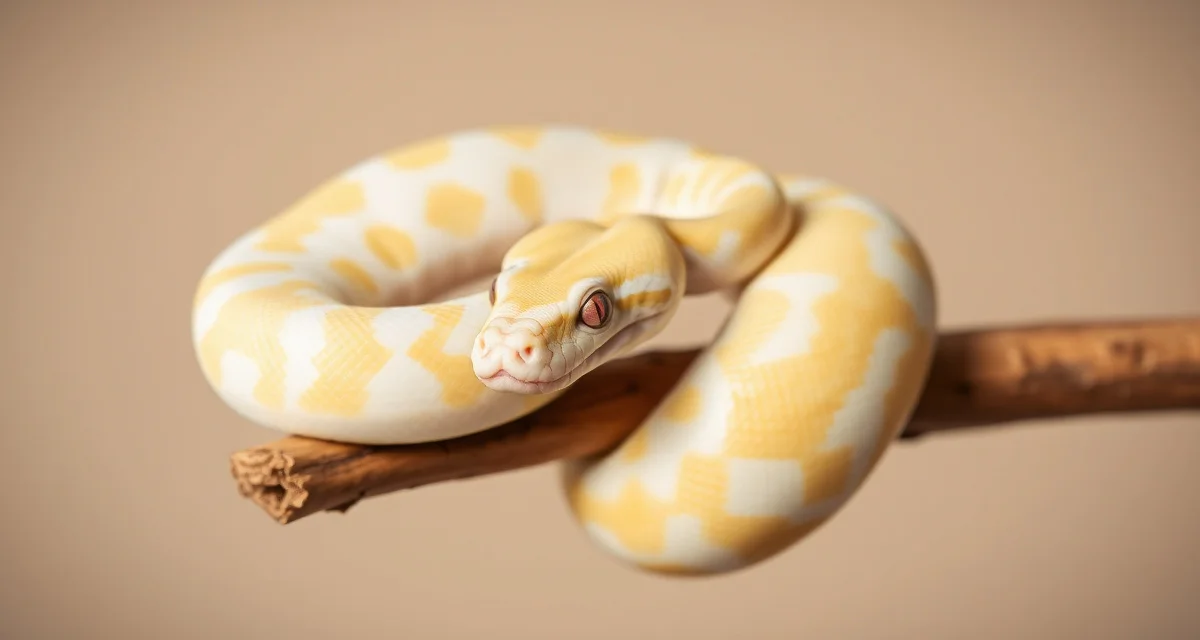
Albino Ball Python: Genetics, Breeding Outcomes and Pricing
By HatchLedger Editorial Team · Published 2025-07-09 · Updated Mar 13, 2026
Albino was one of the first major ball python morphs to hit the hobby in the 1990s, and it remains foundational decades later. The yellow-and-white pattern with pink/red eyes is instantly recognizable, and its compatibility with every other morph in the market means Albino-based projects never go out of style.
TL;DR
- The Albino morph is a documented genetic variant in ball pythons with established inheritance pattern and pricing history.
- Co-dominant morphs express visually in single copy and produce a distinct super form in double copy (with exceptions like Spider where the super is non-viable).
- Recessive morphs require two copies to be visually expressed; single-copy carriers (hets) look identical to normal ball pythons.
- Documented het claims backed by parentage records are worth significantly more at resale than unverified possible-het claims.
- Market prices for any given morph are heavily influenced by production volume, demand trends, and whether the morph stacks well with high-value genes.
Albino Genetics
Albino is a simple recessive, T-negative albinism, meaning the tyrosinase enzyme responsible for dark pigment production is non-functional. Two copies of the gene required for visual expression. Het Albinos look exactly like normal ball pythons.
From het Albino × het Albino:
- 25% visual Albino
- 50% het Albino
- 25% normal
From visual Albino × het Albino:
- 50% visual Albino
- 50% het Albino
From visual Albino × normal:
- 100% het Albino (no visuals)
Visual Identification
Visual Albinos are unmistakable. The black and brown pigment of a normal ball python is completely absent, replaced by:
- Yellow and white pattern (the yellow corresponds to where brown/tan would be; white corresponds to black)
- Pink or red eyes (from hemoglobin showing through unpigmented iris)
- Pale pink tongue
Hatchlings are identifiable at hatch, the yellow-and-white pattern is present from day one. Coloration often intensifies as animals age, with some Albinos developing richer yellows as adults.
Het Albino Documentation
Same challenge as all recessive morphs. Without documentation, a het Albino is indistinguishable from a normal. With documentation, especially 100% het from visual parents, het Albinos command meaningful premiums.
The Albino het market is well-established. Buyers understand the documentation hierarchy and pay accordingly.
Albino Combos: Removing Dark Pigment
Albino's effect on combos is dramatic: it removes all dark pigment, revealing the underlying color genes without any brown or black overlay. This creates some of the most visually striking animals in the hobby.
Albino Pastel: The Pastel yellow brightening combined with Albino's pigment removal produces intense yellow and white. Beautiful animal.
Albino Clown (Caramel Glow Clown or similar): Two high-value recessives combined. Requires both genes in both parents. Very high value.
Albino Spider: Removes dark pigment from the Spider pattern. Striking; disclose wobble.
Lavender Albino: A distinct albinism gene that produces lavender and yellow animals, not to be confused with T-negative Albino. These are different mutations.
Axanthic Albino: Combining axanthia (removes yellow) with albinism (removes black) produces a nearly white animal. Compound recessives like this require multi-generation breeding to produce.
Pricing
Albino prices have moderated significantly from peak years but remain solid for quality animals and combos.
| Animal | Typical Market Price |
|---|---|
| 100% het Albino (male) | $100-$200 |
| 100% het Albino (female) | $200-$400 |
| Visual Albino (male) | $200-$500 |
| Visual Albino (female) | $400-$900 |
| Albino Pastel (male) | $250-$500 |
| Albino Pastel (female) | $500-$1,200 |
| Albino Clown (male) | $1,000-$3,000 |
| Albino Clown (female) | $3,000-$8,000+ |
Breeding for Albino Combos
The most common entry point for Albino projects is buying het Albino animals and breeding toward visual Albinos, then building combos.
Albino Pastel project roadmap:
- Year 1: Breed Albino female × Pastel male → produce Pastel het Albino offspring
- Year 2: Breed Pastel het Albino female × Albino male → 25% Albino Pastel, 25% Pastel (het Albino), 25% Albino, 25% normal het Albino
- Year 3: Breed up, sell Albino Pastels, hold back female Albinos for continued production
The two-year timeline to first visual combos is typical for single-recessive combo projects.
Important Notes on Light and Eye Health
Albino ball pythons are photosensitive, their eyes lack protective pigment. This isn't debilitating, but:
- Avoid bright direct lighting during handling
- Use dimmer, indirect lighting in photo setups
- Note this for buyers so they set up appropriate enclosure lighting
This is a care note to include in buyer packs for all Albino animals.
Related Articles
- Black Magic Ball Python: Genetics, Breeding Outcomes and Pricing
- Black Pastel Ball Python: Genetics, Breeding Outcomes and Pricing
- Bumble Bee Ball Python: Genetics, Breeding Outcomes and Pricing
- Butter Ball Python: Genetics, Breeding Outcomes and Pricing
FAQ
What is the best approach to albino ball python morph?
Albino is a high-versatility recessive that adds dramatic visual impact to virtually every combo. The most profitable Albino projects target double-recessive combos (Albino Clown, Albino Pied) or high-quality multi-gene stacks. Start with 100% het animals from visual parents for maximum documentation certainty, and plan a multi-year project timeline for the best combos.
How do professional breeders handle albino ball python morph?
Professional Albino breeders maintain visual animals as production anchors and work toward double-recessive or multi-gene combo goals over multiple breeding seasons. They keep meticulous het documentation for every animal, particularly females, which have higher value as het animals. They include light sensitivity care notes in all buyer documentation.
What software helps manage albino ball python morph?
HatchLedger is purpose-built for reptile breeders, connecting animal records, breeding history, clutch outcomes, and financial tracking in one connected system. Unlike general spreadsheets or notes apps, it's designed around the specific workflow of an active breeding season -- from pairing records through hatchling inventory and sales documentation. Free for up to 20 animals.
What is Albino Ball Python: Genetics, Breeding Outcomes and Pricing?
The albino ball python is one of the hobby's oldest and most recognized morphs, first documented in the 1990s. It displays a striking yellow-and-white pattern with pink or red eyes caused by T-negative albinism, where the tyrosinase enzyme fails to produce dark pigmentation. As a simple recessive trait, both parents must carry at least one copy of the gene for visual albinos to appear in a clutch. Its genetic compatibility with virtually every other morph makes it a cornerstone of ball python breeding projects.
How much does Albino Ball Python: Genetics, Breeding Outcomes and Pricing cost?
Visual albino ball pythons typically range from under $100 for basic animals to several hundred dollars for high-quality or combo morphs. Prices are driven by production volume, demand trends, and how well the morph pairs with other high-value genes. Het albinos — single-copy carriers that look like normal ball pythons — sell for less, but documented hets with verified parentage records command a meaningful premium over unverified possible-hets at resale.
How does Albino Ball Python: Genetics, Breeding Outcomes and Pricing work?
Albino is a simple recessive trait, meaning a ball python needs two copies of the albino gene to express the visual phenotype. Single-copy carriers (het albinos) look identical to normal ball pythons and can only be confirmed through breeding or verified parentage records. Pairing two het albinos produces a statistically expected 25% visual albinos, 50% het albinos, and 25% normal-looking animals. Pairing a visual albino to a het albino yields 50% visual albinos.
What are the benefits of Albino Ball Python: Genetics, Breeding Outcomes and Pricing?
Albino is one of the most versatile genes in the ball python hobby. Its clean yellow-and-white base enhances color and contrast in virtually any combo morph, and decades of production mean the genetics are well-documented and widely available. Het albinos are easy to source, making entry into albino projects accessible at most budget levels. The morph's long market history also provides reliable price benchmarks, reducing guesswork when valuing clutches or planning breeding pairings.
Who needs Albino Ball Python: Genetics, Breeding Outcomes and Pricing?
Albino ball pythons suit a wide range of keepers and breeders. Beginners benefit from the morph's straightforward recessive genetics and well-established pricing history. Experienced breeders use albino as a foundational gene in complex combo projects, stacking it with co-dominant and other recessive morphs to produce high-value animals. Collectors drawn to bold visual contrasts often seek out albino combos specifically. Anyone building a breeding program around proven, market-stable genetics will find albino a reliable starting point.
Sources
- USARK (United States Association of Reptile Keepers)
- World of Ball Pythons (WoBP genetics reference database)
- Association of Reptilian and Amphibian Veterinarians (ARAV)
- MorphMarket (reptile industry marketplace data)
- Ball Python community genetics documentation
Get Started with HatchLedger
Tracking Albino genetics through multiple generations requires connected records that link parent morphs, clutch outcomes, and het status for every animal in your collection. HatchLedger's genetics engine handles this automatically, making buyer documentation accurate and complete. Try it free with up to 20 animals.