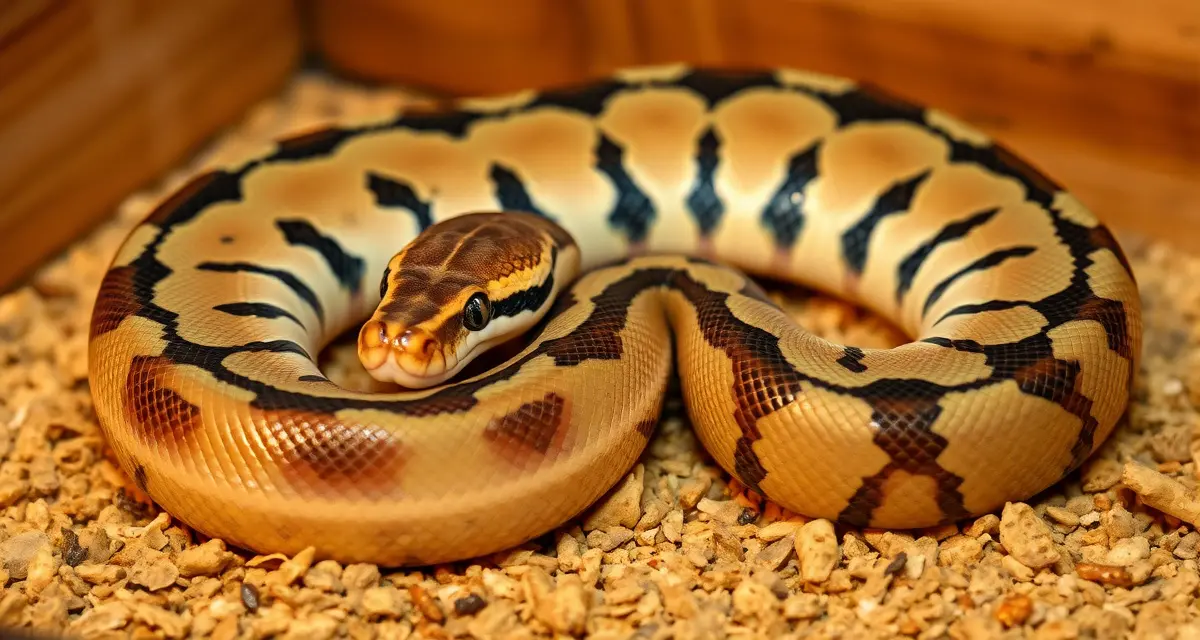
Normal vs. Retained Eggs After Ball Python Laying
By HatchLedger Editorial Team · Published 2025-06-20 · Updated Mar 13, 2026
Most ball python layings go smoothly and the female passes all her eggs without incident. But retained eggs - where one or more eggs remain in the female's body after the main clutch is laid - do occur and require prompt attention if you want to preserve the female's health and potentially the retained eggs. Breeders using integrated software report 30% less time on administrative tasks, giving you more time for the post-lay monitoring that catches this complication early.
TL;DR
- Ball python breeding operations require systematic record-keeping from pre-season preparation through end-of-season sales.
- Females at 1,200-1,500g or more are the target weight before introducing them to a breeding male.
- Ovulation detection is the key event that anchors pre-lay shed and lay date calculations.
- Clutch profitability guide depends on understanding actual cost basis per animal, not just gross sale revenue.
- Well-documented animals with complete feeding histories and clear genetic records consistently sell faster and at higher prices.
What Does Normal Post-Lay Look Like?
After a normal laying, the female should:
- Appear significantly lighter and thinner than she did immediately before laying
- Be visibly deflated in the lower portion of her body compared to pre-lay
- Be calm after the effort of laying
- Be willing to accept water within a day or two
Her body should feel smooth along the lower portion with no distinct lumps or firm masses. Any persistent lumps, firmness, or swelling after the main clutch has been laid warrants attention.
How to Check for Retained Eggs
Gently palpate the female's body in the days following laying. If she passed a complete clutch, there should be no distinct egg-shaped masses remaining. The lower portion of her body should feel relatively empty compared to pre-lay.
If you feel firm, distinct masses that resemble the size and firmness of eggs, there may be retained eggs present. This is not always definitive - it takes practice to distinguish retained eggs from normal post-lay anatomy - but any concern warrants veterinary evaluation.
Veterinary Assessment for Retained Eggs
A veterinarian can:
- Palpate to assess for retained eggs
- Use radiographs to confirm the presence and number of retained eggs
- Use ultrasound for more detailed assessment
Radiographs are often the most definitive tool because fully or partially calcified retained eggs are visible on X-ray. This gives you a clear count of what's retained and helps your vet assess whether intervention is appropriate.
Why Retained Eggs Occur
Several factors can lead to retained eggs:
- Incomplete laying: The female's muscular contractions didn't pass all eggs during the laying event
- Large or malformed eggs: Eggs that are abnormally shaped or oversized may not pass normally
- Physical obstruction: A structural issue preventing normal egg passage
- Weak contractions: Related to nutritional deficiencies, health status, or being worked too hard
One or two retained eggs after an otherwise normal clutch isn't always a crisis, but it can become one if the eggs decompose inside the female or if her body can't resorb them normally.
When Are Retained Eggs a Problem?
Not all retained eggs are emergencies. The female's body can sometimes resorb follicles or eggs that don't pass. However:
- Eggs that aren't resorbed within several weeks can become a source of infection
- Eggs that decompose internally can cause peritonitis, a life-threatening infection
- Any female showing signs of distress (lethargy, loss of appetite, abdominal swelling, discharge) after laying needs immediate veterinary care
Early veterinary assessment is always better than waiting to see if a concern resolves on its own.
Treatment Options
Your vet may recommend:
- Oxytocin or prostaglandin injections: Can stimulate contractions to pass retained eggs if the female is otherwise in good condition and there's no physical obstruction
- Surgical removal: In cases where medical management isn't sufficient
- Monitoring and resorption support: For small or doubtful retained tissue where the vet believes natural resorption is likely
The appropriate treatment depends on what the imaging shows, the female's condition, and the veterinarian's assessment.
Logging Post-Lay Observations
Record for every laying:
- Date the clutch was laid
- Total egg count
- Approximate clutch weight or female weight before and after
- Any palpation findings in the days after laying
- Date and outcome of any veterinary check for retained eggs
These records connect the complete laying event in HatchLedger's breeding management system. A history of retained egg events in a specific female is relevant information for future breeding decisions and for your vet's reference. For tools that support this kind of health-linked breeding documentation, see the reptile breeder software comparison.
Frequently Asked Questions
What is the best approach to distinguishing normal vs. retained ball python eggs after laying?
Palpate the female in the 24-48 hours after laying and compare how her body feels to the pre-lay state. She should feel significantly lighter and emptier. Any firm, discrete masses that feel egg-like warrant veterinary assessment. Don't diagnose this yourself with certainty - a vet with radiograph capability can confirm or rule out retention definitively. When in doubt, get a professional assessment rather than waiting and hoping.
How do professional breeders handle ball python retained egg situations?
Experienced breeders palpate their females post-lay as a standard check and contact their vet at any suspicion of retained eggs. They don't wait for obvious signs of distress because by the time a female shows clear distress from internally decomposing eggs, the situation is significantly more dangerous than it would have been if caught early. They also document any retained egg history for each female, which factors into future breeding decisions.
What software helps manage ball python post-lay health records?
HatchLedger is purpose-built for reptile breeders, connecting animal records, breeding history, clutch outcomes, and financial tracking in one system. Unlike generic spreadsheets, it's designed around the specific workflow of an active breeding season. Free for up to 20 animals.
What records should every reptile breeder maintain per animal?
At minimum: acquisition date and source, morph and genetic documentation, feeding log, weight history, any veterinary treatments, and breeding history including pairing dates, clutch of origin for captive-bred animals, and offspring records. These records serve your own management, buyer documentation, regulatory compliance, and long-term genetic tracking.
How should reptile breeders document genetics for buyers?
A complete genetic record for sale includes the animal's visual morph name, confirmed het genes and their basis (parentage documentation or proven-out production), possible het genes with probability percentages, hatch date, and parent morph information. Including clutch-of-origin records lets buyers independently verify the claims.
What is Normal vs. Retained Eggs After Ball Python Laying?
Normal vs. retained eggs after ball python laying refers to distinguishing between a complete, healthy clutch delivery and a situation where one or more eggs remain inside the female after laying. A normal laying leaves the female visibly lighter and deflated in the lower body. Retained eggs, by contrast, mean the female's body still shows signs of egg presence, which can cause serious health complications if not addressed promptly by an experienced reptile veterinarian.
How much does Normal vs. Retained Eggs After Ball Python Laying cost?
There is no direct cost to understanding this distinction, but the financial stakes are significant. Veterinary intervention for retained eggs — including diagnostic imaging and potential surgery — can cost hundreds of dollars. Losing a breeding female or a viable clutch compounds those losses. Investing in monitoring tools and record-keeping software reduces the risk of missing early warning signs, ultimately protecting both your animals and your breeding program's profitability.
How does Normal vs. Retained Eggs After Ball Python Laying work?
After a ball python lays her clutch, you compare her post-lay body condition against pre-lay records. A normal female appears significantly slimmer, calm, and willing to feed. If she still shows lumps, distension, or unusual behavior, retained eggs may be present. Palpation by an experienced keeper or vet, combined with ultrasound or X-ray, can confirm retention. Prompt veterinary care is essential once retention is suspected to prevent infection or further complications.
What are the benefits of Normal vs. Retained Eggs After Ball Python Laying?
Understanding this distinction protects your female's long-term health and breeding viability. Catching retained eggs early improves the odds of a positive outcome — for both the female and any salvageable eggs. It also strengthens your record-keeping practices, since tracking ovulation dates, pre-lay sheds, and expected lay windows gives you a precise baseline to identify abnormal post-lay presentations quickly and confidently.
Who needs Normal vs. Retained Eggs After Ball Python Laying?
Any ball python breeder keeping females for reproduction needs to understand this topic. It is especially critical for those managing multiple females across a season, where systematic monitoring is harder to maintain manually. New breeders benefit most from learning the normal post-lay baseline early, while experienced breeders refine their detection skills over successive seasons. Veterinarians and reptile rescue workers also encounter retained egg cases regularly.
How long does Normal vs. Retained Eggs After Ball Python Laying take?
The actual laying process typically takes several hours. Recognizing whether it was complete, however, is an ongoing monitoring task lasting 24–72 hours post-lay. If retained eggs are suspected, veterinary diagnosis and treatment timelines vary — imaging is usually same-day, while medical or surgical intervention may extend over days to weeks depending on severity. Early detection through consistent post-lay observation is the single best way to shorten the overall resolution window.
Related Articles
- Ball Python Egg-Laying Box Setup: Getting It Right Before She Lays
- Ball Python Growth Rate Tracking: What's Normal and What Your Records Tell You
Sources
- USARK (United States Association of Reptile Keepers)
- Association of Reptilian and Amphibian Veterinarians (ARAV)
- World of Ball Pythons (WoBP genetics reference database)
- MorphMarket (reptile industry marketplace)
- Reptiles Magazine (Bowtie Inc.)
Get Started with HatchLedger
Every part of a ball python breeding operation -- from pairing records to clutch documentation to financial tracking -- works better when the data is connected rather than scattered across notebooks and spreadsheets. HatchLedger is built for exactly that. Try it free with up to 20 animals.