Ball Python Growth Rate Tracking: What's Normal and What Your Records Tell You
By HatchLedger Editorial Team · Published 2025-06-14 · Updated Mar 13, 2026
Weight tracking is one of the most useful tools in a ball python keeper's or breeder's toolkit. A consistent record of weight over time tells you more about an animal's health trajectory than any single measurement. Understanding normal ball python growth curves, and knowing what deviations from those curves can mean, helps you make better husbandry and breeding decisions. Breeders using integrated software report 30% less time on administrative tasks, freeing up time for the hands-on monitoring that weight tracking requires.
TL;DR
- Ball python breeding operations require systematic record-keeping from pre-season preparation through end-of-season sales.
- Females at 1,200-1,500g or more are the target weight before introducing them to a breeding male.
- Ovulation detection is the key event that anchors pre-lay shed and lay date calculations.
- Clutch profitability guide depends on understanding actual cost basis per animal, not just gross sale revenue.
- Well-documented animals with complete feeding histories and clear genetic records consistently sell faster and at higher prices.
Normal Growth Rates from Hatchling to Adult
Ball pythons are not fast-growing snakes compared to many colubrids, but they do grow steadily through their first few years.
Hatchlings: Typically emerge at 60-100 grams. The variation is normal and influenced by egg fertility, incubation conditions, and individual genetics guide.
Juveniles (6-18 months): With consistent feeding on appropriately sized prey, a well-fed juvenile ball python may gain 50-100 grams per month during this phase. By 12 months, 400-600 grams is a reasonable range for a well-fed animal.
Sub-adults (18-36 months): Growth continues but slows. A 2-year-old ball python might be anywhere from 800-1,500 grams depending on feeding history, sex, and genetics.
Adults: Female ball pythons can reach 3-5 kg (6.5-11 lbs) at full adult size. Males are smaller, typically 1.2-1.7 kg at adulthood. Full adult size is usually reached around 4-5 years.
These are population averages. Individual variation is real and meaningful. Some animals are genetically smaller or larger than average, and some morph lines trend toward different typical adult sizes.
Why Weight Records Matter More Than Single Measurements
A single weight measurement tells you one thing: what this animal weighs today. A series of weight measurements over time tells you:
- Whether growth is proceeding normally
- Whether feeding changes have affected weight appropriately
- Whether an animal is losing weight (which requires explanation)
- Whether a recovery from illness or a breeding season is proceeding as expected
An animal at 900 grams is "healthy" or "underweight" depending entirely on what they weighed 3 months ago and what their trajectory has been. Records make that context available.
How Often to Weigh
Hatchlings and juveniles: Monthly is minimum; every 2-3 weeks is better. Hatchlings and young animals grow quickly and any feeding issues show up faster with more frequent measurement.
Sub-adults: Monthly is appropriate once an animal is feeding consistently.
Adults in maintenance: Every 1-2 months for healthy, established animals.
Breeding females through breeding season: Every 2-4 weeks during recovery and conditioning; at the time of lay; and then monthly through post-season recovery.
Animals with health concerns: More frequently as warranted. A sick or recovering animal may need weekly weight checks.
Reading Your Growth Records
Some patterns to watch for:
Consistent upward trend: Normal for juveniles and growing animals. The rate may vary with feeding frequency but should generally be positive.
Flat line in a juvenile: An animal that isn't gaining weight despite consistent feeding attempts needs investigation. Possible causes include feeding refusals you haven't noticed, low-quality prey, parasites, or an underlying health issue.
Unexplained weight loss in an adult: Ball pythons don't "just lose weight." A healthy adult at maintenance weight losing weight consistently means something is wrong. Rule out feeding issues first, then consider veterinary evaluation.
Sharp drop in a breeding male: Expected during breeding season but should be monitored. If the drop is more than 15-20% during one season, adjust your pairing schedule or provide more recovery time.
Recording Methodology
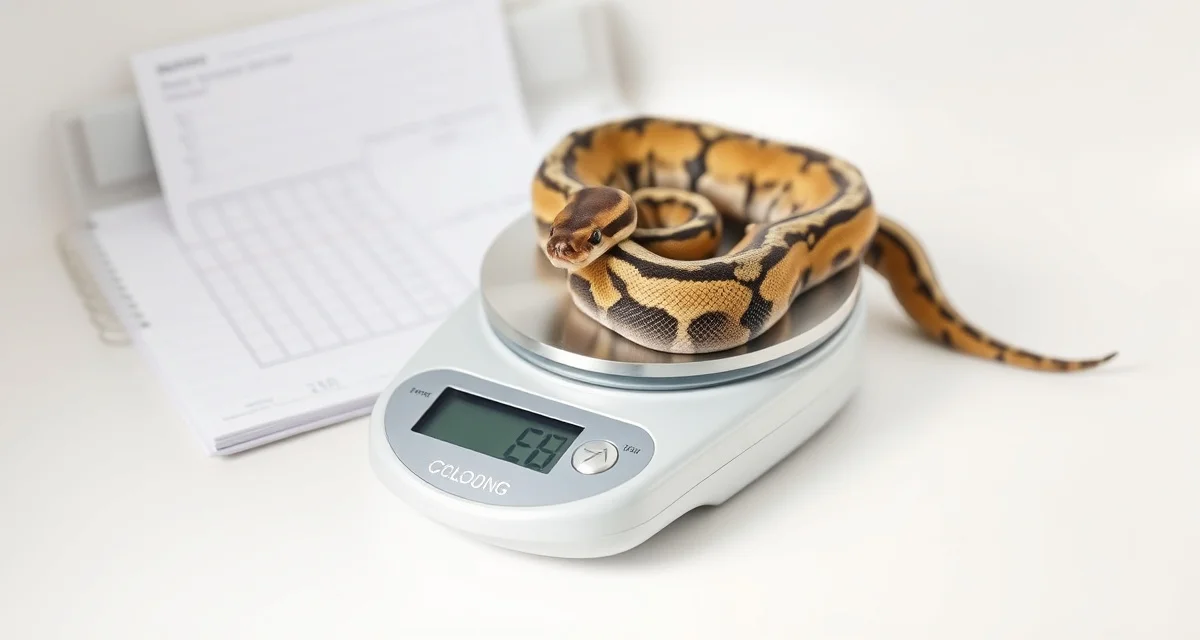
Use a kitchen scale or postal scale with at least 1-gram precision for hatchlings, and 5-gram precision for adults. Weigh in a consistent container so you can subtract the tare weight accurately.
Record:
- Date
- Animal ID
- Weight in grams
- Notes (post-feeding, pre-feeding, breeding season, health event)
Noting whether weights were taken pre- or post-feeding matters for data consistency. A fed animal may weigh 50-200 grams more than the same animal fasted, so comparing fed weights to fasted weights inflates apparent weight change.
Track all growth records connected to each animal in HatchLedger's animal records. This connected history is especially valuable when you're reviewing breeding readiness or post-season recovery. For tools that support longitudinal growth tracking, see the reptile breeder software comparison.
Frequently Asked Questions
What is the best approach to ball python growth rate tracking?
Weigh every animal on a consistent schedule and log every weight with the date. For juveniles, monthly minimum - more frequent for hatchlings or animals you're actively conditioning. Compare weights over time rather than against population averages alone, since individual variation is significant. A flat or declining growth trend in an animal that should be growing is a prompt to investigate feeding and health, not an observation to note and ignore.
How do professional breeders handle ball python weight tracking across a collection?
Experienced breeders build weight tracking into their regular handling schedule. Many weigh every animal on a set day each month, record it immediately, and review any anomalies the same day. They maintain records across years so they can see each animal's long-term trajectory, which is especially useful when making breeding and retirement decisions. Animals whose weight history shows consistent issues often have underlying problems that eventually become expensive.
What software helps manage ball python growth rate records?
HatchLedger is purpose-built for reptile breeders, connecting animal records, breeding history, clutch outcomes, and financial tracking in one system. Unlike generic spreadsheets, it's designed around the specific workflow of an active breeding season. Free for up to 20 animals.
What records should every reptile breeder maintain per animal?
At minimum: acquisition date and source, morph and genetic documentation, feeding log, weight history, any veterinary treatments, and breeding history including pairing dates, clutch of origin for captive-bred animals, and offspring records. These records serve your own management, buyer documentation, regulatory compliance, and long-term genetic tracking.
How should reptile breeders document genetics for buyers?
A complete genetic record for sale includes the animal's visual morph name, confirmed het genes and their basis (parentage documentation or proven-out production), possible het genes with probability percentages, hatch date, and parent morph information. Including clutch-of-origin records lets buyers independently verify the claims.
What is Ball Python Growth Rate Tracking: What's Normal and What Your Records Tell You?
Ball python growth rate tracking is the practice of recording your snake's weight at regular intervals to build a longitudinal health picture. Rather than relying on a single measurement, consistent records reveal trends: steady gain, plateau periods, or unexpected loss. On HatchLedger, this ties directly into breeding readiness assessments, feeding logs, and clutch planning, giving keepers and breeders a data-driven foundation for every husbandry decision.
How much does Ball Python Growth Rate Tracking: What's Normal and What Your Records Tell You cost?
Tracking ball python growth rates costs nothing beyond a reliable digital scale and a consistent logging habit. HatchLedger's record-keeping tools are designed to make data entry fast and accessible, so there's no expensive equipment or specialist software required. The real investment is time — a few minutes per weigh-in session — which pays back through better breeding outcomes, healthier animals, and faster sales of well-documented offspring.
How does Ball Python Growth Rate Tracking: What's Normal and What Your Records Tell You work?
Growth rate tracking works by weighing your ball python on a regular schedule — typically weekly for hatchlings and juveniles, monthly for adults — and logging each measurement. Over time, these data points form a growth curve you can compare against normal benchmarks: hatchlings at 60–100g, females reaching 1,200–1,500g before breeding. Deviations from expected curves flag potential feeding issues, illness, or husbandry problems early, before they become serious.
What are the benefits of Ball Python Growth Rate Tracking: What's Normal and What Your Records Tell You?
Consistent growth records let you identify health problems early, confirm breeding readiness with confidence, and make evidence-based feeding decisions. For breeders, documented weight histories increase buyer trust and support premium pricing. Animals with complete records sell faster. Operationally, integrated tracking reduces administrative overhead — breeders using software-assisted record-keeping report 30% less time on paperwork, freeing more time for hands-on animal care.
Who needs Ball Python Growth Rate Tracking: What's Normal and What Your Records Tell You?
Any ball python keeper benefits from growth tracking, but it's especially valuable for breeders managing multiple animals. If you're conditioning females for breeding, monitoring hatchling development, or selling offspring, records are essential. New keepers gain confidence by seeing normal growth patterns. Experienced breeders use historical data to refine feeding schedules and breeding timelines. Anyone aiming to improve husbandry outcomes or run a more professional operation should be tracking.
How long does Ball Python Growth Rate Tracking: What's Normal and What Your Records Tell You take?
Building a useful growth record takes time proportional to your animal's life stage. Hatchlings and juveniles benefit from weekly weigh-ins during their first one to two years of rapid growth. Adults can be weighed monthly. You won't see meaningful trends from a single session — expect two to three months of consistent data before patterns emerge. Over a full breeding season, cumulative records become a powerful tool for planning the following year.
Related Articles
Sources
- USARK (United States Association of Reptile Keepers)
- Association of Reptilian and Amphibian Veterinarians (ARAV)
- World of Ball Pythons (WoBP genetics reference database)
- MorphMarket (reptile industry marketplace)
- Reptiles Magazine (Bowtie Inc.)
Get Started with HatchLedger
Every part of a ball python breeding operation -- from pairing records to clutch documentation to financial tracking -- works better when the data is connected rather than scattered across notebooks and spreadsheets. HatchLedger is built for exactly that. Try it free with up to 20 animals.