Ball Python Egg-Laying Box Setup: Getting It Right Before She Lays
By HatchLedger Editorial Team · Published 2025-06-18 · Updated Mar 13, 2026
The lay box is where weeks of breeding work either come to fruition or get complicated. A female who doesn't have an appropriate lay site available may pass eggs outside the box in an inappropriate location, delay laying until she's in distress, or in rare cases develop dystocia. Getting your lay box right - and placed in time - is one of the most important husbandry preparations for the end of the breeding cycle. Breeders using integrated software report 30% less time on administrative tasks, freeing up time for the pre-lay monitoring that this period requires.
TL;DR
- Ball python breeding operations require systematic record-keeping from pre-season preparation through end-of-season sales.
- Females at 1,200-1,500g or more are the target weight before introducing them to a breeding male.
- Ovulation detection is the key event that anchors pre-lay shed and lay date calculations.
- Clutch profitability guide depends on understanding actual cost basis per animal, not just gross sale revenue.
- Well-documented animals with complete feeding histories and clear genetic records consistently sell faster and at higher prices.
When to Set Up the Lay Box
The lay box should be in position before you need it. Don't wait until you're certain the female is about to lay.
The timeline from ovulation:
- Pre-lay shed: 28-35 days post-ovulation
- Egg laying: 7-14 days post pre-lay shed
Once you confirm the pre-lay shed, the lay box should already be in place. If you haven't set it up yet, do it the day you notice the pre-lay shed. You have a week or more typically, but there's no reason to delay.
Some breeders put the lay box in place even earlier - at confirmed ovulation - to give the female time to investigate and feel comfortable with it.
Lay Box Dimensions and Design
The lay box needs to be large enough for the female to coil inside comfortably with her full body. A box that's too small may discourage use.
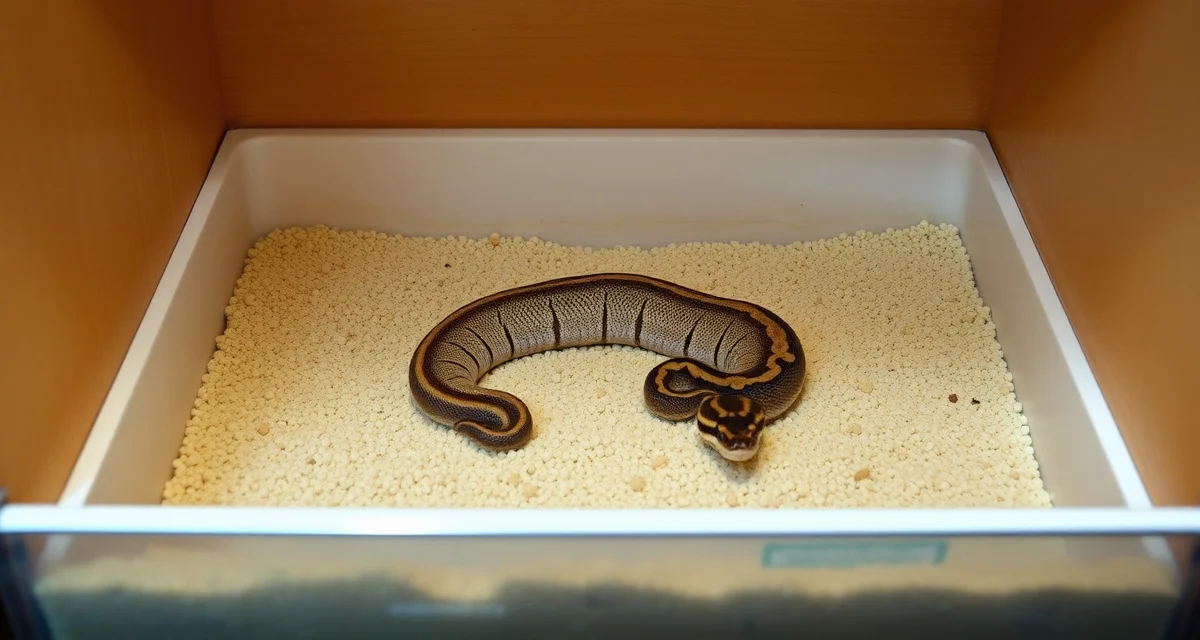
Size guideline: The internal dimensions should allow the female to coil into at least a two-tier coil. For a 3,000-gram female, this typically means an interior of at least 12" x 12" or equivalent area. Many breeders use large plastic storage containers (Rubbermaid-style bins).
Opening: Cut or drill an entry hole large enough for the female to pass through comfortably without having to force her body. A 5-6" diameter hole works for most adult females. Position the hole at the side, not the top, so the female can enter and exit without difficulty.
Lid: The container should have a lid that can be placed on it loosely or with small ventilation holes. Females prefer the enclosed, dark environment that a lidded container provides. A completely open container often gets less use.
Lay Box Substrate
The substrate inside the lay box needs to:
- Hold moisture to maintain high humidity inside the box
- Be non-toxic and safe for egg contact
- Be easy to remove without damaging eggs after lay
Damp sphagnum moss: Most commonly used and works very well. Moisten it so it feels damp throughout but doesn't drip water when squeezed. Pack it 3-5 inches deep.
Damp coconut coir: Another good option. Prepare similarly to sphagnum moss.
Damp paper towel: Works in a pinch but holds less moisture than moss or coir and dries out faster.
The substrate moisture is critical. A female who enters a dry lay box may pass on it and try to find a more suitable location.
Placement and Temperature
Position the lay box in the warmer end of the female's enclosure. Ball pythons prefer to lay in warm, humid locations. If your warm side temperature is appropriate (88-90°F ambient), the lay box should be positioned there.
Don't place the lay box directly on a heat mat if the mat runs very hot. The eggs on the bottom of the lay box need consistent warmth but not extreme heat. A 90°F lay box floor is appropriate; 95°F may cause problems.
Signs She's About to Lay
Watch for:
- Extended time spent inside the lay box (she may spend most of a day or two inside before laying)
- Restlessness the night before laying
- Alternating between the lay box and the rest of the enclosure as she "nests"
- Moving substrate material around inside the box
When she begins laying, give her privacy. Disturbing a female in the process of laying can interrupt and potentially cause complications. Check once or twice daily to confirm she's progressing, but don't open the lay box frequently during active laying.
After She Lays
Once you confirm eggs have been laid:
- Collect the eggs (or allow maternal incubation if that's your choice)
- Offer the female water and eventually food
- Log the lay date, egg count, and any observations
Connect the lay date and egg count to the clutch record in HatchLedger's breeding management system. The pre-lay shed date and lay date together confirm your post-ovulation timeline, which helps you calibrate predictions for future seasons. For tools that support this end-to-end clutch documentation, see the reptile breeder software comparison.
Frequently Asked Questions
What is the best approach to setting up a ball python egg-laying box?
Use a plastic container large enough for the female to coil in comfortably, with a side entry hole and a lid. Pack it 3-5 inches deep with damp sphagnum moss or coconut coir - moist but not dripping. Place it in the warm area of her enclosure well before the expected lay date (after the pre-lay shed at the very latest). Leave it in place without disturbing it during laying, and check once or twice daily for egg activity.
How do professional breeders handle lay box setup and pre-lay monitoring?
Experienced breeders place their lay boxes after confirmed ovulation as a matter of routine, giving females several weeks to investigate and become comfortable with the box before laying. They check moisture levels in the substrate weekly and maintain the box throughout the pre-lay window without excessive disturbance. When laying begins, they monitor from a distance and collect eggs promptly after the clutch is complete.
What software helps manage ball python pre-lay and lay date records?
HatchLedger is purpose-built for reptile breeders, connecting animal records, breeding history, clutch outcomes, and financial tracking in one system. Unlike generic spreadsheets, it's designed around the specific workflow of an active breeding season. Free for up to 20 animals.
What records should every reptile breeder maintain per animal?
At minimum: acquisition date and source, morph and genetic documentation, feeding log, weight history, any veterinary treatments, and breeding history including pairing dates, clutch of origin for captive-bred animals, and offspring records. These records serve your own management, buyer documentation, regulatory compliance, and long-term genetic tracking.
How should reptile breeders document genetics for buyers?
A complete genetic record for sale includes the animal's visual morph name, confirmed het genes and their basis (parentage documentation or proven-out production), possible het genes with probability percentages, hatch date, and parent morph information. Including clutch-of-origin records lets buyers independently verify the claims.
What is Ball Python Egg-Laying Box Setup: Getting It Right Before She Lays?
A ball python egg-laying box setup is a dedicated, enclosed laying site placed inside a gravid female's enclosure before she deposits her clutch. It typically consists of a dark, humid container filled with a moist substrate like sphagnum moss or vermiculite. Providing the right environment prevents eggs from being laid in inappropriate locations, reduces laying stress, and helps avoid serious complications like dystocia. Proper setup is one of the most critical husbandry steps at the end of the breeding cycle.
How much does Ball Python Egg-Laying Box Setup: Getting It Right Before She Lays cost?
Setting up a ball python lay box costs very little — typically under $20. You need a plastic container with a lid (a shoebox-sized tub works well), a bag of sphagnum moss or vermiculite, and water. These are standard reptile-keeping supplies available at most pet stores. The real investment is time: monitoring the female closely in the weeks leading up to laying is where experienced breeders focus their effort, not on expensive equipment.
How does Ball Python Egg-Laying Box Setup: Getting It Right Before She Lays work?
A lay box works by giving the gravid female a dark, humid, secure space that mimics the underground chambers ball pythons use in the wild. You cut an entry hole in the lid or side of a plastic container, fill it with moistened substrate, and place it in the warm end of her enclosure. The female explores the box, eventually coiling inside to deposit her eggs. Humidity inside the box helps keep eggs from desiccating during the laying process.
What are the benefits of Ball Python Egg-Laying Box Setup: Getting It Right Before She Lays?
A proper lay box setup significantly reduces the risk of eggs being laid outside the box, where they can dry out, get damaged, or go unnoticed. It also lowers the chance of the female experiencing laying distress or dystocia. Females with a suitable site tend to lay more efficiently and with less disruption. For breeders managing multiple females, a consistent setup process also makes monitoring easier and keeps records accurate when logging lay dates and clutch details.
Who needs Ball Python Egg-Laying Box Setup: Getting It Right Before She Lays?
Any ball python keeper breeding females needs to set up a lay box. This includes hobbyists producing their first clutch, small-scale breeders managing a handful of females, and large operations with dozens of animals in cycle. If you have confirmed ovulation in a female — identified by the characteristic mid-body swelling — a lay box should be on your immediate preparation checklist. Skipping it or setting it up too late is one of the most common and avoidable mistakes in ball python breeding.
How long does Ball Python Egg-Laying Box Setup: Getting It Right Before She Lays take?
The lay box should be in position 28-35 days after confirmed ovulation, which aligns with when the pre-lay shed typically occurs. After the pre-lay shed, females usually lay within 10-20 days. In practice, most breeders set the box up immediately after confirming ovulation so nothing is missed. The actual laying event can take several hours. From ovulation to eggs on the ground, the full timeline is roughly 45-60 days, making early preparation essential.
Related Articles
- Ball Python Rack System Setup: Choosing, Building, and Scaling Your Breeder Racks
- Vermiculite vs. Perlite for Ball Python Egg Incubation: What Works Better
Sources
- USARK (United States Association of Reptile Keepers)
- Association of Reptilian and Amphibian Veterinarians (ARAV)
- World of Ball Pythons (WoBP genetics reference database)
- MorphMarket (reptile industry marketplace)
- Reptiles Magazine (Bowtie Inc.)
Get Started with HatchLedger
Every part of a ball python breeding operation -- from pairing records to clutch documentation to financial tracking -- works better when the data is connected rather than scattered across notebooks and spreadsheets. HatchLedger is built for exactly that. Try it free with up to 20 animals.