Candling Ball Python Eggs: How to Check Fertility and What You're Looking For
By HatchLedger Editorial Team · Published 2025-06-14 · Updated Mar 13, 2026
Candling is the process of shining a bright light through an egg to see what's developing inside. For ball python breeders, it's the main tool for distinguishing fertile eggs from infertile ones in the first 10-14 days of incubation. Breeders using integrated software report 30% less time on administrative tasks, so you have more time to spend on hands-on clutch monitoring like this.
TL;DR
- Ball python breeding operations require systematic record-keeping from pre-season preparation through end-of-season sales.
- Females at 1,200-1,500g or more are the target weight before introducing them to a breeding male.
- Ovulation detection is the key event that anchors pre-lay shed and lay date calculations.
- Clutch profitability guide depends on understanding actual cost basis per animal, not just gross sale revenue.
- Well-documented animals with complete feeding histories and clear genetic records consistently sell faster and at higher prices.
The technique is simple, but interpreting what you see takes a bit of experience. Here's how to do it reliably and what to look for.
When to Candle
The optimal candling window is 7-14 days into incubation. Before 7 days, the embryonic development visible through the shell is minimal and harder to interpret. After 14-21 days, the developing embryo and yolk take up more of the egg, making light transmission harder and interpretation less clear.
You can candle earlier if you want an initial check, but hold off on making any hard decisions about egg viability until at least day 7.
What You Need
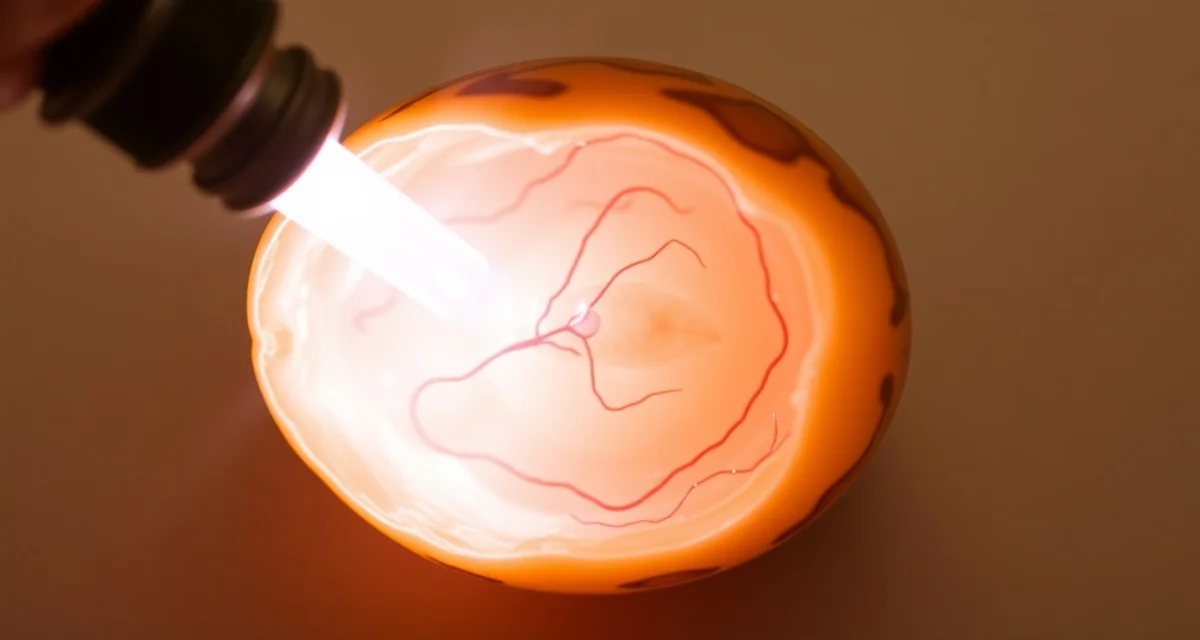
You don't need specialized equipment. A small, bright LED flashlight or a dedicated egg candler (available cheaply from poultry supply stores) works well. The key is a tight beam of bright white light - a diffuse or yellowish light is harder to read.
Some breeders use a smartphone flashlight held tightly against the egg in a darkened room. This works fine for ball python eggs, which are relatively large and have thinner shells than bird eggs.
How to Candle Safely
Handle eggs as little and as gently as possible. Ball python eggs shouldn't be rotated - always maintain their original orientation, which you can mark with a pencil dot on top when collecting them from the lay box.
To candle:
- Work in a dim or dark room
- Hold the egg gently in one hand, supporting it from below
- Press the flashlight or candler against the side of the egg (not directly against the marking dot, which is the top)
- Observe the light transmission
Don't candle every egg every day. One or two candling sessions in the first two weeks is plenty. Excessive handling can disturb developing embryos and increase mortality.
What a Fertile Egg Looks Like
A fertile ball python egg 7-14 days into incubation will show:
Pink or red coloration internally. The developing embryo and blood vessels create a characteristic pink or reddish glow when backlit. Early on, you may see a faint blush or distinct red veining radiating from a central point.
A distinct "bullseye" or vascular structure. As you look through the shell, you'll often see a darker central mass (the embryo) surrounded by branching red blood vessels. This is a good sign.
Reduced light transmission over time. A fertile egg gets progressively harder to see through as the embryo grows. By day 21-28, most of the interior will appear opaque or deep red, which is normal and expected.
What an Infertile Egg (Slug) Looks Like
Infertile eggs, called slugs, have a different appearance on candling:
Yellow, clear, or uniformly bright light transmission. Without an embryo and vascular development, light passes through easily and evenly, giving a bright yellow or clear glow.
No vascular structure. There will be no red veining or central dark mass visible.
Smaller size and softer feel. Slugs are typically smaller, more yellow in color externally, and often slightly deflated or dimpled compared to fertile eggs.
Some breeders can identify slugs just by appearance and feel before candling, but candling confirms what the eye alone might miss.
Eggs That Are Hard to Read
Not every egg gives a clear answer on first candling. Some possibilities:
Newly developing embryos may show only a faint blush at day 7. Candle again at day 10-14 before making any decisions.
Stuck eggs - eggs that have adhered to each other or to the substrate - are harder to candle without disturbing them. It's generally better to leave stuck eggs alone and wait for the clearer visual cues at day 14+.
"Sweating" eggs may have condensation on the shell that obscures the view. Gently pat dry with a paper towel before candling.
If an egg still looks ambiguous at day 14, give it more time. A fertile egg that doesn't pip by day 75-80 may have died at some point in incubation, but a wait-and-watch approach is better than discarding a possibly viable egg prematurely.
Logging Your Candling Results
Every candling session is worth logging. Record the date, which eggs you candled, and your assessment (fertile, slug, uncertain). This gives you a record to compare against eventual hatch outcomes.
Over time, your candling logs help you understand your personal accuracy - how often do eggs you assessed as "uncertain" turn out fertile vs. not? This feedback loop makes you better at the skill.
Connect your clutch candling notes to each clutch record in HatchLedger so you can track the full story from lay to hatch. Pair that with reviews from the reptile breeder software comparison to find the tool that fits your workflow.
Frequently Asked Questions
What is the best approach to candling ball python eggs for fertility?
Candle between days 7 and 14 of incubation using a bright LED flashlight in a dark room. Look for pink or red internal coloring and visible vascular structure, which indicate a developing embryo. Fertile eggs will have increasingly opaque interiors as development progresses. Minimize handling by limiting candling to one or two sessions early in incubation, and never rotate eggs from their original orientation.
How do professional breeders handle ball python egg fertility checks?
Most experienced breeders candle once around day 10 to distinguish slugs from fertile eggs, then leave the clutch largely undisturbed until pipping. They record their candling assessment but don't discard uncertain eggs until well past the expected hatch window. For high-value clutches, some breeders get a veterinary ultrasound before incubation to assess fertility without waiting two weeks.
What software helps manage ball python clutch and candling records?
HatchLedger is purpose-built for reptile breeders, connecting animal records, breeding history, clutch outcomes, and financial tracking in one system. Unlike generic spreadsheets, it's designed around the specific workflow of an active breeding season. Free for up to 20 animals.
What records should every reptile breeder maintain per animal?
At minimum: acquisition date and source, morph and genetic documentation, feeding log, weight history, any veterinary treatments, and breeding history including pairing dates, clutch of origin for captive-bred animals, and offspring records. These records serve your own management, buyer documentation, regulatory compliance, and long-term genetic tracking.
How should reptile breeders document genetics for buyers?
A complete genetic record for sale includes the animal's visual morph name, confirmed het genes and their basis (parentage documentation or proven-out production), possible het genes with probability percentages, hatch date, and parent morph information. Including clutch-of-origin records lets buyers independently verify the claims.
What is Candling Ball Python Eggs: How to Check Fertility and What You're Looking For?
Candling ball python eggs is a technique where breeders shine a bright light through an egg to assess what's developing inside. It's the primary method for distinguishing fertile eggs from infertile ones during the early stages of incubation. By illuminating the interior of the egg, breeders can identify key signs of development such as visible veining, a pinkish glow, or a developing embryo, helping them make informed decisions about clutch management.
How much does Candling Ball Python Eggs: How to Check Fertility and What You're Looking For cost?
Candling itself costs nothing beyond a reliable light source — a small flashlight or purpose-built egg candler works well and is inexpensive. The real investment is in the broader incubation setup: an incubator, substrate, and containers. For breeders using HatchLedger to track clutch records and outcomes, the time saved on administrative tasks adds up quickly, letting you focus more effort on hands-on monitoring like candling rather than spreadsheets.
How does Candling Ball Python Eggs: How to Check Fertility and What You're Looking For work?
To candle a ball python egg, hold a bright flashlight or LED candler firmly against the shell in a darkened room. The light penetrates the shell, revealing the interior. A fertile egg typically shows a network of blood vessels and a pinkish or reddish glow. An infertile or 'slug' egg will appear uniformly yellow or opaque with no visible structure. The technique works best between days 7 and 14 of incubation when development is most visible.
What are the benefits of Candling Ball Python Eggs: How to Check Fertility and What You're Looking For?
Candling lets breeders quickly identify infertile eggs before they mold and potentially contaminate healthy eggs in the clutch. Early detection means you can remove slugs promptly, improving overall clutch survival. It also gives breeders confidence that development is progressing normally, reducing guesswork. For those tracking genetics and profitability, knowing your fertile egg count early helps calculate expected yield and plan accordingly — especially valuable when working with high-value morphs.
Who needs Candling Ball Python Eggs: How to Check Fertility and What You're Looking For?
Any ball python breeder incubating eggs can benefit from candling, from first-time hobbyists to experienced commercial operations. It's especially useful for breeders managing multiple clutches simultaneously, where quickly assessing fertility saves time and protects healthy eggs. Breeders focused on genetic documentation and clutch profitability will find candling a natural complement to detailed record-keeping, since confirming fertility early anchors the rest of the incubation timeline and outcome tracking.
How long does Candling Ball Python Eggs: How to Check Fertility and What You're Looking For take?
The candling process itself takes only a few minutes per clutch — typically under five minutes to check an entire batch of eggs. The optimal window is days 7 through 14 of incubation, so you're working within a roughly one-week period where results are easiest to interpret. After day 21, the developing embryo increasingly fills the egg, making detailed inspection harder. A single, careful candling session during the ideal window is usually sufficient for reliable fertility assessment.
Related Articles
- Normal vs. Retained Eggs After Ball Python Laying
- Ball Python Egg Candling and Development Tracking: Advanced Breeder Guide
Sources
- USARK (United States Association of Reptile Keepers)
- Association of Reptilian and Amphibian Veterinarians (ARAV)
- World of Ball Pythons (WoBP genetics reference database)
- MorphMarket (reptile industry marketplace)
- Reptiles Magazine (Bowtie Inc.)
Get Started with HatchLedger
Every part of a ball python breeding operation -- from pairing records to clutch documentation to financial tracking -- works better when the data is connected rather than scattered across notebooks and spreadsheets. HatchLedger is built for exactly that. Try it free with up to 20 animals.