Reticulated Python Breeder Setup and Housing: Complete Breeder Guide
By HatchLedger Editorial Team · Published 2025-05-10 · Updated Mar 13, 2026
Setting up a retic breeding facility requires planning that scales with the animals' actual adult size. What works for ball python breeding racks doesn't translate to housing for animals that can exceed 15 feet and 100 pounds. The infrastructure requirements are real, and getting them right before your animals need the space is far less expensive than retrofitting a facility around animals that have outgrown their enclosures. Breeders using integrated software report 30% less time on administrative tasks, time that's better spent on the facility work that large retics require.
TL;DR
- Reticulated pythons (Malayopython reticulatus) are the world's longest snake species, with breeding females commonly exceeding 10-14 feet.
- Clutch sizes average 30-60 eggs, making retics one of the most productive large constrictors in captive breeding.
- Temperature drops of 5-8 degrees Fahrenheit over 6-8 weeks typically trigger breeding behavior without the longer cooling required by temperate species.
- Incubation runs 80-90 days at 88-90 degrees Fahrenheit, longer than most python species due to egg size.
- Super dwarf and dwarf locality animals are bred specifically for smaller adult size and command significant premiums over standard retics.
Space Requirements by Line
The most significant variable in retic facility planning is which line you're working with.
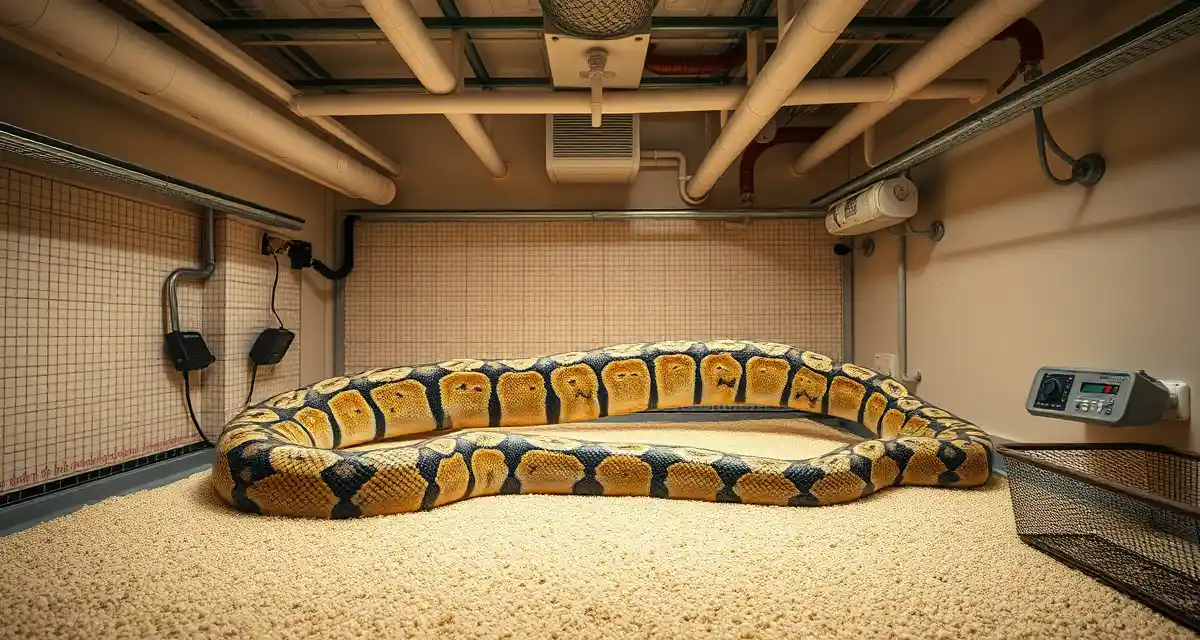
Full-size retics require genuinely large enclosures for adults. A breeding female at 14-16 feet needs a minimum footprint of 8x4 feet on the floor, with appropriate height. Custom builds are essentially required -- commercial enclosures don't come in appropriate sizes and wouldn't bear the weight of a large retic reliably. Building material for full-size retic enclosures needs to be structural-grade: 3/4" melamine or plywood, reinforced joints, heavy-duty hardware.
Dwarf retics (50% or 75% dwarf) stay more manageable: 6-8 feet as adults is typical. Standard large enclosures in the 4x2 to 6x2 range can work for many dwarf animals.
Supermorph dwarfs are the most practical for limited-space operations. Animals from heavily line-bred island stock that max out at 8-10 feet (and often less) can be housed in 4x2 or 6x2 enclosures as adults. This is a significant practical advantage that partially explains the market premium for supermorph dwarf animals.
Structural Considerations
Retic enclosures must be built to contain animals that are strong enough to push through poorly constructed or inadequately latched doors and panels. Hardware should be heavy-duty. Latches should require deliberate mechanical action to open, not just a lift. Hinges should be recessed or otherwise secured so a pushing animal can't lever them open.
Flooring under retic enclosures needs to handle the load. A large retic enclosure with substrate, water dish, and the animal itself can weigh several hundred pounds. Standard residential flooring handles this, but stacked enclosures on shelving require attention to the shelving's weight rating.
Consider the logistics of feeding, cleaning, and handling large animals when you design the layout. Enclosure doors should provide full access to the interior. Doors that open to reveal only part of the enclosure make safely locating and managing a large animal unnecessarily difficult.
Temperature Management Infrastructure
Multiple adult retics in a dedicated room create a practical option: heating the room rather than each individual enclosure. If you're running 4-6 large retics in one room, an ambient room temperature of 78-80F with individual basking heat sources in each enclosure is often more efficient than heating each enclosure independently.
Overhead heat sources (radiant heat panels, CHEs mounted in an overhead fixture) work well for large retics. The heat needs to reach the animal, which for a large retic means overhead or ambient heat, not just a heat mat under a substrate layer.
Whatever heating method you use, thermostat control is essential. A thermostat failure in a room-heating setup affects every animal in that room. Use quality, redundant thermostats and temperature alarms.
Water and Substrate
Adult retics need water containers large enough to soak in. For a 14-foot animal, this means a large rubber storage tub (110+ quart) or a custom water feature. The container needs to be heavy enough or mounted firmly enough that the animal can't tip it. A large water spill in a retic enclosure creates humidity and substrate problems that are significant work to correct.
Substrate options for large retics include newspaper (cheap, easy to change), cypress mulch (good moisture retention for humidity), and paper-based bedding. Deep substrate layers that a retic can burrow into require more frequent full changes but provide better environmental enrichment.
HatchLedger tracks individual animal records including housing details and any facility notes that affect management.
Safety Infrastructure
Every retic facility should have clear protocols for handling large animals safely. Post the protocols visibly. Require two people for any animal over 8 feet; four people for full-size adults. Keep handling equipment (hooks, tongs, snake bags) organized and accessible.
Emergency contact information for your reptile vet should be posted in the facility. The scale of a retic handling incident means a rapid veterinary response may be necessary.
HatchLedger connects facility and animal records to financial tracking for complete program management.
Frequently Asked Questions
What is the best approach to reticulated python breeder setup and housing?
Plan your facility around the adult size of the line you're working with before animals outgrow their current enclosures. Full-size retics need structural enclosures at 8x4 feet minimum for adult females. Dwarf and supermorph dwarf lines allow smaller enclosures that are more practical for most breeders. Use overhead heat sources for large animals. Ensure all enclosures have heavy-duty latches and hardware. Design for safe feeding and handling access. Post safety protocols and keep handling equipment accessible at all times.
How do professional breeders handle reticulated python breeder setup and housing?
Professional retic breeders design their facilities around the animals' actual needs rather than adapting inadequate space. They build or commission structural enclosures appropriate for adult size. They use room-level heating combined with basking sources for efficiency when managing multiple animals. They build safety protocols into their facility design: requiring two or more handlers for large animals, keeping equipment accessible, and maintaining veterinary contacts. They also plan housing for hatchlings from large clutches, which can require substantial additional rack space.
What software helps manage reticulated python breeder setup and housing?
HatchLedger tracks cycling records, pairing introductions, clutch documentation, locality lineage, and sale records for reticulated python breeders. With large animals, large clutches, and locality documentation all requiring careful records, having everything in one system reduces the risk of documentation errors at sale. Free for up to 20 animals.
What is the difference between standard, dwarf, and super dwarf reticulated pythons?
Standard reticulated pythons are the full-size animals from mainland Asian populations. Dwarf retics originate from island populations (Kalatoa, Kayuadi) and typically reach 8-12 feet. Super dwarf retics from Madu and Selayer islands often cap below 8 feet. These size differences are locality-based, and crossing localities produces intermediates. Locality documentation in your records is essential for accurate representation to buyers.
What are the legal considerations for keeping and breeding reticulated pythons?
Regulations vary significantly by state and municipality. Several US states restrict or ban large constrictors, and federal regulations under the Lacey Act apply to some populations. USARK maintains current regulatory information. Before breeding retics at scale, confirm that selling and shipping animals is permitted in your jurisdiction and target markets.
What is Reticulated Python Breeder Setup and Housing: Complete Breeder Guide?
This guide covers everything needed to set up a professional reticulated python breeding facility, including enclosure sizing, temperature management, breeding triggers, egg incubation protocols, and record-keeping systems. It addresses the unique challenges retics present compared to smaller constrictors, from infrastructure scaling for animals exceeding 15 feet to managing clutches of 30-60 eggs. The guide also covers locality-specific considerations for super dwarf and dwarf lines that command premium pricing in the market.
How much does Reticulated Python Breeder Setup and Housing: Complete Breeder Guide cost?
The guide itself is free educational content on HatchLedger. Actual facility costs vary significantly based on your retic line. Standard retic setups require larger, more expensive enclosures than most constrictors. Super dwarf and dwarf locality animals cost more upfront but require less space. Budget for custom or heavy-duty enclosures, robust heating systems, and a dedicated incubation setup capable of handling large clutches across an 80-90 day incubation period.
How does Reticulated Python Breeder Setup and Housing: Complete Breeder Guide work?
The guide walks through facility planning in stages: sizing enclosures to adult dimensions before animals outgrow temporary housing, implementing temperature drops of 5-8°F over 6-8 weeks to trigger breeding behavior, managing gravid females through egg deposition, and running incubation at 88-90°F for 80-90 days. It also covers integrating breeding software to reduce administrative overhead, freeing time for the hands-on facility management large retics demand.
What are the benefits of Reticulated Python Breeder Setup and Housing: Complete Breeder Guide?
A properly designed retic breeding setup reduces costly retrofitting as animals grow, improves breeding success rates through correct environmental triggers, and maximizes productivity from clutches averaging 30-60 eggs. Breeders report up to 30% less time on administrative tasks when using integrated management software. For super dwarf and dwarf locality programs, purpose-built housing protects high-value animals and supports the documentation needed to command premium prices.
Who needs Reticulated Python Breeder Setup and Housing: Complete Breeder Guide?
This guide is for serious reptile breeders working with reticulated pythons at any scale, from hobbyist breeders starting their first pair to commercial operations managing multiple locality lines. It's particularly relevant for breeders transitioning from smaller species like ball pythons who underestimate retic infrastructure requirements, and for anyone developing a super dwarf or dwarf locality program where proper housing directly impacts animal value and breeding outcomes.
How long does Reticulated Python Breeder Setup and Housing: Complete Breeder Guide take?
Initial facility setup for a retic breeding program typically takes several weeks to complete properly before introducing animals. The breeding conditioning period runs 6-8 weeks of gradual temperature reduction. After successful pairing, incubation alone runs 80-90 days, longer than most python species due to egg size. Plan for a full season commitment from cooling through hatchling production, and build your facility infrastructure before your animals need the space rather than after.
Related Articles
- Reticulated Python Egg Incubation Setup: Complete Breeder Guide
- Blood Python Egg Incubation Setup: Complete Breeder Guide
Sources
- USARK (United States Association of Reptile Keepers)
- Association of Reptilian and Amphibian Veterinarians (ARAV)
- Journal of Herpetology (Society for the Study of Amphibians and Reptiles)
- CITES Appendix II (international trade documentation)
- Southeast Asian Biodiversity Society
Get Started with HatchLedger
Reticulated python breeding at any scale involves large animals, large clutches, morph and locality genetics overview, and compliance and shipping records that require an organized system to manage well. HatchLedger tracks every animal, pairing, clutch, and sale record in one place. Try it free with up to 20 animals.