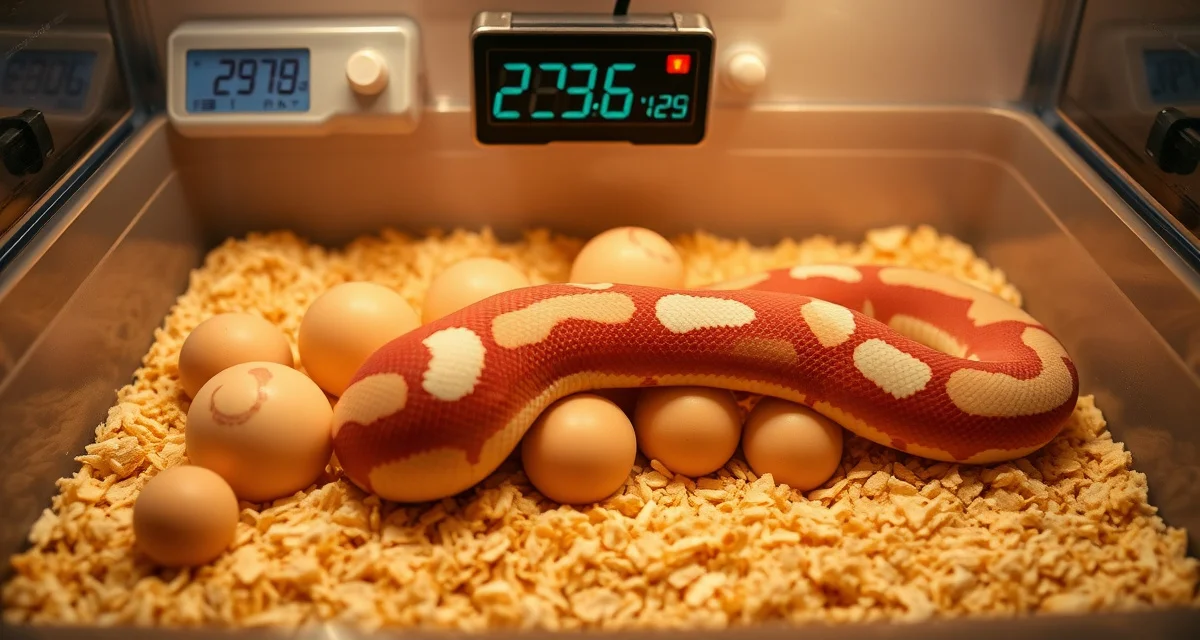
Blood Python Egg Incubation Setup: Complete Breeder Guide
Blood python eggs are notably large for a python of their size -- females produce relatively small clutches of individually substantial eggs. This affects your incubation container sizing and moisture management. The incubation period runs 65-75 days, slightly longer than many other commonly bred pythons. Breeders using integrated software report 30% less time on administrative tasks, giving you capacity to check on incubating eggs consistently through this longer-than-average period.
TL;DR
- Blood python incubation runs 65-75 days, longer than most commonly bred pythons, so plan your setup and monitoring schedule accordingly.
- Maintain 88-90F at egg level, verified with an independent calibrated probe thermometer, not just the incubator's built-in display.
- Use perlite at a 1:1 ratio by weight -- blood python eggs are large and need more moisture retention than smaller python eggs typically require.
- Mark and partially bury eggs without rotating them from their original lay orientation; rotation can drown developing embryos.
- Candle eggs at 2-3 weeks to check for vasculature development and identify infertile or failing eggs before mold spreads to viable neighbors.
- Maternal incubation is a viable option for well-conditioned females, but the 65-75 day fast is a real metabolic risk for blood pythons not in peak condition at lay.
Incubator Requirements
A reliable commercial reptile incubator with a quality thermostat is the foundation of a functional blood python incubation setup. The incubator needs to hold 88-90F at egg level consistently throughout the incubation period. Use an independent calibrated probe thermometer placed in your incubation container (at egg level) to verify actual temperatures rather than relying solely on the incubator's built-in display.
Temperature spikes are dangerous. A thermostat failure that allows temperatures to reach 95F+ can kill developing embryos quickly. Install a temperature alarm in your incubation area that alerts you to significant temperature deviations. Checking the incubator daily and noting the temperature reading takes 30 seconds and provides early warning of developing equipment problems.
Container and Substrate Setup
Use perlite at a 1:1 ratio by weight as substrate. This provides appropriate moisture retention with good air exchange. Blood python eggs are large and have correspondingly higher moisture needs -- don't use drier substrate ratios you might use for smaller python eggs.
Incubation containers need small ventilation openings -- not airtight. Developing embryos produce CO2 and need gas exchange. Commercial egg-incubation containers with built-in ventilation or standard plastic containers with small holes in the lid both work.
Partially bury eggs in the substrate. Eggs should have substrate contact on their lower surface and sides, not be sitting on top of the substrate without contact.
Mark the top of each egg with a pencil before moving from the female. Don't rotate eggs from their original lay orientation -- the embryo anchors to one side early in development, and rotation can drown developing embryos.
Maternal Incubation Option
Female blood pythons will maternally incubate eggs if allowed to remain with their clutch. They'll coil around the eggs and generate heat through thermogenesis. Maternal incubation works well for blood pythons in good condition.
The primary concern with maternal incubation in blood pythons is the 65-75 day fast. Blood pythons are prone to metabolic issues when their feeding is disrupted, and a very long fast can cause problems in females that weren't in peak condition at lay. Assess your female's body condition score before breeding season and make an informed decision about maternal versus artificial incubation.
Monitoring Throughout Incubation
Check on incubating eggs every 3-4 days. You're looking for: eggs maintaining appropriate firmness and color (firm, white), no mold developing on the surface or substrate, and no collapsed or obviously failing eggs.
Candle eggs with a flashlight at 2-3 weeks to check for vasculature development. Viable eggs will show visible blood vessel development when illuminated from behind. Eggs that show no vasculature after 3 weeks are likely infertile.
Remove slugs and clearly failed eggs promptly to prevent mold spread to viable neighbors. Keeping a written or digital log of egg condition checks throughout incubation helps you spot gradual changes that might not be obvious on any single inspection.
HatchLedger logs incubation setup, temperature observations, egg condition checks, and hatch records for each clutch.
HatchLedger connects incubation records to clutch P&L for complete season financial tracking. Tracking your incubation costs per clutch alongside hatch rates gives you real data to evaluate whether your setup is performing as expected season over season.
Frequently Asked Questions
What is the best approach to blood python egg incubation setup?
Incubate at 88-90F on perlite at 1:1 by weight. Use containers with small ventilation openings. Verify actual egg-level temperature with a calibrated probe. Don't rotate eggs from their original lay orientation. Monitor every 3-4 days and candle at 2-3 weeks to assess viability. Consider maternal incubation for well-conditioned females. Blood python incubation runs 65-75 days -- plan for this longer timeline in your incubation setup.
How do professional breeders handle blood python egg incubation?
Professionals verify their incubation setup before the season starts, check on eggs regularly, and log temperature readings throughout the incubation period. They candle eggs at 2-3 weeks to identify any infertile or failing eggs early. They also make deliberate decisions about maternal versus artificial incubation based on female condition at lay rather than defaulting to one approach for all females.
What software helps manage blood python incubation records?
HatchLedger provides clutch record management where incubation setup, temperature logs, and hatch data connect to the parent pair's breeding record. When a hatch is complete, hatchling records link directly to the clutch data above them. The financial tools connect incubation investment to the revenue generated from that clutch.
How do I know if a blood python egg has gone bad during incubation?
Failed eggs typically show one or more of these signs: visible mold growth on the shell, a noticeably soft or collapsed appearance compared to neighboring eggs, discoloration toward yellow or brown, or a foul odor when the container is opened. Candling at 2-3 weeks is the most reliable early check -- an egg showing no vasculature at that stage is almost certainly infertile or non-viable. Remove any clearly failed eggs promptly so mold does not spread to healthy eggs in the same container.
Can blood python eggs from the same clutch hatch on different days?
Yes, it is normal for blood python eggs within a single clutch to pip and hatch across a window of several days rather than all at once. Eggs positioned differently in the incubation container may experience slight temperature or humidity variation, which can shift individual hatch timing by 2-5 days. Do not assume a late-pipping egg has failed until it is meaningfully outside the expected 65-75 day window.
Should I assist a blood python hatchling that is slow to emerge?
Most breeders wait at least 24-48 hours after a pip before considering any intervention. Blood python hatchlings can take longer than expected to fully emerge after the initial pip, and premature assistance risks injuring a hatchling that still has yolk to absorb. If a hatchling has pipped but made no further progress after 48-72 hours and appears to be in distress, consult an experienced reptile veterinarian before intervening.
Sources
- Reptile & Amphibian Ecology International -- published research on python reproductive biology and incubation parameters
- Association of Reptilian and Amphibian Veterinarians (ARAV) -- clinical guidelines on reptile husbandry and breeding management
- University of Florida IFAS Extension -- reptile care and management publications for captive breeding operations
- Ball Python and Specialty Python Breeders Association -- breeder best practices documentation for python incubation
Get Started with HatchLedger
If you are managing blood python clutches through a 65-75 day incubation window, having your temperature logs, egg condition checks, and hatch outcomes in one place makes it easier to spot problems early and evaluate your setup across seasons. HatchLedger connects those incubation records directly to your clutch financials so you always know what each hatch cost and what it returned. Try HatchLedger free and see how it fits your operation.