Carpet Python Breeder Setup and Housing: Complete Breeder Guide
By HatchLedger Editorial Team · Published 2025-05-15 · Updated Mar 13, 2026
Setting up a carpet python breeding facility requires more thought than housing a collection of ball pythons. Carpet pythons are arboreal, temperature-sensitive, and more behaviorally complex than many other commonly kept pythons. The housing decisions you make at setup directly affect how well your animals breed, how healthy they stay, and how efficiently you can manage them. Breeders using integrated software report 30% less time on administrative tasks, which is time better invested in the enclosure design and husbandry refinement that carpet python breeding quality requires.
TL;DR
- Carpet pythons (Morelia spilota) encompass multiple recognized subspecies genetics overview including coastal, jungle, diamond, and Irian Jaya, each with distinct breeding triggers.
- Most carpet python subspecies require a 2-3 month seasonal cycling period with temperatures dropping 10-15 degrees Fahrenheit to trigger reliable ovulation.
- Average clutch size recordss range from 10-20 eggs, with large female diamond carpets sometimes producing 25 or more.
- Incubation typically runs 55-65 days at 84-88 degrees Fahrenheit, slightly lower than ball python targets.
- Subspecies identification in your records matters: crossing subspecies produces offspring of uncertain market value and documentation becomes complex.
Enclosure Requirements for Adults
Adult carpet pythons need more vertical space than most rack-housed species. They climb regularly and use elevated perches as primary resting sites. An enclosure that provides only floor-level space will see your carpets constantly piling against the wall seeking elevation, which is a stress signal.
Minimum enclosure recommendations for adult breeding carpets:
- Coastal carpet (female, 6-8 feet): 4'x2'x4' (L x W x H) minimum
- Jungle carpet (female, 5-7 feet): 3'x2'x4' minimum
- Irian Jaya carpet (female, 5-7 feet): 3'x2'x4' minimum
- Diamond python: Similar to jungle carpet but with different temperature requirements
These are minimums. More space is always better for breeding animals that need to be in good condition. Overly small enclosures produce stressed animals with poor feeding responses and reduced reproductive performance.
Front-opening enclosures are standard for carpet pythons. Top-access increases the ambush response, particularly in defensive subspecies like jungle carpets. Screen tops or adequate ventilation panels are important -- carpet pythons need airflow.
Heating System Design
Carpet pythons benefit from basking-style heating that allows them to thermoregulate above the enclosure floor. A basking spot created by a reflector lamp with an incandescent bulb or a radiant heat panel mounted under a branch or shelf works well. The basking spot should reach 90-92F.
Use a proportional thermostat on your basking heat source. The basking area should be in the upper section of the enclosure on one end, creating a warm end and a cool end gradient. The cool end ambient should be 75-82F depending on subspecies.
Overnight temperature drops of 5-10 degrees are natural for carpet pythons from areas with significant day/night temperature variation. Diamond pythons from temperate Australia may need more pronounced temperature drops, particularly during breeding season.
Rack Systems for Juveniles and Neonates
Hatchlings and juveniles up to about 2-3 feet can be managed in rack systems. 6-quart tubs work for the first 3-4 months; step up to 15-quart and then 28-quart tubs as animals grow. Rack housing for carpets should provide a hide even at neonate size -- carpets that don't feel secure in their housing are poor feeders.
When transitioning animals from rack to individual enclosures, allow time for adjustment. Some carpet pythons show temporary feeding disruption when moved to a larger, more open enclosure. This typically resolves within 1-2 feeding cycles as the animal settles into the new space.
Room Organization for Breeding Season
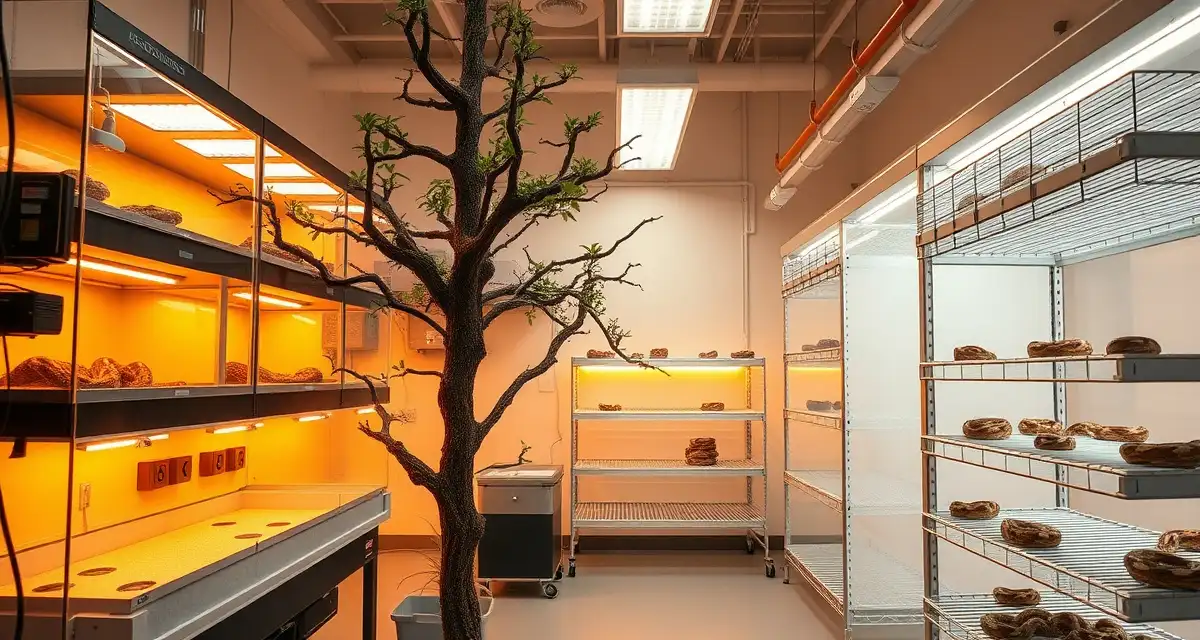
During breeding season, you'll be moving males between female enclosures at regular intervals. Organize your room so males are easily accessible and female enclosures are labeled clearly with individual IDs. The logistics of pairing management get complicated quickly if your room layout doesn't support the workflow.
Keep a room map that shows which animal is in which enclosure and whether it's a breeding animal, a grow-out, or a new acquisition in quarantine. Physical organization that matches your records system makes daily management more reliable.
HatchLedger tracks enclosure assignments for each animal so your records reflect your physical room layout. When an animal moves, you log it.
HatchLedger connects your husbandry records to breeding outcomes so you can evaluate whether housing decisions correlate with performance.
Frequently Asked Questions
What is the best approach to carpet python breeder setup and housing?
Use front-opening enclosures sized appropriately for the subspecies, with vertical space for climbing and perching. Provide basking-style heat at 90-92F at the warm end with cool ambient at 75-82F (adjusted for subspecies). Maintain 50-70% humidity with good ventilation. Use rack systems for neonates and juveniles, transitioning to individual enclosures as animals grow. Design your room layout to support breeding season management workflows -- clear labeling and easy access to all animals reduces mistakes.
How do professional breeders handle carpet python breeder housing setup?
Professional carpet python breeders design their facilities to match the species' specific needs -- vertical space, subspecies-appropriate temperature ranges, and good ventilation. They don't compromise enclosure size for breeding adults because animal condition directly affects breeding performance. They also design their room for operational efficiency during breeding season, when they're moving males between enclosures and need clear labeling and easy access to make that process reliable.
What software helps manage carpet python housing and enclosure records?
HatchLedger is purpose-built for reptile breeders, connecting animal records, breeding history, clutch outcomes, and financial tracking in one system. Unlike generic spreadsheets, it's designed around the specific workflow of an active breeding season. Free for up to 20 animals.
How do carpet python subspecies differ in breeding requirements?
Irian Jaya carpet pythons are among the most forgiving of the subspecies and often respond to minimal cycling. Jungle carpets and coastal carpets benefit from more pronounced temperature drops. Diamond carpet pythons from cooler Australian habitats may require the most aggressive cooling protocol of all the subspecies to achieve reliable ovulation.
Can carpet pythons from different subspecies be crossed?
Technically yes, but the practice is controversial. Many buyers specifically seek pure-subspecies animals, and crossing reduces the value and marketability of offspring. Maintaining clear subspecies documentation in your records is important whether you keep them pure or not.
What is Carpet Python Breeder Setup and Housing: Complete Breeder Guide?
This guide covers everything needed to establish a functional carpet python breeding facility, including enclosure design for arboreal species, temperature and humidity management, seasonal cycling protocols for subspecies like coastal, jungle, diamond, and Irian Jaya carpets, clutch and incubation parameters, and record-keeping best practices. It addresses the behavioral complexity and subspecies-specific husbandry differences that make carpet pythons more demanding than ball pythons, helping breeders make informed setup decisions from day one.
How much does Carpet Python Breeder Setup and Housing: Complete Breeder Guide cost?
The guide itself is free educational content available on HatchLedger. Actual setup costs vary widely depending on scale. A basic single-pair setup might run a few hundred dollars in enclosures and equipment, while a serious breeding operation could require several thousand. Ongoing costs include heating, feeding, and veterinary care. HatchLedger also offers breeding management software that breeders report saves roughly 30% of administrative time, reducing overhead across larger collections.
How does Carpet Python Breeder Setup and Housing: Complete Breeder Guide work?
The guide walks breeders through a structured setup process: selecting appropriate enclosures sized for arboreal behavior, establishing thermal gradients with a 10-15°F seasonal drop to trigger ovulation, pairing animals after cycling, monitoring for follicular development and ovulation, and managing eggs through a 55-65 day incubation at 84-88°F. It also covers subspecies record-keeping, clutch documentation, and integrating breeding software to track pairings, clutches, and hatch outcomes systematically.
What are the benefits of Carpet Python Breeder Setup and Housing: Complete Breeder Guide?
Following this guide helps breeders avoid common mistakes that reduce reproductive success, such as insufficient seasonal cycling or incorrect incubation temperatures. Benefits include more consistent ovulation, healthier clutches averaging 10-20 eggs, accurate subspecies documentation that protects resale value, and a more organized facility. Breeders who combine good husbandry practices with record-keeping tools report significant time savings, allowing more focus on animal care and enclosure refinement.
Who needs Carpet Python Breeder Setup and Housing: Complete Breeder Guide?
This guide is for anyone keeping and breeding carpet pythons at any scale — from hobbyists producing their first clutch to experienced breeders expanding into multiple subspecies. It is especially useful for those transitioning from ball python breeding, as carpet pythons have distinct arboreal, thermal, and behavioral requirements. Breeders working with diamond, jungle, coastal, or Irian Jaya morphs will also benefit from the subspecies-specific cycling and documentation guidance included.
How long does Carpet Python Breeder Setup and Housing: Complete Breeder Guide take?
Initial setup can be completed in a few weeks once enclosures and equipment are sourced. The breeding cycle itself is seasonal: allow 2-3 months for temperature cycling, then pair animals, monitor for ovulation, and expect eggs roughly 30-45 days post-ovulation. Incubation runs 55-65 days at 84-88°F. From first enclosure build to hatchlings, most breeders are looking at a 6-9 month process for a complete first season, depending on when cycling begins.
Related Articles
- Reticulated Python Breeder Setup and Housing: Complete Breeder Guide
- Blood Python Egg Incubation Setup: Complete Breeder Guide
- Boa Constrictor Breeder Setup and Housing: Complete Breeder Guide
- Burmese Python Egg Incubation Setup: Complete Breeder Guide
Sources
- USARK (United States Association of Reptile Keepers)
- Association of Reptilian and Amphibian Veterinarians (ARAV)
- Australian Journal of Zoology
- Herpetofauna (Australian Herpetological Society)
- The Herpetoculture of Morelia (published reference)
Get Started with HatchLedger
Carpet python breeding across multiple subspecies means tracking distinct protocols per animal and maintaining subspecies lineage documentation that buyers increasingly expect. HatchLedger connects animal records, breeding history, and clutch documentation in one system. Try it free with up to 20 animals.