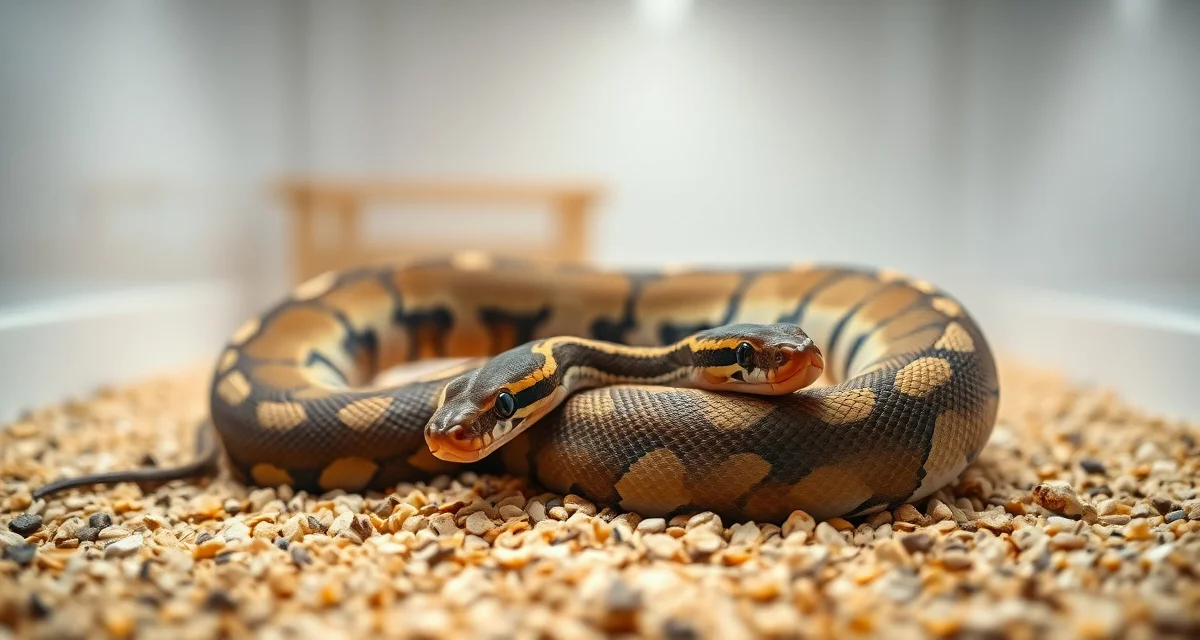
Burmese Python Hatchling Care Guide: Complete Breeder Guide
By HatchLedger Editorial Team · Published 2025-03-28 · Updated Mar 13, 2026
Burmese python hatchlings emerge at 18-24 inches long and grow rapidly -- under good conditions, they can reach 6-8 feet within their first year. Managing a large cohort of fast-growing hatchlings requires an organized approach from day one. Breeders using integrated software report 30% less time on administrative tasks, which is time you'll need as your hatchlings require frequent feeding, regular housing upgrades, and individual health monitoring.
TL;DR
- Burmese pythons (Python bivittatus) are among the largest constrictors in captivity, with breeding females commonly exceeding 100-200 lbs.
- Clutch sizes average 25-50 eggs, making Burmese pythons among the most productive large constrictors in captive breeding.
- Cycling typically involves a 4-8 week period of reduced temperatures (dropping 8-12 degrees Fahrenheit) and reduced feeding frequency.
- Incubation parameters runs 60-65 days at 88-90 degrees Fahrenheit, with females capable of thermoregulating eggs by muscular shivering.
- Compliance requirements requirements for Burmese python ownership and interstate transport vary by state, with federal protections under the Lacey Act applying in some jurisdictions.
The critical first weeks after hatching set the trajectory for each animal's development. Hatchlings that establish quickly on a consistent feeding schedule grow fast and are saleable within a few months. Animals that struggle with initial feeding lose ground early and may never fully catch up to cohort mates.
Setting Up Hatchling Housing
Individual housing is the best practice for Burmese hatchlings. Even at small sizes, cohabitation creates competition for food, increases stress, and makes individual health monitoring much harder. Use appropriately-sized containers -- a 6-quart tub is too small; a 32-quart or similar setup works well for the first few months. Burmese hatchlings grow rapidly, so plan to size up every 2-3 months.
Temperature requirements are the same as adults: warm side at 88-90F, cool ambient at 76-80F. Belly heat from a UTH on a proportional thermostat is the most reliable setup for rack-housed hatchlings. Humidity at 60-70% supports healthy shedding.
Paper towel substrate is practical for the first year -- it's easy to clean, allows you to monitor for parasites or abnormal output, and makes the hatchling's feeding response clearly observable. As animals grow and move into larger enclosures, you can transition to more naturalistic substrates.
First Feeding
Burmese python hatchlings are generally eager feeders and most will accept frozen/thawed prey without significant encouragement. Offer appropriately-sized prey items within 7-14 days after the first shed is complete. Start with adult mice or small rat fuzzies depending on the hatchling's size.
If F/T is refused initially, try warm fresh-killed prey. Braining (opening the skull to release scent) helps with reluctant feeders. Most Burmese hatchlings are not picky -- if a healthy animal is refusing prey after three to four attempts, check your housing temperatures first. An animal that's too cool will not feed reliably.
Once established on F/T rodents, Burmese hatchlings can be fed every 5-7 days. At this feeding frequency with appropriately sized prey, growth is rapid. Monthly weight checks verify that growth is on track.
Rapid Growth Management
The speed of Burmese growth creates ongoing management challenges. An animal that fits a small rack tub in September will need a much larger enclosure by January. Build enclosure size increases into your planning and budget so you're not scrambling to house animals that have outgrown their space.
As animals grow from hatchling to juvenile (4-6 feet), the transition from rack to individual enclosures typically happens somewhere around 18-24 months. Custom-built or commercial PVC enclosures are the standard for Burmese juveniles and adults.
Track weight and length at regular intervals. Monthly weighing is reasonable for the first year. At each weight check, assess whether the current enclosure size is still appropriate and note when a size increase is needed.
Health Monitoring for Hatchlings
Hatchlings are more vulnerable to health problems than established adults. Respiratory infections, mites, and parasites that an adult might handle with relatively minor impact can significantly affect a small hatchling's trajectory.
Daily observation is the most effective health monitoring tool. You're watching for: clear eyes and nares (not cloudy or with discharge), normal body posture (not tucked or stargazing), consistent feeding response, and normal shed cycles. Any deviation from the animal's established normal pattern is worth noting.
Log all health observations for each hatchling individually. When you have 50+ animals from a large clutch, the animals that are trending poorly need to be visually obvious in your records so they get appropriate attention.
HatchLedger provides individual animal records for each hatchling, linked to the parent clutch, where feeding history, weight logs, and health observations all accumulate.
HatchLedger connects hatchling records to your clutch P&L so the cost of raising each animal through to sale is tracked accurately.
Frequently Asked Questions
What is the best approach to Burmese python hatchling care?
House hatchlings individually in appropriately-sized enclosures with warm-side temperatures of 88-90F. Offer first prey within 7-14 days post-first shed. Feed every 5-7 days once established, checking monthly weights to confirm healthy growth. Plan for rapid enclosure size increases -- Burmese grow fast and will outgrow small housing within months. Monitor daily for health changes and log every feeding, shed, and health observation individually for each hatchling in your records.
How do professional breeders handle Burmese python hatchling management?
Professionals treat hatchling management as a systematic process with documented feeding schedules, weight tracking, and individual health logs. They plan ahead for the enclosure size progression that Burmese rapid growth demands, and they monitor the cohort closely for animals falling behind on growth or feeding. Because Burmese clutches can be very large (50-100 hatchlings), organized records are the only way to maintain visibility into every individual's progress without spending excessive time on manual record reconstruction.
What software helps manage Burmese python hatchling records?
HatchLedger tracks every animal, clutch, and sale record for Burmese python breeders, with documentation that supports regulatory compliance and buyer confidence. When managing large clutches and compliance requirements simultaneously, a connected system prevents the record-keeping gaps that create problems at sale. Free for up to 20 animals.
Are Burmese pythons legal to own and breed in all US states?
No. Burmese pythons are listed as an injurious species under the Lacey Act, which restricts interstate transport. Several states have additional bans on ownership entirely. Check current state and federal regulations before acquiring or transporting animals. USARK maintains updated resources on applicable regulations.
How large should a Burmese python enclosure be for a breeding pair?
Breeding females typically require enclosures of at least 8x4 feet and often larger for full-grown adults. Dedicated breeding rooms or custom builds are standard at scale. Thermal gradient with hot spots at 88-92 degrees Fahrenheit and ambient temperatures in the mid-70s allows proper thermoregulation.
What is Burmese Python Hatchling Care Guide: Complete Breeder Guide?
This is a comprehensive resource for reptile breeders covering every stage of Burmese python hatchling development. It details incubation parameters (88-90°F for 60-65 days), first feeding strategies, enclosure sizing, health monitoring, and record-keeping. With clutches averaging 25-50 eggs and hatchlings growing to 6-8 feet in year one, the guide provides the organized framework breeders need to manage large cohorts efficiently from day one.
How much does Burmese Python Hatchling Care Guide: Complete Breeder Guide cost?
This guide is completely free to access on HatchLedger. There are no paywalls or subscription fees to read the care information. HatchLedger also offers breeding management software that breeders can use alongside the guide to track feedings, sheds, weights, and health records — reducing administrative time by around 30% compared to manual tracking methods.
How does Burmese Python Hatchling Care Guide: Complete Breeder Guide work?
The guide walks breeders through each phase sequentially: cycling adults with reduced temperatures and feeding, monitoring incubation, preparing hatchling enclosures, and establishing feeding routines post-hatch. It pairs husbandry best practices with record-keeping workflows so breeders can track individual animals across a large cohort without losing data or missing critical care milestones during the rapid early growth phase.
What are the benefits of Burmese Python Hatchling Care Guide: Complete Breeder Guide?
The guide helps breeders reduce hatchling losses by establishing consistent care protocols from day one. Key benefits include improved feeding success rates, early identification of health issues through individual monitoring, better compliance tracking given Lacey Act and state-level regulations, and significant time savings through organized record-keeping — particularly valuable when managing the 25-50 hatchlings a single Burmese python clutch can produce.
Who needs Burmese Python Hatchling Care Guide: Complete Breeder Guide?
This guide is written for serious reptile breeders managing multiple Burmese pythons, from hobbyists producing their first clutch to established operations scaling up. It is especially useful for anyone working with large cohorts of fast-growing hatchlings who need structured systems for feeding schedules, enclosure upgrades, health monitoring, and regulatory compliance around ownership and interstate transport of this federally regulated species.
How long does Burmese Python Hatchling Care Guide: Complete Breeder Guide take?
The guide itself is a quick read, but successful Burmese python hatchling care spans roughly the first 6-12 months post-hatch. Hatchlings emerge at 18-24 inches and can reach 6-8 feet within their first year, requiring frequent feeding, regular enclosure upgrades, and consistent health checks throughout. The first few weeks are the most critical, with stable feeding and clean husbandry setting the trajectory for each animal's long-term development.
Related Articles
- Reticulated Python Hatchling Care Guide: Complete Breeder Guide
- Blood Python Hatchling Inventory Management: Complete Breeder Guide
- Boa Constrictor Hatchling Care Guide: Complete Breeder Guide
- Burmese Python Breeder Setup and Housing: Complete Breeder Guide
Sources
- USARK (United States Association of Reptile Keepers)
- Association of Reptilian and Amphibian Veterinarians (ARAV)
- US Fish and Wildlife Service (Injurious Wildlife regulations)
- Journal of Herpetology (Society for the Study of Amphibians and Reptiles)
- Florida Fish and Wildlife Conservation Commission
Get Started with HatchLedger
Burmese python breeding involves large animals, large clutches, and compliance documentation that is difficult to manage without a dedicated system. HatchLedger tracks every animal, clutch, and sale record in one place, giving you the documentation you need for regulatory compliance and buyer confidence. Try it free with up to 20 animals.