Boa Constrictor Hatchling Care Guide: Complete Breeder Guide
By HatchLedger Editorial Team · Published 2025-06-23 · Updated Mar 13, 2026
Boa constrictor neonates are born live, fully formed, and immediately independent. A healthy neonate will begin flicking its tongue and exploring within minutes of birth. But "immediately independent" doesn't mean easy to raise -- boa neonates have specific needs in their first weeks, and the decisions you make about housing, feeding, and record keeping in this period set the trajectory for their first year of growth. Breeders using integrated software report 30% less time on administrative tasks, which matters a lot when you've got a litter of 30+ neonates to manage simultaneously.
TL;DR
- Boa constrictors are viviparous (live-bearing), with gestation lasting 5-8 months depending on subspecies and husbandry conditions.
- Seasonal cycling typically starts in October with a 5-10 degree Fahrenheit temperature reduction and reduced photoperiod.
- Litter sizes average 15-25 neonates for Boa constrictor imperator, though some localities and true red-tails average smaller litters.
- Confirming pregnancy in boas is subtler than in ball pythons and often requires close behavioral observation or portable ultrasound.
- Logging every pairing date and gestation-period observation gives you the data to accurately predict birth windows and prepare appropriate neonate housing.
The primary challenges with boa neonates are getting them to accept their first meals, managing humidity to support their first sheds, and keeping accurate individual records so you can track each animal's progress through the critical early weeks.
Neonate Housing Setup
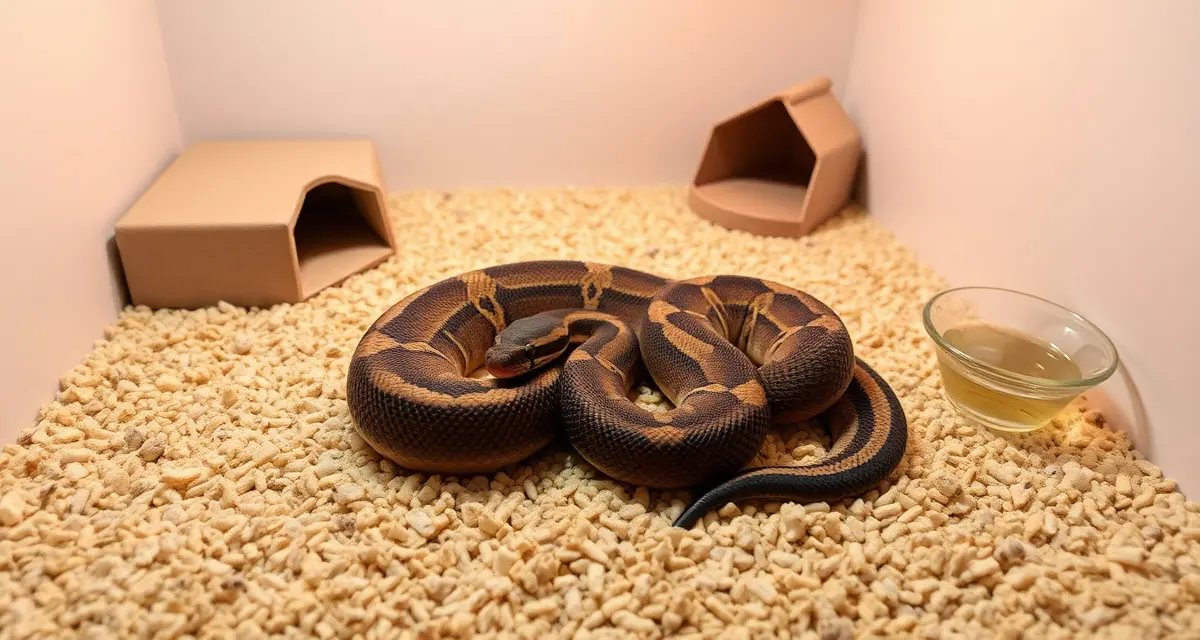
Separate neonates from the mother immediately after birth. Boa females don't provide parental care and can inadvertently injure small young. Neonates should be housed individually in appropriately-sized tubs or containers from day one. A 6-quart shoebox-style tub works well for neonates for the first several months.
Temperature for neonates mirrors adult care: warm side at 88-90F, ambient cool side at 76-80F. Belly heat is preferable to overhead heat. Neonates don't need a large thermal gradient, but they do need the option to move between warm and cool zones.
Humidity should stay around 60-70%. Include a humid hide -- a small container with moist sphagnum moss -- on the cool side. Neonates go through their first shed within 7-14 days of birth, and access to a humid hide dramatically reduces incomplete shed issues. A retained shed on a neonate's eyes or tail tip can cause serious problems if not addressed promptly.
First Shed Timing and What to Expect
The neonate's first shed typically occurs 7-14 days post-birth. Some individuals shed a bit earlier or later. You'll notice the neonate becoming opaque and dull (going "blue") a few days before the shed completes. During this period, don't attempt to feed or handle the neonate.
A complete shed comes off in one or two pieces and leaves a full, patterned skin. An incomplete shed -- retained skin in patches, cloudy eye caps still attached -- requires a soak in warm shallow water for 15-20 minutes, followed by gentle manual removal of the retained skin. Log any incomplete sheds; some animals are chronic poor shedders and knowing this early helps you manage their husbandry proactively.
First Feeding
Most boa neonates will accept their first meal 7-14 days after completing their first shed. Offer appropriately sized pre-killed or frozen/thawed pink mice. The prey item should be no wider than the widest part of the neonate's body. Offering prey that's too large is a common early mistake and causes regurgitation.
Some neonates are reluctant feeders. If a neonate refuses after 3-4 feeding attempts spread over two to three weeks, try these strategies in order: try braining the prey item (opening the skull to release scent), try warm feeding (warming the prey item slightly above room temperature), or try a very small live pink. Boa neonates that refuse five or more meals need closer attention -- persistent refusal can indicate an underlying health issue.
Log every feeding attempt. Accepted, refused, regurgitated -- each outcome goes in the record. When a neonate accepts its first meal, note the date, prey type, prey size, and whether it was fresh, frozen/thawed, or live.
Individual ID and Record Keeping
Individual ID assignment should happen immediately after birth, before you've moved animals to their individual tubs. Many breeders use small numbered tags or a position-based system linked to a birth record spreadsheet. Whatever system you use, it needs to stay consistent.
HatchLedger lets you create individual records for each neonate linked to the parent pair's clutch record. As each animal's feeding history, shed records, and weight logs accumulate, you build a complete picture of every animal's development. This data matters most when you're selling animals -- a buyer who can see a full feeding history for the animal they're purchasing has more confidence in what they're buying.
Weight Tracking in the First Year
Weigh neonates monthly for the first year. A healthy boa neonate should be gaining weight consistently, roughly doubling its birth weight within the first six months under good conditions. Flat or declining weight over consecutive months is an early warning sign worth investigating before the animal becomes significantly compromised.
Keep weight logs tied to individual animal IDs in your records. At a glance, you should be able to see whether any animal in your neonate cohort is falling behind the growth curve. When you have 30 neonates from a large litter, the ones lagging behind are easy to lose track of without organized records.
HatchLedger keeps husbandry logs linked to your clutch P&L so you can see the cost of raising each animal through to sale. When a neonate requires extra care, that investment shows up in your records and helps you price accurately.
Frequently Asked Questions
What is the best approach to boa constrictor neonate care?
House neonates individually in appropriately-sized tubs with warm-side heat at 88-90F, a humid hide for their first shed, and a cool ambient side around 76-80F. Wait until after the first shed completes before offering the first meal. Start with appropriately-sized prey -- no wider than the neonate's body. Log every feeding attempt with date and outcome, and weigh animals monthly. Individual ID records from birth through first feeding give you the data you need to identify struggling animals before they decline seriously.
How do professional breeders handle boa constrictor neonate management?
Professional breeders assign individual IDs at birth and build records from day one. They track shed timing, first feeding acceptance, and monthly weights for every animal in the litter. When a neonate falls behind on growth or refuses repeated feedings, they have clear data showing when the issue started and what they've tried. This makes it easier to make informed decisions about whether extra intervention is needed or whether the animal is just a slow starter. Neonate records also support sales -- buyers respond well to detailed care histories.
What software helps manage boa constrictor neonate records?
HatchLedger is purpose-built for reptile breeders, connecting animal records, breeding history, clutch outcomes, and financial tracking in one system. Unlike generic spreadsheets, it's designed around the specific workflow of an active breeding season. Free for up to 20 animals.
How do you sex boa constrictor neonates?
Boa constrictor neonates can be sexed by probing or by popping, both of which should be performed by an experienced keeper to avoid injury. Males typically probe to 4-8 subcaudal scales and females probe to 2-3. Recording sex in your records at birth is important for accurate inventory and sales documentation.
How long does it take a boa constrictor to reach breeding weight?
Most B. c. imperator females reach breeding weight (typically 3,000-5,000g depending on locality) at 3-4 years under good feeding conditions. True red-tailed boas (B. c. constrictor) grow larger and may take 4-5 years. Males of most localities are ready to breed at 18-24 months.
Can boa constrictors produce back-to-back litters in consecutive years?
Most experienced breeders rest females for a full season after a large litter to allow proper body condition recovery. A female that drops significant weight during a long gestation needs adequate recovery time before the next breeding cycle. Tracking body weight before and after gestation is the best guide.
What is Boa Constrictor Hatchling Care Guide: Complete Breeder Guide?
This guide covers everything boa constrictor breeders need to know about raising neonates from birth through their first year. It addresses the unique challenges of live-bearing boas, including housing setup, first feeding strategies, weight tracking, and record keeping. Because boa litters often exceed 25 neonates, the guide emphasizes systems and workflows that help breeders manage large cohorts efficiently without missing critical early-life milestones.
How much does Boa Constrictor Hatchling Care Guide: Complete Breeder Guide cost?
The guide itself is free educational content published on HatchLedger. There is no purchase required to access the husbandry and breeding information. HatchLedger does offer breeder software tools for inventory and record keeping that are referenced throughout the article, and those tools may have their own pricing tiers depending on the features and litter volume a breeder needs.
How does Boa Constrictor Hatchling Care Guide: Complete Breeder Guide work?
The guide walks breeders through each phase of neonate care: setting up appropriately sized individual enclosures, establishing correct temperature gradients and humidity, initiating the first feeding sequence, and logging key data points like weight, shed dates, and feeding responses. It also covers how to use breeding records — pairing dates, gestation observations, and birth weights — to build a reliable data foundation for future seasons.
What are the benefits of Boa Constrictor Hatchling Care Guide: Complete Breeder Guide?
Using this guide helps breeders reduce neonate mortality, improve first-feeding success rates, and build accurate records that inform future pairings. Breeders who systematically log gestation and neonate data can predict birth windows more reliably, prepare housing in advance, and identify underperforming animals earlier. Integrated record keeping, as outlined in the guide, is reported to cut administrative time by around 30% even when managing litters of 30 or more.
Who needs Boa Constrictor Hatchling Care Guide: Complete Breeder Guide?
This guide is written for serious boa constrictor breeders — from those producing their first litter of common boas to experienced keepers working with locality-specific or designer morphs. It is especially useful for breeders scaling up litter volume, transitioning from casual hobbyist to commercial breeder, or anyone who has struggled with inconsistent neonate feeding, poor record keeping, or difficulty predicting birth windows across multiple females.
Related Articles
- Boa Constrictor Buyer Waitlist Management: Complete Breeder Guide
- Boa Constrictor Clutch Size and Egg Count: Complete Breeder Guide
- Boa Constrictor Common Breeding Issues: Complete Breeder Guide
Sources
- USARK (United States Association of Reptile Keepers)
- Association of Reptilian and Amphibian Veterinarians (ARAV)
- Herpetologica (Herpetologists League)
- Reptiles Canada Magazine
- World Animal Protection
Get Started with HatchLedger
Boa constrictor breeding involves months of gestation monitoring, pairing records, and litter documentation that is difficult to track reliably across multiple females using notebooks or generic spreadsheets. HatchLedger gives you a single connected system for all of it, from cycling start through neonate sale. Try it free with up to 20 animals.