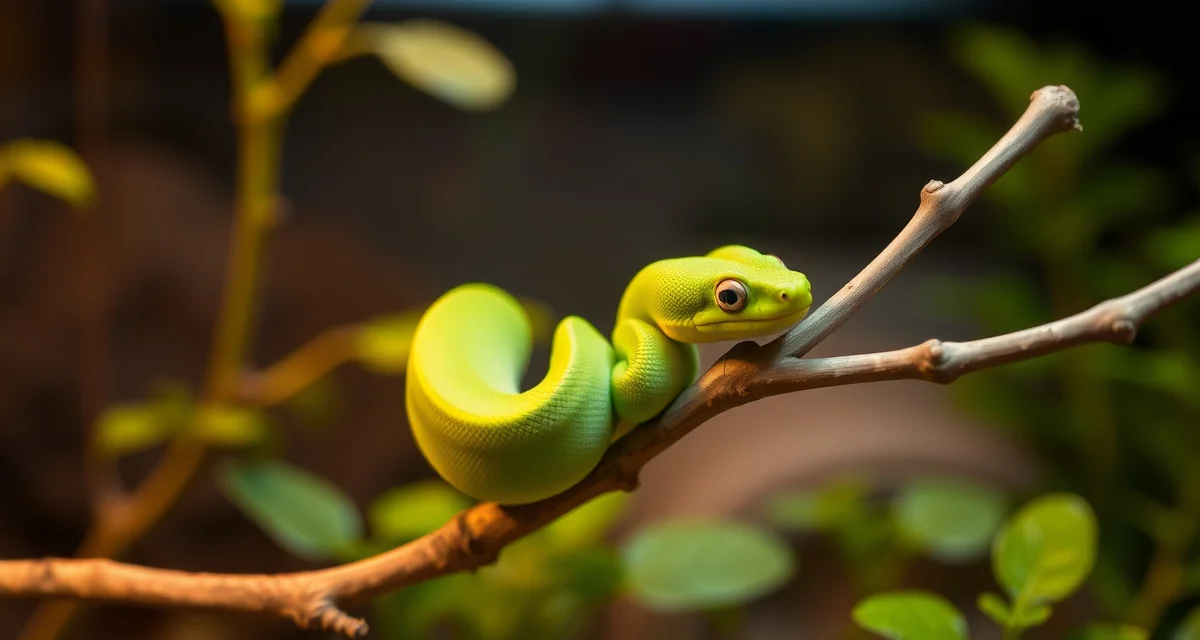
Green Tree Python Hatchling Care Guide: Complete Breeder Guide
By HatchLedger Editorial Team · Published 2025-06-07 · Updated Mar 13, 2026
Green tree python hatchling care is one of the most demanding aspects of breeding GTPs. These neonates are fragile, often reluctant to feed, and require precise husbandry from day one. The first 90 days of a hatchling's life determine its trajectory: a hatchling that eats reliably, sheds cleanly, and gains weight consistently will become a healthy juvenile. One that doesn't feed or sheds poorly in the first weeks can spiral into problems that are hard to reverse. Breeders using integrated software report 30% less time on administrative tasks, freeing up critical attention for this high-stakes early period.
TL;DR
- Green tree pythons (Morelia viridis) are arboreal specialists requiring perch-based enclosures and husbandry quite different from terrestrial pythons.
- Breeding is triggered by a dry season simulation with reduced humidity and a modest temperature reduction over 6-8 weeks.
- Clutch sizes average 12-25 eggs, with Biak locale animals producing larger clutches than Sorong or Aru.
- Incubation runs 47-52 days at 84-86 degrees Fahrenheit, shorter than most python species at equivalent temperatures.
- Locale documentation is critical: Biak, Sorong, Aru, Kofiau, and locality blends all carry distinct market values and buyer expectations.
Unlike ball python hatchlings, which typically take their first meal within a few weeks of hatching with minimal intervention, GTP hatchlings can be genuinely difficult to feed and require tailored setups. This guide walks through every stage of early GTP care.
The First Days After Hatching
GTP hatchlings will pip from the egg before fully emerging. Let them emerge on their own timeline; don't assist unless you have a specific concern about a hatchling stuck in the egg for more than 24 hours after the initial pip. Premature assistance can damage the umbilical area or yolk sac.
Once a hatchling has fully emerged, leave it in the incubation container for 24 to 48 hours to complete yolk absorption. The yolk sac should be fully absorbed before transfer to a hatchling setup. Any hatchling with a protruding or unabsorbed yolk sac needs extra time and careful handling.
Record the hatch date, hatchling weight, and any visible abnormalities immediately. Each hatchling should receive a unique ID in your records, which you'll use to track feeding history, shed dates, and eventual sale. Starting this record at hatch, not later, is essential for maintaining accurate data.
Setting Up the Hatchling Enclosure
Enclosure Size
GTP hatchlings thrive in small, secure enclosures. A 12" x 12" x 18" arboreal enclosure or a similar-sized plastic container with perches at multiple heights works well. Avoid large enclosures: hatchlings feel exposed in too much space and may refuse to feed or remain stressed.
Install a horizontal perch at a comfortable height, roughly one-third to halfway up the enclosure. GTPs spend most of their time coiled on perches, and hatchlings need this option from day one.
Temperature and Humidity
Maintain a thermal gradient with a warm side of 84-86°F and a cooler area of 78-80°F. Allow nighttime temperatures to drop slightly to 75-78°F. GTPs don't use belly heat the same way ground-dwelling species do; they thermoregulate by moving along the gradient within the enclosure.
Humidity should sit at 60-70% ambient with spikes to 90%+ during misting. Mist one side of the enclosure lightly once or twice daily. Hatchlings will drink water droplets from the enclosure walls and perches; this is often their primary water intake in the first weeks.
Lighting
Provide a 12-hour photoperiod. GTPs benefit from UVB lighting, though it's not universally agreed upon as essential for hatchlings. At minimum, provide a visible light cycle to support normal activity patterns.
Feeding GTP Hatchlings
This is where most breeders struggle. GTP hatchlings are notorious for being reluctant first feeders. Patience and technique matter more than force in most cases.
First Feeding Attempts
Wait at least 14 to 21 days after the hatchling's first shed before attempting to feed. GTPs typically shed within 7 to 14 days of hatching. Feeding before this first shed often results in refusal.
Offer a pinky mouse or hopper, depending on the size of the hatchling. Some breeders prefer lizard-scented prey for hatchlings, as GTPs are naturally predisposed to eating lizards in the wild. You can scent pinkies by rubbing them with a gecko or anole before offering.
Try wiggling the prey using tongs, offering at dusk when hatchlings are most active. If the hatchling strikes and constricts but doesn't swallow, leave the prey item in the enclosure for a few hours before removing it.
Log every feeding attempt in your hatchling records. Note the prey type, prey size, whether the hatchling struck, and whether it swallowed. This feeding history becomes important if you ever need to troubleshoot a persistent refuser or if you're documenting the animal for sale. HatchLedger's reptile breeder hub allows you to log all of this at the individual animal level.
Problem Feeders
If a hatchling refuses 3 to 4 consecutive feeding attempts over a period of 3 to 4 weeks, consider these approaches:
Braining prey. Exposing the brain matter of a pinky mouse can trigger strong feeding responses in reluctant hatchlings.
Live prey. A small live pinky or hopper can trigger the prey-detection response in hatchlings that won't strike at frozen-thawed prey.
Assist feeding as a last resort. If a hatchling is visibly losing weight and refusing all prey, assist feeding with a properly sized prey item may be necessary to prevent starvation. This should be done carefully and with veterinary guidance if you haven't done it before.
Track the weight of problem feeders weekly. Weight loss of more than 5 to 10% from hatch weight is a signal to escalate your intervention.
Shedding in GTP Hatchlings
GTP hatchlings are yellow, red, or a combination at birth, depending on locale. Most undergo a color change sometime between 6 months and 3 years of age, transitioning toward the green adults are known for.
First sheds typically occur 7 to 14 days after hatching. Maintain humidity above 70% ambient in the week before a shed cycle. Poor humidity is the leading cause of retained shed in hatchlings. A clean, complete shed is a good health indicator; dysecdysis warrants investigation.
Log every shed date and assess completeness. Retained eye caps are a priority to address; they can cause vision problems and infection if left untreated.
Tracking Hatchling Growth and Development
Weigh hatchlings weekly for the first 90 days, then monthly once they're established feeders. A healthy GTP hatchling should show steady weight gain after it begins eating reliably. Compare weights across clutch-mates to identify outliers.
Consistent growth tracking across your hatchling inventory requires a system. Logging 10 to 20 hatchlings' weights weekly in a spreadsheet is manageable; tracking 50 or more across multiple clutches becomes error-prone. Purpose-built reptile breeder software comparison tools like HatchLedger connect each hatchling's weight log to its breeding records, sale status, and morph ID, so you always know where each animal stands.
Frequently Asked Questions
What is the best approach to green tree python hatchling care guide?
Start each hatchling in a small, secure arboreal enclosure with a horizontal perch, temperatures of 84-86°F on the warm side, and humidity maintained at 60-70% with misting spikes to 90%. Wait for the first shed before attempting feeding. Offer lizard-scented or freshly-killed prey at dusk. Log every feeding attempt, shed date, and weight measurement from day one. Problem feeders need consistent monitoring and documented intervention history. The first 90 days determine whether a hatchling will thrive, so careful daily observation combined with organized records is the most effective approach.
How do professional breeders handle green tree python hatchling care guide?
Professional GTP breeders set up hatchling enclosures before the clutch hatches, so each neonate moves directly into appropriate conditions. They assign unique IDs immediately, log first shed dates, and track every feeding attempt with outcome notes. They weigh hatchlings weekly and compare growth across clutch-mates to catch problems early. They have a clear escalation protocol for problem feeders including scenting, live prey, and assist feeding as a last resort. Most maintain digital records for every hatchling to support accurate sale documentation and track which pairings produce the most reliably feeding offspring.
What software helps manage green tree python hatchling care guide?
HatchLedger is purpose-built for reptile breeders, connecting animal records, breeding history, clutch outcomes, and financial tracking in one system. Unlike generic spreadsheets, it's designed around the specific workflow of an active breeding season. Free for up to 20 animals.
Why is locale documentation so important for green tree pythons?
Buyers of green tree pythons are often very specific about locality. Biak animals are prized for large adult size and a blue ontogenetic coloration phase. Sorong and Aru animals are known for consistent solid green adult coloration. Locality blends from unknown crosses are worth significantly less than documented pure-locale animals. Recording locale information from acquisition through sale is essential.
How long does it take green tree python neonates to change color?
The ontogenetic color change from yellow or red neonate coloration to adult green takes approximately 6-12 months in most locales. Biak animals often go through a blue phase during the transition. Buyers of neonates should understand the timeline. Photographing animals at regular intervals through the color change documents the process and makes for compelling sales content.
What is Green Tree Python Hatchling Care Guide: Complete Breeder Guide?
The Green Tree Python Hatchling Care Guide: Complete Breeder Guide is a comprehensive resource covering every stage of GTP neonate husbandry, from post-hatch setup through the critical first 90 days. It addresses enclosure design, feeding protocols, humidity and temperature management, shed cycles, locale-specific differences between Biak, Sorong, Aru, and Kofiau animals, and how to use breeding management software to track hatchling progress and reduce administrative overhead.
How much does Green Tree Python Hatchling Care Guide: Complete Breeder Guide cost?
The guide itself is free educational content published on HatchLedger. The costs associated with green tree python hatchling care are the real investment: quality perch-based enclosures, a reliable incubation setup, appropriate prey items, and humidity control equipment. Budget varies by scale, but serious breeders typically spend several hundred dollars per clutch on infrastructure before factoring in the value of the animals themselves.
How does Green Tree Python Hatchling Care Guide: Complete Breeder Guide work?
The guide works by walking breeders through GTP-specific husbandry sequentially: triggering breeding via dry season simulation, managing incubation at 84–86°F for 47–52 days, setting up arboreal neonatal enclosures, initiating feeding, and monitoring weight gain and shed cycles. It also explains how breeding software integrates with this workflow, automating record-keeping so breeders can focus attention on high-stakes early husbandry decisions.
What are the benefits of Green Tree Python Hatchling Care Guide: Complete Breeder Guide?
Following this guide gives breeders a structured framework for the most failure-prone period in GTP production. Benefits include improved feeding success rates, cleaner sheds, better weight gain consistency, and accurate locale documentation that protects resale value. Breeders using integrated management software alongside the guide report up to 30% less time on administrative tasks, which is critical when neonates require close daily monitoring.
Who needs Green Tree Python Hatchling Care Guide: Complete Breeder Guide?
This guide is written for serious reptile breeders working with green tree pythons at any scale—from hobbyists producing their first clutch to professional operations managing multiple locale lines. It is especially useful for breeders transitioning from terrestrial python species, since GTP husbandry differs significantly. Anyone investing in high-value Biak, Sorong, or Aru animals will benefit from the locale-specific guidance and record-keeping practices covered.
How long does Green Tree Python Hatchling Care Guide: Complete Breeder Guide take?
The guide covers the first 90 days of a hatchling's life, which is the window that determines long-term trajectory. Incubation alone runs 47–52 days. After hatching, the initial feeding response, first shed, and consistent weight gain typically establish within 6–10 weeks. Breeders should expect to invest daily monitoring time throughout this period, with intensity highest in the first 30 days when feeding reluctance and husbandry errors are most consequential.
Related Articles
Sources
- USARK (United States Association of Reptile Keepers)
- Association of Reptilian and Amphibian Veterinarians (ARAV)
- CITES Appendix II (international trade documentation)
- Herpetofauna (Australian Herpetological Society)
- Green Tree Python Foundation
Get Started with HatchLedger
Green tree python breeding demands locale documentation, seasonal cycling records, and clutch management that generic spreadsheets handle poorly. HatchLedger keeps your locale lineage, breeding history, and per-clutch records connected so buyers get complete documentation and you build a traceable breeding program. Try it free with up to 20 animals.