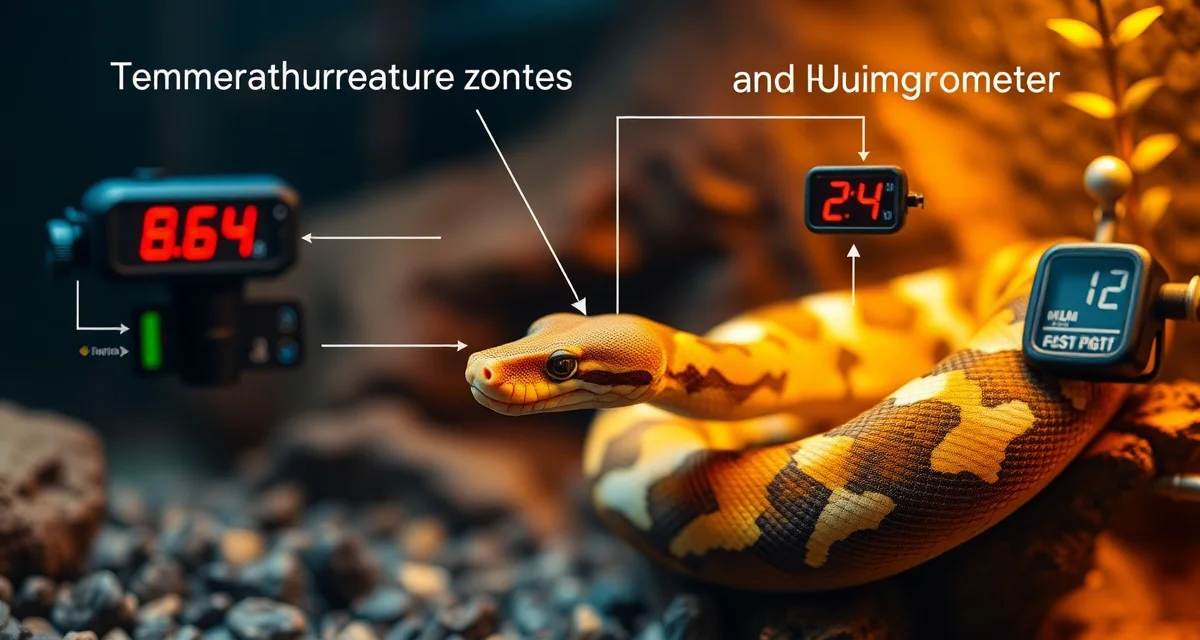
Humidity and Temperature Management for Ball Python Collections
By HatchLedger Editorial Team · Published 2025-07-09 · Updated Mar 13, 2026
If there's one thing that separates experienced breeders from beginners, it's environmental control. The enclosure conditions you maintain, temperature gradients, ambient humidity, ventilation, directly affect feeding response, shed quality, breeding success, and long-term health. Get the environment right and most other things fall into place. Let it slide and you'll spend a lot of time troubleshooting problems that were preventable.
TL;DR
- Ball python breeding operations require systematic record-keeping from pre-season preparation through end-of-season sales.
- Females at 1,200-1,500g or more are the target weight before introducing them to a breeding male.
- Ovulation detection is the key event that anchors pre-lay shed and lay date calculations.
- Clutch profitability guide depends on understanding actual cost basis per animal, not just gross sale revenue.
- Well-documented animals with complete feeding histories and clear genetic records consistently sell faster and at higher prices.
This guide covers the numbers, the equipment, and the practical realities of managing these conditions across a collection.
Temperature Requirements
Ball pythons are ectotherms, which means they depend on external heat sources to regulate their body temperature. In captivity, you need to provide a thermal gradient so they can choose the temperature that suits what they're doing.
Target Temperatures
- Warm side (basking zone): 88-92°F
- Cool side: 76-80°F
- Ambient room temperature: 80-84°F ideal
- Minimum ambient: 75°F (below this, feeding and digestion become unreliable)
The warm side temperature is often the one people get wrong. Too hot (above 95°F) stresses animals and can cause neurological damage with prolonged exposure. Too cool (under 85°F) and they can't digest properly, leading to regurgitation.
Rack Systems vs. Individual Enclosures
In rack systems, heat is typically provided by heat tape or cable running under the tubs, controlled by a proportional thermostat. The thermostat probe sits on the heat tape surface, so you're measuring surface temperature, not ambient air temperature inside the tub. Calibrate your setup using a temperature gun or digital probe inside the tubs themselves when you first set up, not just at the heat tape.
Individual glass enclosures require careful attention to the thermal gradient. Hot spots from overhead basking bulbs or ceramic heat emitters can concentrate in one area, leaving the rest of the enclosure too cool. Use multiple temperature probes or a temperature gun to map the actual gradient before placing an animal.
Seasonal Temperature Adjustments for Breeding
Many breeders lower nighttime temperatures in fall to signal the seasonal shift that triggers breeding behavior. Dropping ambient temps to 72-74°F at night during October through December, combined with a cooling light cycle, is a common conditioning technique.
Keep daytime temps at normal ranges and just adjust the nightly low. You're mimicking natural seasonal variation in West Africa, where ball pythons originate, without genuinely cold temperatures that would stress the animals.
Humidity Requirements
Ball pythons need moderate to moderately high humidity. This matters most for shedding, inadequate humidity is the single most common cause of retained shed in captive ball pythons.
Target Humidity Levels
- Standard maintenance: 60-80% relative humidity
- During shed (in blue): 70-80% is ideal
- Minimum floor: 50% (below this, expect shed problems)
In dry climates or during winter when indoor heating reduces ambient humidity notably, maintaining these levels takes effort. A room humidifier helping maintain ambient levels makes individual enclosure management much easier.
Methods for Maintaining Humidity
Substrate choice has the biggest impact. Coconut fiber, cypress mulch, topsoil mixes, and bioactive substrates retain moisture well and release it slowly. Paper towels and newspaper (used in many rack setups) don't hold any humidity, you compensate by partially blocking ventilation or adding a humid hide.
Humid hides are a simple, effective tool for shedding support. A hide box containing slightly damp sphagnum moss gives the animal a high-humidity microclimate it can use during the shed cycle without making the whole enclosure waterlogged.
Ventilation balance is key. Enough air exchange to prevent mold and bacterial growth, but not so much that moisture evaporates faster than you can replace it. Rack systems often run with nearly blocked ventilation on purpose, which keeps humidity up but requires good substrate management to prevent mold.
Recognizing and Responding to Environmental Problems
Signs of Low Humidity
- Incomplete sheds (retained skin, especially around eye caps)
- Dry, dull-looking skin between sheds
- Dehydration (skin that tents when gently pinched)
If you see retained shed, don't pull it off dry. Soak the animal in lukewarm water for 20-30 minutes and the shed usually rolls off on its own. Addressing the underlying humidity issue prevents recurrence.
Signs of Excessive Moisture
- Mold on substrate or enclosure surfaces
- Blistering disease (fluid-filled blisters on the skin, usually belly)
- Respiratory sounds or wheezing
Blistering disease and scale rot are consequences of chronically damp conditions, not just high humidity. You can have high humidity without wet substrate if your drainage and ventilation are properly managed. The combination of wet substrate, poor air circulation, and high humidity is what causes skin infections.
Signs of Incorrect Temperature
- Refusal to eat when there's no other explanation
- Regurgitation, especially in animals that previously ate reliably
- Lethargy and time spent almost entirely on the warm side (often indicates they can't get warm enough from the warm side alone)
Monitoring Across a Collection
At scale, you can't manually check every single enclosure daily. Building monitoring into your system matters.
Digital thermostats on every heat zone are non-negotiable. If your thermostat fails, enclosure temperatures can spike or drop rapidly, and you may not notice until you have sick animals. The more animals you have, the more consequential these failures are.
Standalone digital thermometer/hygrometer combo units are cheap and reliable. Place them inside representative enclosures across your collection to spot-check conditions regularly, not just at setup.
The HatchLedger platform includes health and husbandry logging where you can record temperature readings, humidity checks, and any environmental anomalies against individual animals or whole rooms. This creates a traceable record that helps you correlate environmental events with health outcomes over time, which is much harder to do with the kind of fragmented records most breeders keep. Breeders using integrated software report 30% less time on administrative tasks, largely because centralized data means less chasing down notes.
Room-Level Environmental Control
If you're running a dedicated reptile room, controlling the room environment is more efficient than fighting humidity and temperature individually at each enclosure.
A room temperature of 80-82°F means most rack systems only need gentle bottom heat to reach the warm side target. A whole-room humidifier eliminates the need to mist individual enclosures. Combined with proper ventilation to prevent stagnant air and mold growth, this approach scales well.
Standalone room thermostats, hygrometers, and even IoT temperature sensors that log remotely are worth the investment when you have more than 30-40 animals. A temperature failure at 2am on a Sunday is much less catastrophic if you get an alert before you check in the next morning.
Tracking Environmental Data for Your Breeding Program
Environmental consistency during breeding season is directly tied to breeding success rates. If your collection experiences notable temperature swings during the conditioning period, tracking those events against your breeding outcomes helps you understand what's working and what isn't.
The reptile breeder software comparison shows clearly that spreadsheets struggle to connect environmental logs to breeding and financial outcomes. A purpose-built platform does this naturally, making it easier to see whether that cold snap in November correlated with better pairing locks or worse ones.
Frequently Asked Questions
What is the best approach to ball python humidity temperature management?
Maintain a warm side of 88-92°F with a cool side of 76-80°F and aim for 60-80% relative humidity. Use quality thermostats on every heat source, provide a humid hide during sheds, and choose a substrate that naturally retains moisture. Monitor conditions across the collection regularly rather than relying on set-and-forget assumptions.
How do professional breeders handle ball python humidity temperature management?
Professional breeders control the room environment as a foundation, then fine-tune individual enclosures around that baseline. They use proportional thermostats on all heat sources, check conditions systematically across their collection, and log any environmental anomalies so they can track the relationship between conditions and animal health outcomes over time.
What records should every reptile breeder maintain per animal?
At minimum: acquisition date and source, morph and genetic documentation, feeding log, weight history, any veterinary treatments, and breeding history including pairing dates, clutch of origin for captive-bred animals, and offspring records. These records serve your own management, buyer documentation, regulatory compliance, and long-term genetic tracking.
How should reptile breeders document genetics for buyers?
A complete genetic record for sale includes the animal's visual morph name, confirmed het genes and their basis (parentage documentation or proven-out production), possible het genes with probability percentages, hatch date, and parent morph information. Including clutch-of-origin records lets buyers independently verify the claims.
What is Humidity and Temperature Management for Ball Python Collections?
Humidity and temperature management for ball python collections refers to the systematic control of thermal gradients and ambient moisture levels within enclosures. Ball pythons require a warm side of 88–92°F, a cool side around 76–80°F, and humidity between 60–80%. Proper management ensures healthy feeding responses, clean sheds, successful breeding cycles, and long-term animal health across an entire collection rather than just individual animals.
How much does Humidity and Temperature Management for Ball Python Collections cost?
There is no single purchase cost — humidity and temperature management is an ongoing operational expense. Initial equipment such as thermostats, digital hygrometers, heat tape, and rack systems can range from a few hundred to several thousand dollars depending on collection size. Ongoing costs include electricity, replacement probes, and substrate. Investing in quality controllers upfront reduces long-term troubleshooting costs and animal losses.
How does Humidity and Temperature Management for Ball Python Collections work?
Effective management works by establishing and maintaining a stable thermal gradient and humidity range inside each enclosure. Keepers use thermostat-controlled heat sources on one side of the enclosure, monitor ambient and surface temperatures with digital probes, and adjust ventilation and substrate moisture to maintain target humidity. Regular spot checks and environmental logging help identify drift before it affects animal health or breeding performance.
What are the benefits of Humidity and Temperature Management for Ball Python Collections?
Proper humidity and temperature management improves feeding consistency, reduces incomplete sheds, and supports successful ovulation and egg incubation. Females in stable environments reach breeding weight faster and cycle more predictably. Well-maintained animals are also easier to sell, as buyers increasingly expect documented husbandry records. Across a large collection, tighter environmental control directly reduces veterinary costs and lost clutch revenue from preventable health issues.
Who needs Humidity and Temperature Management for Ball Python Collections?
Anyone keeping or breeding ball pythons benefits from structured environmental management, but it becomes critical at collection scale. Hobbyists with a few animals can get by with basic monitoring, but breeders managing dozens of females, active breeding pairs, and incubating clutches need consistent, repeatable conditions across every rack or enclosure. Inconsistent environments are among the most common causes of feeding strikes, poor shed cycles, and failed breeding seasons.
How long does Humidity and Temperature Management for Ball Python Collections take?
Environmental management is a continuous, year-round responsibility rather than a one-time setup. Initial calibration of thermostats and probes may take a few days. Seasonal adjustments are needed as ambient room temperatures shift. During breeding season, conditions must be monitored more closely as females approach ovulation and pre-lay shed. Once systems are dialed in, daily maintenance takes minutes, but neglecting routine checks can set back a breeding season significantly.
Related Articles
- Ball Python Incubation FAQ: Temperature Humidity Timing
- Ball Python Incubation Setup: Temperature Humidity and Substrate
Sources
- USARK (United States Association of Reptile Keepers)
- Association of Reptilian and Amphibian Veterinarians (ARAV)
- World of Ball Pythons (WoBP genetics reference database)
- MorphMarket (reptile industry marketplace)
- Reptiles Magazine (Bowtie Inc.)
Get Started with HatchLedger
Every part of a ball python breeding operation -- from pairing records to clutch documentation to financial tracking -- works better when the data is connected rather than scattered across notebooks and spreadsheets. HatchLedger is built for exactly that. Try it free with up to 20 animals.