Ball Python Incubation Temperature and Humidity: Advanced Breeder Guide
Breeders using integrated software report 30% less time on administrative tasks, and incubation monitoring is a task that rewards attention to detail. Temperature spikes, humidity swings, and power outages can all affect a developing clutch, and knowing exactly what conditions your eggs experienced from lay to hatch helps you troubleshoot poor outcomes and replicate successful ones.
TL;DR
- Ball python breeding operations require systematic record-keeping from pre-season preparation through end-of-season sales.
- Females at 1,200-1,500g or more are the target weight before introducing them to a breeding male.
- Ovulation detection is the key event that anchors pre-lay shed and lay date calculations.
- Clutch profitability guide depends on understanding actual cost basis per animal, not just gross sale revenue.
- Well-documented animals with complete feeding histories and clear genetic records consistently sell faster and at higher prices.
Getting incubation parameters right is non-negotiable for maximizing hatch rates. Ball python eggs are reasonably tolerant within a range, but push outside that range for too long and you'll start losing eggs. Here's what you need to know.
Target Temperature Range
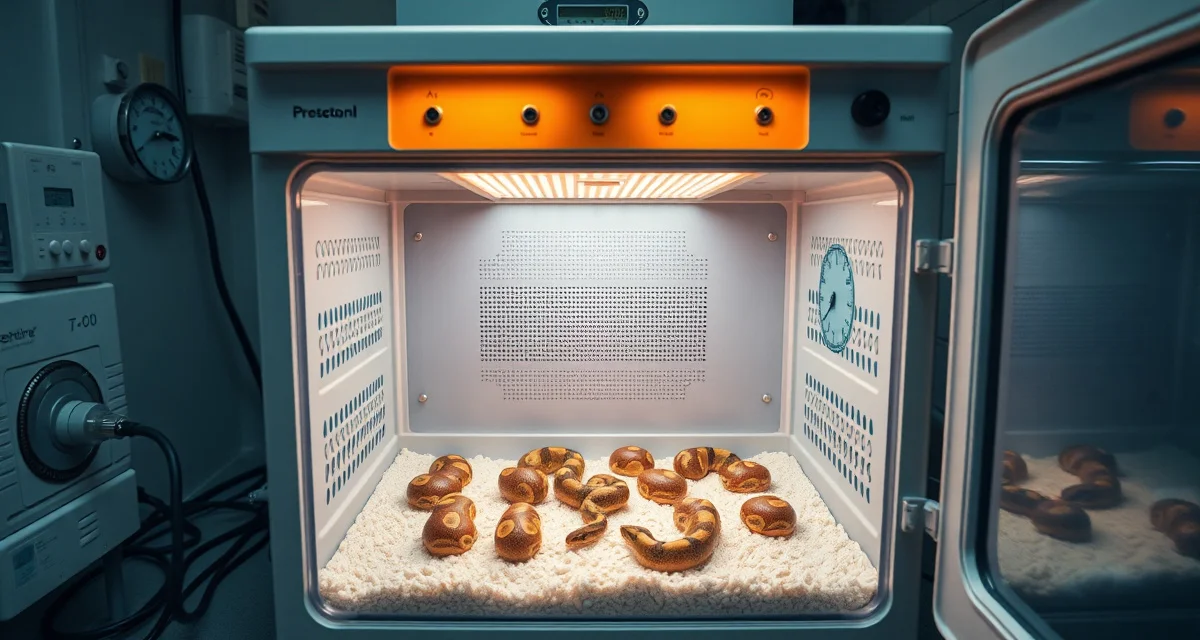
The standard incubation temperature for ball python eggs is 88-90F (31-32C). This is the temperature at the egg level inside the incubation container, not the ambient temperature of the room or the air inside your incubator.
Some experienced breeders run slightly cooler, at 86-88F, reporting that the slower development at lower temperatures can produce slightly larger, more solid hatchlings. The tradeoff is a longer incubation period: at 88-90F you're looking at 55-65 days, while 86-88F incubation can extend to 65-75 days.
Avoid going above 91F. Brief spikes to 91-92F are generally survivable, but sustained temps above 90F increase the risk of developmental defects, particularly neurological issues like the spider wobble-adjacent kinking that can occur in any morph if incubation temperatures are too high. Sustained temps above 93F will kill eggs.
Never drop below 80F for sustained periods. Brief drops from power outages can be recovered from if caught quickly, but chronic low temperatures produce developmental problems and dramatically increase mortality.
Understanding Hot Spots in the Incubator
Most incubators, especially DIY builds using modified coolers, wine fridges, or Hovabator-style units, have uneven temperature distribution. The air temperature measured by the thermostat probe may be several degrees different from the temperature at any given egg.
Test your incubator before it matters. Place temperature probes at multiple locations within the incubator and run it for 24-48 hours before loading eggs. Identify hot spots and cold spots. Put your eggs in the most stable zone, which is usually toward the center.
A digital min/max thermometer inside the incubation container itself (not just in the incubator cavity) tells you the range your eggs are actually experiencing. This is more valuable data than the thermostat reading alone.
Incubator Types
DIY cool box incubators: Modified coolers with heating elements and thermostats. Excellent temperature stability because the insulation maintains heat. Inexpensive to build. The most popular choice among dedicated breeders.
Wine refrigerators (repurposed): The heating element replaces the cooling element. Temperature stability varies by brand and build quality. Popular because they're stackable and aesthetically cleaner than modified coolers.
Commercial reptile incubators: Products like the Reptibator and similar commercial units. Convenient but often have less precise temperature control than a well-built DIY unit. Fine for a clutch or two per season, less ideal for high-volume breeding.
Rack incubation systems: Some breeders simply maintain a room at incubation temperature and use enclosed containers on standard racks. Works well in climate-controlled environments where the ambient temperature can be reliably maintained.
Humidity Requirements
Ball python eggs need high humidity, typically 80-95% relative humidity inside the incubation container. This is distinct from the incubator's ambient humidity, which you don't directly control.
The humidity inside a properly prepared incubation container (with appropriate substrate and sealed or semi-sealed lid) will naturally reach the target range if the substrate moisture is correct. You're managing the substrate moisture to achieve the interior container humidity.
Signs of inadequate humidity:
- Eggs begin to dent or dimple more than a day or two into incubation
- Shells feel dry and papery rather than slightly pliable
- Eggs are losing weight noticeably (if you're weighing them)
Signs of excessive humidity:
- Standing water inside the container
- Eggs appear to be sitting in wet substrate
- Excessive bacterial or mold growth
The sweet spot is a container with light condensation on the walls, eggs that maintain their shape (or develop a healthy "sweat" appearance as they absorb moisture), and substrate that feels damp but not waterlogged.
Egg Weight Changes During Incubation
Healthy ball python eggs typically gain a small amount of weight during the first half of incubation as they absorb moisture from the substrate. Some breeders weigh eggs at setting and again at the midpoint as an additional data point.
notable weight loss (more than a few percent over the full incubation) suggests humidity is too low. notable weight gain combined with a very soft, misshapen egg suggests the egg has a bacterial or fungal problem rather than just absorbing water normally.
Handling Temperature Emergencies
Power outages are the most common incubation emergency. Your response depends on how long the power is out and what temperature the eggs reach.
If the incubator drops to 80-84F for less than a few hours, the clutch will almost certainly be fine. Egg development simply slows.
If temps drop below 75F or you're facing an extended outage, you have options:
- Move the incubation containers to the warmest room in the house
- Use chemical hand warmers placed near (not on) the containers
- Transport to a friend's incubator if possible
Document the incident in your clutch records. A temperature emergency that affected a clutch is important context when evaluating hatch rates and hatchling quality weeks later.
In HatchLedger's clutch tracking, you can log temperature incidents with dates and estimated duration, keeping the full incubation history for each clutch in one place.
Temperature Effects on Sex Determination
Ball pythons, unlike many other reptiles, have genetic rather than temperature-dependent sex determination. You cannot influence the sex ratio of your hatchlings by adjusting incubation temperature within the normal range. Any claims to the contrary are not supported by evidence for this species.
This distinguishes them from temperature-sensitive species like leopard geckos or crocodilians. No incubation temperature manipulation is needed for sex ratio management in ball pythons.
Tracking Incubation Across Multiple Clutches
When you're managing several clutches in the incubator simultaneously, consistent record-keeping becomes essential. Each container should be labeled with lay date, female ID, and expected hatch date. Knowing which container is which prevents expensive mistakes.
Log your incubator thermostat setting, the actual temperature range you're observing inside containers, and any adjustments you make throughout incubation. Compare hatch rates against incubation temperature data across seasons. This analysis, made easy by HatchLedger's reptile breeder software, helps you dial in your setup for consistently excellent outcomes.
Frequently Asked Questions
What is the best approach to ball python incubation temperature and humidity?
Target 88-90F at the egg level inside your incubation containers, with 80-90% relative humidity inside those containers. Verify actual egg-level temperatures with a probe inside the container (not just in the incubator body), check for condensation inside containers every 7-10 days, and add substrate moisture if eggs begin to dimple.
How do professional breeders handle ball python incubation temperature and humidity?
Experienced breeders build or invest in high-quality incubators with proven temperature stability and verify performance with multiple probes before loading eggs. They maintain a log of actual temperature ranges observed throughout incubation and correlate that data with hatch rates to continuously improve their setup.
What records should every reptile breeder maintain per animal?
At minimum: acquisition date and source, morph and genetic documentation, feeding log, weight history, any veterinary treatments, and breeding history including pairing dates, clutch of origin for captive-bred animals, and offspring records. These records serve your own management, buyer documentation, regulatory compliance, and long-term genetic tracking.
How should reptile breeders document genetics for buyers?
A complete genetic record for sale includes the animal's visual morph name, confirmed het genes and their basis (parentage documentation or proven-out production), possible het genes with probability percentages, hatch date, and parent morph information. Including clutch-of-origin records lets buyers independently verify the claims.
Sources
- USARK (United States Association of Reptile Keepers)
- Association of Reptilian and Amphibian Veterinarians (ARAV)
- World of Ball Pythons (WoBP genetics reference database)
- MorphMarket (reptile industry marketplace)
- Reptiles Magazine (Bowtie Inc.)
Get Started with HatchLedger
Every part of a ball python breeding operation -- from pairing records to clutch documentation to financial tracking -- works better when the data is connected rather than scattered across notebooks and spreadsheets. HatchLedger is built for exactly that. Try it free with up to 20 animals.