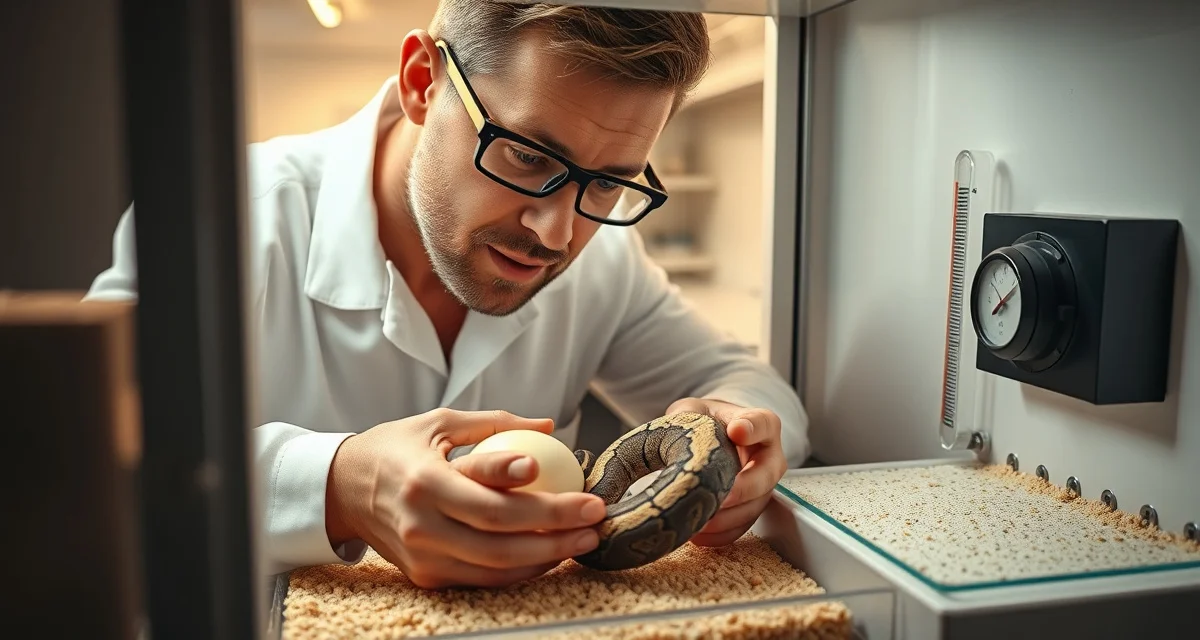
Ball Python Incubation Setup: Temperature Humidity and Substrate
The difference between a good clutch and a lost clutch is often infrastructure, not luck. An incubator setup that holds stable temperature within half a degree and maintains appropriate humidity through a 58-day incubation period is a system you can trust. An incubator setup cobbled together with a borrowed thermometer and whatever substrate you had on hand is a variable you're managing around all season.
TL;DR
- Ball python breeding operations require systematic record-keeping from pre-season preparation through end-of-season sales.
- Females at 1,200-1,500g or more are the target weight before introducing them to a breeding male.
- Ovulation detection is the key event that anchors pre-lay shed and lay date calculations.
- Clutch profitability guide depends on understanding actual cost basis per animal, not just gross sale revenue.
- Well-documented animals with complete feeding histories and clear genetic records consistently sell faster and at higher prices.
This guide covers everything you need to set up a reliable ball python incubation system: equipment selection, substrate preparation, temperature calibration, and monitoring through the full incubation period.
Step 1: Choose Your Incubator
Dedicated reptile incubators:
- HovaBator Genesis 1588: Reliable, widely used, adequate for 1-3 clutches at a time. Temperature stability is good for the price (~$80-$120).
- Reptipro 6000: Purpose-built for reptile eggs, better temperature stability than basic HovaBators. ~$200-$300.
- Zoo Med ReptiBreeder: Larger format for higher-volume operations.
DIY wine cooler conversion:
Highly regarded by experienced breeders. Wine coolers maintain exceptional temperature stability because they're designed to hold narrow temperature ranges. Converted with an external thermostat (Inkbird ITC-308 or similar) and a small heating element, they're arguably more reliable than most dedicated reptile incubators.
Custom builds:
Breeders at scale often build insulated box incubators with dedicated temperature controllers. More upfront investment, more capacity, excellent stability.
What not to use:
- Standard household incubators without reptile-specific temperature controllers
- Setups with no thermostat (just "set and hope" heat mats)
- Incubators with poor insulation that respond heavily to room temperature changes
Step 2: Choose Your Substrate
Vermiculite (most common):
Mix by weight, not volume. A 1:1 ratio of vermiculite to water (100g substrate + 100g water) is the standard starting point. After mixing, the vermiculite should feel slightly damp, like a wrung-out sponge, not wet or dripping.
Vermiculite is forgiving: slightly dry isn't catastrophic, and it holds moisture for a long time in a closed container. The main risk is going too wet, which creates standing water at the bottom of the egg box and promotes mold.
Perlite:
Works similarly to vermiculite. Mix at approximately 1:1 or slightly drier by weight. Perlite dries out somewhat faster than vermiculite, so check moisture more frequently. Slightly better for preventing mold in some setups.
Hatchrite:
Commercial substrate designed specifically for reptile egg incubation. Takes the guesswork out of moisture ratios. More expensive per use than DIY substrate but consistent. Good for breeders running small clutch numbers who don't want to manage mixing.
What not to use:
- Straight sand (desiccates eggs rapidly)
- Soil or coco coir (inconsistent moisture, mold issues)
- Wet paper towels as sole substrate (inadequate moisture buffering)
Step 3: Set Up the Egg Container
Use a clear plastic container with a loose-fitting lid, clear deli containers or food storage containers work well. You need:
- Enough substrate depth to create depressions for eggs (minimum 3-4 inches)
- Depressions spaced so eggs don't touch each other if possible
- 2-4 tiny ventilation holes in the lid (not bigger than necessary, you want near 100% humidity)
Substrate depth: Fill the container to about half full. This gives you room to create egg depressions and provides enough substrate mass to buffer moisture over time.
Creating depressions: Press a round object (the blunt end of a marker works) into the substrate to create a slight depression for each egg. The egg should sit with about 1/3 to 1/2 buried in the substrate, enough to contact the moisture buffering substrate, not so buried that the sides are constricted.
Step 4: Temperature Calibration
This step is non-negotiable. "I set it to 89°F" means nothing without calibration.
The probe placement problem:
An incubator's built-in thermostat reads the temperature at one point inside the cabinet. The temperature inside a sealed egg box can differ from the cabinet ambient by 1-2°F, eggs produce slight metabolic heat, and a sealed box traps that heat. Run a separate calibrated thermometer probe (ideally digital with a logging function) inside your egg box and confirm the actual egg-environment temperature.
Calibration process:
- Set up your incubator with egg boxes (empty) in their intended positions
- Run for 48 hours with probes inside the egg boxes
- Record temperature readings across the cabinet (some positions run warmer than others)
- Adjust thermostat set points until egg box temperature reads 88-90°F consistently
- Note which positions in the cabinet run at which temperatures
This calibration is repeated each season, or any time you change the incubator setup significantly.
Temperature tolerance:
- Target: 88-90°F inside egg container
- Acceptable: 87-91°F with stable humidity
- Concerning: consistent above 91°F or below 86°F
- Critical above 93°F or below 84°F for extended periods
Step 5: Humidity Management
With proper substrate preparation and a closed egg container, humidity inside the box should stay at 95-100% throughout incubation. You shouldn't need to add water frequently if the substrate was prepared correctly.
Signs of inadequate humidity:
- Eggs beginning to dimple (early desiccation)
- Substrate feels bone dry when you open the box
- Condensation on the container walls without moisture on substrate surface
Corrective action for desiccating eggs:
Add a very small amount of water to the substrate near the edges of the box, not directly on the eggs. Close and monitor. A slightly collapsed egg can often recover if you catch it within 1-2 days.
Signs of excessive humidity/moisture:
- Standing water at bottom of egg box
- Heavy mold growth on substrate and egg surfaces
- Eggs becoming unusually soft
Corrective action for too-wet setup:
Slightly prop the lid on the egg box to allow minimal moisture escape. Replace with freshly mixed substrate if standing water is present.
Common Mistakes
Relying on a single thermometer: If that probe fails or drifts, you won't know until you see a bad clutch. Use two probes, or a probe plus a min/max logging thermometer that records temperature history.
Not accounting for metabolic heat: Eggs generate heat. Your incubator may run at 88°F ambient but 90°F inside a sealed egg box with a developing clutch. Calibrate with the eggs in place (or with a dummy box).
Forgetting about room temperature fluctuations: If your breeding room gets significantly warmer or cooler seasonally, your incubator has to compensate more. A well-insulated incubator or climate-controlled breeding space handles this better than a cheap unit in a garage that hits 50°F in February.
Opening egg boxes too frequently: Every time you open the box, you expose eggs to room air. Do your checks purposefully, open, observe, close. Don't leave boxes open for extended periods.
Logging Incubation Data in HatchLedger
For each clutch, log:
- Lay date
- Number of fertile eggs
- Incubation substrate and starting moisture ratio
- Target temperature (and actual measured temperature from calibration)
- Incubator used (if you have multiple)
- Any notable events (temperature spikes, humidity corrections, egg issues)
HatchLedger's incubation timeline manager calculates expected hatch window from lay date and target temperature, sends alerts as you approach pip window, and connects the incubation record to the genetic documentation for that clutch.
FAQ
What is the best approach to ball python incubation setup guide?
Use a thermostat-controlled incubator calibrated with a probe inside the actual egg box (not just in the incubator cabinet). Target 88-90°F inside the container. Prepare substrate (vermiculite or perlite) at 1:1 weight ratio with water. Set up egg containers with small ventilation holes to maintain near-100% humidity without accumulating condensation. Calibrate before putting any eggs in and verify with a second temperature-logging thermometer.
How do professional breeders handle ball python incubation setup?
Most professional breeders use dedicated, purpose-built incubators (Reptipro, wine cooler conversions, or custom units) with reliable thermostats and redundant temperature monitoring. They calibrate per-season and maintain written records of temperature variance across incubator positions. Multiple incubators allow segregating clutches by expected hatch date and provide backup if one unit fails.
What software helps manage ball python incubation setup?
HatchLedger is purpose-built for reptile breeders, connecting animal records, breeding history, clutch outcomes, and financial tracking in one connected system. Unlike general spreadsheets or notes apps, it's designed around the specific workflow of an active breeding season -- from pairing records through hatchling inventory and sales documentation. Free for up to 20 animals.
Sources
- USARK (United States Association of Reptile Keepers)
- Association of Reptilian and Amphibian Veterinarians (ARAV)
- World of Ball Pythons (WoBP genetics reference database)
- MorphMarket (reptile industry marketplace)
- Reptiles Magazine (Bowtie Inc.)
Get Started with HatchLedger
Every part of a ball python breeding operation -- from pairing records to clutch documentation to financial tracking -- works better when the data is connected rather than scattered across notebooks and spreadsheets. HatchLedger is built for exactly that. Try it free with up to 20 animals.