Ball Python Incubation FAQ: Temperature Humidity Timing
By HatchLedger Editorial Team · Published 2025-03-16 · Updated Mar 13, 2026
Answers to the most common incubation questions from first-season breeders and experienced keepers troubleshooting specific problems.
TL;DR
- Ball python breeding operations require systematic record-keeping from pre-season preparation through end-of-season sales.
- Females at 1,200-1,500g or more are the target weight before introducing them to a breeding male.
- Ovulation detection is the key event that anchors pre-lay shed and lay date calculations.
- Clutch profitability guide depends on understanding actual cost basis per animal, not just gross sale revenue.
- Well-documented animals with complete feeding histories and clear genetic records consistently sell faster and at higher prices.
What temperature should I incubate ball python eggs at?
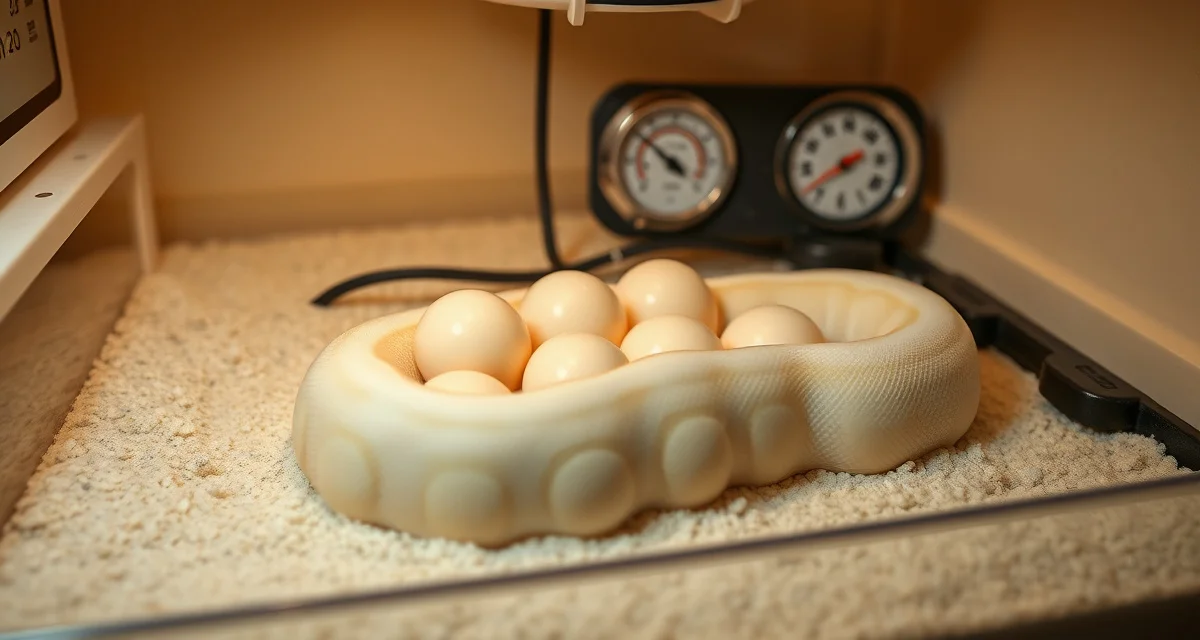
Target 88-90°F inside the egg container, measured with a probe placed inside the sealed egg box, not in the ambient incubator air. Eggs produce slight metabolic heat, so the egg environment is typically 1-2°F warmer than the incubator cabinet ambient.
Acceptable range: 87-91°F. Consistent temperatures above 91°F increase the risk of deformities and neurological issues in hatchlings. Consistent temperatures below 86°F slow development and can cause problems at extremes.
What humidity do ball python eggs need?
95-100% relative humidity inside the egg container. Properly prepared substrate (vermiculite or perlite mixed at roughly 1:1 water-to-substrate by weight) in a sealed container with minimal ventilation holes maintains this level throughout incubation without needing to add water frequently.
Signs of inadequate humidity: eggs beginning to dimple or wrinkle. Correct by adding a small amount of water to the substrate, not directly on the eggs.
How long does ball python incubation take?
| Temperature | Expected Hatch Days |
|---|---|
| 86-87°F | 65-75 days |
| 88-89°F | 58-65 days |
| 88-90°F (optimal) | 54-60 days |
| 90-91°F | 52-56 days |
At the standard 88-90°F target, plan for 54-62 days. Count from lay date, not from when you pulled the eggs or set up the incubation box.
How do I tell fertile eggs from slugs?
Fertile eggs: White or off-white, firm with slight give, often fused together, 70-100g each for typical clutch sizes.
Slugs (infertile): Yellow or yellowish-white, deflated or wrinkled, smaller than fertile eggs, often separated from the clutch or lying apart.
Don't discard anything in the first week, some eggs that look borderline at lay can firm up if they were just laid in the refrigerator (metaphorically, the conditions pre-oviposition). After 7-10 days, clear slugs (deflated, yellowed, molding) can be removed.
Should I pull ball python eggs or let the female incubate maternally?
Most professional breeders use artificial incubation for consistency and control. Maternal incubation works and some breeders use it successfully, but it has practical disadvantages:
- The female is tied up in one enclosure for 55-60 days and typically won't eat
- You can't monitor or intervene with individual eggs
- Temperature and humidity are harder to control precisely
- You can't identify eggs as they develop
Artificial incubation lets you monitor each egg, catch problems early, and maintain precise parameters without stressing the female for the full incubation period.
What substrate should I use for ball python egg incubation?
Vermiculite at 1:1 water to substrate by weight is the most widely used. It holds moisture well and is very forgiving. Available at garden centers.
Perlite at 1:1 or slightly drier. Slightly faster drying than vermiculite but works equally well.
HatchRite or similar commercial products remove the moisture-mixing guesswork. More expensive per use but consistent.
All three work. Choose based on availability and preference. Avoid garden soil, coco coir, and anything that compacts around the eggs.
Why are my eggs denting / collapsing?
Denting eggs are losing moisture, your substrate is too dry or your egg container isn't maintaining humidity adequately.
Correction:
- Add a small amount of water (a few teaspoons) to the substrate at the edges of the container, not directly on the eggs
- Close the container and check in 24 hours
- A dented egg that gets moisture back can often recover, don't assume it's dead until it stays collapsed for several days
Prevention: Prepare substrate at correct moisture ratio (1:1 by weight). Ensure your egg container has minimal ventilation, 2-4 very small holes, not large gaps. In low-humidity rooms, seal the container more aggressively.
Why are my eggs molding?
Some surface mold on substrate is normal and not cause for alarm. Heavy mold growth on egg surfaces warrants attention.
If mold appears on egg shells:
- Use a cotton swab with very diluted betadine solution to gently clean visible mold from the surface
- Slightly increase ventilation in the egg box to reduce surface moisture
- Check that substrate isn't too wet (standing water at the bottom of the box is too wet)
A moderate amount of surface mold on an otherwise healthy egg usually doesn't prevent hatching. Heavy mold penetrating the egg shell is a more serious problem.
When should ball python eggs pip?
At 88-90°F, expect first pips at days 54-58 from lay date. Late pippers within the same clutch can go to day 62-65.
A pip is a small cut or slit in the egg shell from the hatchling's egg tooth. You'll often see just the tip of the snout. This is the start of emergence, the hatchling may remain in the egg for another 24-48 hours before fully exiting.
When should I assist a hatching ball python?
In most cases, don't. A hatchling that's pipped and staying in the egg is absorbing the remaining yolk, pulling it out early risks rupturing the yolk sac, which is almost always fatal.
Consider assistance only if:
- The egg has pipped and the hatchling shows no further progress after 48+ hours
- The egg is collapsing around a partially emerged hatchling
- A yolk sac is visible and the egg is deflating rapidly (possible prolapse situation, requires careful intervention)
If you do assist: gently enlarge the existing pip hole with small scissors. Follow the existing slit direction. Never pull the animal.
What does a healthy hatchling ball python look like?
- Alert and active when gently disturbed
- Dry or slightly damp immediately post-hatch (fully dry within hours)
- No visible yolk sac attached
- 60-100g weight typical range (some variation is normal)
- Scales intact, no obvious deformities
- Eyes clear (not sunken or discolored beyond the normal hatchling blue)
Hatchlings will be in "blue" (pre-shed state) initially. This is normal and not a health concern.
Related Articles
- Humidity and Temperature Management for Ball Python Collections
- How Incubation Temperature Affects Ball Python Hatchlings
- The Complete Ball Python Egg Incubation Guide
- Tracking Ball Python Egg Weight During Incubation
FAQ
What is the best approach to ball python incubation FAQ?
Temperature and humidity stability are the two variables that matter most. Everything else is optimization. Set up your incubation system before breeding season, calibrate it with actual probes inside egg boxes, and verify it holds the target range for a full week before putting any eggs in. A system you've tested is a system you can trust.
How do professional breeders handle ball python incubation?
Professional breeders use dedicated incubator setups calibrated per season, with redundant temperature monitoring and detailed records per clutch. Many run multiple incubators to separate clutches by expected hatch date and to have backup capacity if a unit fails. They log every clutch's lay date, incubation parameters, egg count, and any notable events, this documentation is invaluable for diagnosing the rare bad clutch.
What software helps manage ball python incubation?
HatchLedger is purpose-built for reptile breeders, connecting animal records, breeding history, clutch outcomes, and financial tracking in one connected system. Unlike general spreadsheets or notes apps, it's designed around the specific workflow of an active breeding season -- from pairing records through hatchling inventory and sales documentation. Free for up to 20 animals.
What is Ball Python Incubation FAQ: Temperature Humidity Timing?
Ball Python Incubation FAQ: Temperature Humidity Timing is a comprehensive guide covering the most critical variables in successfully hatching ball python eggs. It addresses optimal temperature ranges (88-90°F inside the egg container), humidity requirements (95-100% RH), and timing benchmarks tied to ovulation detection. The guide helps first-season breeders avoid common mistakes while giving experienced keepers a reliable troubleshooting reference for clutch-specific problems.
How much does Ball Python Incubation FAQ: Temperature Humidity Timing cost?
This FAQ is free editorial content published on HatchLedger. There is no purchase required to access the incubation guidance. HatchLedger provides breeding tools, record-keeping features, and clutch tracking software that complement the article, with paid plans available separately. The incubation temperature, humidity, and timing information covered here is openly accessible to all reptile keepers.
How does Ball Python Incubation FAQ: Temperature Humidity Timing work?
The guide works by anchoring incubation decisions to measurable events and verified data points. Breeders use ovulation detection to calculate expected pre-lay shed and lay dates, then maintain egg containers at 88-90°F with 95-100% humidity throughout the incubation period. Tracking these variables systematically—rather than relying on estimates—reduces developmental failures and gives keepers actionable data when troubleshooting slugs, dented eggs, or late hatches.
What are the benefits of Ball Python Incubation FAQ: Temperature Humidity Timing?
Following proven incubation parameters reduces hatchling deformities, neurological issues, and developmental failures caused by temperature or humidity extremes. Consistent conditions above 86°F and below 91°F keep embryos developing on schedule. Pairing correct incubation with detailed record-keeping—feeding histories, genetic records, lay dates—also produces well-documented animals that sell faster and command higher prices from buyers who value transparency.
Who needs Ball Python Incubation FAQ: Temperature Humidity Timing?
This FAQ is aimed at first-season ball python breeders learning incubation fundamentals and experienced keepers troubleshooting specific clutch problems. It is particularly useful for anyone managing multiple females, tracking ovulation timing, or trying to understand why a clutch is developing slowly or producing abnormal hatchlings. Breeders who maintain systematic records and want to improve clutch profitability will get the most from this resource.
Sources
- USARK (United States Association of Reptile Keepers)
- Association of Reptilian and Amphibian Veterinarians (ARAV)
- World of Ball Pythons (WoBP genetics reference database)
- MorphMarket (reptile industry marketplace)
- Reptiles Magazine (Bowtie Inc.)
Get Started with HatchLedger
Every part of a ball python breeding operation -- from pairing records to clutch documentation to financial tracking -- works better when the data is connected rather than scattered across notebooks and spreadsheets. HatchLedger is built for exactly that. Try it free with up to 20 animals.