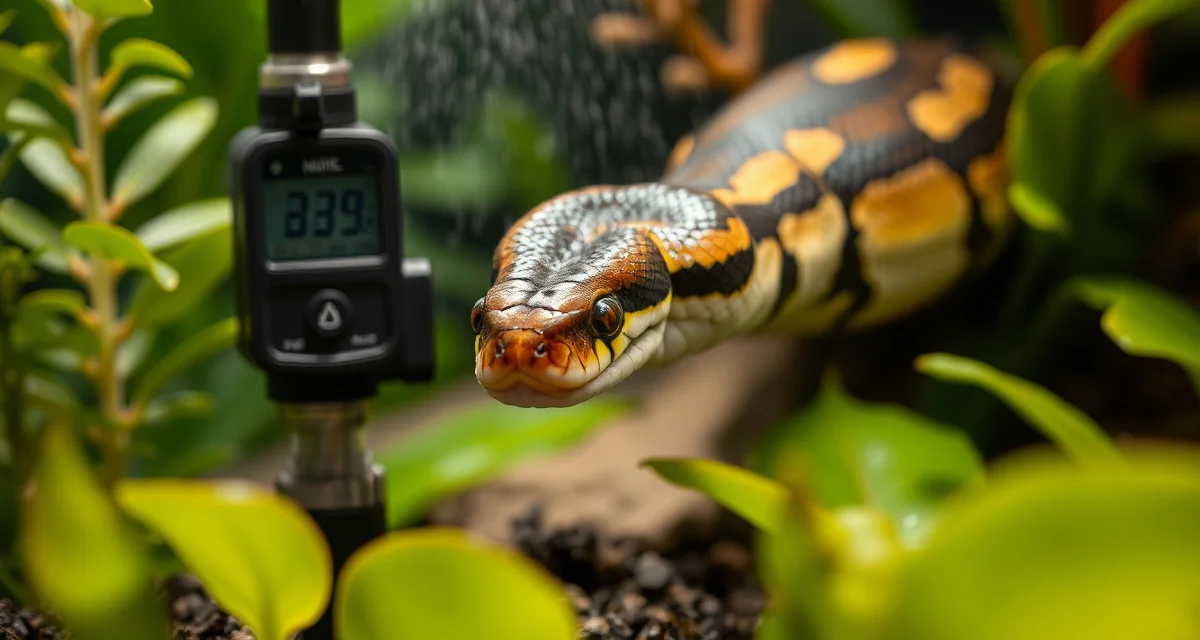
Ball Python Humidity Management: Advanced Techniques for Breeders
By HatchLedger Editorial Team · Published 2025-04-30 · Updated Mar 13, 2026
Breeders using integrated software report 30% less time on administrative tasks, and humidity is one of the husbandry parameters that's easy to neglect because the consequences aren't always immediately obvious. Poor shedding quality creeps up gradually. Respiratory susceptibility increases slowly. Hydration issues develop over weeks. Good humidity records help you catch these trends early.
TL;DR
- Ball python breeding operations require systematic record-keeping from pre-season preparation through end-of-season sales.
- Females at 1,200-1,500g or more are the target weight before introducing them to a breeding male.
- Ovulation detection is the key event that anchors pre-lay shed and lay date calculations.
- Clutch profitability guide depends on understanding actual cost basis per animal, not just gross sale revenue.
- Well-documented animals with complete feeding histories and clear genetic records consistently sell faster and at higher prices.
Humidity management in a production ball python operation is more nuanced than just pointing a hygrometer at your racks. You need to understand how different enclosure types, substrates, and heating methods affect humidity, and you need strategies for maintaining appropriate levels year-round across changing ambient conditions.
Target Humidity Ranges
Ambient enclosure humidity: 60-80% relative humidity. Ball pythons are from sub-Saharan Africa, including humid tropical and subtropical regions. They don't need constant extreme humidity, but they shouldn't be in chronically dry conditions.
During shed cycles: Increase to 70-85%. Higher humidity during the opaque phase reduces retention incidents.
Gravid females: Keep on the higher end of the range, 70-80%+. Developing eggs benefit from maternal hydration.
Inside humid hides: 90%+ humidity is appropriate inside the humid hide microclimate.
General rule: Ball pythons can tolerate brief excursions outside these ranges. What harms them is chronic exposure to conditions outside the range.
Measuring Humidity Accurately
The hygrometer you use matters. Cheap dial hygrometers (the type that often come with display terrariums) are frequently inaccurate by 10-20% relative humidity. At $1-5 each, they're not worth the false confidence they provide.
Digital hygrometers: Use digital hygrometers with calibrated probes. Budget digital models are typically accurate within 5% RH, which is sufficient for most husbandry decisions. More expensive models (SensorPush, Govee, and similar) offer accuracy to ±3% RH and some include data logging.
Probe placement: Place probes in the middle zone of the enclosure, not directly on the substrate (which will read artificially high) or directly at the water bowl (also artificially high). Mid-air reads give the most representative ambient reading.
Rack systems: You can't practically monitor humidity in every individual tub in a 50-tub rack. Instead, monitor several representative positions (top tub, middle tub, bottom tub on each side) and verify periodically that the full rack is within range. Rack humidity tends to be more uniform than individual enclosures.
How Different Heating Methods Affect Humidity
Heat tape/under-rack heating: Warms from below, which drives convection that can dry out the lower substrate layer faster than ambient heating. Animals in tubs over heat tape may need more frequent water bowl refills.
Radiant heat panels (overhead): Warm air rises from below and off the panel, creating convection that circulates moisture. Generally maintains more even humidity than point-source heat below the substrate.
Ceramic heat emitters: Produce dry heat without light. Can notably reduce ambient humidity if too powerful for the enclosure volume.
Heat lamps: Dry heat. If you use lamps, additional humidity management is usually required.
Practical Humidity Management Strategies
The humid hide: The most effective tool for individual animal humidity management. A hide box with damp sphagnum moss creates a 90%+ RH microclimate the animal can use when needed. Update the moss every 1-2 weeks to prevent mold and maintain moisture.
Substrate choice: As covered in the substrate article, substrates with higher moisture retention (coco coir, cypress mulch, damp sphagnum) maintain higher ambient humidity than paper towel. In climates where paper towel racks stay in the appropriate range without intervention, no change is needed. In dry climates, moisture-retaining substrate or more frequent misting may be necessary.
Room humidifier: For reptile rooms that run chronically dry (common in heated homes during winter), a whole-room humidifier is the most efficient solution. A 6-liter evaporative or ultrasonic humidifier can maintain 55-65% RH in a standard reptile room.
Enclosure sealing: For racks, ensure the tub-to-shelf gap is appropriate. Gaps that are too large allow faster humidity loss. For individual enclosures, screen tops lose humidity much faster than solid tops with ventilation holes.
Water bowl size: Larger open water bowls evaporate more moisture into the enclosure. In dry environments, a larger water bowl helps; in already-humid environments, it's less impactful.
Seasonal Humidity Management
Summer: Outdoor humidity is typically higher. Your reptile room may maintain target humidity without intervention. Watch for conditions that are too humid: above 85% ambient RH for extended periods can promote bacterial and fungal growth on substrate and scale rot risk.
Winter: Heated indoor air is typically very dry. This is your high-risk season for chronic low humidity. Add active moisture management (humidifier, larger water bowls, more frequent humid hide maintenance).
Transition seasons: Monitor closely during weather pattern changes, which can cause rapid humidity swings.
Monitoring and Records
Check humidity in representative locations in your reptile room weekly during stable periods, more frequently during seasonal transitions. If you're using data-logging hygrometers, you can review trends without manual checking.
Log humidity observations that deviate from normal, or when you make adjustments. HatchLedger's husbandry notes let you record humidity observations alongside other environmental notes per animal or per rack section. When a cluster of animals starts having poor sheds, the humidity log tells you whether conditions have changed.
For production operations, standardizing on a specific humidity management approach and documenting that in the husbandry record for each rack creates the consistent conditions that make systematic animal management possible.
The HatchLedger reptile breeder software keeps these husbandry parameters recorded and accessible alongside health and feeding data.
Frequently Asked Questions
What is the best approach to ball python humidity management for breeders?
Target 60-80% ambient relative humidity in all enclosures, use calibrated digital hygrometers for accurate measurement, provide humid hides for individual animal moisture regulation, and add room-level humidity (humidifier) during dry winter heating seasons. Monitor shed quality as a proxy for appropriate humidity levels.
How do professional breeders handle ball python humidity management?
Production breeders use calibrated digital hygrometers at multiple points in their facility, address seasonal humidity changes proactively with room humidifiers in winter, and use the humid hide as a standard feature of every enclosure rather than a reactive add-on when shedding problems appear.
What records should every reptile breeder maintain per animal?
At minimum: acquisition date and source, morph and genetic documentation, feeding log, weight history, any veterinary treatments, and breeding history including pairing dates, clutch of origin for captive-bred animals, and offspring records. These records serve your own management, buyer documentation, regulatory compliance, and long-term genetic tracking.
How should reptile breeders document genetics for buyers?
A complete genetic record for sale includes the animal's visual morph name, confirmed het genes and their basis (parentage documentation or proven-out production), possible het genes with probability percentages, hatch date, and parent morph information. Including clutch-of-origin records lets buyers independently verify the claims.
What is Ball Python Humidity Management: Advanced Techniques for Breeders?
Ball Python Humidity Management: Advanced Techniques for Breeders is a comprehensive guide covering systematic humidity control strategies for production ball python operations. It addresses how enclosure types, substrates, and heating methods affect humidity levels, and explains how proper record-keeping helps breeders detect early warning signs of husbandry problems like poor sheds, respiratory issues, and hydration deficits before they become serious health concerns.
How much does Ball Python Humidity Management: Advanced Techniques for Breeders cost?
This is a free educational article published on HatchLedger. There is no cost to read it. HatchLedger offers breeding management software that some breeders use alongside guides like this one to automate record-keeping, with users reporting around 30% reduction in administrative time compared to manual tracking methods.
How does Ball Python Humidity Management: Advanced Techniques for Breeders work?
The guide works by breaking humidity management into actionable components: understanding target ranges, selecting appropriate substrates, configuring enclosure types, and tracking data over time. Rather than relying on a single hygrometer reading, breeders learn to account for seasonal ambient changes, heating method interactions, and how to use logged records to identify gradual trends before they affect animal health or breeding outcomes.
What are the benefits of Ball Python Humidity Management: Advanced Techniques for Breeders?
Proper humidity management improves shed quality, reduces respiratory susceptibility, and supports healthy hydration in breeding animals. For production operations, consistent humidity records help breeders catch slow-developing problems early. Well-documented husbandry histories also increase sale prices and buyer confidence, since animals with complete health and environmental records consistently sell faster than those without documentation.
Who needs Ball Python Humidity Management: Advanced Techniques for Breeders?
This article is aimed at intermediate to advanced ball python breeders running production-scale operations with multiple females, racks, and seasonal breeding cycles. It is particularly useful for breeders who manage dozens of animals simultaneously and need systematic, scalable approaches to humidity rather than the basic advice suitable for hobbyists keeping one or two snakes.
How long does Ball Python Humidity Management: Advanced Techniques for Breeders take?
Implementing the techniques described is an ongoing process rather than a one-time setup. Initial enclosure configuration and substrate selection may take a few hours per rack. Building meaningful humidity trend data requires consistent logging across weeks and months. Breeders typically see measurable improvements in shed quality and early problem detection within one full breeding season of disciplined record-keeping.
Related Articles
- Ball Python Collection Financial Management: Revenue, Costs, and Tax Basics for Breeders
- Ball Python Egg Laying and Clutch Management: Advanced Breeder Guide
Sources
- USARK (United States Association of Reptile Keepers)
- Association of Reptilian and Amphibian Veterinarians (ARAV)
- World of Ball Pythons (WoBP genetics reference database)
- MorphMarket (reptile industry marketplace)
- Reptiles Magazine (Bowtie Inc.)
Get Started with HatchLedger
Every part of a ball python breeding operation -- from pairing records to clutch documentation to financial tracking -- works better when the data is connected rather than scattered across notebooks and spreadsheets. HatchLedger is built for exactly that. Try it free with up to 20 animals.