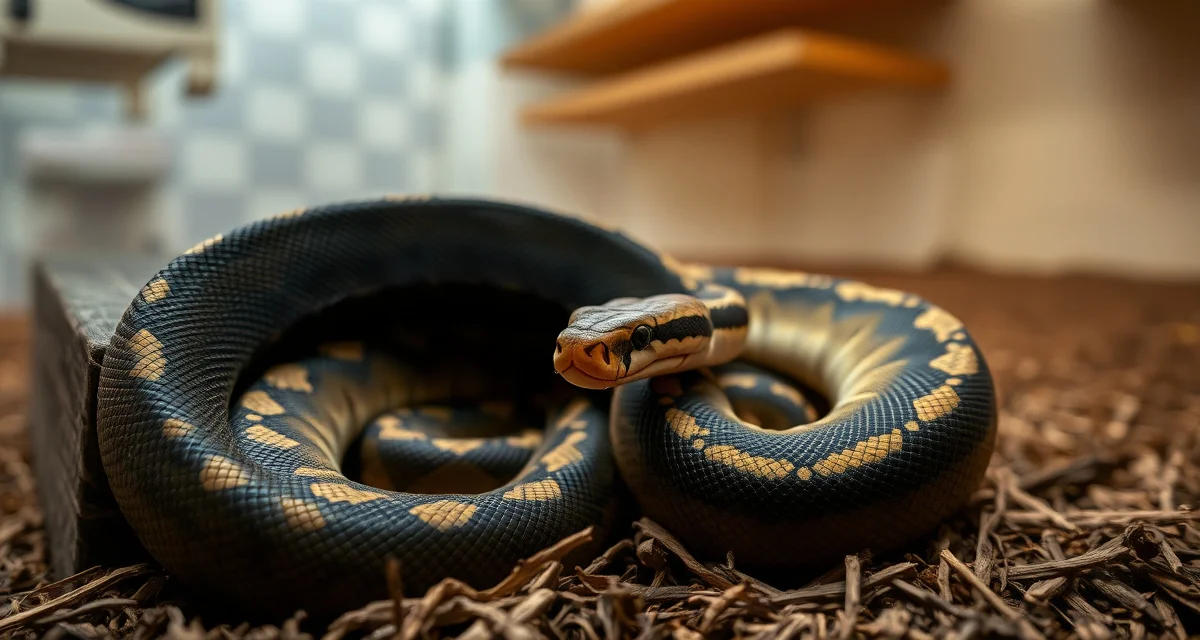
Ball Python Pre-Lay Shed and Nest Box Setup: Advanced Breeder Guide
Breeders using integrated software report 30% less time on administrative tasks, and the pre-lay shed period is one of those moments where having your records in order pays off immediately. You'll know exactly how many days post-ovulation you are, exactly what your female's normal shed cycle looks like, and exactly when to have your nest box ready.
TL;DR
- Ball python breeding operations require systematic record-keeping from pre-season preparation through end-of-season sales.
- Females at 1,200-1,500g or more are the target weight before introducing them to a breeding male.
- Ovulation detection is the key event that anchors pre-lay shed and lay date calculations.
- Clutch profitability guide depends on understanding actual cost basis per animal, not just gross sale revenue.
- Well-documented animals with complete feeding histories and clear genetic records consistently sell faster and at higher prices.
The pre-lay shed is the clearest signal your female gives you that eggs are coming soon. Miss it or misread it, and you might find eggs deposited in the water bowl or scattered across an unprepared enclosure. Get it right, and you've set the stage for a smooth lay and a successful clutch.
Recognizing the Pre-Lay Shed
Ball pythons typically go into shed (opaque eyes and dull pattern) 18-28 days after ovulation. This shed cycle is distinguishable from a routine shed by the timing and the behavioral context, but visually it looks like any other shed: blue/milky eyes, muted pattern, and often a slight pinkish flush to the ventral scales.
What's different is the behavior. A gravid female going into pre-lay shed is often more restless than during a normal shed. She may be exploring more, spending time at the corners and edges of the enclosure, and showing clear interest in any enclosed spaces available to her.
Once she goes opaque, you're typically 7-14 days from laying. The shed itself (clearing of the eyes and completion of the shed) is followed by egg laying within a few days to two weeks in most cases. Some females lay within 24-48 hours of completing the pre-lay shed. Others take up to 10 days.
Logging the Shed
The moment you notice your female going opaque, record the date. This becomes your countdown clock. You now know:
- Eggs are coming within approximately 14-21 days
- Your incubation equipment needs to be ready and running
- Your nest box should already be in place
If you haven't already set up the nest box by the time the shed starts, do it immediately. Some females will go directly to the nest box right after shedding.
Nest Box Design
The ideal nest box provides warmth, darkness, moderate humidity, and a confined space that feels secure to the female. Ball pythons are predisposed to choose enclosed laying sites in the wild, often using termite mounds or mammal burrows.
Container options:
- Tupperware-style containers with a hole cut in the lid (8-10 inch diameter hole works well for most adults)
- Commercial snake nest boxes with locking lids and entry ports
- Large hide boxes with modified lids
The entry hole should be large enough for the female to enter and exit comfortably but small enough that she feels secure inside. A hole that's too large reduces the sense of security; too small causes stress during entry and exit.
Size: The container should be large enough for the female to coil inside with her full body, with room to rearrange herself during laying. A 15-20 gallon tote works for most adult ball pythons. Larger females (2,000g+) benefit from a larger box.
Nest Box Substrate
The substrate inside the nest box serves two purposes: providing a cushioned surface for the eggs and maintaining appropriate humidity. Common choices:
Damp sphagnum moss: The most popular option. Wet the moss thoroughly and wring it out until it holds moisture without dripping. Pack several inches into the bottom of the nest box. The humidity inside will be notably higher than ambient, which keeps the female comfortable during and after laying.
Coco fiber (coconut coir): Works similarly to sphagnum moss and tends to be less expensive in bulk. Moisten to the same degree, squeeze out excess water.
Damp paper towels: A minimalist option that works fine and makes monitoring easier. Multiple layers, moistened but not soaking.
Avoid dry substrates. The slight increase in humidity inside the nest box appears to be important for comfortable laying.
Temperature in the Nest Box
The nest box should be positioned in the warm zone of the enclosure. Gravid females laying eggs need access to elevated temperatures, and many will lay right under a heat source. The inside of the nest box should reach 85-88F.
If you're using an under-tank heater, position the nest box directly above it. If you use overhead heating, make sure the lid of the nest box allows enough heat penetration or use a nest box without a fully insulated lid.
Placement in the Enclosure
Put the nest box in the warm end of the enclosure, close to the heat source. Make sure there's still access to the cool end and to the water bowl, as the female needs to drink and thermoregulate during the lead-up to laying.
Remove any second hide from the warm end once the nest box is in place. You don't want the female setting up shop in a standard hide rather than the nest box.
What If She Won't Use the Nest Box?
Some females ignore the nest box and lay in the water bowl, on the cool side of the enclosure, or even in a pile in an open area. This is frustrating but recoverable. If you find eggs outside the nest box, transfer them carefully to the incubator without rotating them, using a permanent marker to mark the top of each egg before moving.
If a female consistently refuses nest boxes, try:
- A darker interior (line the inside of the lid with black contact paper)
- A different substrate
- Repositioning the box to a slightly different temperature zone
- A different box size or entry hole diameter
- Reducing ambient light in the room
Tracking which nest box design each female prefers is the kind of detail that HatchLedger's animal records were built for. Note the box dimensions, substrate, placement, and whether the female used it without hesitation or laid elsewhere.
Monitoring During the Lay
Once you see the female spending extended time inside the nest box, resist the urge to check constantly. A female disturbed during laying may pause or move, potentially separating eggs that should stay together.
Check every 4-6 hours rather than every hour. Most clutches are laid within a 2-4 hour window, though some females take longer. When she comes out of the box and doesn't return, the lay is complete.
After the Lay
Once the female has finished laying, she'll typically coil around the eggs. You can leave her with the eggs briefly, but most breeders move the clutch to the incubator within a few hours of laying. Mark the top of each egg with a soft marker before moving them, and don't rotate eggs after marking.
Offer the female food within 24-48 hours of laying. She'll usually be ready to eat and needs to begin rebuilding her reserves. Compared to her pre-breeding weight, she may have lost 20-30% of her body mass between the breeding season start and post-lay, so aggressive refeeding is appropriate.
Your HatchLedger clutch management records should be updated immediately: lay date, number of eggs, slug count if any, and the transition of the clutch to incubation.
Frequently Asked Questions
What is the best approach to ball python pre-lay shed and nest box setup?
Have your nest box ready and in place before the pre-lay shed begins, ideally from about day 15 post-ovulation. Use a humid substrate like damp sphagnum moss, position the box in the warm zone of the enclosure, and keep the entry hole sized appropriately. Once the shed completes, check every few hours and minimize disturbance.
How do professional breeders handle ball python pre-lay shed and nest box setup?
Experienced breeders track ovulation dates precisely so they know when the pre-lay shed window is approaching. They typically have standardized nest box configurations they've found work with their specific females, logged in their animal records, and they prepare incubation equipment well before the expected lay date.
What records should every reptile breeder maintain per animal?
At minimum: acquisition date and source, morph and genetic documentation, feeding log, weight history, any veterinary treatments, and breeding history including pairing dates, clutch of origin for captive-bred animals, and offspring records. These records serve your own management, buyer documentation, regulatory compliance, and long-term genetic tracking.
How should reptile breeders document genetics for buyers?
A complete genetic record for sale includes the animal's visual morph name, confirmed het genes and their basis (parentage documentation or proven-out production), possible het genes with probability percentages, hatch date, and parent morph information. Including clutch-of-origin records lets buyers independently verify the claims.
Sources
- USARK (United States Association of Reptile Keepers)
- Association of Reptilian and Amphibian Veterinarians (ARAV)
- World of Ball Pythons (WoBP genetics reference database)
- MorphMarket (reptile industry marketplace)
- Reptiles Magazine (Bowtie Inc.)
Get Started with HatchLedger
Every part of a ball python breeding operation -- from pairing records to clutch documentation to financial tracking -- works better when the data is connected rather than scattered across notebooks and spreadsheets. HatchLedger is built for exactly that. Try it free with up to 20 animals.