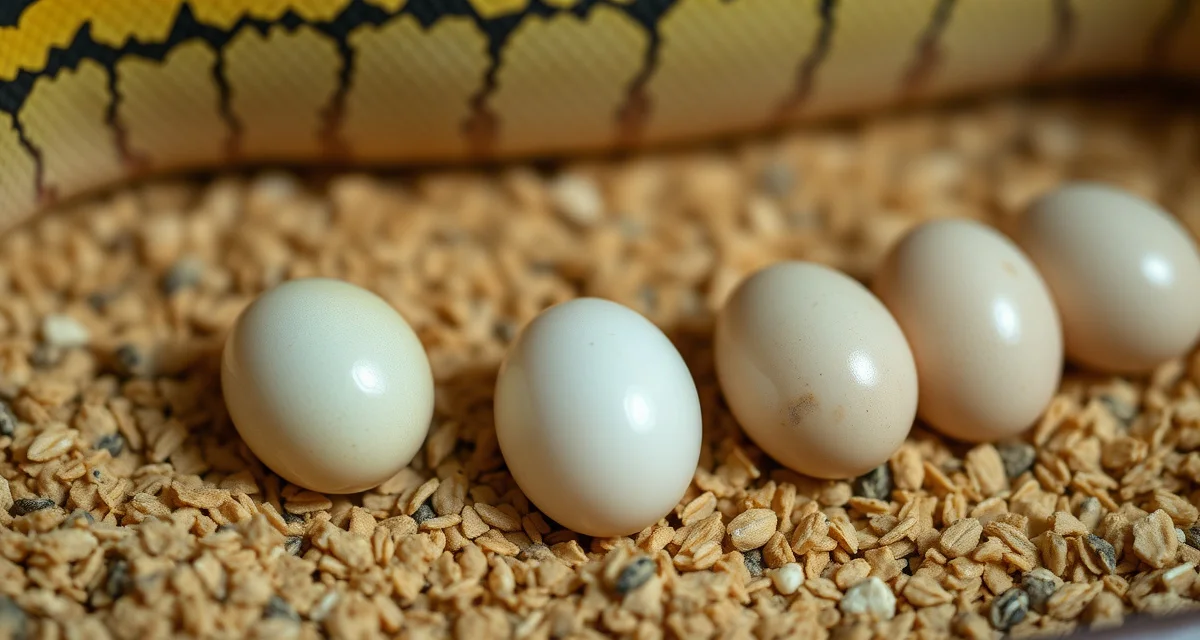
Identifying Fertile Ball Python Eggs vs. Slugs at Lay
One of the first things you do after your female lays her clutch is assess the eggs. Which are fertile? Which are slugs? Getting this assessment right at lay time sets up your incubation approach correctly and helps you understand your clutch's yield before candling confirms fertility a week or two later. Breeders using integrated software report 30% less time on administrative tasks, which means more time for the careful observation that clutch assessment requires.
TL;DR
- Ball python breeding operations require systematic record-keeping from pre-season preparation through end-of-season sales.
- Females at 1,200-1,500g or more are the target weight before introducing them to a breeding male.
- Ovulation detection is the key event that anchors pre-lay shed and lay date calculations.
- Clutch profitability guide depends on understanding actual cost basis per animal, not just gross sale revenue.
- Well-documented animals with complete feeding histories and clear genetic records consistently sell faster and at higher prices.
What Are Slugs?
Slugs are infertile, undeveloped eggs. They lack an embryo and won't develop into hatchlings. They're a normal part of every ball python clutch - most clutches have at least one slug, and some clutches are primarily or entirely slugs.
A clutch that consists entirely of slugs is called a "slug clutch" and typically indicates a pairing failure (no successful fertilization), poor timing (breeding outside the viable fertilization window), or a health issue with one or both parents.
Visual Assessment at Lay
You can make a reasonable preliminary fertility assessment by visual examination and touch at lay, before candling.
Fertile egg characteristics:
- White, smooth shell
- Firm texture - feels slightly turgid when gently pressed, like a water balloon with some pressure
- Normal egg size for that female (roughly the size of a large chicken egg or bigger)
- Slightly shiny or moist appearance when fresh
Slug characteristics:
- More yellow coloration - slugs are typically a distinct yellowish-cream color rather than pure white
- Smaller than fertile eggs - slugs are usually noticeably smaller than the fertile eggs in the same clutch
- Softer or deflated feel - they lack the firmness of a water-filled fertile egg
- May appear slightly irregular or dimpled
The Tactile Test
Gently and briefly press on each egg with a fingertip. Don't squeeze; just apply light pressure.
A fertile egg should feel firm and spring back slightly - there's something inside pressing back against the shell. A slug feels noticeably less firm and may feel partially empty or collapsed under gentle pressure.
This isn't perfectly reliable - some slugs can feel deceptively firm early on, and some fertile eggs may feel softer than expected. It's a useful initial screen, not a definitive assessment.
Eggs That Are Stuck Together
Ball python eggs are produced with a sticky coating that causes them to adhere to each other and to the lay box substrate. By the time the female has finished laying and coiling over the clutch, many eggs are firmly stuck together.
Don't separate stuck eggs forcefully. The adhesion is strong, and forcing them apart tears the shell membrane and almost certainly kills developing embryos.
If eggs are stuck together, leave them that way. Incubate the entire stuck mass together. If you need to candle individual eggs later, you can sometimes see through multiple eggs by holding the mass up to a bright light, or you can use a more directed light source.
Some eggs at the edges of the stuck mass may be partially free. These are easier to assess individually.
Separating Slugs From Fertile Eggs at Lay
When slugs are obvious - visually distinct yellow, smaller, clearly deflated - you can remove them from the incubation container before setting up. Slugs won't develop and may mold, which can potentially affect neighboring fertile eggs.
However: if you're not confident in your visual assessment, leave questionable eggs in place and let candling at day 7-14 make the definitive call. A slug you incorrectly identify as fertile doesn't harm anything by sitting in the incubation container. A fertile egg you incorrectly discard before incubation is an irreversible loss.
When in doubt, candle.
Recording Lay Assessment
Log your lay-time assessment for every clutch:
- Total egg count including slugs
- Number identified as likely fertile
- Number identified as likely slugs
- Any unusual-looking eggs (deformed shell, abnormal size)
Compare your lay-time assessment against your candling results at day 7-14. Over multiple clutches, you'll calibrate how accurate your visual assessment is and adjust your confidence accordingly.
Store this in HatchLedger's clutch records linked to the female and pairing history. For tools that support end-to-end clutch documentation, see the reptile breeder software comparison.
Frequently Asked Questions
What is the best approach to identifying fertile ball python eggs vs. slugs at lay?
Use a combination of visual assessment (fertile eggs are white and firm; slugs are yellowish, smaller, and softer) and gentle tactile assessment. Remove obvious slugs from the incubation container when you're confident, but when uncertain, candle at day 7-14 rather than guessing. The cost of leaving a slug in the incubator is minor; the cost of discarding a fertile egg early is total. Document your lay-time assessment and compare against candling results to calibrate your accuracy.
How do professional breeders handle ball python fertile egg identification at lay?
Experienced breeders develop a quick but systematic assessment at lay: visual check on color and size, brief tactile check on firmness. They remove obvious slugs and set the rest for incubation. For clutches where they're uncertain about specific eggs, they wait for candling. They log their lay-time estimates and actual candling results together, which helps them understand how accurate their visual assessment has become over years of practice.
What software helps manage ball python clutch fertility records?
HatchLedger is purpose-built for reptile breeders, connecting animal records, breeding history, clutch outcomes, and financial tracking in one system. Unlike generic spreadsheets, it's designed around the specific workflow of an active breeding season. Free for up to 20 animals.
What records should every reptile breeder maintain per animal?
At minimum: acquisition date and source, morph and genetic documentation, feeding log, weight history, any veterinary treatments, and breeding history including pairing dates, clutch of origin for captive-bred animals, and offspring records. These records serve your own management, buyer documentation, regulatory compliance, and long-term genetic tracking.
How should reptile breeders document genetics for buyers?
A complete genetic record for sale includes the animal's visual morph name, confirmed het genes and their basis (parentage documentation or proven-out production), possible het genes with probability percentages, hatch date, and parent morph information. Including clutch-of-origin records lets buyers independently verify the claims.
Sources
- USARK (United States Association of Reptile Keepers)
- Association of Reptilian and Amphibian Veterinarians (ARAV)
- World of Ball Pythons (WoBP genetics reference database)
- MorphMarket (reptile industry marketplace)
- Reptiles Magazine (Bowtie Inc.)
Get Started with HatchLedger
Every part of a ball python breeding operation -- from pairing records to clutch documentation to financial tracking -- works better when the data is connected rather than scattered across notebooks and spreadsheets. HatchLedger is built for exactly that. Try it free with up to 20 animals.