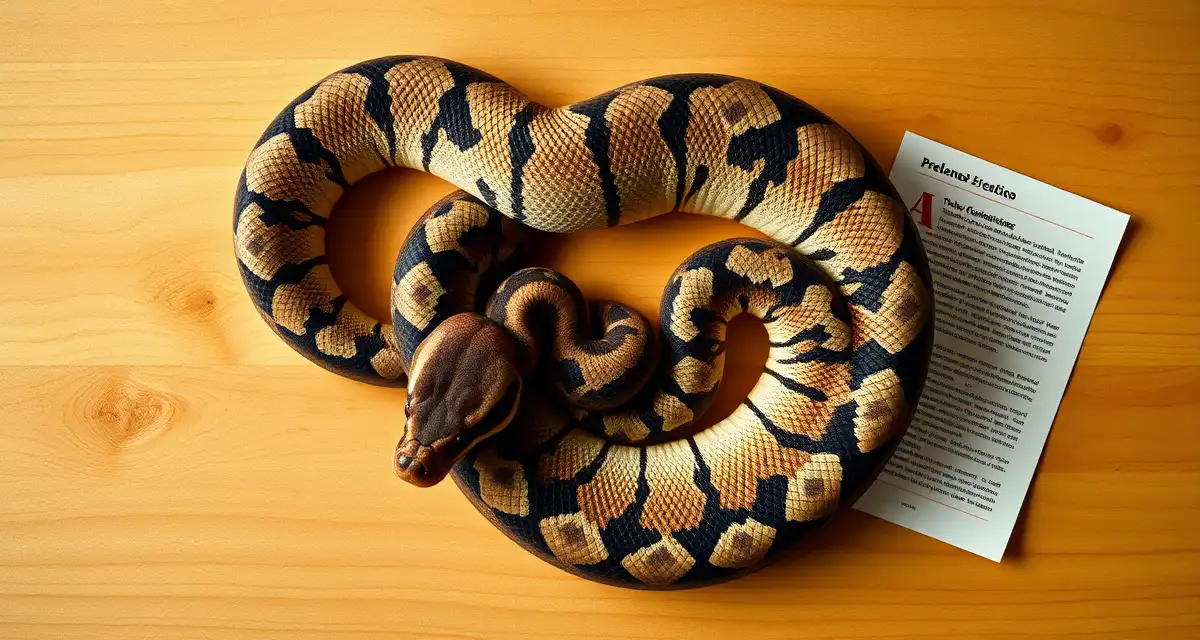
Boa Constrictor Selling and Pricing: Complete Breeder Guide
By HatchLedger Editorial Team · Published 2025-04-06 · Updated Mar 13, 2026
Pricing boa constrictors for sale is more art than science, but breeders who approach it systematically consistently make better decisions than those who price by instinct. The boa market is smaller and more specialized than the ball python market, which means pricing signals from a handful of major breeders carry more weight. Breeders using integrated software report 30% less time on administrative tasks, which gives you more time to research market conditions and build the buyer relationships that drive boa sales.
TL;DR
- Boa constrictors are viviparous (live-bearing), with gestation lasting 5-8 months depending on subspecies and husbandry conditions.
- Seasonal cycling typically starts in October with a 5-10 degree Fahrenheit temperature reduction and reduced photoperiod.
- Litter sizes average 15-25 neonates for Boa constrictor imperator, though some localities and true red-tails average smaller litters.
- Confirming pregnancy in boas is subtler than in ball pythons and often requires close behavioral observation or portable ultrasound.
- Logging every pairing date and gestation-period observation gives you the data to accurately predict birth windows and prepare appropriate neonate housing.
A boa you sell for $150 without knowing your cost to produce it might be selling at a loss. A boa you're asking $400 for might be priced above what the current market will bear. Good pricing requires knowing both your costs and your market simultaneously.
Understanding the Boa Market
The boa market in the US operates differently from ball pythons. The total number of active boa breeders is smaller, the buyer pool is more specialized, and the morph premium structure is different. Common boas (B. imperator) without notable genetics sell in the $50-150 range depending on size, feeding status, and locality. Well-established morphs like albino or hypo normals command $200-600 depending on the line and breeder reputation. High-end morph combinations -- Hypo Motley, Jungle Albino, Leopard Albino, and similar projects -- can reach $500-2,000+ for quality animals from proven lines.
Locality boas add another pricing dimension. Colombian common boas are widely available and priced accordingly. Central American localities, Argentine boas, and Hog Island boas command premiums for their coloration and size characteristics, independent of morph genetics. True Suriname or Guyana red-tailed boas (B. c. constrictor) are more specialized still and can command prices well above common boas even in normal coloration.
Setting Prices Based on Your Costs
Before you list any animal, you need to know what it cost to produce. The full cost includes: the female's feeding costs through the breeding season and recovery period, a proportional share of enclosure and utilities, the male's feeding and housing costs for the season, and any veterinary expenses incurred during pregnancy or birth.
Divide total production costs by the number of live saleable neonates from the litter. That's your cost-per-animal floor. Add your time (at whatever hourly rate makes sense for your operation) and your desired margin on top of that. The resulting number should be your minimum price -- not your asking price, but the floor below which you're losing money.
HatchLedger connects husbandry logs to clutch P&L so this calculation is built into your records rather than requiring you to manually assemble it each time you go to price a litter.
When and Where to Sell
Most boa sales happen through one of four channels: MorphMarket, Facebook reptile groups, reptile expos, and direct from the breeder via website or social media.
MorphMarket is the most organized marketplace and supports morph-based filtering, which is important for boa buyers who are searching for specific genetic projects. Facebook groups have a large audience but less purchase protection and a more chaotic buying process. Reptile expos allow in-person sales and work well for moving multiple animals at once, though show fees and logistics add to your costs.
Timing matters for boa sales. Neonates are most marketable when they have 3-5 consistent meals under their belt. Buyers want animals that are eating reliably, not fresh neonates that might still be getting established. Pricing for freshly-born animals that haven't started feeding should reflect the risk premium the buyer is taking on.
Building Buyer Confidence Through Documentation
In the boa market, reputation and documentation differentiate serious breeders from casual sellers. Buyers spending $500+ on a morph boa want to know what they're getting. Providing feeding history, weight records, genetic documentation, and parent information commands premium prices and generates repeat customers and referrals.
Document every boa you sell with at least: animal ID, date of birth, parentage, known genetics, current weight, date of most recent feeding, and feeding response notes. Buyers who receive this documentation with their purchase are more likely to reach out when they're ready to buy again.
HatchLedger keeps husbandry logs connected to each animal's record so pulling this documentation together at the time of sale is straightforward rather than a research project.
Pricing Hets and Possible Hets
Hets and possible hets are a significant part of boa sales. A het albino from a known, clean genetic line can sell for 20-50% of the visual's price depending on the morph. Possible hets (from het x het pairings) typically sell at 25-50% of a known het's price, with the exact discount depending on the probability.
Be accurate and transparent about het status. Selling an animal as "100% het" when it's a possible het destroys your reputation if the buyer breeds the animal and doesn't produce expected outcomes. Price honestly and let your transparency be a selling point rather than inflating claimed genetics to hit a higher price.
Frequently Asked Questions
What is the best approach to boa constrictor selling and pricing?
Know your cost to produce before setting any price. Factor in food, housing, veterinary care, and time across the full production cycle. Research current MorphMarket listings for comparable animals to understand market rates. Price neonates only after they're eating consistently -- buyers pay more for animals with proven feeding records. Provide documentation with every sale: parentage, genetics, feeding history, and weight. Transparent, well-documented sellers consistently command higher prices than those who provide minimal information.
How do professional breeders handle boa constrictor sales and pricing?
Professional boa breeders track production costs per litter, research market pricing before listing, and build their pricing around documented value rather than wishful thinking. They price hets and possible hets accurately and transparently, which builds long-term reputation even if it means slightly lower short-term revenue. They also develop direct buyer relationships through social media and expos rather than relying solely on marketplace platforms, because direct relationships often command better prices and generate repeat business.
What software helps manage boa constrictor sales records and pricing?
HatchLedger is purpose-built for reptile breeders, connecting animal records, breeding history, clutch outcomes, and financial tracking in one system. Unlike generic spreadsheets, it's designed around the specific workflow of an active breeding season. Free for up to 20 animals.
How do you sex boa constrictor neonates?
Boa constrictor neonates can be sexed by probing or by popping, both of which should be performed by an experienced keeper to avoid injury. Males typically probe to 4-8 subcaudal scales and females probe to 2-3. Recording sex in your records at birth is important for accurate inventory and sales documentation.
How long does it take a boa constrictor to reach breeding weight?
Most B. c. imperator females reach breeding weight (typically 3,000-5,000g depending on locality) at 3-4 years under good feeding conditions. True red-tailed boas (B. c. constrictor) grow larger and may take 4-5 years. Males of most localities are ready to breed at 18-24 months.
Can boa constrictors produce back-to-back litters in consecutive years?
Most experienced breeders rest females for a full season after a large litter to allow proper body condition recovery. A female that drops significant weight during a long gestation needs adequate recovery time before the next breeding cycle. Tracking body weight before and after gestation is the best guide.
What is Boa Constrictor Selling and Pricing: Complete Breeder Guide?
This guide is a comprehensive resource for boa constrictor breeders covering how to price and sell boas effectively. It explains market dynamics specific to boas, including how subspecies, locality, and morph genetics affect value. The guide also covers how to position animals competitively, build buyer relationships, and use breeding records and software to make smarter pricing decisions rather than relying on guesswork or instinct alone.
How much does Boa Constrictor Selling and Pricing: Complete Breeder Guide cost?
The guide itself is free editorial content published on HatchLedger. The strategies inside help breeders avoid underpricing — a common mistake when sellers lack cost-of-production data. Boa prices vary widely by genetics and locality, from under $100 for common BCIs to several thousand for high-end morphs or rare localities. Understanding your true costs ensures every sale is profitable rather than a loss disguised as a transaction.
How does Boa Constrictor Selling and Pricing: Complete Breeder Guide work?
The guide walks breeders through a systematic pricing process: calculate your actual cost per neonate, research current market rates from established breeders and reptile expos, factor in morph and locality premiums, and set prices that reflect real value. It also covers how integrated breeding software reduces administrative overhead by around 30%, freeing time to monitor market trends and nurture the buyer relationships that drive consistent boa sales.
What are the benefits of Boa Constrictor Selling and Pricing: Complete Breeder Guide?
Breeders who follow this guide make more confident, data-backed pricing decisions instead of guessing. Benefits include fewer underpriced sales, clearer understanding of morph and locality value, better buyer communication, and more efficient record-keeping. Because the boa market is smaller and more specialized than ball pythons, even small improvements in pricing strategy and relationship-building can meaningfully increase annual revenue and help establish a reputable, sustainable breeding operation.
Who needs Boa Constrictor Selling and Pricing: Complete Breeder Guide?
This guide is written for boa constrictor breeders at any experience level — from hobbyists producing their first litter of BCIs to established breeders working with rare localities or morphs. It is especially useful for anyone who has been pricing boas by gut feeling, losing money on sales without realizing it, or struggling to communicate value to buyers in a specialized and relationship-driven market.
Related Articles
- Boa Constrictor Clutch Size and Egg Count: Complete Breeder Guide
- Boa Constrictor Common Breeding Issues: Complete Breeder Guide
- Boa Constrictor Common Health Issues: Complete Breeder Guide
- Boa Constrictor Compliance and Shipping: Complete Breeder Guide
Sources
- USARK (United States Association of Reptile Keepers)
- Association of Reptilian and Amphibian Veterinarians (ARAV)
- Herpetologica (Herpetologists League)
- Reptiles Canada Magazine
- World Animal Protection
Get Started with HatchLedger
Boa constrictor breeding involves months of gestation monitoring, pairing records, and litter documentation that is difficult to track reliably across multiple females using notebooks or generic spreadsheets. HatchLedger gives you a single connected system for all of it, from cycling start through neonate sale. Try it free with up to 20 animals.