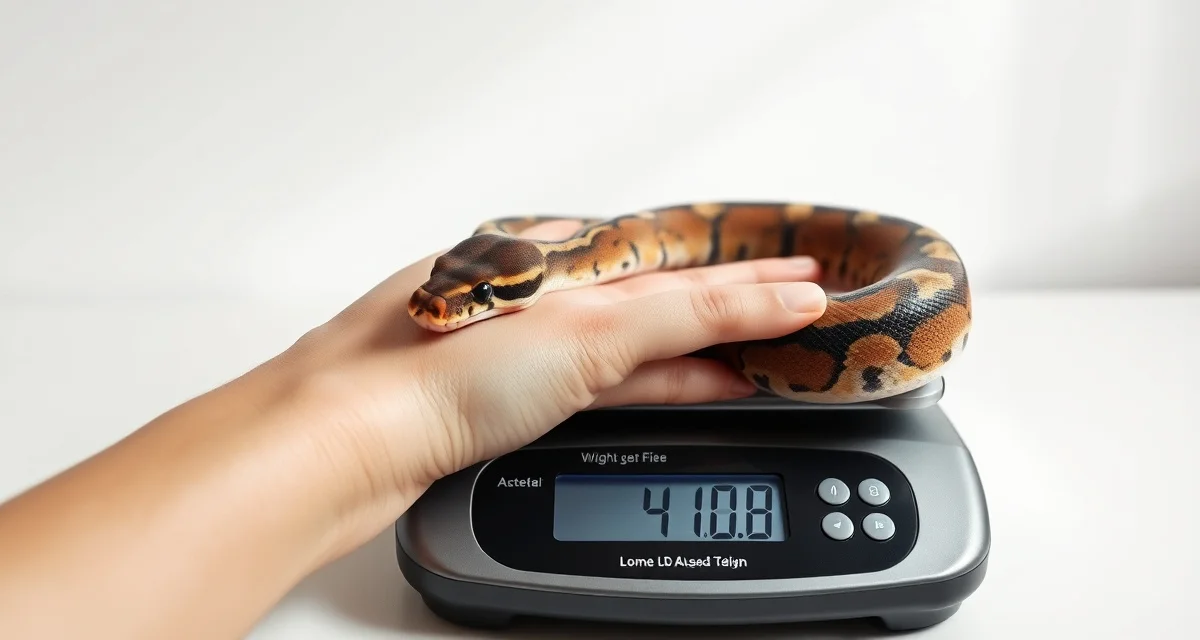
Reptile Weight Tracking: The Most Useful Number You Can Write Down
By HatchLedger Editorial Team · Published 2025-01-21 · Updated Mar 13, 2026
Weight is the single most objective measure of reptile health available to keepers without laboratory equipment. Color looks good or bad based on who's looking. Behavior is hard to quantify. But 1,200 grams is 1,200 grams, and if a female who weighed 1,400 grams six months ago now weighs 1,150, that's a measurable change worth investigating.
Most experienced breeders who weigh consistently say the same thing: weight records catch problems early and confirm that what you're doing is working. The ones who skip it are usually the ones who say they didn't realize there was a problem until it was obvious.
How Often to Weigh
Frequency depends on the animal's age and status:
Hatchlings through first year: Weigh before every feeding attempt. Hatchlings can decline quickly, and weekly weights give you the data to catch early problems. See reptile hatchling weight tracking for hatchling-specific guidance.
Juveniles: Every 2-4 weeks is sufficient once animals are established on feed and growing consistently.
Adults not in breeding season: Monthly works for most healthy adult snakes. More frequent if there's any concern.
Breeding females: Weigh before breeding season to confirm they're at target weight, monthly during the season, and after laying. Gravid females will gain weight as eggs develop; post-lay females will lose that weight. Tracking this curve helps you understand individual females' patterns.
Males in breeding season: Monthly is fine unless there's a health concern. Males often lose weight during breeding season due to reduced feeding; weight records let you monitor how much they've lost and when to pull them from pairings to recover condition.
Target Weights for Breeding Condition
Getting breeding animals to the right weight before the season starts is one of the highest-leverage things you can do to improve outcomes.
Ball python females: General guideline is 1,200-1,500 grams before introduction to a male, though females well above this range are often more successful. Under 1,200 grams, females may produce smaller clutches or have higher infertile egg rates. Very young females under 1,500 grams who ovulate and lay can sometimes struggle with the physical demands.
Ball python males: Males can successfully breed at weights around 400-500 grams, but heavier males with good body condition tend to be more reliable breeders over a full season.
Blood python females: Should be solid and heavy relative to their length. Thin blood pythons are much harder to cycle successfully.
Boa constrictors: Females should have good body condition through the entire gestation period (up to 6 months). Tracking weights through gestation helps confirm the female is maintaining appropriate condition.
What Weight Changes Mean
Steady weight loss in a normally eating animal: Check for parasites, assess temperature and humidity, consider a vet visit if it continues more than 2-3 weigh cycles.
Weight loss during breeding season in a male: Normal if modest. Males that lose more than 15-20% of body weight in a breeding season may need to come out for recovery.
Weight gain in a post-ovulation female: Expected as eggs develop. Ball pythons can gain 200-400 grams of egg weight relative to their pre-ovulation weight.
Sudden weight drop post-lay: Normal as the female sheds her egg mass. This weight drop, combined with laying date, helps you calculate the female's own body weight recovery needs.
Weight loss despite refused feeds: The default assumption for a ball python refusing for 4-6 weeks is that it's behavioral (breeding season, stress, seasonal). But if the animal is also losing weight, that changes the calculus. A ball python that refuses and holds weight is fine. One that refuses and is declining needs investigation.
Weighing Equipment
A kitchen scale that reads in grams and has a 5-kilogram or greater capacity covers most snake collections. Accuracy to 1 gram is sufficient for adults.
For hatchlings, a scale accurate to 0.1 grams is worth having. Small hatchlings weigh 50-80 grams, and changes of 2-3 grams per week matter at that scale.
Use a container on the scale to hold the animal while weighing. Tare (zero out) the scale with the empty container, then place the animal. Most animals tolerate a brief weigh-in easily, especially if it's a consistent routine.
Logging Weights Efficiently
The weight log needs to be fast to use. If weighing 60 animals takes 4 hours including logging, the logging will start getting skipped. If it takes 90 minutes, it stays.
Options for fast logging:
- Keep a physical log sheet on each rack or room, fill it in during feeding sessions, transfer to your main record system weekly
- Use HatchLedger on a phone or tablet at the rack, logging directly as you go
- Voice memos if typing feels slow, transcribed afterward
Whatever your method, log at the time of weighing, not later from memory. "She looked about the same" is not useful data six months from now.
Weight Tracking and Breeding Decisions
Weight data directly informs breeding decisions:
Which females to introduce: Use weight to decide which females are ready. A female who hasn't recovered weight since her last clutch may need another season before being worked again.
When to pull pairings: If a male has been breeding for months and is showing significant weight loss, his weight record tells you when to stop for the season.
Evaluating females for long-term retention: A female who maintains weight well between seasons and recovers quickly after laying is a more productive breeder than one who takes two seasons to recover from each clutch. Weight records over multiple years tell this story.
Connecting your weight logs to reptile genetics record keeping and breeding records in HatchLedger gives you the complete picture of each animal's productivity and condition history, which is what you actually need to run a breeding program well.
Start weighing consistently and don't stop. The value of weight records is cumulative. Six months of data is useful. Three years of data is invaluable.
FAQ
What is Reptile Weight Tracking: The Most Useful Number You Can Write Down?
Reptile weight tracking is the practice of regularly recording your reptile's body weight to monitor health, growth, and breeding condition over time. Unlike subjective indicators like color or behavior, weight provides an objective, measurable data point. A consistent log reveals trends—slow growth, unexpected loss, or breeding readiness—that would otherwise go unnoticed until a problem becomes serious. It's the simplest diagnostic tool available to keepers without lab equipment.
How much does Reptile Weight Tracking: The Most Useful Number You Can Write Down cost?
Reptile weight tracking costs nothing beyond a basic digital kitchen scale, which typically runs $10–$30. The real investment is your time—weighing an animal takes under a minute. Apps and platforms like HatchLedger offer free or low-cost tools to log and visualize weight history, making it even easier to spot trends without managing spreadsheets manually.
How does Reptile Weight Tracking: The Most Useful Number You Can Write Down work?
You place your reptile on a tared (zeroed) scale and record the reading alongside the date and any relevant notes like feeding status or shed cycle. Done consistently—weekly for hatchlings, monthly for adults—these readings build a historical record. Over time, the trend line tells you whether your animal is growing on track, holding steady, or declining in a way that warrants a closer look.
What are the benefits of Reptile Weight Tracking: The Most Useful Number You Can Write Down?
Weight tracking catches health problems early, before they become emergencies. It confirms that feeding, supplementation, and husbandry changes are actually working. For breeders, it removes guesswork from pairing decisions by confirming females are at target weight before breeding season. It also provides documentation of animal history that's useful for veterinary consultations and when selling or transferring animals.
Who needs Reptile Weight Tracking: The Most Useful Number You Can Write Down?
Anyone who keeps reptiles benefits from weight tracking, but it's especially critical for breeders managing multiple animals, keepers with hatchlings or juveniles, and anyone working with species prone to feeding strikes or weight fluctuation. If you have a collection large enough that you can't notice subtle changes by eye alone, a written weight log is essential—it extends your observational capacity across every animal you keep.
How long does Reptile Weight Tracking: The Most Useful Number You Can Write Down take?
Each individual weigh-in takes less than two minutes. The cumulative time investment depends on collection size and weigh frequency—a keeper with ten animals on monthly cycles spends roughly twenty minutes per month on data collection. The time required to interpret the data is minimal once you have a baseline; a single glance at a trend line tells you whether an animal is on track or needs attention.
What should I look for when choosing Reptile Weight Tracking: The Most Useful Number You Can Write Down?
Look for a simple, consistent process: a reliable digital scale accurate to at least one gram, a fixed weighing routine tied to feeding or calendar intervals, and a method for recording results that you'll actually use. The best system is the one you maintain long-term. Digital logs with date-stamped entries and visual trend tracking are more useful than scattered notebook entries when you need to identify when a change started.
Is Reptile Weight Tracking: The Most Useful Number You Can Write Down worth it?
Yes. Experienced breeders consistently credit weight records with catching problems early and validating husbandry decisions. The cost is minimal, the time commitment is low, and the data is genuinely useful—not just reassuring. Keepers who skip it often report not recognizing a problem until it was visually obvious, which typically means intervention comes later than it should. For anyone serious about reptile health or breeding outcomes, regular weight tracking is one of the highest-return habits you can build.