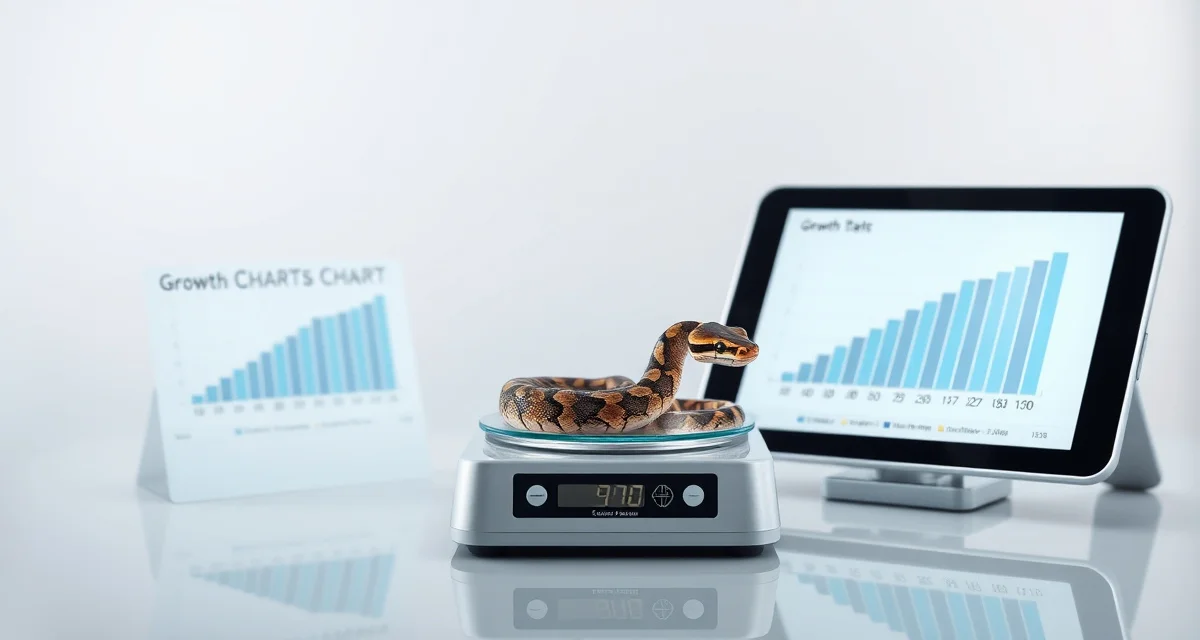
Ball Python Weight Tracking for Breeders: Schedules, Growth Curves, and Warning Signs
Weight is your most objective health indicator for ball pythons. It doesn't require a vet visit, it doesn't depend on subjective assessment of the animal's appearance, and it gives you data over time rather than a single snapshot. For breeders managing dozens of animals, systematic weight tracking is what separates a reactive approach (noticing something's wrong when it's already serious) from a proactive one. Breeders using integrated software report 30% less time on administrative tasks, and a lot of that time savings comes from having weight data already logged rather than hunting through notebooks.
TL;DR
- Ball python breeding operations require systematic record-keeping from pre-season preparation through end-of-season sales.
- Females at 1,200-1,500g or more are the target weight before introducing them to a breeding male.
- Ovulation detection is the key event that anchors pre-lay shed and lay date calculations.
- Clutch profitability guide depends on understanding actual cost basis per animal, not just gross sale revenue.
- Well-documented animals with complete feeding histories and clear genetic records consistently sell faster and at higher prices.
This guide covers how to build a practical weight tracking schedule, what healthy weight trajectories look like at each life stage, and how to interpret the data when something looks off.
Why Weight Matters More Than Visual Assessment
An experienced ball python keeper can often tell when an animal looks "off," but by the time that's visible, weight loss has usually already been substantial. Ball pythons are masters at maintaining a normal posture and behavior even when they're in declining condition.
A 10% weight loss over 30 days is clinically meaningful and rarely visible to the naked eye unless you're handling the animal frequently. A 20% weight loss begins to show as spine prominence, visible hip bones, and a triangular head profile rather than the normal rounded appearance. At that point, you've missed several weeks of early intervention opportunity.
Weekly or biweekly weights catch problems before they become serious and confirm that your feeding and husbandry is working as intended.
Weighing Schedule by Life Stage
Hatchlings (0-6 months): Weigh weekly. Hatchlings grow rapidly and changes happen quickly. A hatchling that refuses two consecutive feedings may still look fine but will show a plateau or slight decline on the scale. Weekly weighing also confirms when animals have eaten (a fresh meal registers as a weight increase of the prey item's approximate weight).
Juveniles (6-18 months): Weigh biweekly. Growth is still active but more predictable. Biweekly weighing catches refusal cycles without requiring weekly handling.
Sub-adults and adults in non-breeding status: Monthly weighing is typically sufficient for healthy animals in consistent routine.
Breeding females: Weigh every 2-3 weeks during breeding season and monthly during the off-season. A breeding female going through ovulation, pre-lay shed, and egg development will show dramatic weight changes. Tracking those changes lets you confirm she's progressing normally and estimate clutch weight.
Breeding males: Males during breeding season often reduce food intake and lose some weight, which is normal. Track monthly to confirm losses don't exceed 10-15% over the season.
Healthy Growth Curves
These are approximate ranges. Individual variation is normal, and some morphs (GHI, for example) tend toward larger size while others stay smaller.
Hatchlings: 55-90 grams at hatch is typical. Some large clutches produce smaller hatchlings; single-egg clutches often produce large ones.
3 months: 150-250 grams feeding consistently every 5-7 days.
6 months: 250-450 grams.
1 year: 500-900 grams depending on sex (females track higher).
18 months: 700-1,400 grams.
Adult female: 1,500-3,000 grams, with most productive breeding females between 1,600-2,500 grams.
Adult male: 800-1,500 grams.
A hatchling not reaching 200 grams by 3 months likely has a feeding or husbandry issue worth investigating. A female not reaching 1,500 grams by 30 months should not be bred regardless of age.
Pre-Breeding Weight Thresholds
Weight is the primary gating criterion for breeding readiness:
- Female minimum: 1,500 grams before introduction to a male. Most experienced breeders prefer 1,700+ grams.
- Male minimum: 500-600 grams, though 800+ grams is more typical for reliable breeding interest.
- Female post-breeding condition: A female that lays a clutch and drops below 1,200 grams should be given at least one full season off before rebirthing.
Breeding underweight females produces smaller clutches, higher egg mortality, and risks the female's long-term health. The scale tells you when she's ready; trust it over an arbitrary age threshold.
Interpreting Weight Changes
Sudden increase: If an animal gains 30-80 grams overnight and you haven't fed it, it ate a prey item you may have missed or the item was consumed during the night. A dramatic increase in a female of breeding age could also indicate she's retaining eggs.
Gradual decline despite eating: Suggests a parasite load, infection, or metabolic issue. If a ball python is consuming prey items but losing weight month over month, a fecal exam and vet consultation are warranted.
Plateau in juveniles: A growth plateau in a juvenile that was previously gaining steadily usually correlates with a feeding refusal cycle or insufficient prey size. Confirm prey sizing and review the feeding log.
Rapid loss in breeding females: A breeding female may lose 15-25% of her body weight producing a clutch. This is expected. Document pre-lay and post-lay weights to track recovery.
Consistent seasonal decline in males: Males during breeding season routinely lose 5-15% while pursuing females. As long as they're eating between breeding sessions and recovering weight in the off-season, this is normal.
Setting Up Your Weighing System
Equipment: A digital kitchen scale accurate to 1 gram is sufficient for most animals. For hatchlings under 100 grams, a jewelry scale accurate to 0.1 grams gives more useful data.
Containers: Use a small plastic deli cup or bucket to tare the scale. Weigh the container, place the snake inside, then weigh again. The difference is the snake's weight. This prevents stress from the snake moving on the scale.
Logging: Write the weight down immediately. Don't rely on memory between the scale and your logbook. If you're logging into HatchLedger's weight tracking tools, enter weights directly during the weighing session from your phone or tablet.
The ability to see a graph of weight over time for any individual animal is one of the most valuable features in dedicated breeding software. It makes trends visible at a glance rather than requiring you to scan through columns of numbers. A quick look at any animal's weight history tells you whether you're looking at a healthy animal on a normal schedule or one that needs attention.
For a comparison of how different platforms handle weight logging and growth tracking, the reptile breeder software comparison is worth reviewing.
Frequently Asked Questions
What is the best approach to weight tracking for ball python breeders?
Set a consistent schedule and stick to it. Weekly for hatchlings, biweekly for juveniles, monthly for adults, and every 2-3 weeks for breeding females during the active season. Use a gram-accurate scale and log every weight immediately rather than recording from memory. Review the data regularly rather than only when you suspect a problem. Trends over weeks and months reveal issues that individual measurements miss.
How do professional breeders handle weight monitoring across large collections?
High-volume breeders typically build weighing into their regular rack checks. During the feeding session, every animal gets weighed before or after prey is offered, and the weight goes directly into their management software. This creates an automatic feeding + weight log for every session without requiring a separate task. Over time, they build benchmark data for their specific lines and can identify outliers quickly: which animals gain weight slower than expected, which females recover post-clutch faster, and which males need supplemental feeding during the breeding season.
What software helps manage ball python weight records across a collection?
HatchLedger is purpose-built for reptile breeders, connecting animal records, breeding history, clutch outcomes, and financial tracking in one system. Unlike generic spreadsheets, it's designed around the specific workflow of an active breeding season. Free for up to 20 animals.
What records should every reptile breeder maintain per animal?
At minimum: acquisition date and source, morph and genetic documentation, feeding log, weight history, any veterinary treatments, and breeding history including pairing dates, clutch of origin for captive-bred animals, and offspring records. These records serve your own management, buyer documentation, regulatory compliance, and long-term genetic tracking.
How should reptile breeders document genetics for buyers?
A complete genetic record for sale includes the animal's visual morph name, confirmed het genes and their basis (parentage documentation or proven-out production), possible het genes with probability percentages, hatch date, and parent morph information. Including clutch-of-origin records lets buyers independently verify the claims.
Sources
- USARK (United States Association of Reptile Keepers)
- Association of Reptilian and Amphibian Veterinarians (ARAV)
- World of Ball Pythons (WoBP genetics reference database)
- MorphMarket (reptile industry marketplace)
- Reptiles Magazine (Bowtie Inc.)
Get Started with HatchLedger
Every part of a ball python breeding operation -- from pairing records to clutch documentation to financial tracking -- works better when the data is connected rather than scattered across notebooks and spreadsheets. HatchLedger is built for exactly that. Try it free with up to 20 animals.