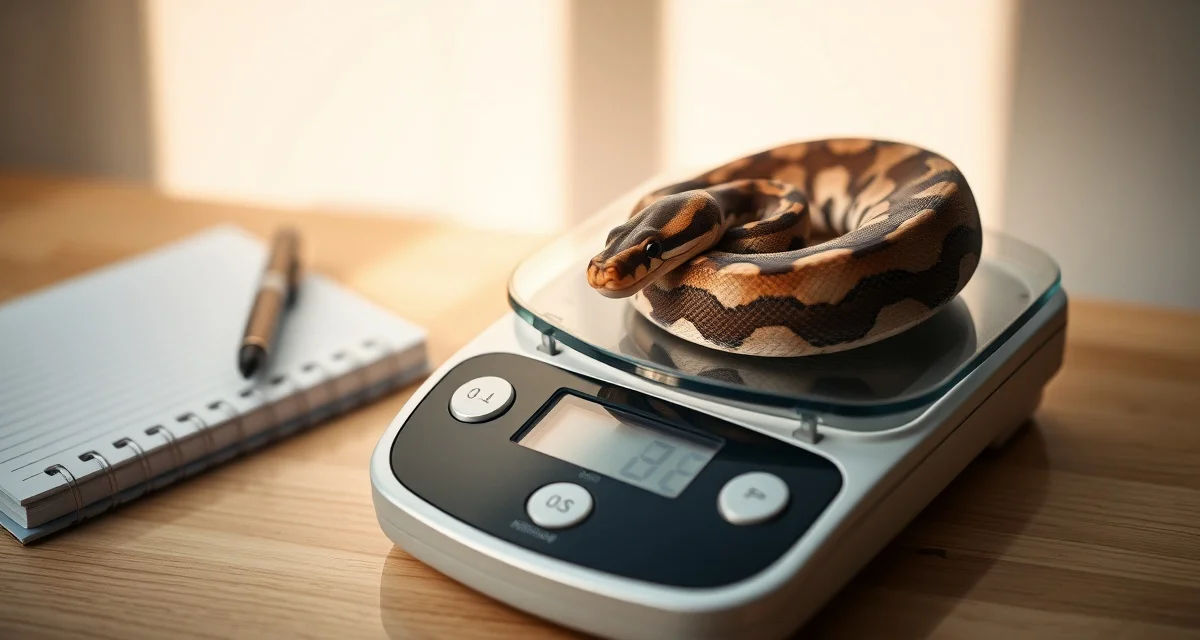
Animal Weight Tracking for Reptile Collections
Weight is the most objective health indicator you have for a captive reptile. A snake can look fine when it's actually in decline. But consistent weight data tells the truth. An animal that was 1,400g in January and is 1,200g in April has lost nearly 15% of its body weight, and that demands explanation.
Weight tracking only works if it's consistent. A single weight entry is a data point. A year of monthly weights is a health record.
Weighing Frequency by Life Stage
Adults (Breeding Collection)
Weigh breeding adults monthly throughout the year. This frequency captures seasonal fluctuations without being excessive. For females, you'll see weight trends tied to the breeding cycle: gradual increase pre-breeding, potential weight loss during gravid period, significant loss post-clutch, and recovery through the off-season.
For males, monthly weights help you monitor the effect of the breeding season on body condition. Heavily worked breeding males, especially smaller animals used frequently, can lose significant weight. Knowing a male's September weight and his March weight tells you how the season affected him and whether he needs a full recovery period before the next season.
Hatchlings and Juveniles
Weigh weekly for the first 3-4 months, then every 2 weeks until the animal reaches 500g, then monthly. Hatchling growth rates vary significantly by individual, feeding success, and temperature. Ball python hatchlings typically weigh 55-90g at birth. A hatchling that's not gaining weight in the first 60 days needs an assessment of its feeding, housing, and health.
Young growing snakes that are eating well will gain 20-40g per week on average, though this varies by prey size and frequency. Juveniles growing faster than expected are not a problem. Ones growing significantly slower need more food, warmer temperatures, or a health check.
Pre-Breeding Assessment
Weigh every breeding candidate before the season starts, typically in September or October. Ball python females should be at minimum 1,200g, with most experienced breeders preferring 1,500g or more. A female below 1,200g at the start of October is not ready to breed and you need that data before you make pairing decisions, not after you've been running her with a male for two months.
What Normal Weight Patterns Look Like
Ball Python Females
A typical breeding female might follow this pattern:
- Pre-breeding (October): 1,700g
- Peak breeding season (November-January): 1,650-1,700g (may lose some weight during reduced feeding)
- Post-ovulation through lay (February-April): 1,800-1,950g (gravid weight increase)
- Post-clutch (May-June): 1,350-1,500g (significant loss through egg production)
- Recovery (July-September): returning toward 1,700g with consistent feeding
This is a normal cycle. A female whose post-clutch weight is below 1,300g, or who fails to recover through the off-season, may be a candidate for a year off from breeding.
Hatchling Ball Pythons
A healthy hatchling eating every 7-10 days on appropriately sized prey should roughly double its birth weight within the first 2-3 months. A 70g hatchling that's still 70g at 8 weeks post-hatch despite feeding attempts has a problem.
Recording and Interpreting Weight Data
The value of weight data comes from trends, not individual measurements. A single weight tells you what an animal weighs today. Ten weights over ten months tell you how the animal is performing.
When you're managing 50+ animals, scanning for weight loss across the collection manually is time-consuming. HatchLedger tracks weight trends per animal and can surface animals that are outside their normal range, so you don't have to review every entry individually to find the ones that need attention.
Scale Recommendations
For most reptile collections, a digital kitchen scale accurate to 1g is sufficient. Weigh animals in a small container or pillowcase (weigh the container first and subtract). For large breeding females, a postal scale rated to 5kg is more practical. Calibrate your scale periodically with a known weight, especially if it lives in the reptile room where temperature swings can affect electronics.
Keep the scale in a consistent location and use the same method each time. Consistent methodology makes the data comparable across measurements.
Related content: Ball Python Female Weight Tracking | Hatchling Weight Tracking | Animal Health Records
Sources
- Association of Reptilian and Amphibian Veterinarians (ARAV)
- Ball Python Breeders Association guidelines
- Reptiles Magazine husbandry standards