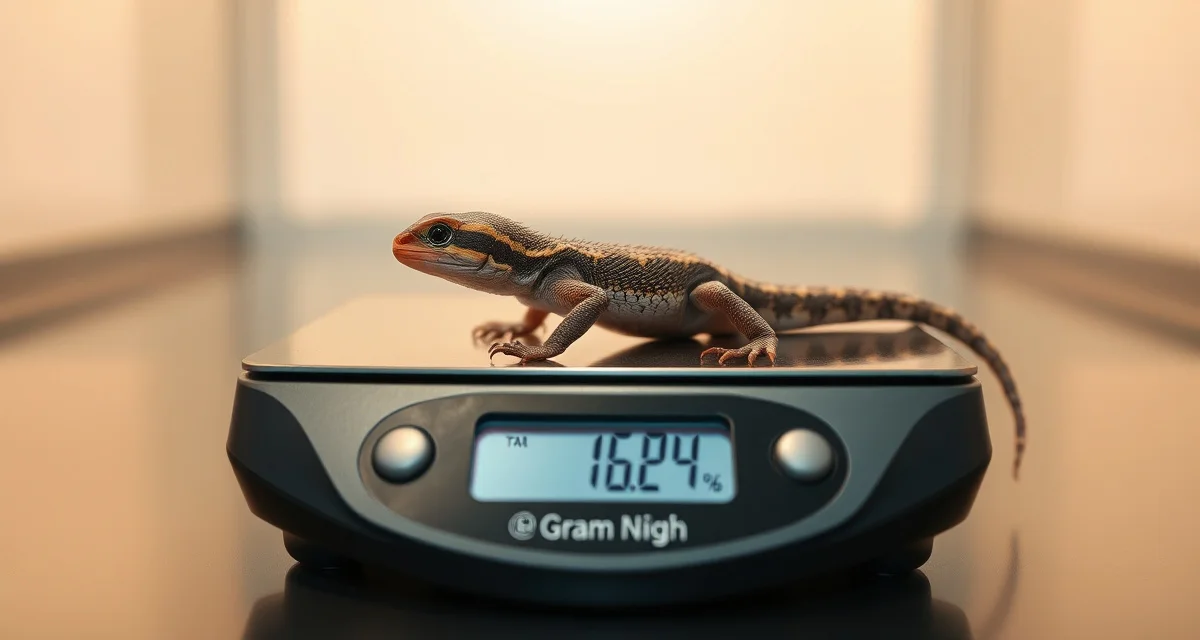
Reptile Hatchling Weight Tracking: What the Numbers Tell You
By HatchLedger Editorial Team · Published 2025-04-22 · Updated Mar 13, 2026
Hatchling weights are one of the few objective measurements available to a breeder in the first weeks after a clutch hatches. Everything else is somewhat subjective: the animal looks healthy, it seems alert, the color looks good. Weight gives you a number you can compare, track, and act on.
The breeders who track hatchling weights consistently say the same thing: you catch problems weeks earlier than you would otherwise. A hatchling that's declining before it ever takes a first meal is easy to miss visually. But a weight log that shows it dropped from 62 grams to 56 grams in ten days while siblings held steady tells you exactly what you need to know.
Birth Weights and What to Expect
Hatchling birth weights vary by species, and knowing normal ranges for your animals is the baseline everything else is measured against.
Ball python hatchlings typically weigh between 55 and 90 grams at hatch. The range is wide because clutch variation, egg size, and genetics all play a role. A 55-gram hatchling from a smaller female is not necessarily concerning. A 55-gram hatchling from a female that consistently produces 80-gram babies is worth watching.
Blood python hatchlings tend to come out heavier, often in the 80-120 gram range. Corn snakes and most colubrids hatch much smaller, typically 8-15 grams depending on species.
Establish your own baselines by logging every hatchling at birth and comparing across clutches over multiple seasons. Your animals, your conditions, and your feeding program will produce a distribution that becomes your reference point.
When to Weigh
Weigh hatchlings at hatch or within 24 hours of emerging. This is your baseline weight.
After that, the standard practice among most serious breeders is to weigh again before each feeding attempt. Pre-feed weight captures the animal's weight without a meal in its system, which makes comparisons meaningful. If you weigh after feeding, a 10-gram prey item changes the number in ways that are not informative.
For the first two months, weekly weigh-ins are practical for most keepers. After animals are established on feed and gaining consistently, you can drop to every 2-3 weeks.
Normal Growth Curves
Ball python hatchlings that are feeding consistently should be doubling their birth weight within the first 3-4 months. A hatchling that hatched at 65 grams should be near 120-130 grams by month three if it's eating on schedule.
The trajectory matters more than any single number. A hatchling gaining 5-8 grams per week is doing well. A hatchling that gained 15 grams then lost 8 grams then gained 3 grams needs attention.
For animals with first-feed refusals, weight loss during the first few weeks is expected and normal. Hatchlings absorb their yolk sac and will lose 5-10% of birth weight while waiting for first food. What you don't want to see is continued weight loss past the point where siblings have established feeding.
What Weight Loss Signals
Weight loss in a hatchling that should be gaining is a prompt to investigate. Common causes:
Not eating: The most obvious. If a hatchling has never eaten and has been losing weight for 4-5 weeks, it needs more intervention than just repeated feeding attempts.
Regurgitation: If an animal is eating but losing weight, it may be regurgitating after you put it back. Check your records. An animal that appears to be eating but shows declining weights likely has a husbandry issue (enclosure too cold, prey too large, too much handling after feeding) or a health problem.
Parasites: Internal parasites can cause steady weight loss despite apparent feeding. A fecal float at a reptile-experienced vet can confirm or rule this out.
Cryptosporidiosis: Crypto in hatchlings often presents as steady weight loss and regurgitation. Log your weights carefully, because weight loss that continues despite apparent feeding is one of the patterns that distinguishes Crypto from simple husbandry problems.
Connecting weight data to reptile feeding logs lets you see both pieces of the picture at once.
Comparing Clutch-Mates
One of the most useful applications of hatchling weight tracking is comparing animals from the same clutch. Clutch-mates share genetics, hatch conditions, and initial feeding setups. If seven animals from a clutch are gaining normally and one is falling behind, the problem is specific to that animal, not a systemic issue with your husbandry.
This distinction matters because it shapes your response. A collection-wide problem (wrong temps, bad prey batch, husbandry change) affects most animals. An animal-specific problem (sickness, defect, Crypto) affects one.
Keeping the Records
Your weight log needs:
- Animal ID or designation (clutch/individual number, or name)
- Date of each weigh-in
- Weight in grams
- Whether a feeding was attempted and whether the animal accepted
- Notes on anything unusual
A scale accurate to 0.1 grams is worthwhile for hatchling work. Kitchen scales that read to 1 gram are fine for adults but miss precision on small hatchlings where a 3-gram change is significant.
Linking weight records to reptile incubation records and clutch data in HatchLedger gives you a complete picture from egg through first feeds, which is especially useful when evaluating long-term outcomes from specific pairings.
Weight Data for Animal Sales
Buyers of hatchlings increasingly expect documentation. Weight history, first feed dates, and prey type and size records are standard at the professional end of the market. Providing a weight log with an animal shows the buyer you tracked it carefully and lets them establish a baseline for their own records.
For animals that had early issues (late first feed, weight dip, any health event) that were resolved before sale, the weight log is actually an asset. It documents the problem and shows recovery, which is more reassuring than no records at all.
You can attach this documentation directly to reptile sales documentation when transferring animals.
Weight tracking takes 30 seconds per animal per weigh-in. Over the course of a season, those numbers build a picture of your hatchlings that nothing else can replicate. Build the habit early and it becomes automatic.
FAQ
What is Reptile Hatchling Weight Tracking: What the Numbers Tell You?
Reptile hatchling weight tracking is the practice of regularly weighing newly hatched reptiles and logging those numbers over time. It gives breeders an objective baseline to compare individuals within a clutch and across clutches. Unlike visual assessments, weight data is concrete — you can see trends, catch declines early, and make informed decisions about feeding, husbandry adjustments, or veterinary intervention before problems become serious or irreversible.
How much does Reptile Hatchling Weight Tracking: What the Numbers Tell You cost?
Hatchling weight tracking itself costs nothing beyond a reliable digital scale, which typically runs $15–$40 for a gram-accurate kitchen or postal scale. HatchLedger offers a free tier for getting started with basic logging. The real value is in the time saved and animals caught early — one avoided vet visit or saved hatchling easily justifies any cost associated with consistent record-keeping.
How does Reptile Hatchling Weight Tracking: What the Numbers Tell You work?
You weigh each hatchling at hatch, then at regular intervals — typically every 7–10 days in the early weeks. Each weight is logged alongside the date and any relevant notes. Over time, the log reveals trends: steady gain, plateau, or decline. Comparing an individual's trajectory against its siblings flags outliers quickly. The process takes only a few minutes per animal but builds a data picture that visual checks alone can't provide.
What are the benefits of Reptile Hatchling Weight Tracking: What the Numbers Tell You?
The core benefit is early problem detection. A hatchling losing weight while siblings hold steady is easy to miss visually but impossible to miss in a weight log. Tracking also helps you assess feeding response, compare production across females, identify clutch-level patterns, and build historical records that inform future breeding decisions. Breeders who track consistently report catching health issues weeks earlier than they would have otherwise.
Who needs Reptile Hatchling Weight Tracking: What the Numbers Tell You?
Any reptile breeder who produces clutches regularly will benefit, but it's especially valuable for those working with ball pythons, blood pythons, colubrids, or other species where hatchling health and feeding response vary widely. Hobbyist breeders gain confidence and catch problems early. Commercial breeders gain production data across females and seasons. Anyone who has ever lost a hatchling to an undetected decline will understand why the numbers matter.
How long does Reptile Hatchling Weight Tracking: What the Numbers Tell You take?
The tracking itself is ongoing — you start at hatch and continue through the first feeding, establish, and grow-out phases. Initial setup takes minutes. Each weigh-in takes 2–5 minutes per animal. The meaningful data picture begins to emerge within the first 3–4 weeks, when you can see whether individuals are gaining, plateauing, or declining relative to their clutchmates. Some breeders track through the first year for full grow-out records.
What should I look for when choosing Reptile Hatchling Weight Tracking: What the Numbers Tell You?
Look for a method or tool that makes logging fast and consistent. The biggest failure point in weight tracking is abandonment, so friction matters. You want easy date-stamped entries, the ability to compare individuals within a clutch, and trend visibility at a glance. HatchLedger is built specifically for reptile breeders with these needs. A spreadsheet works too, but purpose-built tools reduce the time cost that causes breeders to stop tracking.
Is Reptile Hatchling Weight Tracking: What the Numbers Tell You worth it?
Yes. The margin between a hatchling that survives and one that doesn't often comes down to how early you notice something is wrong. Weight tracking closes that gap. A 10-gram drop over two weeks in a ball python hatchling is a clear signal — visible in a log before it's visible on the animal. For breeders serious about animal welfare, clutch performance, and long-term production data, consistent weight tracking is one of the highest-return habits you can build.