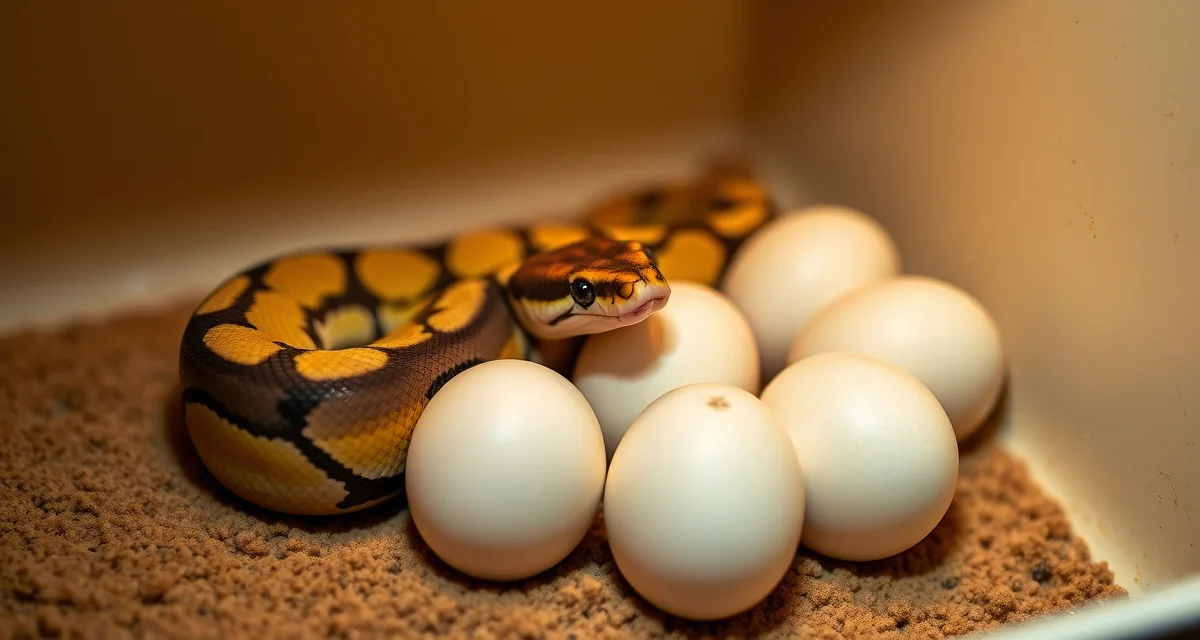
Ball Python 7-Egg Clutch: Expected Outcomes and Revenue
By HatchLedger Editorial Team · Published 2025-02-23 · Updated Mar 13, 2026
A 7-egg clutch is a good result. Above average, reliably productive, and large enough that genetics outcomes start to approach expected ratios with reasonable consistency. A female who consistently lays 7 eggs is a valuable producer worth investing in for your best pairings.
TL;DR
- Reptile breeders benefit most from documentation systems that connect animal records, breeding history, and financial data.
- Genetics claims are only as trustworthy as the records behind them -- parentage documentation is the evidence buyers evaluate.
- Seasonal timing and cooling protocols matter significantly for reproductive success across most captive reptile species.
- Clutch profitability analysis requires knowing actual cost per animal produced, not just gross sale revenue.
- Administrative efficiency through connected records frees time for animal care and the strategic work of project planning.
What a 7-Egg Clutch Means for Your Operation
Seven eggs from an established female means you have meaningful production to work with every season. At 7 eggs, you'll usually get a representative spread of genetics from most pairings, and you have enough animals to move through your waitlist while retaining animals for your own use if needed.
This is the clutch size that starts to feel like a business rather than a hobby. Seven hatchlings, priced right, from a good pairing, can produce $2,000 to $5,000+ in revenue.
Expected Genetics Outcomes
Co-dominant single-gene pairing (50% expected)
From 7 eggs: most commonly 3 to 4 carriers and 3 to 4 normals. The exact split varies, but 3/4 or 4/3 is the most common result. Rarely do you see 7/0 or 0/7 splits at this sample size.
Het x Het recessive pairing (25% visual expected)
Expected: 1.75 visuals from 7 eggs. Most commonly 1 to 2 visuals; occasionally 0 or 3. With 7 eggs, you have a meaningful chance at hitting 2 visuals, which notably boosts revenue.
Two co-dominant gene pairing (four-way split)
From 7 eggs: expect roughly 1 to 2 animals each of the four possible phenotypes (both genes, gene A only, gene B only, normal). Small sample variance still applies, but 7 animals gives you a reasonable chance of seeing all four outcomes.
Revenue Estimates for a 7-Egg Clutch
Pastel x Normal pairing
- 3 to 4 Pastels at $150 to $400 average
- 3 to 4 normals at $50 to $80
- Rough clutch revenue: $900 to $1,600
GHI x Mojave pairing
- 1 to 2 GHI Mojaves: $600 to $1,200 each
- 1 to 2 GHIs: $300 to $500 each
- 1 to 2 Mojaves: $150 to $300 each
- 1 to 2 normals: $50 to $80 each
- Rough clutch revenue: $1,500 to $3,800
Both het Pied pairing
- 1 to 2 visual Pieds: $400 to $900 each (female premium)
- 3 to 4 het Pieds: $150 to $300 each
- 1 to 2 normals: $50 to $80 each
- Rough clutch revenue: $1,200 to $2,800
Both het Clown pairing
- 1 to 2 visual Clowns: $300 to $600 each
- 3 to 4 het Clowns: $150 to $300 each
- 1 to 2 normals: $50 to $80 each
- Rough clutch revenue: $1,100 to $2,500
The 7-Egg Financial Threshold
For most mid-value pairings, a 7-egg clutch produces enough revenue to comfortably cover the season's costs associated with that female plus return a profit. If your average sale price per animal is $300 and you produce 7 hatchlings, you're looking at $2,100 gross before selling costs. That generally covers a season's feed costs, incubation supplies, and a portion of the female's acquisition cost.
Track these numbers per clutch in HatchLedger. The clutch profitability calculator models this math before you commit pairings, so you can plan your most productive female's pairings to maximize returns.
Frequently Asked Questions
What is the expected revenue from a ball python 7-egg clutch?
Revenue typically ranges from $900 to $3,800 depending on the pairing. High-value co-dominant combination pairings or recessive het x het pairings with premium morphs generate the most from a 7-egg clutch.
How do professional breeders plan their best females' pairings for 7-egg production?
They match high-producing females with their highest-value pairings, knowing that 7+ egg clutches generate enough animals for meaningful genetic outcome representation, and plan waitlists around expected production before the season starts.
What software helps optimize ball python 7-egg clutch planning?
HatchLedger is purpose-built for reptile breeders, connecting animal records, breeding history, clutch outcomes, and financial tracking in one connected system. Unlike general spreadsheets or notes apps, it's designed around the specific workflow of an active breeding season -- from pairing records through hatchling inventory and sales documentation. Free for up to 20 animals.
What records should every reptile breeder maintain per animal?
At minimum: acquisition date and source, morph and genetic documentation, feeding log, weight history, any veterinary treatments, and breeding history including pairing dates, clutch of origin for captive-bred animals, and offspring records. These records serve your own management, buyer documentation, regulatory compliance, and long-term genetic tracking.
How should reptile breeders document genetics for buyers?
A complete genetic record for sale includes the animal's visual morph name, confirmed het genes and their basis (parentage documentation or proven-out production), possible het genes with probability percentages, hatch date, and parent morph information. Including clutch-of-origin records lets buyers independently verify the claims.
What is Ball Python 7-Egg Clutch: Expected Outcomes and Revenue?
A ball python 7-egg clutch refers to a female laying seven eggs in a single breeding season. This clutch size is considered above average and marks a meaningful production milestone. At seven eggs, breeders can expect genetics outcomes to approach expected ratios with reasonable consistency, allowing them to fulfill waitlists while retaining select animals for future projects. It's the point where a breeding operation begins to feel like a structured business rather than a casual hobby.
How much does Ball Python 7-Egg Clutch: Expected Outcomes and Revenue cost?
A 7-egg clutch itself has no fixed cost, but producing one involves real expenses: feeding and maintaining the female year-round, cooling protocols, incubation setup, and veterinary care. To understand true profitability, breeders should calculate cost per animal produced by dividing total seasonal expenses by clutch size. Without tracking actual input costs against sale revenue, gross income figures can be misleading and don't reflect whether the pairing was financially worthwhile.
How does Ball Python 7-Egg Clutch: Expected Outcomes and Revenue work?
A 7-egg clutch results from pairing a healthy, well-conditioned female with a compatible male after appropriate seasonal cooling. Eggs are laid, collected, and incubated at controlled temperatures for roughly 55-60 days. During incubation, each egg develops independently. Genetic outcomes depend on the morphs carried by both parents. Breeders document parentage, hatch dates, and morph outcomes to maintain trustworthy records that support animal valuations and future project planning.
What are the benefits of Ball Python 7-Egg Clutch: Expected Outcomes and Revenue?
Seven eggs provides enough animals to satisfy customer waitlists while retaining holdbacks for your own breeding projects. The clutch size is large enough that genetic ratios begin to reflect statistical expectations, giving you more predictable morph outcomes. It also justifies the investment in high-quality pairings. Operationally, a female producing seven eggs consistently is a valuable asset worth allocating to premium genetic pairings each season.
Who needs Ball Python 7-Egg Clutch: Expected Outcomes and Revenue?
Breeders running structured operations with documented pairings, incubation records, and sales tracking benefit most from analyzing 7-egg clutch outcomes. This applies to hobbyists scaling into small businesses, established breeders evaluating female productivity, and anyone selling morphs where parentage documentation matters to buyers. If you're making pairing decisions based on projected returns or maintaining a waitlist, understanding clutch-level economics is directly relevant to your planning.
How long does Ball Python 7-Egg Clutch: Expected Outcomes and Revenue take?
From pairing to hatchlings, the timeline spans roughly four to five months. Ovulation and pre-lay shed take several weeks after successful copulation, followed by egg deposition. Incubation runs approximately 55-60 days at stable temperatures. Add post-hatch observation time before animals are ready for sale or placement. Breeders running accurate records can track this timeline per female, helping forecast seasonal inventory and align production with waitlist demand.
Related Articles
- Ball Python 8-Egg Clutch: Expected Outcomes and Revenue
- Ball Python 9-Egg Clutch: Expected Outcomes and Revenue
Sources
- USARK (United States Association of Reptile Keepers)
- Association of Reptilian and Amphibian Veterinarians (ARAV)
- World of Ball Pythons (WoBP genetics reference database)
- MorphMarket (reptile industry marketplace)
- Reptiles Magazine (Bowtie Inc.)
Get Started with HatchLedger
Reptile breeders who track animal records, breeding history, and financials in a connected system make better decisions each season and provide better documentation to buyers. HatchLedger is built for that workflow. Try it free with up to 20 animals.