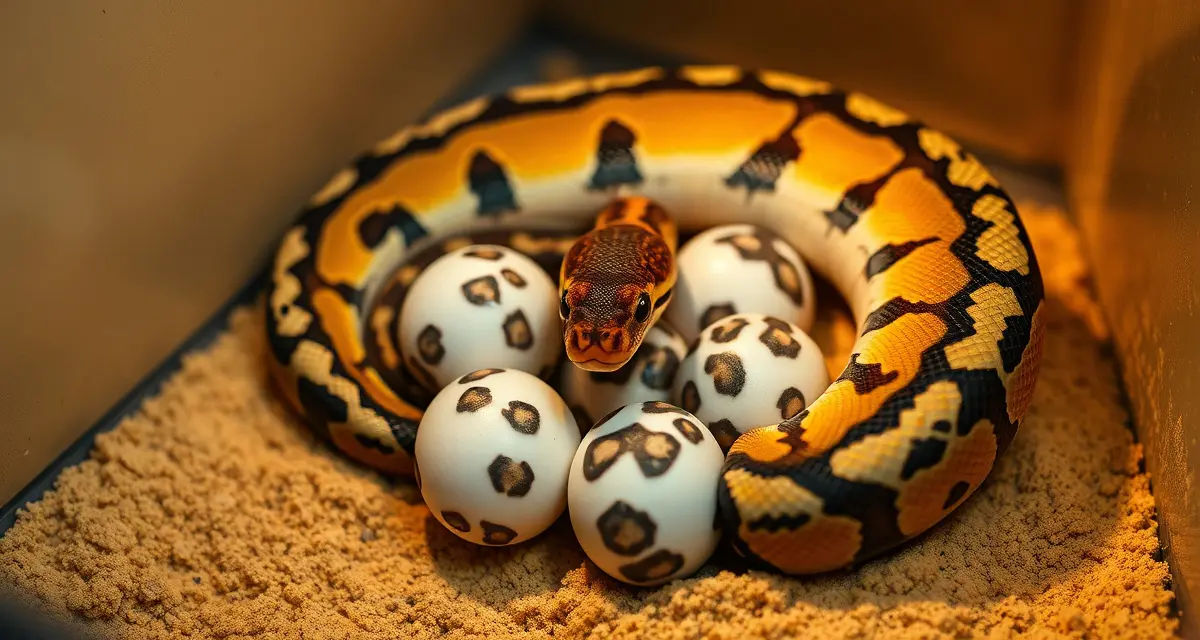
Ball Python 4-Egg Clutch: Expected Outcomes and Revenue
By HatchLedger Editorial Team · Published 2025-02-20 · Updated Mar 13, 2026
A 4-egg clutch is below average for a healthy ball python female but not unusual, particularly from younger females or those in their first breeding season. Understanding what to expect in terms of genetics outcomes, hatch rates, and revenue potential helps you plan appropriately.
TL;DR
- Reptile breeders benefit most from documentation systems that connect animal records, breeding history, and financial data.
- Genetics claims are only as trustworthy as the records behind them -- parentage documentation is the evidence buyers evaluate.
- Seasonal timing and cooling protocols matter significantly for reproductive success across most captive reptile species.
- Clutch profitability analysis requires knowing actual cost per animal produced, not just gross sale revenue.
- Administrative efficiency through connected records frees time for animal care and the strategic work of project planning.
Typical Causes of a 4-Egg Clutch
Smaller-than-average clutches often come from:
- First-season females who haven't reached peak reproductive maturity
- Females slightly below optimal breeding weight
- Nutritional deficiencies or suboptimal body condition
- Genetic tendency in certain lines toward smaller clutch sizes
- Late-season breeding where follicle development wasn't optimal
A 4-egg clutch from an experienced, well-conditioned female is worth investigating. A 4-egg clutch from a first-season female is often just where they start.
Expected Genetics Outcomes from a 4-Egg Clutch
Genetics outcomes depend entirely on the pairing, not the clutch size. However, with only four animals to work from, variance from expected ratios is notable.
Pastel x Normal (expected 50% Pastel)
With 4 eggs, you might get 2 Pastels and 2 normals. Or 4 Pastels. Or 4 normals. With small clutches, a coin flip run four times can deviate substantially from the expected mean.
Het x Het pairing (expected 25% visual)
With 4 eggs, the most common outcomes are 0 or 1 visual (each at fairly high probability). Two visuals from 4 eggs is good luck. Zero visuals is entirely within expected variance.
Revenue Potential from a 4-Egg Clutch
Revenue depends heavily on the pairing. Using moderate-value assumptions:
Common co-dom pairing (Pastel x Normal)
- 2 Pastels at $150 male / $250 female = variable, roughly $400 to $800 for the clutch
- 2 normals at $50 to $80 each = $100 to $160
- Total clutch revenue estimate: $500 to $960
High-value co-dom pairing (GHI x Mojave)
- 1 GHI Mojave (25% expected) at $600 to $1,200
- 1 GHI at $250 to $400
- 1 Mojave at $150 to $300
- 1 Normal at $50 to $80
- Total rough estimate: $1,050 to $1,980
Het x Het recessive pairing (both het Clown)
- 1 visual Clown (25% expected) at $300 to $500
- 2 het Clowns at $150 to $250 each
- 1 normal at $50 to $80
- Total rough estimate: $700 to $1,080
Cost Considerations
Your costs don't scale down because your clutch was small. Feed for the female, incubation supplies, and the amortized cost of your breeding stock all apply to a 4-egg clutch the same as to an 8-egg clutch. This means your cost per animal produced is notably higher from a small clutch.
If your female consistently produces 3 to 4 eggs, weigh whether additional seasons of breeding, nutrition optimization, or rest year management might improve her output.
Track all 4-egg clutch records, costs, and revenue outcomes in HatchLedger. Over multiple seasons, your data shows patterns in which females produce smaller clutches and whether those clutches are financially viable. The clutch profitability calculator helps you model expected revenue before committing to a pairing.
Frequently Asked Questions
What is the expected revenue from a ball python 4-egg clutch?
Revenue depends on the pairing but commonly ranges from $500 to $2,000 for a 4-egg clutch from co-dominant or recessive project pairings. High-value pairings with premium morphs can push higher if the favorable outcomes appear.
How do professional breeders handle 4-egg clutch production financially?
They track cost per animal from small clutches, recognize that the cost-to-revenue ratio is less favorable than larger clutches, and assess whether the female's consistent small clutch size warrants a rest year, nutrition adjustment, or retirement from the breeding program.
What software helps manage ball python clutch revenue tracking?
HatchLedger is purpose-built for reptile breeders, connecting animal records, breeding history, clutch outcomes, and financial tracking in one system. Unlike generic spreadsheets, it's designed around the specific workflow of an active breeding season. Free for up to 20 animals.
What records should every reptile breeder maintain per animal?
At minimum: acquisition date and source, morph and genetic documentation, feeding log, weight history, any veterinary treatments, and breeding history including pairing dates, clutch of origin for captive-bred animals, and offspring records. These records serve your own management, buyer documentation, regulatory compliance, and long-term genetic tracking.
How should reptile breeders document genetics for buyers?
A complete genetic record for sale includes the animal's visual morph name, confirmed het genes and their basis (parentage documentation or proven-out production), possible het genes with probability percentages, hatch date, and parent morph information. Including clutch-of-origin records lets buyers independently verify the claims.
What is Ball Python 4-Egg Clutch: Expected Outcomes and Revenue?
A ball python 4-egg clutch refers to a breeding event where a female ball python produces four eggs. This guide covers what breeders can realistically expect in terms of hatch rates, genetic outcomes, and revenue potential from a smaller-than-average clutch. It's especially useful for first-season breeders or those working with younger females who haven't yet reached peak reproductive output.
How much does Ball Python 4-Egg Clutch: Expected Outcomes and Revenue cost?
There is no cost to access this article — it is free educational content published on HatchLedger. However, the revenue potential of a 4-egg clutch varies widely based on the morphs produced, market demand, and your cost basis per animal. Hatchlings from high-demand genetic pairings can sell for anywhere from $50 to several hundred dollars each.
How does Ball Python 4-Egg Clutch: Expected Outcomes and Revenue work?
This article walks through the biological and husbandry factors behind a 4-egg clutch, explains how to calculate expected genetic outcomes from your pairing, and breaks down how to estimate profitability by factoring in incubation costs, feeding expenses, and realistic sale prices — giving you a complete picture of what this clutch size means for your operation.
What are the benefits of Ball Python 4-Egg Clutch: Expected Outcomes and Revenue?
Understanding 4-egg clutch outcomes helps breeders set realistic revenue expectations, avoid overestimating returns, and identify whether a smaller clutch reflects a husbandry issue worth correcting. It also supports better project planning by connecting genetics documentation, hatch rates, and actual cost-per-animal data — the foundation of running a profitable, well-managed breeding program.
Who needs Ball Python 4-Egg Clutch: Expected Outcomes and Revenue?
This resource is designed for ball python breeders at any experience level — from hobbyists producing their first clutch to established breeders tracking project profitability. It's particularly relevant for anyone working with first-season females, evaluating breeding weight and timing, or looking to improve how they document and analyze clutch-level financial performance.
How long does Ball Python 4-Egg Clutch: Expected Outcomes and Revenue take?
Incubation for ball python eggs typically takes 55 to 65 days at stable temperatures around 88–90°F. From the time eggs are laid to when hatchlings are feeding and ready for sale, most breeders allow an additional 4 to 8 weeks. The full process from laying to first sales can take approximately 3 to 4 months depending on feeding response and buyer timing.
Related Articles
- Ball Python 8-Egg Clutch: Expected Outcomes and Revenue
- Ball Python 9-Egg Clutch: Expected Outcomes and Revenue
Sources
- USARK (United States Association of Reptile Keepers)
- Association of Reptilian and Amphibian Veterinarians (ARAV)
- World of Ball Pythons (WoBP genetics reference database)
- MorphMarket (reptile industry marketplace)
- Reptiles Magazine (Bowtie Inc.)
Get Started with HatchLedger
Reptile breeders who track animal records, breeding history, and financials in a connected system make better decisions each season and provide better documentation to buyers. HatchLedger is built for that workflow. Try it free with up to 20 animals.