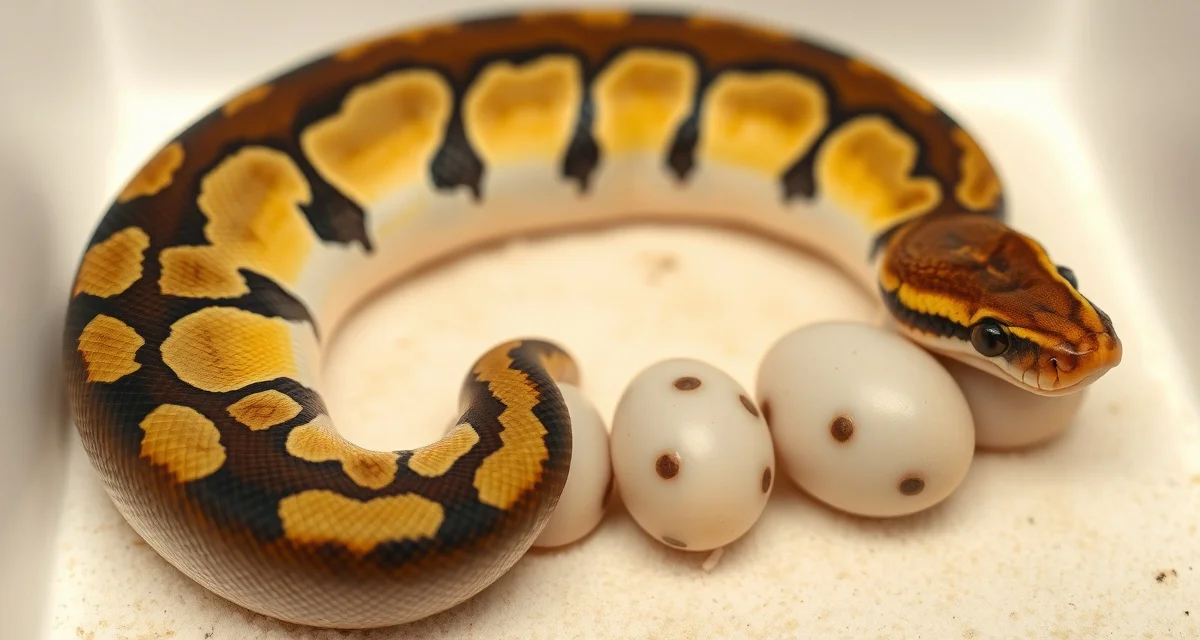
Ball Python 6-Egg Clutch: Expected Outcomes and Revenue
By HatchLedger Editorial Team · Published 2025-02-22 · Updated Mar 13, 2026
Six eggs is solidly within normal range for a healthy adult ball python. A 6-egg clutch gives you enough animals to start seeing genetics outcomes that approach expected ratios, and at most price points it produces a meaningful return on investment.
TL;DR
- Reptile breeders benefit most from documentation systems that connect animal records, breeding history, and financial data.
- Genetics claims are only as trustworthy as the records behind them -- parentage documentation is the evidence buyers evaluate.
- Seasonal timing and cooling protocols matter significantly for reproductive success across most captive reptile species.
- Clutch profitability analysis requires knowing actual cost per animal produced, not just gross sale revenue.
- Administrative efficiency through connected records frees time for animal care and the strategic work of project planning.
What a 6-Egg Clutch Represents
A consistent 6-egg producer is a reliable female. Not your star producer, but someone you can plan around. At 6 eggs per season, you get predictable volume from established pairings.
Where producers differ notably from 6-egg averages: if a female who previously laid 8 to 9 eggs drops to 6, investigate body condition, nutrition, or health factors. Declining clutch size in an established female can be an early sign of an underlying issue.
Expected Genetics Outcomes
Co-dominant single-gene pairing (50% expected)
From 6 eggs, the most common actual outcome is 3 carriers and 3 normals. Occasionally 4 and 2, or 2 and 4. A clean 3/3 split is the most frequent single result.
Het x Het recessive pairing (25% visual expected)
Expected: 1.5 visuals from 6 eggs. Most commonly 1 visual; 2 visuals is about as likely as 0 from a 6-egg clutch. The variance starts to compress a bit compared to 4 or 5 eggs, but you're still dealing with small-sample statistics.
Co-dom x het recessive (multiple gene pairing)
When both co-dom and recessive genes are involved, 6 eggs gives you a reasonable (but not reliable) spread across all possible outcomes.
Revenue Estimates for a 6-Egg Clutch
Pastel x Normal pairing
- 3 Pastels (1 female, 2 males): roughly $250 to $400 + $150 + $150 = $550 to $700
- 3 normals: $50 to $80 each = $150 to $240
- Rough clutch revenue: $700 to $940
GHI x Mojave pairing (high-value)
- 1 to 2 GHI Mojaves: $600 to $1,200 each
- 1 to 2 GHIs: $300 to $500 each
- 1 to 2 Mojaves: $150 to $300 each
- Normals: $50 to $80 each
- Rough clutch revenue range: $1,200 to $3,000 (notable variance)
Both het Clown pairing
- Expected 1 to 2 visual Clowns: $300 to $600 each
- 3 het Clowns: $150 to $300 each
- 1 normal: $50 to $80
- Rough clutch revenue: $1,000 to $2,040
When a 6-Egg Clutch Is Your Best Production
For many mid-size hobby operations (5 to 15 females), a 6-egg average is completely workable. If your pairings are producing average genetic value of $200 to $300 per animal, a 6-egg clutch grosses $1,200 to $1,800. That's a reasonable return for a mid-value pairing.
The key is knowing your actual costs. Track everything in HatchLedger. Use the clutch profitability calculator to model what a 6-egg clutch needs to generate at each price point to hit your profitability targets.
Frequently Asked Questions
What is the expected revenue from a ball python 6-egg clutch?
Revenue typically ranges from $700 to $3,000 depending on morph value and which genetics appear in the clutch. High-value pairings like GHI x Mojave or recessive project pairs with premium visual potential generate the most from 6-egg clutches.
How do professional breeders plan around 6-egg clutch production?
They track consistent clutch sizes per female, calculate per-animal cost basis from actual production data, and plan seasonal pairing selections to maximize the financial return from their most reliable 6-egg producers.
What software helps manage ball python 6-egg clutch profitability?
HatchLedger is purpose-built for reptile breeders, connecting animal records, breeding history, clutch outcomes, and financial tracking in one system. Unlike generic spreadsheets, it's designed around the specific workflow of an active breeding season. Free for up to 20 animals.
What records should every reptile breeder maintain per animal?
At minimum: acquisition date and source, morph and genetic documentation, feeding log, weight history, any veterinary treatments, and breeding history including pairing dates, clutch of origin for captive-bred animals, and offspring records. These records serve your own management, buyer documentation, regulatory compliance, and long-term genetic tracking.
How should reptile breeders document genetics for buyers?
A complete genetic record for sale includes the animal's visual morph name, confirmed het genes and their basis (parentage documentation or proven-out production), possible het genes with probability percentages, hatch date, and parent morph information. Including clutch-of-origin records lets buyers independently verify the claims.
What is Ball Python 6-Egg Clutch: Expected Outcomes and Revenue?
A ball python 6-egg clutch refers to a female laying six eggs in a single breeding season. This is a normal, healthy clutch size that provides enough offspring to begin observing expected genetic ratios from your pairings. For breeders, a consistent 6-egg producer is a reliable female you can plan around when forecasting seasonal revenue and project outcomes.
How much does Ball Python 6-Egg Clutch: Expected Outcomes and Revenue cost?
There is no direct cost to a clutch itself, but producing it requires investment in the breeding female, the pairing male, incubation equipment, and ongoing husbandry. Profitability depends on genetics, morph rarity, and market pricing. To understand true margins, breeders should calculate cost per animal produced — including overhead — rather than focusing solely on gross sale revenue from the six hatchlings.
How does Ball Python 6-Egg Clutch: Expected Outcomes and Revenue work?
A 6-egg clutch results from a successfully conditioned female who has been cooled, paired, and carried eggs through a roughly 55-60 day incubation period. Genetic outcomes are determined by the parent morphs. With six animals, you begin approaching statistically expected morph ratios. Hatchlings are typically sold individually, with pricing driven by morph, sex, and documented parentage records.
What are the benefits of Ball Python 6-Egg Clutch: Expected Outcomes and Revenue?
Six eggs provides enough volume to generate meaningful revenue while keeping management workload reasonable. It allows breeders to test genetic pairings and see outcome ratios, plan inventory forecasts, and build a track record with buyers. Reliable documentation of each animal's parentage and genetics from a clutch this size builds credibility and supports premium pricing in the market.
Who needs Ball Python 6-Egg Clutch: Expected Outcomes and Revenue?
Ball python breeders at any scale — from hobbyists producing their first clutch to established operations managing dozens of females — need to understand 6-egg clutch outcomes. It is especially relevant for breeders tracking female productivity over multiple seasons, since a drop from 8-9 eggs to 6 in an established female can signal health or nutrition issues worth investigating immediately.
How long does Ball Python 6-Egg Clutch: Expected Outcomes and Revenue take?
The incubation period for ball python eggs typically runs 55 to 60 days at stable temperatures around 88-90°F. Add the breeding season preparation — cooling protocols, pairing, and confirming follicle development — and the full cycle from conditioning to hatchlings spans several months. Breeders using connected record systems can track these timelines per female and optimize scheduling across their entire collection.
Related Articles
- Ball Python 8-Egg Clutch: Expected Outcomes and Revenue
- Ball Python 9-Egg Clutch: Expected Outcomes and Revenue
Sources
- USARK (United States Association of Reptile Keepers)
- Association of Reptilian and Amphibian Veterinarians (ARAV)
- World of Ball Pythons (WoBP genetics reference database)
- MorphMarket (reptile industry marketplace)
- Reptiles Magazine (Bowtie Inc.)
Get Started with HatchLedger
Reptile breeders who track animal records, breeding history, and financials in a connected system make better decisions each season and provide better documentation to buyers. HatchLedger is built for that workflow. Try it free with up to 20 animals.