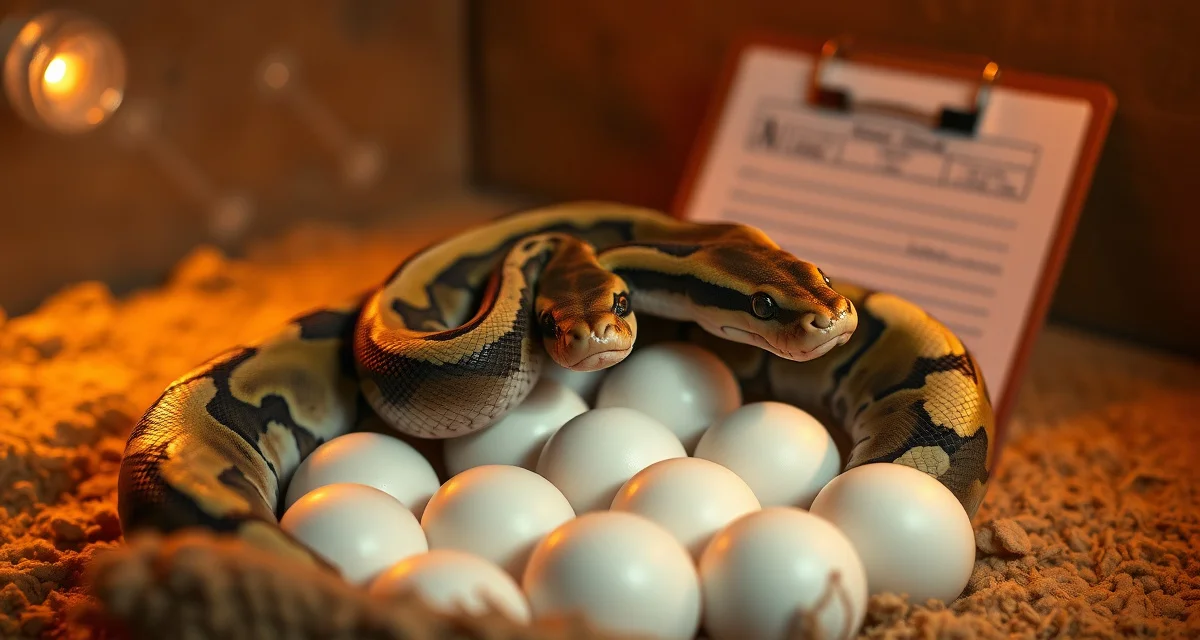
Ball Python 8-Egg Clutch: Expected Outcomes and Revenue
An 8-egg clutch is an excellent result, well above average, and in this range your genetics outcomes start to represent expected ratios quite well. An 8-egg female producing consistently is one of your most valuable animals, and she deserves to be paired with your best genetics.
TL;DR
- Reptile breeders benefit most from documentation systems that connect animal records, breeding history, and financial data.
- Genetics claims are only as trustworthy as the records behind them -- parentage documentation is the evidence buyers evaluate.
- Seasonal timing and cooling protocols matter significantly for reproductive success across most captive reptile species.
- Clutch profitability analysis requires knowing actual cost per animal produced, not just gross sale revenue.
- Administrative efficiency through connected records frees time for animal care and the strategic work of project planning.
What an 8-Egg Producer Means for Your Business
A female who lays 8 eggs consistently is a star. At that production level, she generates meaningful volume regardless of what pairing you put her in. Eight hatchlings from a high-value pairing can produce $3,000 to $8,000+ in a single season, which notably contributes to overall operation profitability.
These females should be prioritized for your most valuable pairings. Don't waste an 8-egg producer on a normal-to-normal pairing.
Expected Genetics Outcomes
Co-dominant single-gene pairing (50% expected)
From 8 eggs: most commonly 4 carriers and 4 normals. A clean 4/4 split is the single most common outcome. Four of the most valuable animals in the clutch (assuming the morph commands value) is a meaningful sale pool.
Het x Het recessive pairing (25% visual expected)
Expected: 2 visuals from 8 eggs. Getting 2 visuals is now a realistic and common outcome. One or two visuals is the most likely range. Zero visuals from an 8-egg clutch is unlucky but happens.
Super form production (Pastel x Pastel, 25% super expected)
Expected: 2 Super Pastels (or equivalent) from 8 eggs. Getting at least 1 super is highly probable; 2 or 3 is realistic.
Revenue Estimates for an 8-Egg Clutch
Pastel x Normal pairing
- 4 Pastels at $150 to $400 average = $600 to $1,600
- 4 normals at $50 to $80 each = $200 to $320
- Rough clutch revenue: $800 to $1,920
GHI x Mojave pairing
- 2 GHI Mojaves: $1,200 to $2,400
- 2 GHIs: $600 to $1,000
- 2 Mojaves: $300 to $600
- 2 normals: $100 to $160
- Rough clutch revenue: $2,200 to $4,160
Both het Clown pairing
- 2 visual Clowns: $600 to $1,200
- 4 het Clowns: $600 to $1,200
- 2 normals: $100 to $160
- Rough clutch revenue: $1,300 to $2,560
Pastel Enchi x Clown (het) pairing
Complex outcomes including Pastel Enchi Clowns, het combination animals, and single-gene carriers at various price points. Premium combination animals can push total clutch revenue toward $4,000 to $8,000 from 8 eggs.
Managing an 8-Egg Female's Production Calendar
High-producing females can breed every season, but giving them solid recovery time post-lay is important. Feed aggressively after they've recovered from the lay. Monitor weight closely in the post-lay anorexia period. If a female's body condition looks compromised after a large clutch, consider giving her a rest season.
A female who produces 8 eggs for five seasons is worth more than one who burns out after three seasons of heavy production.
Track every clutch size, recovery timeline, and post-lay weight in HatchLedger. The clutch profitability calculator helps you plan which pairings are worth reserving for your best producers.
Frequently Asked Questions
What is the expected revenue from a ball python 8-egg clutch?
Revenue typically ranges from $800 to $8,000+ depending on the pairing's genetic value. High-value combination pairings from an 8-egg producer can generate substantial returns in a single season.
How do professional breeders manage their 8-egg female producers?
They match these females with their highest-value pairings, monitor post-lay body condition carefully, feed aggressively during recovery, and consider rest seasons after particularly demanding production years to maintain long-term productivity.
What software helps manage 8-egg ball python clutch production records?
HatchLedger is purpose-built for reptile breeders, connecting animal records, breeding history, clutch outcomes, and financial tracking in one system. Unlike generic spreadsheets, it's designed around the specific workflow of an active breeding season. Free for up to 20 animals.
What records should every reptile breeder maintain per animal?
At minimum: acquisition date and source, morph and genetic documentation, feeding log, weight history, any veterinary treatments, and breeding history including pairing dates, clutch of origin for captive-bred animals, and offspring records. These records serve your own management, buyer documentation, regulatory compliance, and long-term genetic tracking.
How should reptile breeders document genetics for buyers?
A complete genetic record for sale includes the animal's visual morph name, confirmed het genes and their basis (parentage documentation or proven-out production), possible het genes with probability percentages, hatch date, and parent morph information. Including clutch-of-origin records lets buyers independently verify the claims.
Sources
- USARK (United States Association of Reptile Keepers)
- Association of Reptilian and Amphibian Veterinarians (ARAV)
- World of Ball Pythons (WoBP genetics reference database)
- MorphMarket (reptile industry marketplace)
- Reptiles Magazine (Bowtie Inc.)
Get Started with HatchLedger
Reptile breeders who track animal records, breeding history, and financials in a connected system make better decisions each season and provide better documentation to buyers. HatchLedger is built for that workflow. Try it free with up to 20 animals.