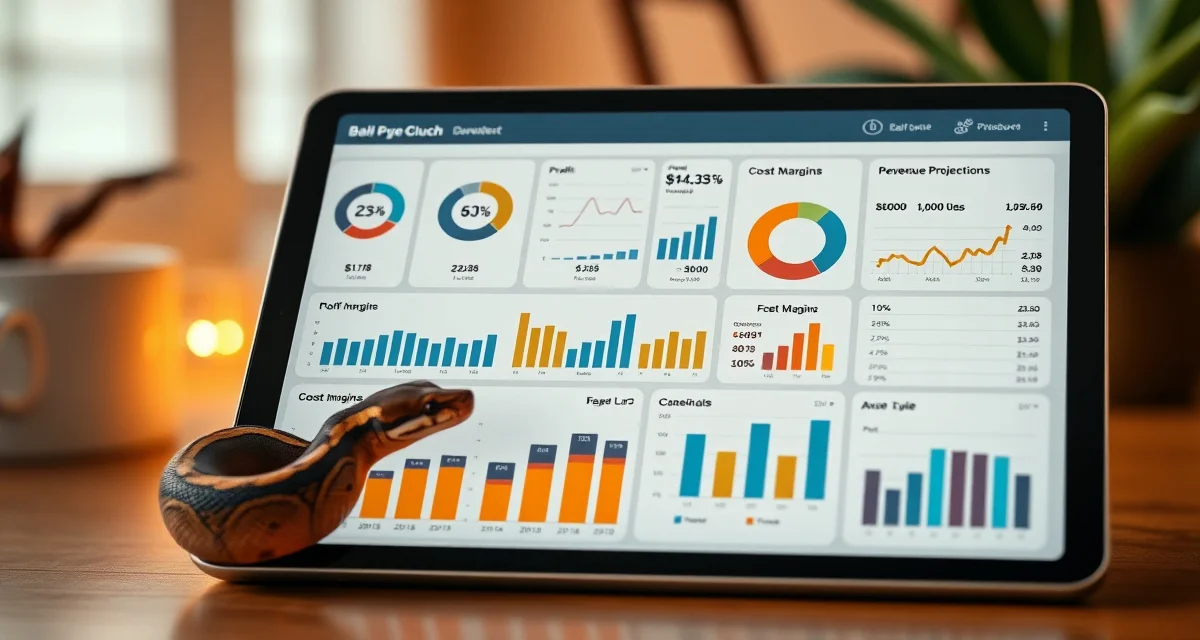
Ball Python Clutch Profitability Calculator
By HatchLedger Editorial Team · Published 2025-06-13 · Updated Mar 13, 2026
Most ball python breeders have a rough sense of whether a season was profitable. Few know which specific clutches made money and which ones didn't. A clutch profitability calculator closes that gap by projecting expected revenue against attributable costs for a specific pairing, giving you a financial picture before you commit to the pairing or after the season to evaluate actual performance.
TL;DR
- Clutch profitability is calculated as total sale revenue from all hatchlings minus the allocated production cost for that specific clutch.
- Production costs include amortized parent acquisition, feeder costs for the breeding pair, incubation supplies, electricity, and time.
- A clutch of 6 Clown hatchlings at $350 each generates very different margins than 6 Cinnamon Pastel hatchlings at $80 each -- even at identical production costs.
- Inventory carrying costs add up: a hatchling feeding for 6 months before sale adds $9+ in feeder costs alone.
- Analyzing per-clutch P&L each season identifies which genetic projects deserve continued investment and which should be restructured.
Why Per-Clutch Profitability Matters
Season-level financial tracking tells you whether you made money overall. Clutch-level tracking tells you which decisions made money and which didn't. The difference is enormous for future planning.
If you ran 12 pairings and came out ahead, that's good. But if three of those pairings generated 80% of your profit while the other nine barely broke even, you have an obvious decision to make next season: run more of the profitable three, reconsider the nine.
Without clutch-level data, you're making pairing decisions based on what you find genetically interesting or what animals happen to be available, rather than what has historically performed in your specific market. Clutch profitability analysis gives you that grounding.
What Goes Into a Profitability Calculation
A complete clutch profitability calculation includes both revenue and costs. Getting both sides right matters.
Revenue Side
Expected number of fertile eggs: Based on the female's historical production, her current body condition, and the pairing timing.
Expected genetic breakdown: What phenotypes will be produced and in what ratios? This comes from your morph calculator. For a Banana Pastel het Clown x Banana het Clown pairing, the calculator tells you the percentage of Banana Pastel Clowns, Banana Clowns, Pastel Clowns, and other outcomes expected.
Current market price for each phenotype: What are animals like yours actually selling for right now? Check recent MorphMarket sales for each expected phenotype. Use sold prices, not asking prices.
Expected revenue per egg: Multiply the probability of each phenotype by its current market value and sum across all expected phenotypes. This gives you an average expected revenue per egg, which multiplied by expected egg count gives total expected revenue.
Example:
- 8 expected eggs
- 12.5% Banana Pastel Clown @ $1,200 = $150 expected value
- 12.5% Banana Clown @ $900 = $112.50 expected value
- 12.5% Pastel Clown @ $600 = $75 expected value
- 12.5% Clown @ $400 = $50 expected value
- 50% hets/no visual Clown at various values = $100 blended
Total expected value per egg: ~$487.50
Total expected revenue (8 eggs): ~$3,900
Cost Side
Animal carrying costs: The cost of maintaining the breeding male and female for the year, prorated to this pairing. If your cost per animal guide is $40/month and you have two animals whose primary purpose is this pairing, that's $960 in annual carrying costs for this pairing.
Hatchling care costs: Food, space, substrate, and electricity from hatch through sale. Hatchlings that sell in week 2 have lower carrying costs than animals that sit for 90 days. Use an average based on your historical sell-through speed.
Incubation costs: Heat, media, equipment depreciation, and your time. At scale, incubation costs per egg can be as low as $2-5. For a small operation with an expensive incubator run for one clutch, the per-egg cost is higher.
Platform and shipping costs: MorphMarket listing fees, shipping materials, and any shipping costs you absorb.
Example costs for the pairing above:
- Annual carrying costs (2 animals): $960
- Hatchling care (8 animals, 45-day average hold): $120
- Incubation: $40
- Platform and shipping: $200
Total costs: $1,320
Projected gross margin: ($3,900 - $1,320) / $3,900 = 66%
That margin justifies the pairing. Running the same calculation on a Pastel x Cinnamon pairing producing commodity animals might return a 15-20% margin, which may not justify the same level of resource commitment.
Using the Calculator Before the Season
The most valuable time to run this calculation is before you commit your breeding animals to specific pairings. Modeling three or four alternative pairings for a specific female shows you which option has the best expected return.
This changes how you think about pairing selection. Instead of asking "what would be interesting to produce?" you're asking "which pairing produces the best expected return for this female's breeding season?" Sometimes the answers align. When they don't, financial data gives you a concrete reason to choose one pairing over another.
Using the Calculator After the Season
Post-season analysis compares projected profitability against actual performance. Where actual revenue missed projections, was it because:
- Fewer eggs than expected?
- Genetic outcomes that skewed away from the high-value phenotypes?
- Market prices that dropped between planning and selling?
- Slower sell-through that increased hatchling carrying costs?
Understanding why specific clutches underperformed expectations improves your projections for the following season and identifies systemic issues (like chronic overestimation of egg counts from a specific female) that consistent analysis reveals over time.
The HatchLedger platform connects clutch records to financial data so post-season analysis is built from real transaction data rather than estimates. Breeders using integrated software report 30% less time on administrative tasks, with the biggest savings in year-end financial reconciliation. The gross margin guide covers the financial concepts behind clutch P&L in more detail.
Building This Into Your Planning Process
Running profitability calculations on every planned pairing before each season takes time upfront but saves money all season. Breeders who've implemented this consistently report that it changes pairing selection meaningfully: some animals that seemed valuable as breeders aren't worth the space when the numbers are run, while other pairings they wouldn't have prioritized turn out to be their best financial performers.
The reptile breeder software comparison covers how different tools support financial modeling alongside breeding records. For breeders who want to build this kind of analysis into their workflow, purpose-built software is notably more practical than trying to construct it in spreadsheets from scratch.
Frequently Asked Questions
What is the best approach to ball python clutch profitability calculator?
Model both sides of the equation: expected revenue using morph calculator outputs and current market pricing, and expected costs including carrying costs for breeding animals, hatchling care, incubation, and platform fees. Run calculations before the season to compare pairing options, and rerun with actual data after the season to identify where your estimates were off and improve future projections.
How do professional breeders handle ball python clutch profitability calculator?
Professional breeders run profitability projections as a standard part of pre-season pairing selection. They compare expected margins across alternative pairings for each female, weight the financial return alongside genetic project goals, and review actual vs. projected performance at the end of each season to refine their estimation methodology.
What records should every reptile breeder maintain per animal?
At minimum: acquisition date and source, morph and genetic documentation, feeding log, weight history, any veterinary treatments, and breeding history including pairing dates, clutch of origin for captive-bred animals, and offspring records. These records serve your own management, buyer documentation, regulatory compliance, and long-term genetic tracking.
How should reptile breeders document genetics for buyers?
A complete genetic record for sale includes the animal's visual morph name, confirmed het genes and their basis (parentage documentation or proven-out production), possible het genes with probability percentages, hatch date, and parent morph information. Including clutch-of-origin records lets buyers independently verify the claims.
What is Ball Python Clutch Profitability Calculator?
A Ball Python Clutch Profitability Calculator is a tool that projects expected revenue against production costs for a specific breeding pairing. It breaks down income from hatchling sales and subtracts allocated expenses — including parent acquisition costs, feeder bills, incubation supplies, electricity, and time — to give breeders a clear per-clutch profit or loss figure, rather than relying on vague season-level estimates.
How much does Ball Python Clutch Profitability Calculator cost?
The Ball Python Clutch Profitability Calculator on HatchLedger is free to use. There are no subscription fees or paywalls to access the core calculation tool. Breeders simply input their pairing details, estimated clutch size, expected sale prices per morph, and production costs to instantly generate a projected profit and loss breakdown for that specific clutch.
How does Ball Python Clutch Profitability Calculator work?
You input key variables for a specific pairing: the number of hatchlings, expected sale price per animal based on morph combination, and attributable production costs such as amortized parent purchase price, feeder expenses for the breeding pair, incubation media, electricity, and your time. The calculator outputs projected gross revenue, total allocated costs, and net profit — giving you a financial snapshot before or after a season.
What are the benefits of Ball Python Clutch Profitability Calculator?
Per-clutch analysis reveals which genetic projects are actually profitable and which are losing money despite feeling productive. A clutch of six Clown hatchlings at $350 each has very different margins than six Cinnamon Pastels at $80 each, even with identical production costs. The calculator surfaces those differences so you can prioritize high-margin pairings, restructure underperforming projects, and make data-driven decisions about which morphs to invest in next season.
Who needs Ball Python Clutch Profitability Calculator?
Any ball python breeder who wants to move beyond gut-feel financial tracking needs this tool. It is especially valuable for hobbyist breeders scaling up, small operations deciding which pairings to repeat or retire, and anyone holding hatchlings long-term — since carrying costs like feeder bills accumulate fast. If you are making decisions about parent purchases or breeding projects based on expected returns, per-clutch profitability data is essential.
How long does Ball Python Clutch Profitability Calculator take?
Running a calculation takes under two minutes once you have your inputs ready — clutch size, morph sale prices, and cost estimates. Gathering accurate cost data, particularly amortized parent acquisition costs and seasonal feeder totals, may take longer if you have not tracked expenses previously. Post-season analysis using actual sale prices and real costs can be completed in one sitting and gives the most accurate picture of true clutch performance.
Sources
- USARK (United States Association of Reptile Keepers)
- Association of Reptilian and Amphibian Veterinarians (ARAV)
- World of Ball Pythons (WoBP genetics reference database)
- MorphMarket (reptile industry marketplace)
- Reptiles Magazine (Bowtie Inc.)
Get Started with HatchLedger
Clutch profitability analysis requires connecting animal records, production costs, and sale data in a system that does the math automatically. HatchLedger's clutch P&L tools track cost basis and revenue per clutch so you know exactly which pairings are worth repeating next season. Try it free with up to 20 animals.