Milk Snake Hatchling Inventory Management: Complete Breeder Guide
By HatchLedger Editorial Team · Published 2025-01-19 · Updated Mar 13, 2026
Milk snake hatchling inventory management requires the same individual record discipline as any colubrid breeding program, with the added complexity of managing subspecies identification and morph genetic status across potentially large cohorts. A productive Honduran milk snake season can produce 60 to 120 hatchlings from multiple females, each requiring individual tracking of feeding history, weight, morph status, and sale progress. Breeders using integrated software report 30% less time on administrative tasks, and for managing large hatchling cohorts, that efficiency is directly proportional to collection size.
TL;DR
- Milk snakes span dozens of recognized subspecies of Lampropeltis triangulum and related species, each with distinct care and breeding requirements.
- Most milk snake subspecies require 60-90 days of seasonal cycling at 50-55 degrees Fahrenheit for reliable breeding.
- Clutch sizes range from 4-18 eggs depending on subspecies, with Honduran milk snakes averaging toward the larger end.
- Incubation runs 55-70 days at 78-82 degrees Fahrenheit with moderate humidity.
- Honduran milk snakes have an active morph program with albino, hypo, and tri-color tangerine lines among the established variants.
ID Assignment and Record Creation at Hatch
Every hatchling gets a unique ID at the moment of emergence. Don't defer this step. The ID links every subsequent record to the clutch and through it to the pairing and parent animals.
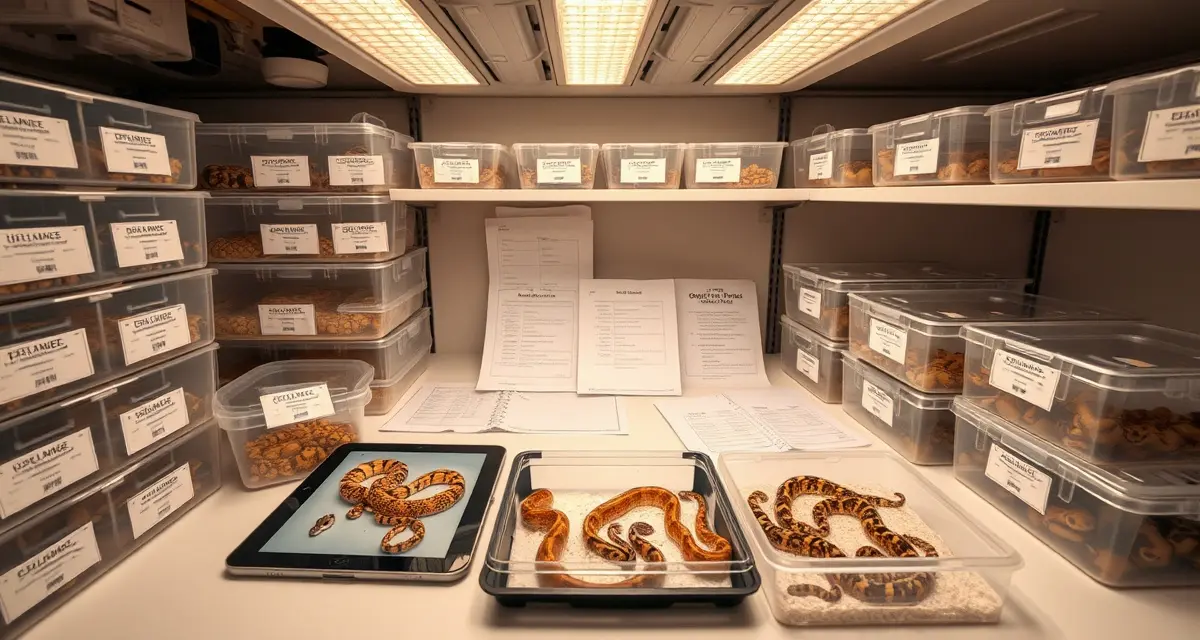
Create the physical enclosure label and the digital record simultaneously. In a room of 60 hatchlings in similar tubs, the label is what connects the physical animal to its complete history.
Record at hatch:
- Hatchling ID and clutch ID
- Hatch date and weight
- Visual morph assessment
- Any visible abnormalities
Tracking Through the Pre-Sale Period
Feeding Logs
Every feeding attempt logs at the individual animal level: date, prey type, method, outcome. For 60 animals updated multiple times per month, this is a significant data volume. A spreadsheet trying to track 60 rows of feeding history with multiple columns per animal becomes difficult to navigate accurately within weeks of the hatchling season starting.
HatchLedger's reptile breeder hub maintains each animal's record individually, so you navigate to a specific hatchling and log its feeding event without any risk of misattribution to adjacent records.
Weight Records
Log weekly weights for the first 90 days. An animal showing consecutive weight losses despite attempted feedings is a priority concern. An animal gaining steadily is ready for sale when feeding is established. This trend is only visible in a longitudinal record.
Morph and Genetic Status
Confirm morph identification and update het status based on parentage before listing animals for sale. For a clutch from two het albino animals, your records need to reflect:
- 25% visual albino offspring (confirmed at visual assessment)
- 50% possible het albino (normal-appearing, may carry one copy)
- 25% confirmed normal (normal-appearing, no copies)
Accurate genetic documentation in sale listings is what builds buyer trust and supports premium pricing in the milk snake market.
Sale Status Management
Track current status for every hatchling:
- Available (established feeder, morph confirmed)
- Not yet selling (feeding not established)
- Reserved (deposit received)
- Sold and delivered
- Held for collection
Deposit records need their own documentation: buyer name, amount, date, which animal, balance due. Reptile breeder software comparison resources consistently identify deposit management as a gap in basic animal tracking tools. HatchLedger includes this tracking integrated with your hatchling inventory.
Connecting to P&L
Each sale contributes to clutch revenue. Each hatchling's sale price and date log against the clutch record. Your P&L per clutch builds automatically as sales occur. At season end, you know exactly what each clutch earned versus what it cost to produce.
Frequently Asked Questions
What is the best approach to milk snake hatchling inventory management?
Assign IDs at hatch and create individual records immediately. Log feeding attempts and outcomes for every animal consistently. Confirm morph and genetic status before selling. Maintain accurate sale status including deposit records. Connect hatchling records to clutch financial records. Use a digital system for any cohort larger than 15 to 20 animals; spreadsheets can't maintain record quality at the hatchling volumes a productive milk snake season generates.
How do professional breeders handle milk snake hatchling inventory management?
Professional milk snake breeders create records at hatch, update feeding and weight logs on schedule, confirm morph documentation before listing, and manage deposits with formal records. They review their full inventory status regularly to identify animals needing attention and to maintain accurate availability information for buyers. Their records support the genetic documentation that sophisticated buyers expect from a credible breeding program.
What software helps manage milk snake hatchling inventory management?
HatchLedger is purpose-built for reptile breeders, connecting animal records, breeding history, clutch outcomes, and financial tracking in one system. Unlike generic spreadsheets, it's designed around the specific workflow of an active breeding season. Free for up to 20 animals.
What is the most commonly bred milk snake subspecies?
Honduran milk snakes (L. t. hondurensis) are the most widely bred milk snake subspecies due to their larger size, active morph development, and established keeper base. Nelson's milk snakes and Sinaloan milk snakes are also commonly bred. Scarlet kingsnakes have a smaller but dedicated keeper community.
How do you tell apart milk snake subspecies?
Subspecies identification relies on coloration pattern (band count and width), scale counts, and geographic origin. For captive-bred animals, documentation from the original breeder is the most reliable source. Hybridization between subspecies does occur and reduces the value and documentation reliability of offspring.
What is Milk Snake Hatchling Inventory Management: Complete Breeder Guide?
Milk Snake Hatchling Inventory Management: Complete Breeder Guide is a comprehensive resource for reptile breeders covering systematic tracking of milk snake hatchlings from hatch to sale. It addresses the unique challenges of managing subspecies identification, morph genetic status, feeding records, and weight logs across large cohorts. With productive Honduran milk snake seasons producing 60-120 hatchlings from multiple females, the guide helps breeders implement disciplined record-keeping systems that scale with collection size and reduce administrative overhead.
How much does Milk Snake Hatchling Inventory Management: Complete Breeder Guide cost?
The guide itself is free educational content published on HatchLedger. However, it references integrated hatchling management software that streamlines the record-keeping processes described. Software pricing varies by plan and collection size. Breeders report saving roughly 30% of administrative time by using dedicated inventory tools rather than spreadsheets or paper logs, making the investment worthwhile for anyone managing more than a handful of hatchlings per season.
How does Milk Snake Hatchling Inventory Management: Complete Breeder Guide work?
The guide walks breeders through assigning unique IDs to each hatchling at hatch, creating individual records that track feeding history, weight progression, morph and genetic status, and sale progress. It covers subspecies-specific care variables, incubation protocols at 78-82°F for 55-70 days, and seasonal cycling requirements. Breeders maintain a living database per animal, allowing quick status checks across entire cohorts and streamlined communication with potential buyers.
What are the benefits of Milk Snake Hatchling Inventory Management: Complete Breeder Guide?
Key benefits include reduced administrative time, fewer record-keeping errors, and better genetic tracking across subspecies and morph lines. Breeders gain clear visibility into which hatchlings are feeding consistently, hitting weight targets, and ready for sale. For Honduran milk snakes with active albino, hypo, and tangerine morph programs, accurate genetic records directly protect animal value. Organized inventory also improves buyer confidence and supports long-term breeding program planning.
Who needs Milk Snake Hatchling Inventory Management: Complete Breeder Guide?
This guide is essential for serious milk snake breeders managing multiple females and large seasonal cohorts, particularly those working with Honduran milk snakes or other high-output subspecies. It is also valuable for newer breeders wanting to establish professional habits early, and for any colubrid breeder expanding into subspecies with distinct cycling, incubation, and morph tracking requirements. If you are producing more than 20 hatchlings per season, structured inventory management becomes critical.
How long does Milk Snake Hatchling Inventory Management: Complete Breeder Guide take?
Setup time depends on collection size, but most breeders can establish a basic inventory system within a few hours at hatch time. Ongoing record-keeping per hatchling takes only minutes per feeding or weigh-in session. The 60-90 day seasonal cycling period and 55-70 day incubation window provide natural planning milestones. Breeders who invest time in proper ID assignment and record creation at hatch recover that time many times over during the sale and follow-up phase.
Related Articles
- Burmese Python Hatchling Inventory Management: Complete Breeder Guide
- Carpet Python Hatchling Inventory Management: Complete Breeder Guide
Sources
- USARK (United States Association of Reptile Keepers)
- Association of Reptilian and Amphibian Veterinarians (ARAV)
- Herpetologica (Herpetologists League)
- Society for the Study of Amphibians and Reptiles (SSAR)
- Reptiles Magazine (Bowtie Inc.)
Get Started with HatchLedger
Milk snake breeders working across subspecies and morph lines benefit from records that track lineage clearly and connect cooling protocols to seasonal clutch outcomes. HatchLedger keeps this information organized and searchable across your entire collection. Free for up to 20 animals.