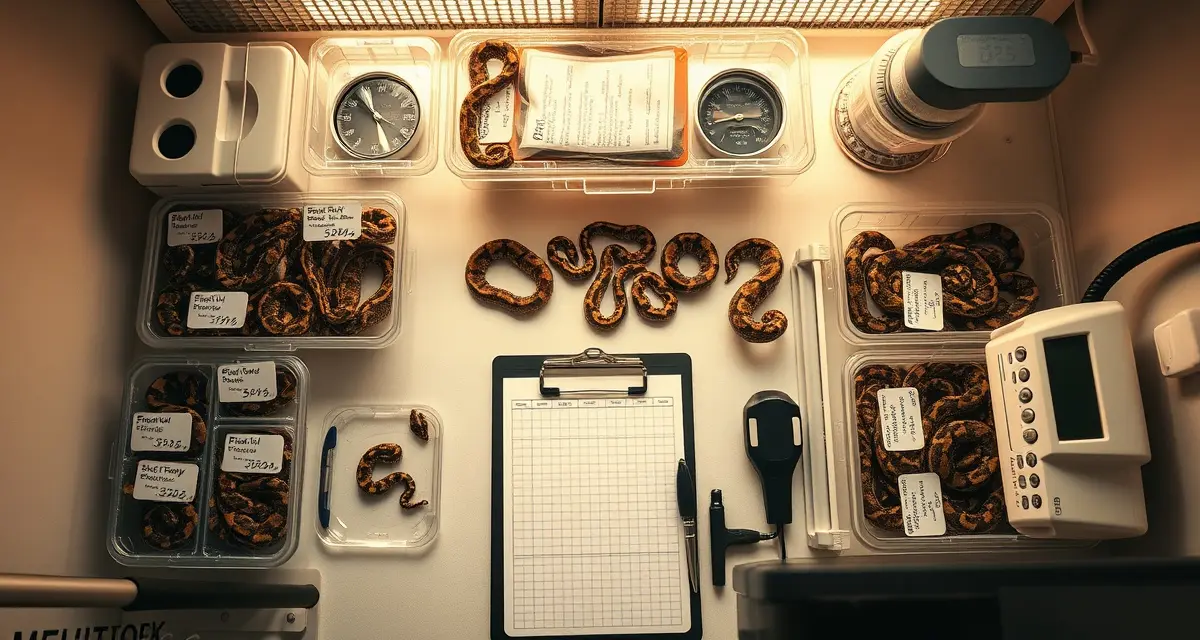
Carpet Python Hatchling Inventory Management: Complete Breeder Guide
By HatchLedger Editorial Team · Published 2025-07-12 · Updated Mar 13, 2026
Managing a cohort of carpet python hatchlings requires more individual attention than most python species because of the feeding challenges that characterize the species. While a ball python cohort might have a few reluctant feeders, a carpet python clutch can have a significant percentage of animals requiring extended troubleshooting to establish feeding. Breeders using integrated software report 30% less time on administrative tasks, which directly translates into more time for the individual feeding management that carpet python hatchlings need.
TL;DR
- Carpet pythons (Morelia spilota) encompass multiple recognized subspecies genetics overview including coastal, jungle, diamond, and Irian Jaya, each with distinct breeding triggers.
- Most carpet python subspecies require a 2-3 month seasonal cycling period with temperatures dropping 10-15 degrees Fahrenheit to trigger reliable ovulation.
- Average clutch size recordss range from 10-20 eggs, with large female diamond carpets sometimes producing 25 or more.
- Incubation typically runs 55-65 days at 84-88 degrees Fahrenheit, slightly lower than ball python targets.
- Subspecies identification in your records matters: crossing subspecies produces offspring of uncertain market value and documentation becomes complex.
Inventory management for carpet python hatchlings is especially important for keeping track of which animals are eating, which are still working on their first meal, and which need escalated attention before they lose significant condition.
ID Assignment and Birth Records
Assign individual IDs to carpet python hatchlings as they emerge or as soon as possible after hatch. Don't let animals sit in a hatch container as an anonymous mass -- even a brief delay in ID assignment creates opportunities for mix-ups, particularly if your clutch includes animals with different morph outcomes that need to be identified accurately.
For carpet python breeders, morph identification at hatch is important for accurate genetic representation. Axanthic animals, granites, and other morph expressions should be identified and noted at hatching. Where morph status is uncertain (possible het animals from recessive projects), note the uncertainty in the record rather than guessing.
Capture birth weight if you have a scale. This establishes a baseline for growth assessment and helps you identify the smaller animals in the cohort that may need more careful monitoring.
Organizing the Pre-Sale Pipeline
Carpet python hatchlings move through a pre-sale pipeline that looks like this:
- Hatch and ID assignment
- First shed (7-14 days post-hatch)
- First feeding (7-14 days post-shed)
- Consistent feeding established (3-5 consecutive meals)
- Available for sale
- Sold
The variable in this pipeline is the feeding establishment phase, which can range from a few days to several weeks or months for difficult feeders. Your inventory management needs to make the current status of each animal visible at a glance so you can identify who needs attention.
Flag animals that haven't eaten within two weeks of their first shed as needing active feeding management. Flag animals that have gone four weeks post-shed without a meal for escalated troubleshooting. These flags should be visible in your records without having to review each animal's full log individually.
Tracking Feeding Progress Across the Cohort
When you have 15-20 carpet python hatchlings from a clutch, tracking feeding progress individually is essential. A weekly summary review should show you: how many hatchlings have eaten in the past week, how many have not, and which are in their second or third week of refusing.
This summary view is what lets you prioritize your time. Animals in week three or four of refusing need more focused troubleshooting than animals that ate last week. Without organized records, it's easy to assume everything is fine when some animals in the back of the rack haven't eaten in three weeks.
Keep notes on what methods have been tried for each non-feeder: F/T warm, braining, fresh-killed, paper bag, lizard scenting, live. This prevents you from repeatedly trying the same approach on an animal that has already refused it multiple times, and it provides context if you need to consult a vet.
HatchLedger manages individual feeding logs for each hatchling so this cohort-level visibility is built into your normal record-keeping workflow.
When Animals Are Ready to Sell
Carpet python hatchlings are ready for sale when they have 3-5 consecutive accepted meals. For reluctant feeders that took weeks to establish, the method that finally worked (paper bag, lizard scenting, specific prey size) should be communicated to the buyer so they can replicate it.
This documentation isn't just good customer service -- it's a market differentiator. Buyers of carpet python hatchlings know the species' feeding reputation. A seller who provides detailed, accurate feeding documentation builds credibility and commands better prices.
HatchLedger connects your inventory records to your clutch P&L so you know the full cost of raising each animal through the often-extended pre-sale period.
Frequently Asked Questions
What is the best approach to carpet python hatchling inventory management?
Assign IDs at hatch, capture birth weight and initial morph assessment, and build individual records from day one. Track each hatchling through defined pipeline stages: first shed, first feeding, consistently eating, available for sale. Flag animals that are behind on feeding for escalated attention rather than assuming they'll sort themselves out. Document every feeding attempt so you know what's been tried and what works for each individual. When selling, provide detailed feeding documentation that helps buyers replicate what worked.
How do professional breeders handle carpet python hatchling inventory?
Professionals maintain individual records for every hatchling with complete feeding logs, understanding that with carpet pythons the feeding establishment timeline is highly variable. They use their records to identify which animals need more attention rather than discovering it after an animal has lost significant condition. When selling, they provide feeding history documentation that reflects well on their program and supports premium pricing. Their records also help them identify patterns across their collection -- lines that consistently produce better feeders, for example.
What software helps manage carpet python hatchling inventory?
HatchLedger is purpose-built for reptile breeders, connecting animal records, breeding history, clutch outcomes, and financial tracking in one system. Unlike generic spreadsheets, it's designed around the specific workflow of an active breeding season. Free for up to 20 animals.
How do carpet python subspecies differ in breeding requirements?
Irian Jaya carpet pythons are among the most forgiving of the subspecies and often respond to minimal cycling. Jungle carpets and coastal carpets benefit from more pronounced temperature drops. Diamond carpet pythons from cooler Australian habitats may require the most aggressive cooling protocol of all the subspecies to achieve reliable ovulation.
Can carpet pythons from different subspecies be crossed?
Technically yes, but the practice is controversial. Many buyers specifically seek pure-subspecies animals, and crossing reduces the value and marketability of offspring. Maintaining clear subspecies documentation in your records is important whether you keep them pure or not.
What is Carpet Python Hatchling Inventory Management: Complete Breeder Guide?
Carpet Python Hatchling Inventory Management: Complete Breeder Guide is a comprehensive resource for reptile breeders covering how to track, organize, and manage cohorts of Morelia spilota hatchlings across multiple subspecies. It addresses feeding challenges, subspecies record-keeping, incubation parameters, and how integrated software tools can reduce administrative workload so breeders spend more time on hands-on animal care.
How much does Carpet Python Hatchling Inventory Management: Complete Breeder Guide cost?
The guide itself is free educational content published on HatchLedger. The platform offers inventory management software with various subscription tiers depending on collection size and feature needs. Pricing varies, so visit HatchLedger directly for current plan details. The time savings alone—breeders report 30% less admin time—can offset subscription costs quickly for active breeding operations.
How does Carpet Python Hatchling Inventory Management: Complete Breeder Guide work?
The guide walks breeders through building a structured record system for each hatchling: tracking feeding attempts, shed cycles, weight, subspecies genetics, and lineage. Software integrations allow breeders to log data quickly, flag problem feeders, and monitor cohort health at a glance. Seasonal cycling schedules, incubation logs, and clutch records can all be managed within one unified system.
What are the benefits of Carpet Python Hatchling Inventory Management: Complete Breeder Guide?
Key benefits include reduced administrative burden (up to 30% time savings), better identification of struggling feeders before they decline, accurate subspecies and lineage records that protect sale transparency, and improved breeding outcomes through consistent cycling and incubation tracking. Organized records also support pricing decisions and buyer trust when selling hatchlings.
Who needs Carpet Python Hatchling Inventory Management: Complete Breeder Guide?
This guide is ideal for hobbyist and professional carpet python breeders managing clutches of 10 or more hatchlings, particularly those working with multiple subspecies such as coastal, jungle, diamond, or Irian Jaya. It is especially valuable for breeders who find feeding troubleshooting time-consuming and need a systematic approach to monitor individual animals across a cohort.
How long does Carpet Python Hatchling Inventory Management: Complete Breeder Guide take?
Initial setup of an inventory system typically takes a few hours to enter existing animals and configure tracking fields. Ongoing daily logging runs 5-15 minutes per session depending on collection size. Establishing feeding with a carpet python cohort can take 4-12 weeks, and the guide helps breeders use that time efficiently by keeping records current and intervention-focused from hatch day onward.
Related Articles
- Boa Constrictor Hatchling Inventory Management: Complete Breeder Guide
- Carpet Python Buyer Waitlist Management: Complete Breeder Guide
- Carpet Python Hatchling Care Guide: Complete Breeder Guide
- Corn Snake Hatchling Inventory Management: Complete Breeder Guide
Sources
- USARK (United States Association of Reptile Keepers)
- Association of Reptilian and Amphibian Veterinarians (ARAV)
- Australian Journal of Zoology
- Herpetofauna (Australian Herpetological Society)
- The Herpetoculture of Morelia (published reference)
Get Started with HatchLedger
Carpet python breeding across multiple subspecies means tracking distinct protocols per animal and maintaining subspecies lineage documentation that buyers increasingly expect. HatchLedger connects animal records, breeding history, and clutch documentation in one system. Try it free with up to 20 animals.