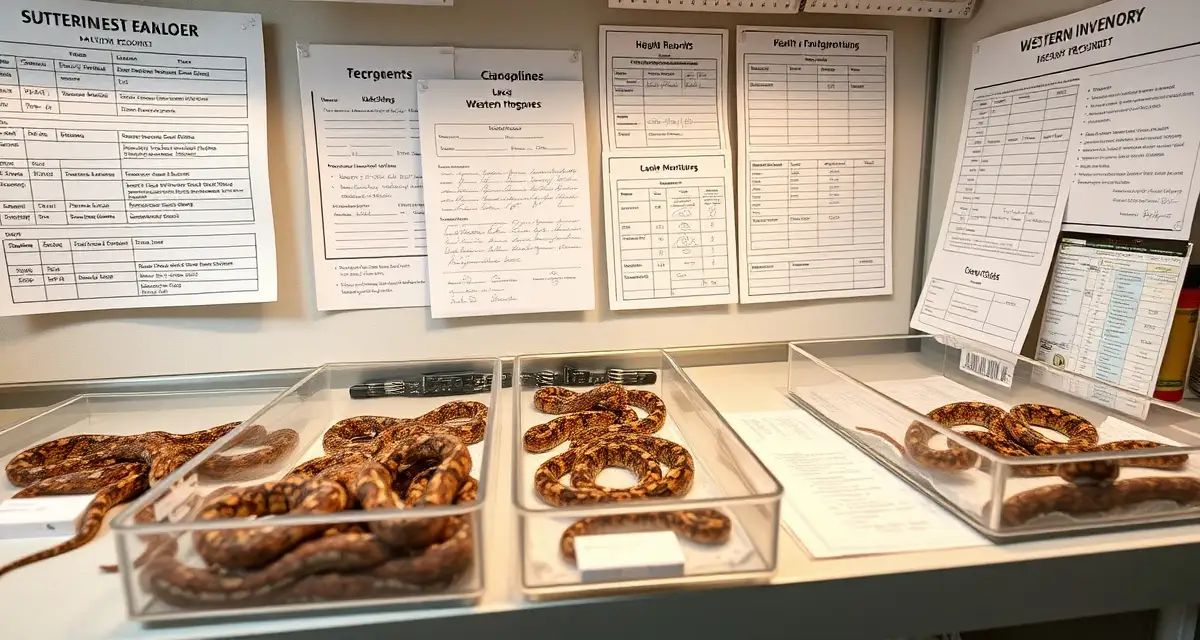
Hognose Snake Hatchling Inventory Management: Complete Breeder Guide
By HatchLedger Editorial Team · Published 2025-06-14 · Updated Mar 13, 2026
Hognose snake hatchling inventory management is more complex than for most colubrid species. Western hognose hatchlings (Heterodon nasicus) require extended individual attention during the feeding establishment phase, and managing a cohort of animals with different feeding escalation statuses, genetic compositions, and sale readiness levels requires organized, per-animal records. Breeders using integrated software report 30% less time on administrative tasks, and that efficiency is particularly valuable when your hatchling cohort requires the level of individual tracking that western hognose programs demand.
TL;DR
- Western hognose snakes (Heterodon nasicus) require 60-90 days of seasonal cycling at 50-60 degrees Fahrenheit for reliable breeding success.
- Females that skip cooling often fail to ovulate or produce infertile clutches, making brumation near-mandatory rather than optional.
- Clutch sizes average 8-18 eggs, with adult females commonly producing two clutches per season when managed well.
- Incubation runs 55-65 days at 82-84 degrees Fahrenheit with moderate humidity around 80-85%.
- Western hognose morphs include albino, axanthic, toffee, coral, and several combination lines with active development continuing.
Setting Up Hatchling Records at Emergence
Hatchling inventory management starts the moment animals emerge from eggs. Don't let animals go unrecorded even briefly.
At emergence, record for each hatchling:
- Unique ID (assign your next available ID in sequence or by clutch and individual number)
- Hatch date
- Clutch ID and parent IDs
- Initial weight
- Morph assessment (what morphs are visually expressed; genetic notes based on parentage)
- Physical notes (any anomalies, coloration observations)
Tag or label the tub with the animal's ID before anything else. In a clutch of 15 hatchlings, the animals that look similar to each other are only distinguishable by their ID assignment on hatch day. Mixing up animals later is a records problem you can't fully correct.
Log this in HatchLedger's reptile breeder hub immediately. Your hatchling inventory is live from the moment the first animal emerges.
Tracking Feeding Status
Feeding status is the most operationally important piece of information for each western hognose hatchling. Because feeding establishment often takes weeks of escalation work, you need to know at a glance where each animal is in the process.
Categories to track:
- Pre-first offer: Post-hatch, awaiting first shed
- Active escalation: First shed complete, feeding attempts underway, not yet established
- Established: 3 to 5 consecutive accepted meals on target prey type
- On hold: Health issue, veterinary review, or other reason feeding has paused
For animals in active escalation, the log detail matters: which techniques have been tried, which have produced responses, which are confirmed ineffective for this individual.
A western hognose hatchling that responds to toad-scented prey but not plain frozen-thawed is a different sale item than one eating plain frozen-thawed without assistance. Document the distinction and carry it through to your sale listing description.
Morph and Genetic Records
Every hatchling's genetic record is derived from its parentage. If both parents are documented, you know what each hatchling can carry. The challenge in western hognose programs is that het animals look identical to normals, and possible hets from parents of uncertain genetics require accurate probability documentation.
Connect each hatchling's genetic record to its parent IDs in your system. When you list animals for sale, you can generate accurate genetic descriptions from the record rather than reconstructing from memory.
Don't guess at genetics or round up het probabilities. A hatchling with a 33% chance of carrying a gene is a possible het, not a het. Accurate documentation builds trust with buyers over time; inflated genetic claims do the opposite.
Weight Tracking and Health Monitoring
Weigh every hatchling weekly during the active escalation period and bi-weekly after feeding is established. Log with date. Weight loss during active escalation indicates an animal falling behind; maintaining or gaining weight despite not yet accepting prey suggests it's healthy enough to continue escalation.
An animal that's actively losing weight after 6 to 8 weeks of escalation without any successful meals is a veterinary referral candidate. Your weight log documents the timeline and magnitude of the loss, which helps your veterinarian assess the situation accurately.
Reptile breeder software comparison tools that maintain per-animal weight logs connected to feeding records give you the complete picture that individual notebooks or spreadsheet cells don't.
Managing Sale Readiness
A western hognose hatchling is sale-ready when:
- Feeding is established on documented prey type and technique
- At least 3 to 5 consecutive meals are logged
- Weight is stable or increasing
- No health concerns are active
- Genetic documentation is complete
Track sale readiness status in your inventory. The difference between "for sale now" and "feeding escalation in progress" matters operationally. Don't list animals that aren't ready, and don't accidentally overlook animals that have been ready for weeks.
Sale Records and Clutch P&L
Every sale closes out an individual animal's inventory record. Log the sale price, buyer, and sale date. As sales accumulate from a clutch, the clutch revenue builds in your financial records.
Compare clutch revenue to clutch costs (proportional share of breeding pair costs, feeders, incubation supplies, show fees) to calculate per-clutch P&L. This is the number that tells you whether a particular pairing is actually profitable.
HatchLedger maintains this connection between individual animal sales and clutch-level financials automatically. When the last hatchling from a clutch sells, the complete P&L is already in your records without manual reconciliation.
Frequently Asked Questions
What is the best approach to hognose snake hatchling inventory management?
Assign IDs and create records on hatch day before anything else. Track feeding status per animal with full technique detail. Monitor weights weekly during escalation. Maintain genetic records from parentage. Set clear sale readiness criteria and only list animals that meet them. Log every sale connected to the clutch record. Don't sell animals with undocumented or inaccurate genetic claims; accurate documentation builds the buyer trust that drives repeat sales.
How do professional breeders handle hognose snake hatchling inventory management?
Professional western hognose breeders treat hatchling inventory as a structured production system. Every animal has a record from hatch day. Feeding escalation is logged in detail because it has direct sale value. Genetic records are accurate and traceable to parentage. Sale readiness is tracked per animal. Financial records connect individual sales to clutch P&L. Their inventory management is what makes their operation scalable and their buyer relationships sustainable.
What software helps manage hognose snake hatchling inventory management?
HatchLedger logs cooling start and end dates, temperature records, post-cooling feeding resumption, and all pairing sessions for each hognose breeding animal. These records connect to clutch outcomes when females lay, allowing you to compare your seasonal protocol to breeding results across multiple seasons. Free for up to 20 animals.
Can western hognose snakes double-clutch?
Yes, double-clutching is common and reliable in well-conditioned western hognose females. The first clutch is typically laid in April or May, and if the female feeds aggressively through June, a second clutch often follows in July or August. Tracking body condition through the season tells you whether a female is ready for a second clutch.
Why do some hognose females play dead during introductions?
Death-feigning (thanatosis) is a well-known hognose defensive behavior and can occur during breeding introductions. Most females habituate to handling over time and reduce this response. Experienced males are generally persistent through the female's initial responses. Keeping introduction sessions calm and minimally disturbing helps.
What is Hognose Snake Hatchling Inventory Management: Complete Breeder Guide?
Hognose Snake Hatchling Inventory Management is a comprehensive guide for western hognose breeders covering per-animal record-keeping from emergence through sale. It addresses the unique challenges of managing hatchlings with varying feeding escalation statuses, genetic compositions, and sale readiness levels. Because western hognose hatchlings require more individual attention than most colubrids during feeding establishment, organized tracking systems are essential for running an efficient, profitable breeding program.
How much does Hognose Snake Hatchling Inventory Management: Complete Breeder Guide cost?
HatchLedger's hatchling inventory management tools are available through a subscription plan designed for reptile breeders. Pricing varies by tier based on collection size and feature access. Breeders using integrated software like HatchLedger report saving approximately 30% of time previously spent on administrative tasks, making the cost quickly offset by improved efficiency across cohorts that demand the intensive individual tracking western hognose programs require.
How does Hognose Snake Hatchling Inventory Management: Complete Breeder Guide work?
The system works by assigning each hatchling a unique record at emergence, capturing genetic data, hatch date, weight, feeding status, and escalation history. As hatchlings progress through the feeding establishment phase, records update to reflect prey acceptance, refusal patterns, and assist-feeding notes. Inventory views let breeders sort animals by sale readiness, morph, or feeding status, giving a real-time snapshot of the entire cohort.
What are the benefits of Hognose Snake Hatchling Inventory Management: Complete Breeder Guide?
Key benefits include reduced administrative time, fewer missed feeding escalations, accurate genetic records for morph tracking, and clearer sale-readiness visibility. For western hognose programs specifically, where feeding refusals and escalation protocols are common, structured records prevent animals from slipping through the cracks. Breeders also gain clean documentation to share with buyers, supporting buyer confidence and repeat business across albino, axanthic, toffee, coral, and combination morph lines.
Who needs Hognose Snake Hatchling Inventory Management: Complete Breeder Guide?
Any western hognose breeder producing multiple clutches per season will benefit, particularly those managing adult females capable of producing two clutches annually with average sizes of 8-18 eggs. Hobbyist breeders scaling up, as well as established operations running parallel incubation cycles and multi-morph programs, need this level of per-animal organization. It is especially valuable when cohorts contain animals at different feeding escalation stages simultaneously.
How long does Hognose Snake Hatchling Inventory Management: Complete Breeder Guide take?
Initial record setup begins at emergence and is ongoing through the hatchling's first consistent feeding responses, which can span several weeks to months depending on the individual animal. The full inventory management cycle from hatch to sale-ready status typically runs 60-120 days for western hognose hatchlings, reflecting their extended feeding establishment phase compared to other colubrids. Brumation and breeding prep for the next season adds additional planning timeline considerations.
Related Articles
- Burmese Python Hatchling Inventory Management: Complete Breeder Guide
- Carpet Python Hatchling Inventory Management: Complete Breeder Guide
Sources
- USARK (United States Association of Reptile Keepers)
- Association of Reptilian and Amphibian Veterinarians (ARAV)
- Society for the Study of Amphibians and Reptiles (SSAR)
- Herpetological Review
- Great Plains Wildlife Management
Get Started with HatchLedger
Western hognose breeding with multiple morphs and double-clutching females benefits from connected records that link cooling dates, pairing introductions, and per-clutch outcomes. HatchLedger tracks all of it and lets you compare seasonal protocols against results over multiple years. Free for up to 20 animals.