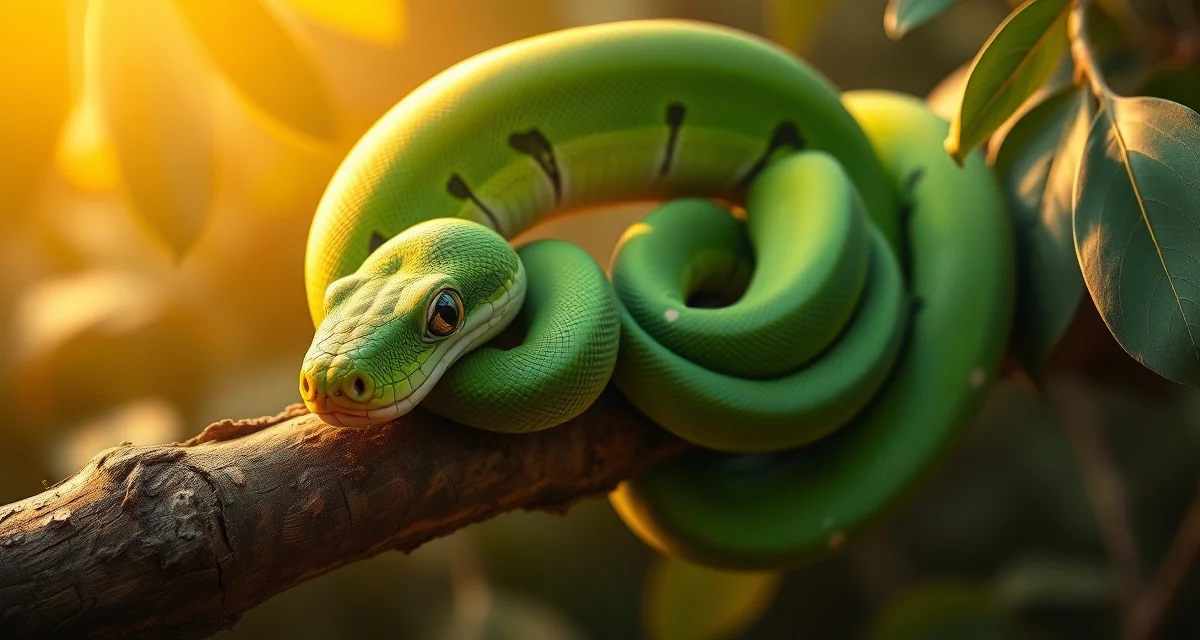
Green Tree Python Clutch Size and Egg Count: Complete Breeder Guide
By HatchLedger Editorial Team · Published 2025-03-19 · Updated Mar 13, 2026
Green tree python clutch size is one of the most significant variables affecting your profitability as a breeder. A well-conditioned female producing 20 eggs is a very different business outcome than the same female producing 8. Understanding what drives clutch size, and how to track those variables over time, is essential for any serious GTP program. Breeders using integrated software report 30% less time on administrative tasks, which frees up time to focus on the husbandry decisions that actually move the needle on clutch outcomes.
TL;DR
- Green tree pythons (Morelia viridis) are arboreal specialists requiring perch-based enclosures and husbandry quite different from terrestrial pythons.
- Breeding is triggered by a dry season simulation with reduced humidity and a modest temperature reduction over 6-8 weeks.
- Clutch sizes average 12-25 eggs, with Biak locale animals producing larger clutches than Sorong or Aru.
- Incubation runs 47-52 days at 84-86 degrees Fahrenheit, shorter than most python species at equivalent temperatures.
- Locale documentation is critical: Biak, Sorong, Aru, Kofiau, and locality blends all carry distinct market values and buyer expectations.
The key insight that separates experienced GTP breeders from newer ones is this: clutch size isn't random. It's closely correlated to female body condition at breeding, successful seasonal cycling, and the number of productive lock-ups during the breeding season. When you log these variables consistently, patterns emerge that let you predict and improve results year over year.
What to Expect: Typical GTP Clutch Sizes
Green tree pythons generally produce clutches of 10 to 25 eggs, with an average around 12 to 18 for well-conditioned adult females. First-time breeders often produce smaller clutches, sometimes as few as 5 to 8 eggs. Older, established females tend to produce larger clutches, though there's a ceiling that varies by individual animal and locale.
Locality matters. Aru GTPs, Biak GTPs, and mainland New Guinea animals can differ in typical clutch sizes, body size at maturity, and temperament. Know your animals' origins and research what other breeders with the same locale have reported.
Infertile eggs (slugs) are common in GTPs, especially in first-time breeders or females that had limited lock-up time. A clutch with 50% viable eggs is disappointing but not unusual. A female consistently producing 80%+ viable eggs is a valuable animal worth noting in your records.
Factors That Influence Clutch Size
Female Body Condition
This is the single most important factor. A female that enters the breeding season underweight, obese, or recovering from illness will produce fewer follicles and potentially smaller eggs. Ideal condition means the female has good muscle tone, a rounded cross-section without being obese, and a healthy feeding response.
Weigh your female at the start of conditioning and track her weight weekly through the season. You want to see stable or slightly increasing weight through conditioning, followed by normal weight gain as follicles develop. Log every weight measurement in your animal records.
Number of Productive Lock-Ups
More confirmed lock-ups generally correlate with higher fertility rates, though they don't directly increase egg count. If your female only had one observed lock-up and produces a clutch with 40% slugs, the reproductive access may have been insufficient. Multiple lock-ups over several weeks give better odds of fertilization across all follicles.
Age and Breeding History
Young females breeding for the first time typically produce smaller clutches. Experienced females in their prime years (roughly ages 3-8 for GTPs, depending on locale) tend to produce the largest, most consistent clutches. Track each female's breeding history across seasons so you can identify when she's hitting her peak production years versus declining output in older animals.
Environmental Cycling Quality
A female that wasn't effectively cycled won't develop optimal follicle counts. If you skipped or shortened the dry phase, or didn't ramp humidity and temperatures adequately during the wet phase, you may see a reduced clutch as a result. This is exactly why logging your environmental conditions alongside your breeding outcomes matters, so you can correlate the two in your reptile breeder hub records and adjust future seasons.
Tracking Your Clutch from Lay to Hatch
When your female lays her eggs, your job isn't over. You need to record:
- Total egg count
- Number of eggs that appear viable versus clearly infertile at lay
- Date and time of lay
- Female's weight before and after laying
- Egg weights if you're tracking individually
Candle eggs 10 to 14 days after lay to assess fertility. Viable eggs will show visible vascularization; infertile eggs remain opaque. Log your candling results in your clutch record. This is also a good time to remove clearly infertile eggs so they don't contaminate the viable clutch.
Connecting Clutch Size to P&L
Clutch size directly determines your revenue ceiling for a breeding pair. If a female produces 15 eggs with 12 viable, and 10 hatch successfully, your sales revenue depends on morph breakdown, sex ratios, and market pricing. But clutch size is the foundation of that calculation.
Spreadsheets and tools like HerpTracker don't connect egg counts to financial outcomes automatically. HatchLedger does. When you log a clutch in HatchLedger, you can add individual hatchling records with morph IDs, set sale prices, and track deposits against each animal. Your clutch P&L calculates automatically based on your inputs, so you always know whether a particular pairing is profitable. Reptile breeder software comparison articles consistently identify this integrated financial view as a major advantage for breeding programs operating at scale.
Improving Clutch Size Over Time
The breeders producing the largest, most consistent GTP clutches share a few common practices:
They condition females for longer. A minimum of 60 to 90 days of pre-breeding conditioning is standard. Some breeders run conditioning for an entire year, managing female weight and feeding year-round with breeding in mind.
They prioritize female weight management. Not just during breeding season, but year-round. A female that stays in good condition between seasons hits her next breeding cycle faster and with better follicle development.
They document everything. Clutch size trends across seasons, combined with condition notes and environmental data, reveal what's working and what isn't. This documentation is only useful if it's organized and searchable, which is exactly where dedicated breeding software pays for itself.
Frequently Asked Questions
What is the best approach to green tree python clutch size and egg count?
The best approach is to maximize female condition before breeding and ensure thorough environmental cycling. A well-conditioned female that has been through a proper dry-to-wet transition with multiple confirmed lock-ups will produce larger, more viable clutches than one that was rushed into breeding. Track female weight throughout conditioning, log all pairing dates and durations, and record complete clutch data including individual egg counts and fertility assessments. Review this data across seasons to identify which husbandry decisions correlate with your best clutch outcomes.
How do professional breeders handle green tree python clutch size and egg count?
Professional GTP breeders treat clutch size as a performance metric tied to their overall program quality. They condition females methodically, document every relevant variable, and compare clutch sizes across seasons to identify trends. They weigh eggs individually and candle at multiple points during incubation to track fertility rates. They also track which pairings produce the best fertility rates, so they can prioritize high-performing pairs in future seasons. Most maintain detailed records in breeding software that connects animal records to clutch data and financial outcomes.
What software helps manage green tree python clutch size and egg count?
HatchLedger is purpose-built for reptile breeders, connecting animal records, breeding history, clutch outcomes, and financial tracking in one system. Unlike generic spreadsheets, it's designed around the specific workflow of an active breeding season. Free for up to 20 animals.
Why is locale documentation so important for green tree pythons?
Buyers of green tree pythons are often very specific about locality. Biak animals are prized for large adult size and a blue ontogenetic coloration phase. Sorong and Aru animals are known for consistent solid green adult coloration. Locality blends from unknown crosses are worth significantly less than documented pure-locale animals. Recording locale information from acquisition through sale is essential.
How long does it take green tree python neonates to change color?
The ontogenetic color change from yellow or red neonate coloration to adult green takes approximately 6-12 months in most locales. Biak animals often go through a blue phase during the transition. Buyers of neonates should understand the timeline. Photographing animals at regular intervals through the color change documents the process and makes for compelling sales content.
What is Green Tree Python Clutch Size and Egg Count: Complete Breeder Guide?
This is a comprehensive breeding reference covering green tree python (Morelia viridis) clutch sizes, egg counts, and the key variables that influence reproductive outcomes. It explains how locale genetics, female conditioning, seasonal cycling, and incubation protocols affect clutch size — which typically ranges from 12 to 25 eggs. The guide is designed to help breeders make informed husbandry decisions and track breeding data systematically to improve results season over season.
How much does Green Tree Python Clutch Size and Egg Count: Complete Breeder Guide cost?
The guide itself is free editorial content published on HatchLedger. There is no purchase required to read it. HatchLedger does offer breeding management software that integrates clutch tracking, incubation logging, and locale documentation — pricing for that platform is listed separately on the site. The core information about GTP clutch sizes, breeding triggers, and incubation parameters is accessible to all readers at no cost.
How does Green Tree Python Clutch Size and Egg Count: Complete Breeder Guide work?
The guide walks breeders through the full GTP reproductive cycle: conditioning females before breeding season, simulating a dry season with reduced humidity and modest temperature drops over 6-8 weeks, monitoring ovulation, and managing incubation at 84-86°F for 47-52 days. It explains how locale (Biak, Sorong, Aru, Kofiau) affects expected clutch size and market value, and how documenting these variables over multiple seasons leads to more predictable breeding outcomes.
What are the benefits of Green Tree Python Clutch Size and Egg Count: Complete Breeder Guide?
The primary benefit is helping breeders understand what actually drives clutch size variation — locale genetics, female body condition, seasonal cycling accuracy, and incubation consistency. Armed with this knowledge, breeders can optimize each season rather than guessing. Secondary benefits include understanding the market implications of locale documentation and leveraging software tools to cut administrative time by roughly 30%, freeing more hours for hands-on husbandry work.
Who needs Green Tree Python Clutch Size and Egg Count: Complete Breeder Guide?
This guide is written for serious GTP breeders at any experience level — from hobbyists producing their first clutch to commercial operations running multiple locale-specific breeding groups. It is especially useful for breeders transitioning from other python species, since GTP husbandry differs significantly from terrestrial pythons. Anyone looking to improve clutch consistency, understand locale value differences, or build a more systematic breeding program will find it directly applicable.
How long does Green Tree Python Clutch Size and Egg Count: Complete Breeder Guide take?
Reading the guide takes roughly 10-15 minutes. Implementing the recommendations — particularly the 6-8 week dry season simulation and conditioning protocol — takes one full breeding season to execute properly. Seeing meaningful data trends across clutch size and incubation outcomes requires two to three seasons of consistent record-keeping. The guide is designed to be revisited each season as a reference checklist rather than read once and set aside.
Related Articles
Sources
- USARK (United States Association of Reptile Keepers)
- Association of Reptilian and Amphibian Veterinarians (ARAV)
- CITES Appendix II (international trade documentation)
- Herpetofauna (Australian Herpetological Society)
- Green Tree Python Foundation
Get Started with HatchLedger
Green tree python breeding demands locale documentation, cycling records, and clutch management that generic spreadsheets handle poorly. HatchLedger keeps your locale lineage, breeding history, and per-clutch records connected so buyers get complete documentation and you build a traceable breeding program. Try it free with up to 20 animals.