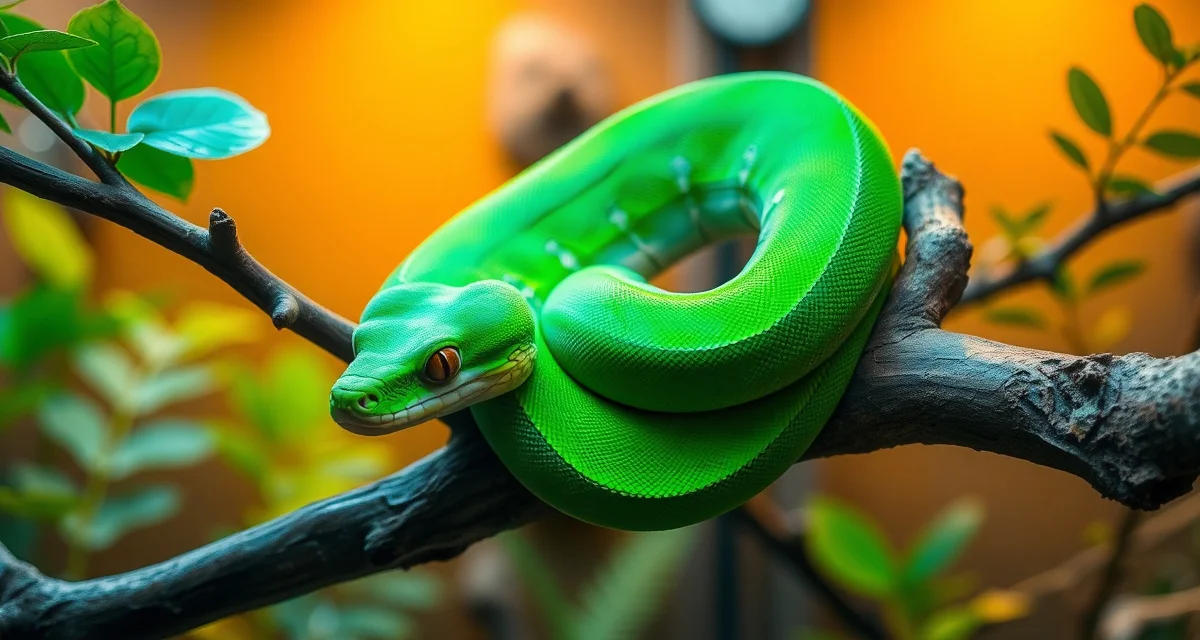
Green Tree Python Seasonal Cycling: Complete Breeder Guide
By HatchLedger Editorial Team · Published 2025-07-08 · Updated Mar 13, 2026
Green tree python seasonal cycling is the foundation of a successful breeding program. GTPs are more responsive to environmental cues than many captive python species, and without a proper cycling protocol, breeding attempts often fail entirely. Understanding what triggers GTP reproductive behavior, how to simulate those conditions in captivity, and how to document your cycling protocol for repeatable results is what separates productive GTP programs from frustrating ones. Breeders using integrated software report 30% less time on administrative tasks, freeing up the careful environmental management that cycling requires.
TL;DR
- Green tree pythons (Morelia viridis) are arboreal specialists requiring perch-based enclosures and husbandry quite different from terrestrial pythons.
- Breeding is triggered by a dry season simulation with reduced humidity and a modest temperature reduction over 6-8 weeks.
- Clutch sizes average 12-25 eggs, with Biak locale animals producing larger clutches than Sorong or Aru.
- Incubation runs 47-52 days at 84-86 degrees Fahrenheit, shorter than most python species at equivalent temperatures.
- Locale documentation is critical: Biak, Sorong, Aru, Kofiau, and locality blends all carry distinct market values and buyer expectations.
Why Seasonal Cycling Matters for GTPs
In their native range across New Guinea and northern Australia, GTPs experience distinct wet and dry seasons. Breeding in the wild corresponds with the transition from dry to wet season conditions. In captivity, you need to create a convincing version of this transition to stimulate reproductive behavior in both males and females.
GTPs that are kept at constant year-round conditions often fail to cycle reproductively. Females may not develop follicles. Males may show no interest in females during introductions. The investment in quality animals and housing doesn't pay off if the environmental trigger for breeding isn't provided.
The Two-Phase Cycling Protocol
Phase One: The Dry Season
The dry phase mimics the conditions preceding breeding in the wild. Begin the dry phase 4 to 6 weeks before you intend to introduce males to females.
Temperature adjustments: Allow nighttime temperatures to drop from normal (76-80°F) to a cooler range of 72-76°F. Maintain daytime highs around 84-86°F. The nighttime drop is the more significant cue.
Humidity reduction: Reduce misting frequency from twice daily to once daily or every other day. Allow ambient humidity to drop from 60-70% to 50-60%. The enclosure should feel noticeably drier without becoming dangerously low.
Feeding adjustments: Many breeders reduce feeding frequency slightly during the dry phase. Females may naturally begin refusing meals as the cycle progresses. Log all meal refusals; they're normal during this phase and expected.
Photoperiod: Reduce light cycle from 12-13 hours to 10-11 hours of light. This subtle change contributes to the overall seasonal signal alongside temperature and humidity changes.
Phase Two: The Wet Season
The wet phase transition triggers breeding behavior. This phase begins 1 to 2 weeks before male introductions.
Temperature return: Raise nighttime temperatures back to 76-80°F. Maintain daytime highs at 84-88°F. The warming nighttime temperatures signal the onset of the wet season.
Humidity increase: Increase misting frequency to twice daily or more. Allow humidity to return to 70-80% ambient with misting spikes to 90%+. This increase is often dramatic compared to the dry phase.
Feeding resumption: Resume normal feeding schedules. Females that were refusing meals during the dry phase should resume eating or show renewed interest.
Photoperiod extension: Return the light cycle to 12-13 hours of light.
The transition from dry to wet, particularly the humidity increase and temperature warming at night, is the primary breeding trigger. Some breeders also simulate rain events by misting more aggressively during the transition period.
Timing Your Cycle
Most captive GTP breeders run their cycling protocol in the fall and winter months in the northern hemisphere, introducing males between November and February. This produces clutches from late winter through spring.
However, successful breeders also cycle GTPs outside these conventional windows. The key is your specific animals' history. If your females have cycled successfully at a specific time of year before, match that timing in subsequent seasons.
Log your cycling start and end dates each year. HatchLedger's reptile breeder hub allows you to record these dates alongside your breeding outcomes, so you can review whether earlier or later cycling starts produced better results for individual animals over multiple seasons.
Cycling Males
Males need to be cycled as well as females. A male kept at constant conditions year-round may not show breeding behavior during introductions even when the female is receptive.
Run your males through the same dry-to-wet protocol as your females. Males often show increased restlessness and movement after the wet phase transition begins, which is a behavioral signal that they're ready for introduction.
Monitoring Female Response
Watch your females carefully during the cycling protocol for signs that it's working:
- Increased activity in the evenings after the wet phase begins
- Spending time exploring lower areas of the enclosure
- Displaying a gravid posture or restlessness
- Resuming feeding after dry phase refusals
Log these behavioral observations with dates. They're qualitative data that, combined with your environmental logs, helps you understand how your specific animals respond to cycling. Over multiple seasons, you'll develop a pattern for each female that tells you when she's genuinely ready for introduction.
When Cycling Doesn't Work
If a female shows no response to a complete dry-to-wet cycling protocol, consider:
Was the cycling protocol substantial enough? Review your temperature and humidity logs. Minor changes may not have registered as meaningful seasonal cues. The nighttime temperature drop should be at minimum 6 to 8°F from normal.
Is the female at appropriate age and condition? Females under 24 months or in poor body condition may not cycle regardless of environmental cues.
Does the female have an underlying health issue? Parasitic loads, infections, and other health problems can suppress reproductive cycling. A vet check may be warranted if a well-conditioned adult female repeatedly fails to cycle.
Compare your cycling parameters across seasons in reptile breeder software comparison-recommended software. If one season produced excellent breeding activity and another produced none, your environmental logs will show you what was different.
Frequently Asked Questions
What is the best approach to green tree python seasonal cycling?
Run a two-phase cycling protocol with a clear dry phase of 4 to 6 weeks and a wet phase transition before introductions. The dry phase should include a meaningful nighttime temperature drop (to 72-76°F), reduced misting frequency, and shortened photoperiod. The wet phase transition should include restored nighttime temps, significantly increased humidity and misting, and restored photoperiod. Log all environmental parameters and female behavioral responses throughout. Review your cycling logs from previous seasons alongside breeding outcomes to refine timing and depth of cycling for your specific animals.
How do professional breeders handle green tree python seasonal cycling?
Professional breeders treat cycling as a documented protocol, not a casual adjustment. They log temperature and humidity levels throughout the dry and wet phases, note the specific dates when behavioral changes occur in each female, and review this data alongside clutch outcomes after each season. They cycle both males and females simultaneously and time the wet phase transition carefully to match female readiness indicators. Over multiple seasons, they develop individual cycling profiles for their breeding animals that allow for more precise timing of introductions.
What software helps manage green tree python seasonal cycling?
HatchLedger is purpose-built for reptile breeders, connecting animal records, breeding history, clutch outcomes, and financial tracking in one system. Unlike generic spreadsheets, it's designed around the specific workflow of an active breeding season. Free for up to 20 animals.
Why is locale documentation so important for green tree pythons?
Buyers of green tree pythons are often very specific about locality. Biak animals are prized for large adult size and a blue ontogenetic coloration phase. Sorong and Aru animals are known for consistent solid green adult coloration. Locality blends from unknown crosses are worth significantly less than documented pure-locale animals. Recording locale information from acquisition through sale is essential.
How long does it take green tree python neonates to change color?
The ontogenetic color change from yellow or red neonate coloration to adult green takes approximately 6-12 months in most locales. Biak animals often go through a blue phase during the transition. Buyers of neonates should understand the timeline. Photographing animals at regular intervals through the color change documents the process and makes for compelling sales content.
What is Green Tree Python Seasonal Cycling: Complete Breeder Guide?
Green Tree Python Seasonal Cycling: Complete Breeder Guide is a comprehensive resource covering the environmental protocols needed to trigger reproductive behavior in Morelia viridis. It details how to simulate dry season conditions in captivity, including humidity reduction, modest temperature drops, and photoperiod adjustments over 6-8 weeks. The guide also covers locale-specific considerations for Biak, Sorong, Aru, and Kofiau animals, incubation parameters, and documentation strategies for building repeatable, productive breeding programs season after season.
How much does Green Tree Python Seasonal Cycling: Complete Breeder Guide cost?
The guide itself is free editorial content published on HatchLedger. There are no purchase requirements to access the breeding and cycling information. HatchLedger does offer breeding management software that helps breeders track cycling protocols, clutch records, and locale documentation — that platform has its own pricing tier — but the seasonal cycling guide and its husbandry recommendations are available at no cost.
How does Green Tree Python Seasonal Cycling: Complete Breeder Guide work?
The guide works by walking breeders through a step-by-step dry season simulation: gradually reducing enclosure humidity and lowering ambient temperatures over 6-8 weeks to mimic the natural seasonal cues GTPs experience in New Guinea. It explains timing, environmental targets, male and female conditioning, and how to recognize breeding readiness. Locale-specific notes address differences between Biak, Sorong, and Aru animals, since cycling response and clutch size vary meaningfully across populations.
What are the benefits of Green Tree Python Seasonal Cycling: Complete Breeder Guide?
Following a proper GTP cycling protocol significantly improves breeding success rates compared to year-round stable conditions. Benefits include more reliable copulation, better clutch viability, and eggs that incubate predictably in 47-52 days at 84-86°F. Locale documentation practices covered in the guide also protect the market value of offspring. Breeders using structured record-keeping software alongside these protocols report spending roughly 30% less time on administrative tasks, allowing more focus on precise environmental management.
Who needs Green Tree Python Seasonal Cycling: Complete Breeder Guide?
This guide is designed for serious GTP keepers ready to attempt breeding — typically those who have successfully maintained adult animals for at least one full season and understand arboreal husbandry fundamentals. It is also useful for intermediate hobbyists transitioning from terrestrial pythons, since GTP cycling requirements differ substantially from species like ball pythons or blood pythons. Breeders working with locale-specific animals, particularly Biak or Sorong GTPs, will find the population-level detail especially relevant.
How long does Green Tree Python Seasonal Cycling: Complete Breeder Guide take?
The active cycling phase runs 6-8 weeks, during which humidity and temperature are gradually reduced to simulate dry season conditions. After cycling concludes and conditions are restored, breeders typically observe copulation attempts within 2-4 weeks. Incubation then runs 47-52 days at 84-86°F — shorter than most python species at equivalent temperatures. From the start of cycling to hatchling emergence, the full process spans approximately 4-5 months, making annual scheduling and documentation essential for consistent results.
Related Articles
Sources
- USARK (United States Association of Reptile Keepers)
- Association of Reptilian and Amphibian Veterinarians (ARAV)
- CITES Appendix II (international trade documentation)
- Herpetofauna (Australian Herpetological Society)
- Green Tree Python Foundation
Get Started with HatchLedger
Green tree python breeding demands locale documentation, cycling records, and clutch management that generic spreadsheets handle poorly. HatchLedger keeps your locale lineage, breeding history, and per-clutch records connected so buyers get complete documentation and you build a traceable breeding program. Try it free with up to 20 animals.