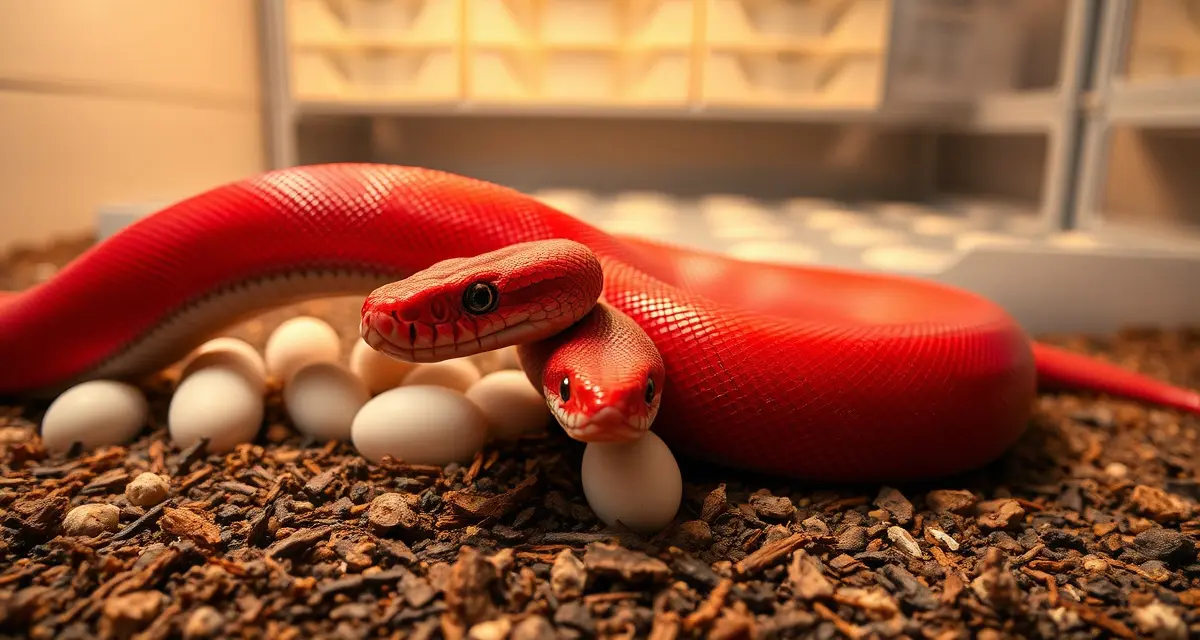
Blood Python Clutch Size and Egg Count: Complete Breeder Guide
Blood python clutch sizes are modest compared to larger constrictors but respectable for a short, heavy-bodied species. A typical blood python clutch ranges from 8-20 eggs, with well-conditioned females in their prime producing toward the higher end of that range. Breeders using integrated software report 30% less time on administrative tasks, which gives you time to focus on the female conditioning that drives clutch quality.
TL;DR
- Typical blood python clutches run 10-16 eggs, with first-time breeders often producing smaller clutches of 6-12 eggs that increase as the female matures
- Female body condition is the primary controllable variable, overweight blood pythons have fat deposits that impair reproductive function, so lean-to-moderate condition is the target
- A slug rate of 10-20% is within normal range for a well-managed clutch; higher rates point to male fertility issues, insufficient pairings, or female reproductive stress
- P. brongersmai and P. curtus have different typical clutch size ranges, so knowing your specific species matters for calibrating expectations
- Peak reproductive output occurs in females aged 5-10 years, with clutches of 18-20+ eggs possible in well-conditioned animals at that stage
- Tracking total eggs, slug count, viable count, and lay date per clutch across multiple seasons is how you identify trends in individual female productivity
Understanding what influences blood python clutch size, and tracking it systematically across seasons, is how you optimize your breeding program over time.
Typical Clutch Sizes
Most healthy adult female blood pythons in good breeding condition produce clutches of 10-16 eggs. First-time breeders often produce smaller clutches (6-12 eggs) that increase in size as the female matures and her reproductive system develops. Females that are very well-conditioned and at peak reproductive age (5-10 years) sometimes produce 18-20+ egg clutches.
Short-tailed pythons (Python curtus) and Sumatran blood pythons differ slightly in average clutch size. P. brongersmai (blood pythons) and P. curtus (Borneo short-tails) have different typical ranges, and knowing your specific blood python species identification helps calibrate expectations.
What Drives Clutch Size
Female body condition going into breeding season is the primary controllable variable. Blood pythons are characteristically heavy-bodied animals, and the temptation is to equate heaviness with health. But overweight blood pythons have fat deposits that impair reproductive function. Females in lean-to-moderate condition consistently produce better clutches than obese ones.
Blood pythons have a reputation for developing heart disease and other metabolic conditions when overfed. Breeding animals should be maintained on a feeding schedule that keeps them in good condition without excessive weight gain. Weigh breeding females regularly and adjust feeding frequency for breeding reptiles accordingly.
Nutritional quality matters alongside quantity. Blood pythons fed exclusively on nutritionally incomplete prey may show reproductive deficits. A varied diet that includes appropriate prey sizes helps ensure nutritional coverage.
Slug Rates and Egg Quality
Every blood python clutch includes some slugs. A rate of 10-20% slugs in an otherwise well-managed clutch is within normal range. Higher slug rates suggest either male fertility issues, insufficient successful pairings, or female reproductive stress.
Blood python eggs are relatively large and firm compared to the eggs of many other python species. A clutch of 12 good blood python eggs from a well-conditioned female is a healthy result. At lay, assess each egg: viable eggs are firm, white, and maintain their shape. Slugs are soft, collapsed, or obviously infertile. Remove slugs promptly.
HatchLedger tracks clutch records including total eggs, slug count, viable count, and lay date, linked to the breeding pair.
HatchLedger connects clutch data to financial records for per-clutch P&L analysis. Pairing this with consistent reptile breeding season records gives you the clearest picture of each female's long-term productivity.
Frequently Asked Questions
What is the best approach to blood python clutch size optimization?
Maintain females in lean-to-moderate body condition year-round -- blood pythons that are significantly overweight have impaired reproductive function. Weigh breeding females regularly and adjust feeding to maintain appropriate condition rather than maximizing size. Ensure sufficient confirmed copulation events during breeding season to minimize slug rates. Document every clutch with full statistics: total eggs, slug count, lay date. Compare across seasons to identify trends in individual female productivity.
How do professional breeders handle blood python clutch size tracking?
Professional blood python breeders monitor female body condition carefully because overconditioning is a genuine risk in this species. They connect clutch size data to female weight and condition records across seasons. When clutch sizes decline, they investigate whether the cause is female condition, male fertility, cycling inadequacy, or natural age-related decline. Financial analysis connects clutch size to revenue so they know the actual productivity of each breeding female.
What software helps manage blood python clutch records?
HatchLedger tracks clutch statistics and connects them to the parent pair's record for season-over-season comparison. The financial tools show clutch revenue against production costs so you can evaluate whether each breeding pair is generating appropriate returns.
At what age do blood pythons typically start producing their largest clutches?
Most blood python breeders see peak clutch output between ages 5 and 10, once the female's reproductive system is fully mature and she has been through several successful breeding seasons. Females bred too young, before they have reached adequate size and weight, often produce smaller clutches and may experience more reproductive stress. Waiting until a female is at least 3-4 years old and has reached a healthy adult weight before introducing her to breeding generally leads to better long-term productivity.
Does incubation method affect how many eggs survive from a blood python clutch?
Incubation method does not change the number of viable eggs laid, but it significantly affects how many of those eggs successfully hatch. Blood python eggs incubate well at temperatures between 88-90°F with moderate humidity, and maintaining stable conditions throughout the incubation period reduces mid-incubation losses. Eggs that were viable at lay can still fail if temperature spikes, humidity drops, or eggs are disturbed repeatedly, so consistent monitoring from lay to pip is important.
How does a blood python clutch size compare to other short-tailed python species?
P. brongersmai (blood pythons) and P. curtus (Borneo short-tails) tend to produce similar clutch size ranges, while P. breitensteini (Borneo blood pythons) often produce slightly smaller clutches on average. All three species are considered modest producers relative to larger pythons like reticulated pythons or Burmese pythons. Breeders working with multiple short-tailed python species should track each species separately rather than applying a single clutch size benchmark across all three.
Sources
- Reptile & Amphibian Ecology International (RAEI), research publications on Python species reproductive biology
- United States Association of Reptile Keepers (USARK), breeder husbandry guidelines and species care documentation
- Ball Python Society and Short-Tailed Python working groups, community breeding data and husbandry standards
- Journal of Herpetological Medicine and Surgery, peer-reviewed clinical and reproductive health studies in captive pythons
- Florida Fish and Wildlife Conservation Commission, captive reptile breeding and record-keeping regulatory guidance
Get Started with HatchLedger
HatchLedger gives blood python breeders a single place to record every clutch detail, egg counts, slug rates, lay dates, and female condition scores, and connects that data to financial records so you can see the actual productivity of each breeding pair across seasons. If you are managing multiple females or trying to identify why clutch sizes have shifted year over year, having that history organized and searchable makes a real difference. Start a free trial and bring your breeding records into one place.