Burmese Python Clutch Size and Egg Count: Complete Breeder Guide
By HatchLedger Editorial Team · Published 2025-07-06 · Updated Mar 13, 2026
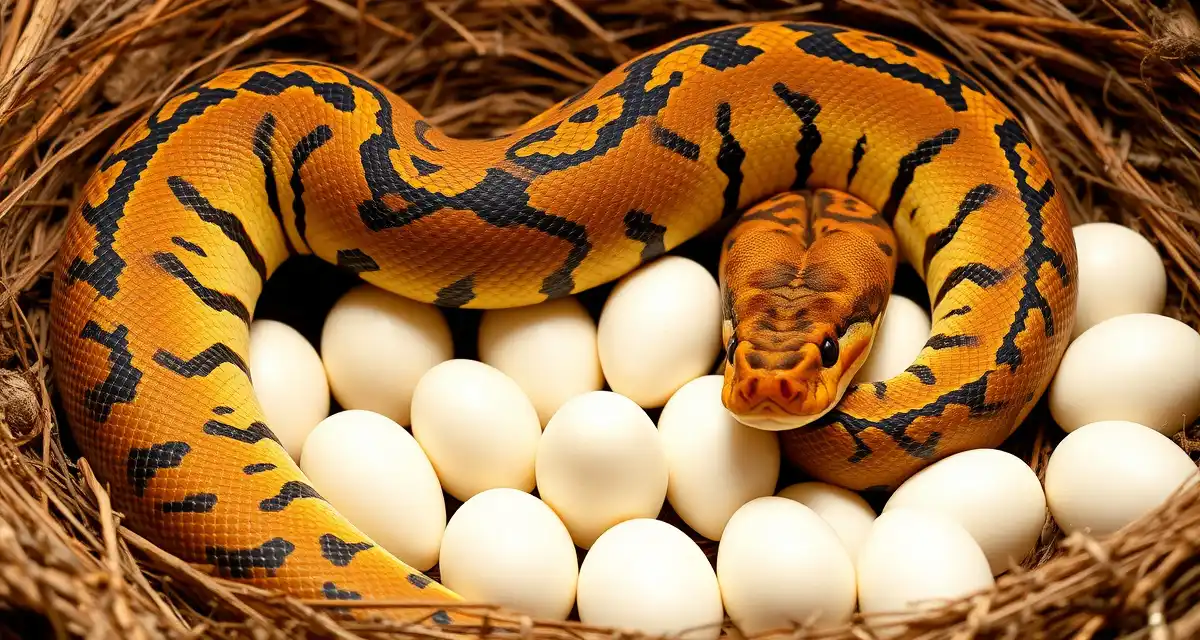
Burmese pythons are among the most prolific egg-laying reptiles in captivity. A mature, well-conditioned female can produce clutches of 50-100+ eggs, making them one of the highest-output breeding animals in the hobby. That scale changes the math of breeding significantly -- a single clutch from a productive female represents a major annual production event. Breeders using integrated software report 30% less time on administrative tasks, and with a clutch of 80 eggs requiring careful monitoring through incubation parameters, that efficiency matters.
TL;DR
- Burmese pythons (Python bivittatus) are among the largest constrictors in captivity, with breeding females commonly exceeding 100-200 lbs.
- Clutch sizes average 25-50 eggs, making Burmese pythons among the most productive large constrictors in captive breeding.
- Cycling typically involves a 4-8 week period of reduced temperatures (dropping 8-12 degrees Fahrenheit) and reduced feeding frequency.
- Incubation runs 60-65 days at 88-90 degrees Fahrenheit, with females capable of thermoregulating eggs by muscular shivering.
- Compliance requirements requirements for Burmese python ownership and interstate transport vary by state, with federal protections under the Lacey Act applying in some jurisdictions.
Clutch size in Burmese pythons correlates most strongly with female body size and body condition. A 15-foot female in prime breeding condition will typically outproduce a 10-foot female from the same genetics, everything else being equal. Age matters too -- females reach peak productivity somewhere in the 5-12 year range and may produce larger clutches as they mature into their prime years.
Average Clutch Sizes by Female Size
As a rough guide, expect approximately one egg per foot of female length, though this varies considerably. A 10-foot female might produce 25-40 eggs. A 14-foot female in excellent condition could produce 60-80 eggs. Very large females (16-18 feet) occasionally produce clutches of 90-100+ eggs, though these tend to include a higher proportion of slugs as total egg count increases.
Slugs -- infertile, unfertilized eggs -- occur in every clutch in small numbers. A rate of 5-15% slugs is normal in well-managed pairings. Significantly higher slug rates (25%+) can indicate male fertility issues, insufficient copulation events, or female stress during breeding.
What Drives Larger Clutches
The primary driver of larger, higher-quality clutches is the female's nutritional condition going into the breeding season. Females that are well-fed and at healthy body weight in the months before cycling begins consistently produce larger clutches than animals that are thin or nutritionally compromised.
Body composition matters, not just body weight. An overly obese female carries excessive fat deposits around her reproductive tract that can impair ovarian function and reduce egg production. Females in lean-to-moderate condition, where ribs are not visible but the spine is detectable, typically outperform both very thin and very heavy animals.
Pairing frequency during the breeding season also affects clutch size indirectly, through fertilization success. Females with multiple confirmed copulation events produce clutches with lower slug rates than females that had only one or two brief breeding contacts.
Egg Condition at Lay
When a Burmese female lays her clutch, assess egg quality immediately. Healthy viable eggs are firm, white, and maintain their shape when handled gently. Slugs are typically smaller, yellow or off-white, and soft or collapsed. Remove slugs from the clutch promptly to prevent mold growth that can affect adjacent viable eggs.
Occasionally, eggs that appear viable at lay will collapse during incubation. Some of these are fertilized eggs that failed to develop normally. Others are viable eggs that suffered incubation problems. Tracking which eggs in a clutch fail and at what stage helps identify whether the problem is pre-incubation (fertilization failure) or incubation-related.
Weigh eggs at lay if possible. Egg weights at the beginning of incubation, tracked against weights at various intervals, help assess whether eggs are losing or gaining appropriate moisture levels.
Calculating Clutch Value
A Burmese clutch's value depends heavily on the morph genetics of the parents. A clutch from two normal Burmese pythons produces animals worth $50-200 each at retail. A clutch from parents carrying significant genetics -- Albino, Green, Labyrinth, Granite -- can produce animals worth substantially more depending on the specific outcomes.
Before breeding season, calculate your projected clutch value based on expected morph outcomes and current market prices. Compare that projection to your estimated production costs (female's annual maintenance, male's seasonal costs, incubation costs) to evaluate whether the pairing makes financial sense.
HatchLedger connects clutch records to P&L analysis, so your projected and actual clutch values are tracked in the same system as your production costs.
HatchLedger lets you build per-clutch financial reports that show actual return against actual investment for every breeding season.
Frequently Asked Questions
What is the best approach to Burmese python clutch size optimization?
Focus on the female's nutritional condition in the months leading up to breeding season. Animals in lean-to-moderate body condition with good muscle tone consistently outperform underweight or obese females. Ensure sufficient copulation events during breeding season to maximize fertilization rates and minimize slug percentage. At lay, assess and document each egg's condition and promptly remove slugs to protect viable eggs. Track total egg count, slug count, and estimated morph outcomes as the foundation of your clutch record.
How do professional breeders handle Burmese python clutch size tracking?
Professional Burmese breeders document every clutch in detail: total egg count, slug count, egg weights if measured, lay date, and estimated genetic outcomes per egg. They compare this data across seasons for each female to evaluate whether her productivity is stable, improving, or declining. Clutch records connect to financial analysis so they can evaluate whether each breeding female is generating an appropriate return on the investment she represents. Females with consistently declining productivity or high slug rates get evaluated for replacement or retirement from the breeding program.
What software helps manage Burmese python clutch records?
HatchLedger tracks every animal, clutch, and sale record for Burmese python breeders, with documentation that supports regulatory compliance and buyer confidence. When managing large clutches and compliance requirements simultaneously, a connected system prevents the record-keeping gaps that create problems at sale. Free for up to 20 animals.
Are Burmese pythons legal to own and breed in all US states?
No. Burmese pythons are listed as an injurious species under the Lacey Act, which restricts interstate transport. Several states have additional bans on ownership entirely. Check current state and federal regulations before acquiring or transporting animals. USARK maintains updated resources on applicable regulations.
How large should a Burmese python enclosure be for a breeding pair?
Breeding females typically require enclosures of at least 8x4 feet and often larger for full-grown adults. Dedicated breeding rooms or custom builds are standard at scale. Thermal gradient with hot spots at 88-92 degrees Fahrenheit and ambient temperatures in the mid-70s allows proper thermoregulation.
What is Burmese Python Clutch Size and Egg Count: Complete Breeder Guide?
This is a comprehensive breeding reference covering everything Burmese python keepers need to manage clutch production — from expected egg counts (averaging 25-50 eggs per clutch) to cycling protocols, incubation parameters, and compliance considerations. It breaks down the biology and logistics of breeding one of the most prolific large constrictors in captivity, with practical guidance on temperature cycling, incubation setup at 88-90°F, and what to expect across a 60-65 day incubation period.
How much does Burmese Python Clutch Size and Egg Count: Complete Breeder Guide cost?
The guide is free to read on HatchLedger. There is no cost to access the article. HatchLedger does offer breeding management software for tracking clutches, incubation data, and animal records — pricing for that platform is available separately on the site. The guide itself is provided as an educational resource for the reptile breeding community.
How does Burmese Python Clutch Size and Egg Count: Complete Breeder Guide work?
The guide walks breeders through the full Burmese python reproductive cycle: conditioning females, implementing a 4-8 week cooling period with temperatures reduced 8-12°F, recognizing pre-lay behavior, setting eggs at the correct incubation parameters, and monitoring through hatch. It covers both the biological side — including the female's ability to thermoregulate eggs via muscular shivering — and the practical record-keeping demands of managing large clutches.
What are the benefits of Burmese Python Clutch Size and Egg Count: Complete Breeder Guide?
The guide helps breeders set realistic expectations for clutch size, reduce errors during incubation, and stay informed on federal and state compliance requirements under the Lacey Act. For operations managing 50-100+ egg clutches, having clear protocols reduces costly mistakes. Breeders using structured tracking tools alongside guides like this report spending significantly less time on administrative tasks, freeing more time for hands-on animal care.
Who needs Burmese Python Clutch Size and Egg Count: Complete Breeder Guide?
This guide is aimed at intermediate to advanced reptile breeders working with Burmese pythons (Python bivittatus), as well as experienced keepers considering their first breeding season with a large female. It's also useful for anyone researching the regulatory landscape around Burmese python ownership and interstate transport, given the federal protections under the Lacey Act that affect how animals can be moved and sold.
How long does Burmese Python Clutch Size and Egg Count: Complete Breeder Guide take?
Reading the guide takes roughly 10-15 minutes. Applying it to a full breeding season is a longer commitment: cycling females typically requires 4-8 weeks, followed by a 60-65 day incubation period. From the start of temperature reduction to hatch day, breeders should plan for approximately 3-4 months. Add pre-conditioning time and post-hatch care for hatchlings, and a complete Burmese python breeding cycle spans most of the calendar year.
Related Articles
- Boa Constrictor Clutch Size and Egg Count: Complete Breeder Guide
- Corn Snake Clutch Size and Egg Count: Complete Breeder Guide
- Hognose Snake Clutch Size and Egg Count: Complete Breeder Guide
Sources
- USARK (United States Association of Reptile Keepers)
- Association of Reptilian and Amphibian Veterinarians (ARAV)
- US Fish and Wildlife Service (Injurious Wildlife regulations)
- Journal of Herpetology (Society for the Study of Amphibians and Reptiles)
- Florida Fish and Wildlife Conservation Commission
Get Started with HatchLedger
Burmese python breeding involves large animals, large clutches, and compliance documentation that is difficult to manage without a dedicated system. HatchLedger tracks every animal, clutch, and sale record in one place, giving you the documentation you need for regulatory compliance and buyer confidence. Try it free with up to 20 animals.