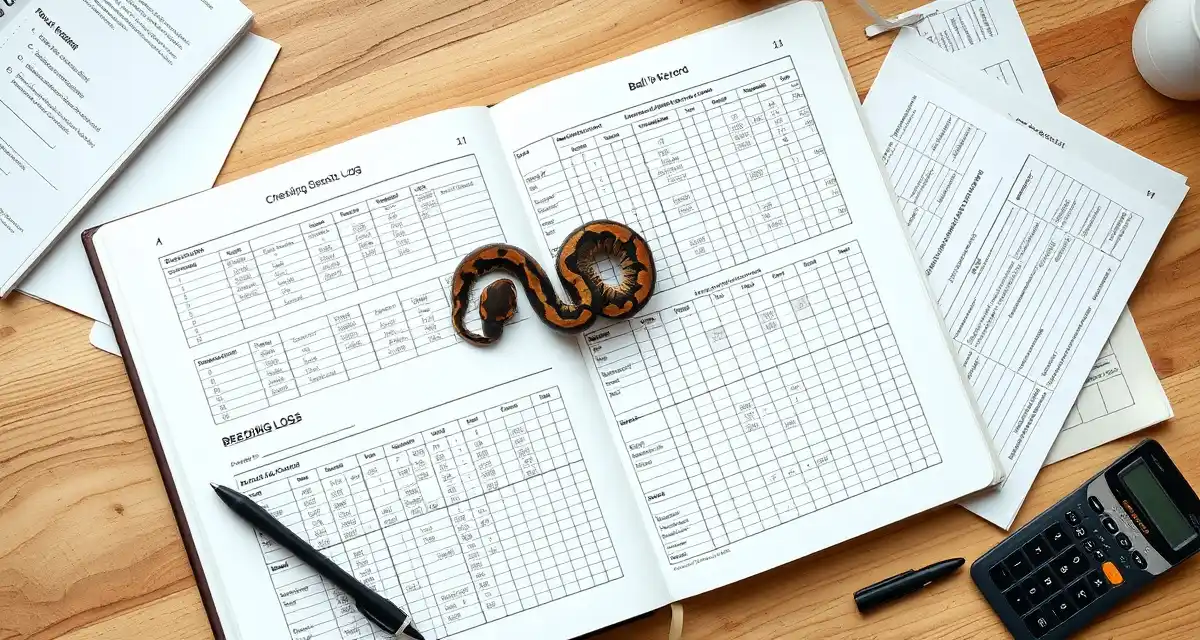
Record Keeping for Ball Python Breeders
By HatchLedger Editorial Team · Published 2025-03-14 · Updated Mar 13, 2026
Bad records cost money. I learned this the expensive way, sold a het Clown female for $175 because I wasn't sure whether she was het Clown or possible het Clown, because I hadn't documented her parentage properly. Found the original pairing records a month later: both parents were visual Clown. That animal was a guaranteed het. Should have been priced at $300.
TL;DR
- Ball python breeding operations require systematic record-keeping from pre-season preparation through end-of-season sales.
- Females at 1,200-1,500g or more are the target weight before introducing them to a breeding male.
- Ovulation detection is the key event that anchors pre-lay shed and lay date calculations.
- Clutch profitability guide depends on understanding actual cost basis per animal, not just gross sale revenue.
- Well-documented animals with complete feeding histories and clear genetic records consistently sell faster and at higher prices.
That mistake paid for several years of my HatchLedger subscription. Good records aren't busywork. They directly affect your ability to price accurately and sell with confidence.
What You Actually Need to Track
Ball python breeding records break into four categories:
1. Animal Records
For every animal in your collection:
- Species, sex, morph/genes
- Date acquired
- Source (who you bought from)
- Acquisition cost
- Date of birth or estimated hatch year
- Current weight (updated monthly)
- Feeding history (what, when, how much, accepted/refused)
- Shed history
- Veterinary visits
2. Breeding Records
For every pairing:
- Female ID, male ID
- Introduction dates
- Observed lock dates
- Ovulation observation date
- Pre-lay shed date
- Egg deposition date
- Number of eggs (viable and slugs)
3. Incubation Records
For every clutch:
- Lay date
- Incubation start date
- Temperature and humidity targets
- Weekly egg weight observations
- First pip date
- Hatch date
- Number of successful hatchlings
4. Hatchling Records
For every offspring:
- Hatch date
- Morph/genetic identification
- Sex (method used)
- Birth weight
- Feeding history
- Sale date, buyer, price
The Problem with Spreadsheets
Most breeders start with spreadsheets. They work, until they don't. I ran my operation on Google Sheets for four years. The problems that emerged:
- Multiple tabs that got out of sync
- No automatic connection between parent animals and offspring
- No alerts for upcoming breeding windows or hatch dates
- Genetic calculations done manually (and sometimes wrong)
- No buyer-ready documentation output
The lineage tracking problem is the most serious. When you need to know what a specific hatchling is carrying genetically based on its parents' genetics guide, a spreadsheet requires you to look up both parents manually, cross-reference their genes, and calculate the offspring's possible status. For a single animal it's manageable. For 40 hatchlings from 6 clutches it's error-prone.
HatchLedger's lineage engine does this automatically, each hatchling is connected to both parents and inherits their genetic records.
Setting Up Your Records Before Breeding Season
The worst time to set up a record system is in October when males are going into enclosures with females. Set up your records in August-September.
Pre-season setup checklist:
- Enter all animals into HatchLedger with complete genetics, weight, and history
- Set up all planned pairings in the breeding planner
- Schedule monthly weight check reminders
- Verify all animal IDs are on physical enclosures (label your racks)
Physical labeling and software records need to match. If your rack labels are wrong, your software records are unreliable.
The Documentation That Buyers Want
When you sell a ball python, buyers increasingly expect documentation. In the hobbyist market this means at minimum:
- Morph/genetics confirmation
- Hatch date (or approximate)
- Sex confirmation
- Feeding record
In the semi-pro market ($400+), buyers also want:
- Parent pairings showing genetics origin
- Het status documentation (proven vs. possible, with explanation of how status was determined)
- Lineage back at least one generation
In the premium market ($1,000+), buyers expect:
- Full lineage documentation
- Breeding history if the animal is of breeding age
- Professional certificate of authenticity
HatchLedger's buyer pack generator creates this documentation from your records automatically. You enter the data once (at hatch) and the system generates a professional PDF certificate at sale time.
Records as a Pricing Tool
Good records don't just protect you legally and reputationally, they directly enable higher pricing. Here's how:
An animal with no records is worth whatever a buyer thinks it is. An animal with complete records is worth what its genetics actually are.
A female sold as "Enchi het Clown, possible het from het x het pairing" without documentation: $250.
The same female with HatchLedger documentation showing both parents as visual Enchi Clown from proven-het lineage: $400-$500.
The documentation created the value difference.
Related Articles
- Blood Python Record Keeping: A Guide for Serious Breeders
- Blood Python Record Keeping for Breeders: Complete Breeder Guide
- Record Keeping for CITES Compliance in Ball Python Breeding
FAQ
What is the best approach to ball python breeder record keeping?
Keep records current, enter data when it happens, not weeks later when memory is unreliable. Maintain four categories: animal records, breeding records, incubation records, and hatchling records. Connect them through a system that links offspring to parents automatically. Review records before each breeding season to confirm genetics and weights for all planned breeders.
How do professional breeders handle ball python breeding records?
Experienced breeders enter data in real time, lock dates logged the day of observation, hatchlings processed and entered within 48 hours of emergence, sales recorded on the day of transaction. They treat their records as a business asset because they are one. Annual P&L reviews use actual records to assess which projects are profitable and which need adjustment.
What is Record Keeping for Ball Python Breeders?
Record keeping for ball python breeders is the systematic documentation of every animal, pairing, clutch, and sale in your breeding operation. It covers animal genetics and acquisition history, breeding introductions and locks, ovulation and pre-lay shed dates, incubation data, hatchling feeding records, and cost-per-animal accounting. Good records let you price accurately, identify which pairings produce the best results, and sell animals with verifiable histories that buyers trust.
How much does Record Keeping for Ball Python Breeders cost?
Record keeping itself is free if you use spreadsheets, but dedicated tools like HatchLedger offer structured templates and automation for a subscription fee. The real cost of not keeping records is much higher — misidentified genetics, underpriced animals, and lost pairing data can cost hundreds of dollars per season. Most breeders find that a single pricing mistake from poor documentation covers years of software subscription costs.
How does Record Keeping for Ball Python Breeders work?
You log each animal's morph, sex, weight, and acquisition details at intake. During breeding season, you record every pairing introduction, observed lock, and weight check. You note ovulation, then calculate expected pre-lay shed and lay dates from that anchor point. At lay, you record egg count and start incubation logs. Hatchlings get individual feeding records, and at sale you track revenue against your cost basis to calculate actual clutch profitability.
What are the benefits of Record Keeping for Ball Python Breeders?
Accurate records let you price animals correctly based on verified genetics rather than guessing. You can identify your most productive pairings, track female weights to hit the 1,200–1,500g breeding threshold, and calculate true cost-per-animal including food and electricity. Buyers pay more for well-documented animals with clean feeding histories. Over a season, the difference between documented and undocumented animals can add hundreds of dollars to your gross revenue.
Who needs Record Keeping for Ball Python Breeders?
Any ball python breeder who sells animals needs proper records. Hobbyists with a few pairings benefit from knowing actual costs versus guessing. Mid-scale breeders managing 10–30 females need structured pairing and clutch logs to avoid scheduling conflicts and missed ovulations. Large-scale operations require records to maintain inventory accuracy and satisfy buyers expecting documentation. If you've ever underpriced an animal or lost track of a pairing outcome, systematic record keeping is for you.
How long does Record Keeping for Ball Python Breeders take?
Initial setup takes a few hours to enter your existing collection — morph, sex, weight, and acquisition details for each animal. During active breeding season, daily or weekly logging adds 5–15 minutes depending on collection size. Incubation checks take a minute per clutch entry. End-of-season sales reconciliation is the most time-intensive step but typically under an hour. The total time investment is small compared to the financial losses that come from incomplete or missing records.
Sources
- USARK (United States Association of Reptile Keepers)
- Association of Reptilian and Amphibian Veterinarians (ARAV)
- World of Ball Pythons (WoBP genetics reference database)
- MorphMarket (reptile industry marketplace)
- Reptiles Magazine (Bowtie Inc.)
Get Started with HatchLedger
Every part of a ball python breeding operation -- from pairing records to clutch documentation to financial tracking -- works better when the data is connected rather than scattered across notebooks and spreadsheets. HatchLedger is built for exactly that. Try it free with up to 20 animals.