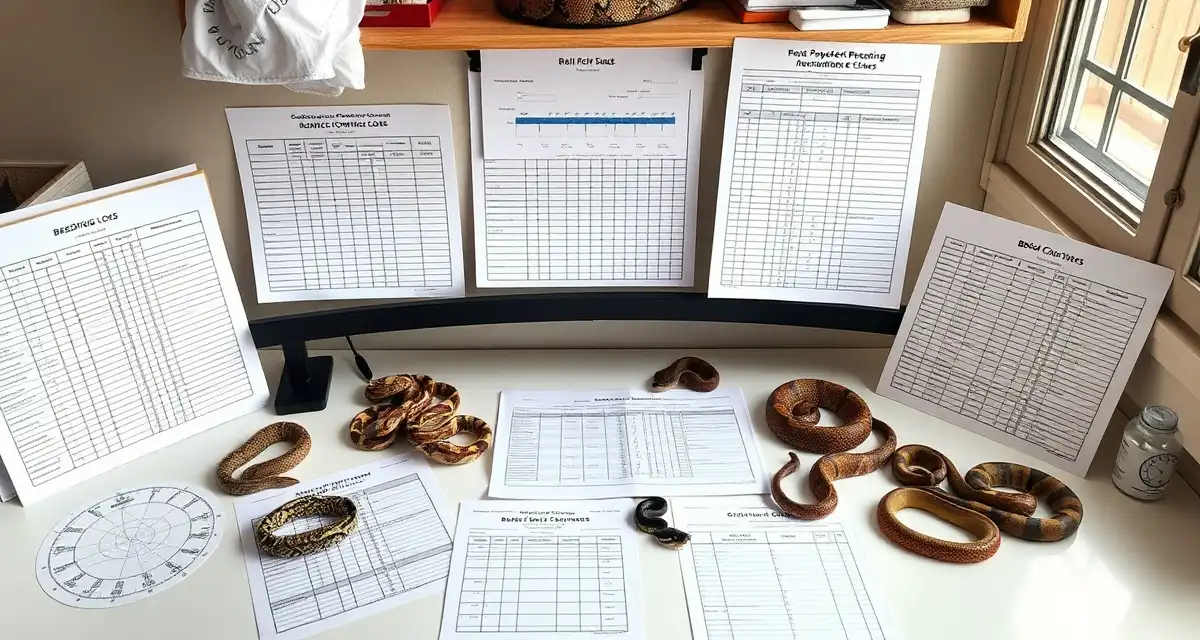
Record-Keeping Across Species: What Ball Python Breeders Can Learn From Other Reptile Programs
By HatchLedger Editorial Team · Published 2025-06-17 · Updated Mar 13, 2026
Most of this content focuses exclusively on ball pythons, but many breeders work with multiple species - blood pythons, boa constrictors, carpet pythons - alongside or instead of ball pythons. The record-keeping principles that make ball python programs run well apply across species, with some meaningful differences in what data matters most for each. Breeders using integrated software report 30% less time on administrative tasks, and this efficiency multiplies when you're managing records across multiple species rather than one.
TL;DR
- Ball python breeding operations require systematic record-keeping from pre-season preparation through end-of-season sales.
- Females at 1,200-1,500g or more are the target weight before introducing them to a breeding male.
- Ovulation detection is the key event that anchors pre-lay shed and lay date calculations.
- Clutch profitability guide depends on understanding actual cost basis per animal, not just gross sale revenue.
- Well-documented animals with complete feeding histories and clear genetic records consistently sell faster and at higher prices.
What All Reptile Breeding Records Share
Across ball pythons, blood pythons, boas, and other commonly bred reptiles, the core record needs are similar:
- Individual animal identification
- Weight tracking over time
- Feeding history (prey type, size, acceptance/refusal)
- Pairing history
- Reproductive outcomes (clutch or litter dates, offspring counts)
- Health events and veterinary records
- genetics guide and morph documentation
The universal need is for an animal-centric record system where all of this information is linked to the specific individual animal rather than scattered across different notebooks, spreadsheets, or memory.
Blood Python Record-Keeping: Key Differences
Blood pythons (Python brongersmai and related species) are sometimes kept alongside ball pythons, and breeders who work with both notice meaningful husbandry differences that affect what records matter most.
Humidity is more critical: Blood pythons require significantly higher ambient humidity than ball pythons - 80-90%+ vs. ball pythons' 50-60%. Recording humidity conditions alongside health events is more important in blood python records because respiratory issues and poor sheds in blood pythons more frequently trace back to humidity failures.
Temperament notes matter more: Blood pythons have a reputation for defensive behavior that's more variable than ball pythons. Individual temperament notes in animal records are more practically useful for blood pythons than for most ball python collections.
Incubation differences: Blood python eggs incubate at slightly lower temperatures than ball pythons and are often maternally incubated in more traditional programs. If you move from ball python to blood python production, your incubation records need to capture different temperature and humidity parameters.
Morph market is smaller: Blood python morph genetics are less complex and the commercial market is more limited than ball pythons. Record-keeping for blood python projects tends to focus more on health and condition than on the multi-layered genetics that characterize ball python breeding.
Boa Constrictor Record-Keeping: Key Differences
Boas are live-bearing (viviparous), which fundamentally changes what reproductive records look like compared to oviparous species.
No incubation records: There are no eggs to track, no candling, no incubation temperature. The equivalent focus is on the female's condition during gestation and the date/outcomes of the live birth.
Gestation length tracking: Boa gestation runs roughly 100-120 days from confirmed ovulation. Tracking the ovulation or breeding date and calculating expected birth windows serves the same planning function as tracking incubation periods for egg-layers.
Litter size vs. clutch size: Boa litters typically include both live offspring and "slugs" (unfertilized or failed offspring that are expelled with the litter). Recording both live neonates and slugs/stillbirths follows similar logic to ball python clutch records.
Regional subspecies documentation: If you work with regional boa subspecies or localities, origin documentation is a significant part of record-keeping in a way that doesn't apply to ball pythons.
The Transferable Principles
The practices that make ball python records excellent transfer to any reptile breeding program:
- Animal-centric records where all data links to the individual
- Consistent weight tracking so changes over time are visible
- Complete feeding history including refusals
- Documented reproductive outcomes linked to specific pairings
- Health event documentation linked to animals and dates
The specific parameters change by species; the organizational structure doesn't.
Use HatchLedger's breeding management system as the consistent record-keeping foundation regardless of species, adapting the specific fields to the parameters that matter for each species you work with. For how different tools handle multi-species breeding programs, see the reptile breeder software comparison.
Frequently Asked Questions
What is the best approach to record-keeping across ball pythons and other reptile species?
Build your record-keeping system around the universal elements (animal identification, weight, feeding, reproduction, health) that apply across species, then add species-specific tracking parameters on top of that foundation. The organizational principle - all data linked to the individual animal in a searchable record - works regardless of species. What you track changes; how you track it shouldn't need to be reinvented for each species.
How do professional breeders handle record-keeping across multiple reptile species?
Multi-species breeders typically use one consistent record-keeping system across their entire operation rather than separate systems for each species. This allows them to maintain consistent habits, makes it easier to staff or train helpers, and gives them a single source of truth for their collection regardless of which species an animal belongs to.
What software helps manage ball python and multi-species reptile breeding records?
HatchLedger is purpose-built for reptile breeders, connecting animal records, breeding history, clutch outcomes, and financial tracking in one system. Unlike generic spreadsheets, it's designed around the specific workflow of an active breeding season. Free for up to 20 animals.
What records should every reptile breeder maintain per animal?
At minimum: acquisition date and source, morph and genetic documentation, feeding log, weight history, any veterinary treatments, and breeding history including pairing dates, clutch of origin for captive-bred animals, and offspring records. These records serve your own management, buyer documentation, regulatory compliance, and long-term genetic tracking.
How should reptile breeders document genetics for buyers?
A complete genetic record for sale includes the animal's visual morph name, confirmed het genes and their basis (parentage documentation or proven-out production), possible het genes with probability percentages, hatch date, and parent morph information. Including clutch-of-origin records lets buyers independently verify the claims.
What is Record-Keeping Across Species: What Ball Python Breeders Can Learn From Other Reptile Programs?
Record-Keeping Across Species is a guide for reptile breeders—particularly ball python keepers—who want to apply structured data tracking across multiple species like blood pythons, boas, and carpet pythons. It covers the universal principles of animal identification, weight tracking, feeding logs, and genetic records, while highlighting the meaningful differences in what data matters most for each species. The goal is a unified record-keeping system that works whether you breed one species or five.
How much does Record-Keeping Across Species: What Ball Python Breeders Can Learn From Other Reptile Programs cost?
HatchLedger's record-keeping tools are available through their subscription plans—visit HatchLedger.com for current pricing. The principles in this article are free to read and apply manually, but breeders using integrated software like HatchLedger report saving roughly 30% of time spent on administrative tasks. That efficiency compounds significantly when managing records across multiple species, making the investment in dedicated software worthwhile for serious multi-species programs.
How does Record-Keeping Across Species: What Ball Python Breeders Can Learn From Other Reptile Programs work?
Cross-species record-keeping works by establishing a consistent data framework—individual ID, weight history, feeding records, and genetic lineage—applied to every animal regardless of species. Species-specific fields are layered on top: ovulation tracking for ball pythons, humidity logs for blood pythons, and so on. Software centralizes all of this so breeders can track clutch profitability, breeding timelines, and animal histories without juggling separate spreadsheets per species.
What are the benefits of Record-Keeping Across Species: What Ball Python Breeders Can Learn From Other Reptile Programs?
Systematic cross-species records reduce administrative time by up to 30%, help breeders catch health trends early through weight and feeding history, and make genetic planning more accurate across a mixed collection. Well-documented animals also sell faster and command higher prices because buyers trust complete records. For multi-species programs, a unified system eliminates the errors and gaps that come from managing each species in isolation.
Who needs Record-Keeping Across Species: What Ball Python Breeders Can Learn From Other Reptile Programs?
Any reptile breeder managing more than one species benefits from cross-species record-keeping practices. It's especially valuable for ball python breeders expanding into blood pythons, boas, or carpet pythons, where breeding timelines, weight thresholds, and clutch data differ. Hobbyists scaling into semi-professional programs, and established breeders looking to cut administrative overhead or improve sales documentation, will find the most immediate return from implementing these systems.
How long does Record-Keeping Across Species: What Ball Python Breeders Can Learn From Other Reptile Programs take?
Setting up a cross-species record-keeping system takes a few hours initially—creating animal profiles, entering existing weight and feeding history, and configuring species-specific fields. Ongoing maintenance is minimal: a few minutes per animal per week for feeding and weight logs, plus clutch data entry during breeding season. Breeders with existing records can import data quickly. Most report the upfront setup pays off within the first breeding season through time saved and fewer tracking errors.
Related Articles
Sources
- USARK (United States Association of Reptile Keepers)
- Association of Reptilian and Amphibian Veterinarians (ARAV)
- World of Ball Pythons (WoBP genetics reference database)
- MorphMarket (reptile industry marketplace)
- Reptiles Magazine (Bowtie Inc.)
Get Started with HatchLedger
Every part of a ball python breeding operation -- from pairing records to clutch documentation to financial tracking -- works better when the data is connected rather than scattered across notebooks and spreadsheets. HatchLedger is built for exactly that. Try it free with up to 20 animals.