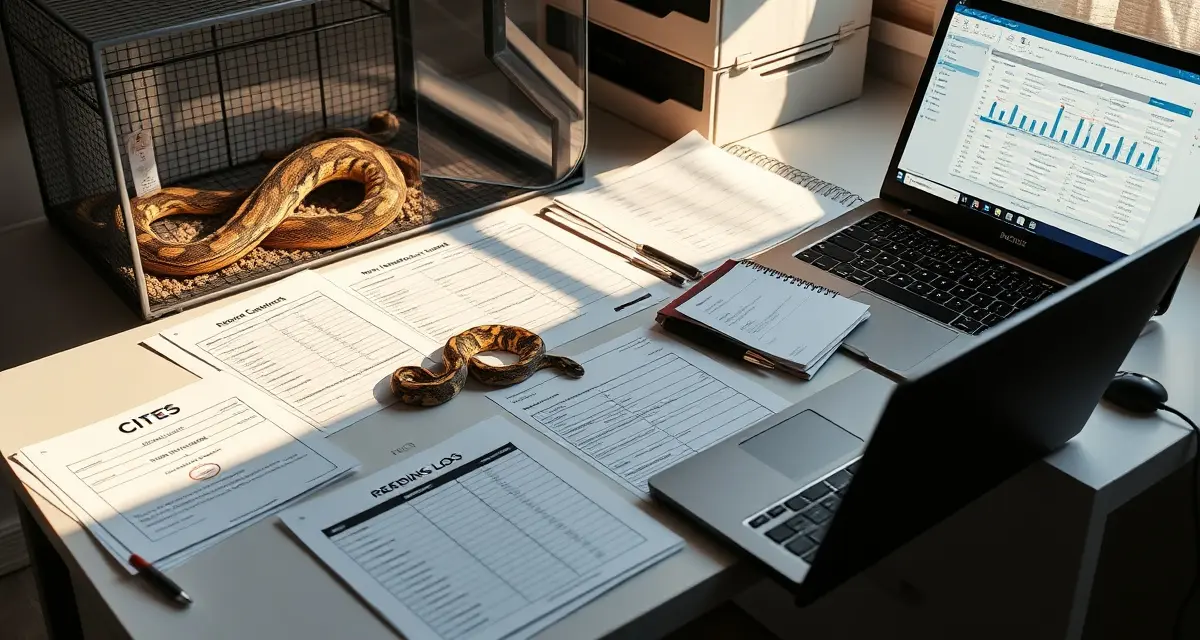
Record Keeping for CITES Compliance in Ball Python Breeding
By HatchLedger Editorial Team · Published 2025-06-19 · Updated Mar 13, 2026
Ball pythons (Python regius) are listed under CITES Appendix II, which means international trade is regulated, and in many jurisdictions domestic commercial breeding operations have documentation requirements as well. For most hobbyist breeders selling domestically, CITES compliance is less complex than for exporters - but understanding what's required and keeping appropriate records is still important. Breeders using integrated software report 30% less time on administrative tasks, and having your records organized makes any compliance review far less stressful.
TL;DR
- Ball python breeding operations require systematic record-keeping from pre-season preparation through end-of-season sales.
- Females at 1,200-1,500g or more are the target weight before introducing them to a breeding male.
- Ovulation detection is the key event that anchors pre-lay shed and lay date calculations.
- Clutch profitability guide depends on understanding actual cost basis per animal, not just gross sale revenue.
- Well-documented animals with complete feeding histories and clear genetic records consistently sell faster and at higher prices.
CITES Basics for Ball Python Breeders
CITES (the Convention on International Trade in Endangered Species of Wild Fauna and Flora) is an international agreement that regulates the trade of species that may be threatened by commercial exploitation. Ball pythons are Appendix II, meaning they're not currently threatened with extinction but could become so if trade isn't controlled.
For captive-bred ball pythons in the United States:
Domestic sales within the US: CITES permits are generally not required for domestic sales of captive-bred ball pythons. However, some states have additional state-level regulations that may require permits or documentation.
Export from the US: Exporting live ball pythons requires USFWS (US Fish & Wildlife Service) export permits. The exporting country and receiving country both have documentation requirements.
Import into the US: Importing live ball pythons requires USFWS import permits and may require CITES permits from the country of origin.
For breeders selling strictly within the US, the primary documentation concerns are at the state level and for demonstrating captive-bred status if challenged.
What "Captive-Bred" Documentation Looks Like
Ball pythons in the US reptile trade are overwhelmingly captive-bred animals. Demonstrating captive-bred status matters because wild-caught animals have different (stricter) trade requirements.
Your captive-bred documentation should include:
- Breeding records showing the parentage of animals you're selling
- Incubation and hatch records
- Records that trace each animal to domestic parents, not wild-caught imports
This is exactly the kind of documentation that good breeding software produces as a byproduct of your normal record-keeping. When you document every pairing, every clutch, and every hatchling's parentage, you're automatically creating a captive-bred paper trail.
State-Level Requirements
Reptile regulations vary considerably by state. Some states require:
- Commercial breeder licenses or permits for selling reptiles
- Health certificates for animals shipped across state lines
- Records of sales and purchases
Check with your state's fish and wildlife agency for current requirements in your state. What's required in Texas differs from what's required in California or Florida. Some states (California, Hawaii) have restrictions on certain reptile species that affect possession regardless of captive-bred status.
What Records to Maintain
For regulatory compliance and business legitimacy, maintain:
Breeding and production records:
- Parentage documentation for every animal produced
- Hatch dates, clutch records, and individual animal identification
- Health records and any veterinary documentation
Sales records:
- Date of every sale
- Buyer name and contact information
- Animal description (species, morph, sex, ID)
- Sale price
- Location (state) of buyer for shipping documentation
Acquisition records:
- Source of every animal entering your collection (seller name, date, price)
- For imported animals: import documentation and permits
Financial records:
- Income and expense documentation for tax purposes (overlaps with financial records discussed in the tax article)
Why Good Records Benefit You Beyond Compliance
Beyond regulatory requirements, having complete records serves several other interests:
- Buyer confidence: Buyers for high-value animals often want documentation of parentage, health history, and captive-bred status. Your records are evidence of your legitimacy.
- Dispute resolution: If a buyer claims an animal was sold with incorrect genetics guide or health history, your records are your documentation.
- Audit response: If you're ever audited (tax or regulatory), complete records are what demonstrates legitimate operations.
Keeping your production and sales records organized in HatchLedger's breeding management system creates this documentation automatically through your normal workflow. For tools that support this level of documentation, see the reptile breeder software comparison.
Frequently Asked Questions
What is the best approach to record keeping for CITES compliance in ball python breeding?
For domestic US sales, maintain complete parentage documentation for every animal you produce, sales records for every transaction, and acquisition records for your breeding stock. This creates a captive-bred paper trail and demonstrates legitimate business operations. For any international trade, research USFWS export permit requirements and work with a licensed wildlife broker if needed. Check your state's specific requirements, as they vary significantly.
How do professional breeders handle CITES and regulatory compliance records?
Established breeders typically have a records system that generates captive-bred documentation as a standard byproduct of normal record-keeping. They maintain sales logs with buyer information, keep acquisition records for all parent animals, and know their state's specific requirements for commercial reptile operations. For export, they work with brokers or attorneys familiar with USFWS permit requirements rather than navigating the process alone.
What software helps manage ball python breeding records for regulatory compliance?
HatchLedger is purpose-built for reptile breeders, connecting animal records, breeding history, clutch outcomes, and financial tracking in one system. Unlike generic spreadsheets, it's designed around the specific workflow of an active breeding season. Free for up to 20 animals.
What records should every reptile breeder maintain per animal?
At minimum: acquisition date and source, morph and genetic documentation, feeding log, weight history, any veterinary treatments, and breeding history including pairing dates, clutch of origin for captive-bred animals, and offspring records. These records serve your own management, buyer documentation, regulatory compliance, and long-term genetic tracking.
How should reptile breeders document genetics for buyers?
A complete genetic record for sale includes the animal's visual morph name, confirmed het genes and their basis (parentage documentation or proven-out production), possible het genes with probability percentages, hatch date, and parent morph information. Including clutch-of-origin records lets buyers independently verify the claims.
What is Record Keeping for CITES Compliance in Ball Python Breeding?
Record keeping for CITES compliance in ball python breeding is the practice of maintaining systematic documentation of your breeding animals, clutches, offspring, sales, and acquisition history. Ball pythons are listed under CITES Appendix II, meaning international trade is regulated and many domestic commercial operations face documentation requirements. Good records include animal weights, pairing dates, ovulation events, hatch dates, feeding histories, and transaction details — creating a traceable paper trail that demonstrates your animals are captive-bred and legally traded.
How much does Record Keeping for CITES Compliance in Ball Python Breeding cost?
For domestic hobbyist breeders, CITES compliance record keeping costs little beyond your time and a basic organizational system. Dedicated breeding management software like HatchLedger typically runs $10–30 per month and can reduce administrative time by around 30%. The real cost of not keeping records is higher: compliance violations, difficulty selling animals, and the stress of reconstructing documentation during any regulatory review. For exporters, official CITES permits carry fees that vary by country.
How does Record Keeping for CITES Compliance in Ball Python Breeding work?
CITES compliance record keeping works by documenting every animal in your collection from acquisition through sale. You record the source of each breeder animal, pairing events, ovulation dates, clutch details, hatch outcomes, and individual offspring records including morphs and genetics. When animals are sold, transaction records link buyers to specific animals. This chain of custody demonstrates captive-bred status. Organized software centralizes all of this, making it easy to generate reports or respond to compliance inquiries quickly.
What are the benefits of Record Keeping for CITES Compliance in Ball Python Breeding?
Proper record keeping delivers multiple benefits beyond compliance. Well-documented animals with complete feeding histories and clear genetic records sell faster and at higher prices than undocumented ones. Tracking actual cost basis per clutch — including feeding, electricity, and labor — reveals true profitability rather than just gross revenue. Organized records reduce stress during any regulatory review. Breeders who systematize documentation also make better breeding decisions by identifying which pairings and females produce the most profitable clutches over time.
Who needs Record Keeping for CITES Compliance in Ball Python Breeding?
Any ball python breeder selling animals commercially should maintain compliance records, but the complexity scales with your operation. Hobbyists selling domestically need basic acquisition, breeding, and sales records. Commercial breeders operating at scale face more formal documentation requirements in many jurisdictions. Exporters must obtain official CITES permits and meet the strictest documentation standards. Even hobbyists benefit from good records: they protect you legally, support your reputation as a responsible breeder, and make your animals more attractive to buyers.
How long does Record Keeping for CITES Compliance in Ball Python Breeding take?
Setting up a basic record keeping system takes a few hours initially to log your existing collection. Ongoing maintenance is minimal if done consistently — logging a pairing, ovulation event, or sale takes minutes per entry. Breeders using integrated software report spending about 30% less time on administrative tasks compared to spreadsheets or paper records. The time investment pays off significantly when you need to reconstruct records for a sale, compliance review, or end-of-season profitability analysis.
Related Articles
Sources
- USARK (United States Association of Reptile Keepers)
- Association of Reptilian and Amphibian Veterinarians (ARAV)
- World of Ball Pythons (WoBP genetics reference database)
- MorphMarket (reptile industry marketplace)
- Reptiles Magazine (Bowtie Inc.)
Get Started with HatchLedger
Every part of a ball python breeding operation -- from pairing records to clutch documentation to financial tracking -- works better when the data is connected rather than scattered across notebooks and spreadsheets. HatchLedger is built for exactly that. Try it free with up to 20 animals.