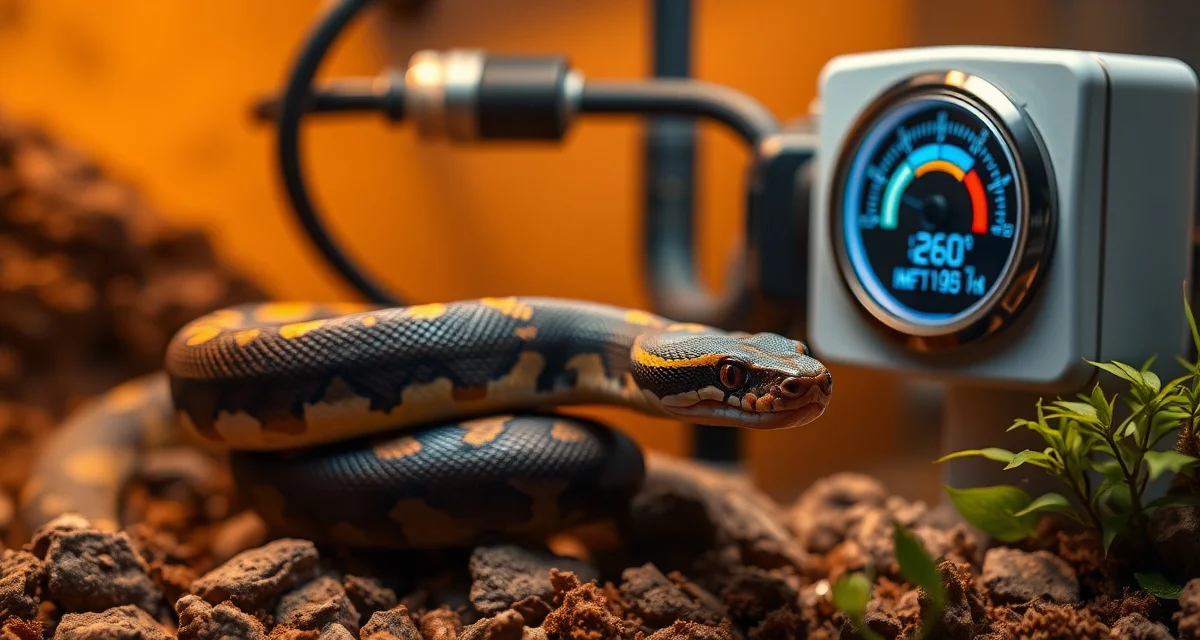
Cooling Ball Pythons to Trigger Breeding
By HatchLedger Editorial Team · Published 2025-04-16 · Updated Mar 13, 2026
Ball pythons are equatorial animals, and in the wild they don't experience the dramatic seasonal temperature drops that some North American snake species need for brumation. But they do cycle. West African rainfall patterns, photoperiod changes, and mild temperature fluctuations at their native latitude create a breeding season even without extreme cold.
TL;DR
- Ball python breeding operations require systematic record-keeping from pre-season preparation through end-of-season sales.
- Females at 1,200-1,500g or more are the target weight before introducing them to a breeding male.
- Ovulation detection is the key event that anchors pre-lay shed and lay date calculations.
- Clutch profitability guide depends on understanding actual cost basis per animal, not just gross sale revenue.
- Well-documented animals with complete feeding histories and clear genetic records consistently sell faster and at higher prices.
In captivity, the question is: how much cooling does a ball python actually need, and is it necessary at all?
Does Cooling Actually Trigger Ball Python Breeding?
The short answer: it helps, but it's not required the way it is for some temperate species.
Many ball python breeders cool their animals moderately and report improved breeding success. Some breeders run their animals at stable temperatures year-round and produce consistent results. The consensus in the industry seems to be that moderate cooling, dropping nighttime lows by 4-8°F, improves breeding response in many animals without being an absolute requirement.
What Cooling Looks Like in Practice
Ball pythons are NOT put through brumation. You're not cooling them to 55-65°F like a corn snake. You're doing much milder temperature cycling.
Standard cooling protocol:
- Normal hot side: 88-92°F → cooled hot side: 82-86°F
- Normal cool side: 78-82°F → cooled cool side: 72-76°F
- Normal ambient: 78-80°F → cooled ambient: 74-76°F
This is a 6-8°F drop across the board. Some breeders drop ambient room temperature by running the HVAC slightly cooler from October through January.
Duration: October through January is the typical cooling period, aligned with the start of breeding season. Many breeders return to full temperatures gradually in February-March.
Photoperiod: Does It Matter?
Reducing light hours alongside temperature cooling can help signal breeding season. Ball pythons are crepuscular and nocturnal, they're not highly light-sensitive compared to diurnal species, but some breeders report improved breeding response with:
- Reducing light from 12 hours/day to 10 hours/day October-January
- Eliminating artificial overhead light during the breeding season (relying on ambient room light only)
This is a minor adjustment that doesn't hurt and may help. It's low-effort enough to be worth implementing.
Feeding During Cooling
Continue feeding during the breeding season. Males often go off food voluntarily once they're actively breeding, this is normal. Females can continue eating right up until follicle development becomes obvious, then many self-regulate.
Feeding guidelines during breeding season:
- Don't force-feed males that are off food during active breeding periods
- Continue offering females food every 10-14 days
- Stop offering food to females when they're obviously gravid (visible follicle/egg development) and in the pre-lay shed period
Animals That Don't Need Cooling
Some ball pythons breed readily without any temperature cycling. This is more common with:
- Animals that have been in a breeding program for multiple seasons and respond to pairing introductions alone
- Males with high breeding drive that lock readily regardless of temperature
- Females that have already successfully bred multiple times
If your animals are locking and ovulating consistently without cooling, there's no compelling reason to change what's working.
Logging Temperature Changes in HatchLedger
When you implement seasonal cooling, log the change date in HatchLedger's animal records for your breeders. When you return to normal temperatures in March, log that too. Over multiple seasons, you can correlate temperature changes with breeding outcomes, first lock dates, ovulation timing, clutch success, to understand whether your cooling protocol is actually affecting your results.
This kind of multi-season data is only possible if you've been recording it consistently. HatchLedger's breeding records provide that longitudinal view.
Common Cooling Mistakes
Cooling too aggressively. Dropping a ball python to 72-74°F ambient for months is excessive. Some breeders confuse ball python breeding cooling with temperate snake brumation and go too cold. This stresses rather than cycles animals.
Cooling underfed animals. Never cool a thin or underweight ball python. Animals need body reserves to handle even mild temperature drops. Ensure all breeding animals are at appropriate weight before reducing temperatures.
Not resuming normal temps before peak breeding season. Some breeders forget to bring temps back up in February-March when most ovulations occur. Females ovulating at subnormal temperatures may have slower follicle development.
Related Articles
- Quarantine Protocols for New Ball Pythons: Protecting Your Breeding Collection
- Mite Treatment in Ball Pythons Without Disrupting Breeding Season
- Pairing Ball Pythons During Feeding Season: How Breeding and Feeding Interact
- Line Breeding Ball Pythons for Enhanced Expression
FAQ
What is the best approach to cooling ball pythons for breeding?
Implement moderate temperature cycling, 6-8°F reduction across the enclosure, starting in October. Continue feeding through the cooling period. Resume normal temperatures gradually in February. Pair introductions throughout the cooling period (every 10-14 days). This approach aligns with the natural mild seasonality ball pythons experience and supports breeding response without the stress of extreme cooling.
How do professional breeders handle ball python breeding temperature drops?
Most production breeders in climates with natural seasonal temperature variation allow their breeding rooms to cycle naturally, maintaining rack temperatures within a narrower thermostatically-controlled range but accepting mild variation. Some deliberately drop room temperature by 4-6°F from October through January. They track first lock dates relative to cooling start to calibrate the relationship between temperature and breeding response for their specific animals.
What is Cooling Ball Pythons to Trigger Breeding?
Cooling ball pythons to trigger breeding is the practice of mildly reducing ambient temperatures during winter months to mimic the subtle seasonal shifts ball pythons experience in West Africa. Unlike true brumation in temperate species, this process involves modest temperature drops rather than prolonged cold. It helps signal to the snakes that breeding season has arrived, encouraging males to actively pursue females and improving overall reproductive success in captivity.
How much does Cooling Ball Pythons to Trigger Breeding cost?
Cooling ball pythons has no direct monetary cost beyond your existing setup. You're simply reducing your ambient room temperature or adjusting thermostat settings slightly. Indirect costs may include a small increase in heating bills if you later warm the space back up, or investing in additional temperature monitoring equipment to track the gradient accurately. Most breeders find the process adds negligible expense to an already-established breeding operation.
How does Cooling Ball Pythons to Trigger Breeding work?
Cooling works by dropping ambient temperatures a few degrees over several weeks, typically bringing nighttime lows into the low-to-mid 70s°F while keeping daytime highs in the upper 70s. This mild fluctuation, combined with reduced photoperiod, signals a seasonal shift. Males typically become more active and scent-trail females more aggressively. Females at target weight of 1,200–1,500g respond by cycling hormonally, increasing the likelihood of successful ovulation after pairing.
What are the benefits of Cooling Ball Pythons to Trigger Breeding?
The primary benefits include improved breeding receptivity in females, increased male drive and pairing activity, and more synchronized ovulation timing across your collection. Breeders who cool consistently often report higher clutch rates and more predictable lay dates, which simplifies record-keeping and incubation scheduling. Synchronized breeding seasons also allow for more efficient pairing rotations and better planning of hatchling production timelines relative to peak market demand.
Who needs Cooling Ball Pythons to Trigger Breeding?
Cooling is most relevant for serious ball python breeders managing multiple animals with the goal of consistent annual clutch production. Hobbyists attempting their first pairing can also benefit from the technique. It is especially important when working with females that have been difficult to cycle or males that show low breeding interest at stable temperatures. Animals must be in excellent health and at proper weight before any cooling protocol begins.
How long does Cooling Ball Pythons to Trigger Breeding take?
A typical cooling period lasts 8 to 12 weeks, running roughly from late October through January in the Northern Hemisphere. Temperature reductions are introduced gradually over one to two weeks and reversed the same way at season's end. Actual breeding introductions happen throughout this window. From successful pairing to confirmed ovulation can take several more weeks, with egg laying occurring approximately 30 days post-ovulation and incubation adding another 55 to 60 days.
Sources
- USARK (United States Association of Reptile Keepers)
- Association of Reptilian and Amphibian Veterinarians (ARAV)
- World of Ball Pythons (WoBP genetics reference database)
- MorphMarket (reptile industry marketplace)
- Reptiles Magazine (Bowtie Inc.)
Get Started with HatchLedger
Every part of a ball python breeding operation -- from pairing records to clutch documentation to financial tracking -- works better when the data is connected rather than scattered across notebooks and spreadsheets. HatchLedger is built for exactly that. Try it free with up to 20 animals.