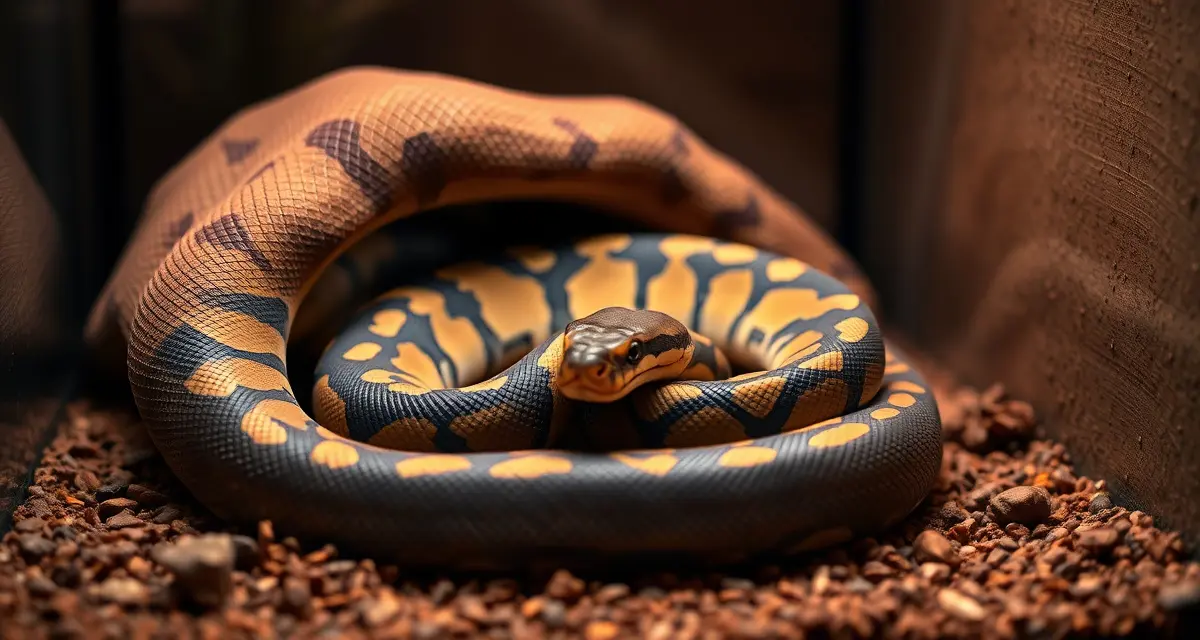
Ball Python Cooling and Breeding Triggers
Ball pythons do not require true hibernation to breed, but they do respond to seasonal cues. In the wild, West African ball pythons experience a dry season with cooler nights and reduced prey availability. Replicating these conditions in captivity triggers breeding behavior reliably.
Understanding what actually triggers breeding and how to document the process is the difference between a consistent breeding season and a frustrating one.
The Biological Basis
Ball pythons are not photoperiod-sensitive to the same degree as temperate species like king snakes. But they are responsive to temperature changes, particularly night-time temperature drops. Males become active, restless, and interested in females. Females become receptive. Ovulation follows weeks to months after the first successful pairings.
The key environmental variables to manipulate are:
- Night-time ambient temperature
- Feeding frequency and prey size
- Introduction timing
Cooling Protocol
Starting the Protocol
Begin your cooling protocol in September or early October, approximately 4-6 weeks before you plan to make first introductions. This gives your animals time to cycle physiologically before you start pairing.
Temperature adjustment:
Normal ball python housing runs hot spots at 88-92F, with ambient temps of 78-82F. The cooling protocol reduces ambient temperature, particularly overnight.
- Day: maintain hot spot at 86-88F, reduce ambient to 74-76F
- Night: allow ambient to drop to 72-74F, some breeders go as low as 68-70F
The night temperature drop is what drives breeding behavior. If your setup doesn't allow for a night temperature differential, consider using a separate thermostat with a nighttime setback, or use a timer to reduce heat tape output by 10-20% during overnight hours.
Crucially, always maintain hot spots so animals can thermoregulate. You are lowering ambient, not eliminating heat access.
Feeding Adjustments
Reduce feeding frequency during the cooling period and into the pairing season. This is not about starving the animals. It's about mirroring the natural reduction in prey availability that triggers breeding readiness.
Typical protocol:
- September: begin reducing from weekly to every 10-14 days
- October-November: feed females every 14-21 days if they are accepting food
- December-February: many females will begin refusing food naturally; do not force-feed an otherwise healthy female at breeding weight who is refusing
Males during heavy pairing use often stop eating voluntarily. A male at a healthy weight who refuses through the peak pairing season (December-February) is normal. Force-feeding a breeding male is generally counterproductive.
Humidity
Ball pythons from West Africa tolerate lower humidity than is often believed during the dry season equivalent. Some breeders drop humidity slightly during cooling (from 60-70% to 50-60%) as an additional seasonal cue. This is optional and not universally practiced.
Introduction Timing
Once animals have been in the cooling protocol for 3-5 weeks, begin introductions. Most experienced breeders make first introductions in late October or November.
Place the male with the female in a neutral or the female's enclosure. Monitor for interaction. If the male is actively investigating the female and she is tolerating his presence, leave them together for 24-48 hours. Remove the male to feed and rest, then reintroduce 3-5 days later.
If the female is immediately aggressive or shows no receptivity, try:
- A different male
- Another week of cooling before retry
- Adding the female to the male's enclosure instead
Documenting the Cooling Protocol
Record the start date and temperature changes in your annual breeding notes. This becomes useful data for year-over-year comparison. If one season your breeding response was poor, having documented that you started cooling two weeks later than usual or that November temperatures in your reptile room were unusually high gives you a variable to adjust the following year.
HatchLedger's breeding season management tools let you note protocol start dates and environmental settings alongside pairing and lock records, so the full seasonal context is visible when you're reviewing a season's results.
Related content: Ball Python Pairing Records | Breeding Season Management | Ball Python Breeding Records
Sources
- World of Ball Pythons seasonal breeding guides
- Ball Python Breeders Association community documentation
- USARK reptile keeper resources