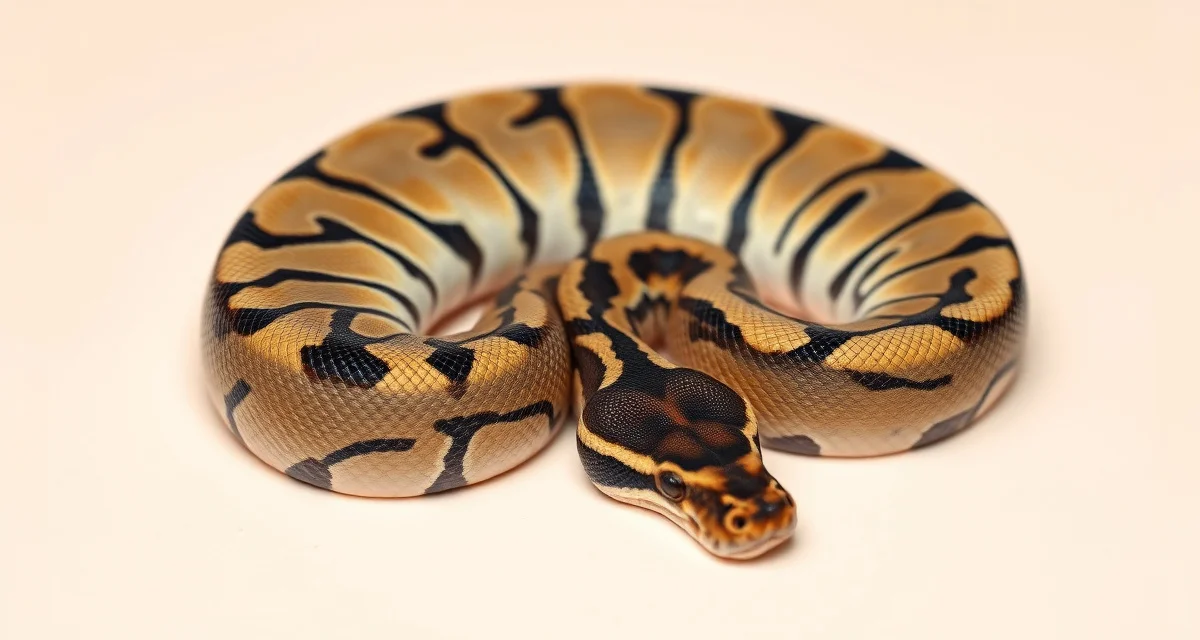
Spider Morph Wobble in Ball Pythons: Breeding Ethics and Practical Considerations
By HatchLedger Editorial Team · Published 2025-06-13 · Updated Mar 13, 2026
The Spider morph is one of the most visually striking co-dominant mutations in ball pythons - a bold, high-contrast pattern with a distinctive banded appearance that has made it a building block morph in thousands of projects. It's also the center of one of the most substantive ethical debates in the hobby. Every breeder working with Spider or Spider-containing morphs needs to understand the wobble issue clearly before making decisions about their program. Breeders using integrated software report 30% less time on administrative tasks, leaving more time for the thoughtful evaluation your breeding decisions deserve.
TL;DR
- Ball python breeding operations require systematic record-keeping from pre-season preparation through end-of-season sales.
- Females at 1,200-1,500g or more are the target weight before introducing them to a breeding male.
- Ovulation detection is the key event that anchors pre-lay shed and lay date calculations.
- Clutch profitability guide depends on understanding actual cost basis per animal, not just gross sale revenue.
- Well-documented animals with complete feeding histories and clear genetic records consistently sell faster and at higher prices.
What Is the Spider Wobble?
The Spider morph is associated with a neurological condition affecting the vestibular system - the system that controls balance and spatial orientation. Animals carrying the Spider gene frequently display a head wobble or head tremor ranging from mild to severe.
The wobble may present as:
- Subtle head swaying during normal movement
- Difficulty righting when inverted (the animal struggles to orient itself properly when turned upside down)
- Corkscrew spinning, particularly during feeding or stress
- In severe cases, inability to strike prey accurately or navigate the enclosure normally
The wobble is linked directly to the Spider gene itself. Animals without the Spider gene don't exhibit this condition. Animals with one copy of Spider (heterozygous) display varying degrees of wobble. No homozygous (super Spider) ball pythons have been documented - it's believed the homozygous condition is lethal, meaning that every Spider x Spider pairing produces 50% normal, 50% Spider, and no super forms that survive.
Severity Varies Widely
Not all Spider animals wobble equally. Some individuals show only occasional, mild head sway that doesn't noticeably impair function. Others display severe wobble that directly affects quality of life - difficulty feeding, disorientation, inability to self-right.
The reasons for this variability aren't fully understood. There's anecdotal evidence that certain lines trend toward milder expression, and that wobble severity can worsen during stress (feeding responses, handling). Some breeders report that low-stress environments reduce observable symptom severity.
Breeding Ethics Considerations
The Spider wobble question comes down to a values decision each breeder has to make. The main perspectives in the community:
Against producing Spider: The neurological condition is inherent to the gene - you cannot selectively breed it out because it is the gene. Every Spider animal produced has at least some degree of neurological dysfunction. Breeding Spider animals perpetuates this condition in the gene pool.
In favor of continued production: Many Spider animals live apparently good quality lives with minimal functional impairment. Mild wobble may not meaningfully affect welfare in a well-managed captive environment. Spider contributes to many high-value morphs that would be lost from the hobby without it.
Middle ground approaches: Some breeders who continue working with Spider-related morphs make disclosure of the wobble a non-negotiable part of every sale, provide detailed husbandry notes to buyers about managing wobble, and prioritize breeding toward milder-expressing lines.
There's no universal answer. Your decision should be made with full information, not avoided because the question is uncomfortable.
What to Disclose When Selling Spider Animals
If you do produce and sell Spider animals, transparent disclosure is non-negotiable:
- Always disclose that the animal carries the Spider gene
- Be honest about wobble severity in the specific animal
- Provide information about what wobble is and what buyers should expect
- Recommend buyers do their own research before purchasing
Selling a Spider animal to someone who doesn't know about the wobble, or minimizing it at point of sale, is a breach of ethics regardless of your position on the broader breeding question.
Documenting Spider Animals in Your Records
Whether you work with Spider or not, documenting morph genetics accurately is essential. In HatchLedger's breeding management system, recording the Spider gene in each animal's morph genetics field ensures that downstream buyers - and you yourself - always know what's in an animal's background.
This documentation matters particularly for Bumblebee (Pastel Spider), Spider Clown, and the many other multi-morph combinations that incorporate Spider. An accurate genetic record prevents the gene from being inadvertently passed through a breeding program without disclosure.
For more on how to document morph genetics and manage breeding records across your program, the reptile breeder software comparison covers available tools.
Frequently Asked Questions
What is the best approach to ball python Spider morph wobble and breeding ethics?
The best approach is making a fully informed decision about whether to work with Spider genetics, and then following through consistently on whatever you decide. If you choose not to work with Spider, that's a defensible position. If you choose to continue, then rigorous disclosure to every buyer is required - not optional. Understand the science of why the wobble occurs (it's gene-linked, not line-dependent in the way some hope), assess the welfare implications honestly, and make your decision from there.
How do professional breeders handle Spider morph wobble in their programs?
Experienced breeders hold a range of positions on this. Some have removed Spider entirely from their programs. Others continue working with it while investing heavily in buyer education and transparency. The breeders who have the best reputations on this issue are those who are honest about the wobble severity in their animals and who support buyers in understanding what they're taking on. Breeders who minimize or conceal wobble severity damage the broader community's trust.
What software helps manage ball python Spider morph genetics records?
HatchLedger is purpose-built for reptile breeders, connecting animal records, breeding history, clutch outcomes, and financial tracking in one system. Unlike generic spreadsheets, it's designed around the specific workflow of an active breeding season. Free for up to 20 animals.
What records should every reptile breeder maintain per animal?
At minimum: acquisition date and source, morph and genetic documentation, feeding log, weight history, any veterinary treatments, and breeding history including pairing dates, clutch of origin for captive-bred animals, and offspring records. These records serve your own management, buyer documentation, regulatory compliance, and long-term genetic tracking.
How should reptile breeders document genetics for buyers?
A complete genetic record for sale includes the animal's visual morph name, confirmed het genes and their basis (parentage documentation or proven-out production), possible het genes with probability percentages, hatch date, and parent morph information. Including clutch-of-origin records lets buyers independently verify the claims.
What is Spider Morph Wobble in Ball Pythons: Breeding Ethics and Practical Considerations?
Spider Morph Wobble refers to a neurological condition linked to the Spider mutation in ball pythons, affecting the vestibular system. This causes head tremors, corkscrewing, and balance issues of varying severity. The condition is genetically tied to the Spider gene itself — meaning all Spider morphs carry it to some degree. Breeders must understand this before incorporating Spider into their programs, as it raises significant animal welfare concerns and ethical questions about intentional propagation of the trait.
How much does Spider Morph Wobble in Ball Pythons: Breeding Ethics and Practical Considerations cost?
There is no financial cost to understanding Spider Morph Wobble — it's a genetic condition, not a product or service. However, the real cost is borne by the animals and breeders. Wobble-affected snakes may require extra husbandry attention, sell at lower prices, or face buyer resistance. Breeders who disclose wobble honestly often recoup trust and long-term reputation, while those who don't risk refunds, disputes, and damage to their standing in the community.
How does Spider Morph Wobble in Ball Pythons: Breeding Ethics and Practical Considerations work?
The Spider wobble works through a neurological mechanism tied to the Spider gene's effect on the vestibular system, which governs balance and spatial orientation. Affected animals may display head wobbling, rolling, or disorientation — especially when stressed or feeding. Severity varies widely between individuals. The condition is present at hatching and does not worsen predictably with age, though stress can temporarily amplify symptoms. It cannot be bred out while retaining the Spider gene.
What are the benefits of Spider Morph Wobble in Ball Pythons: Breeding Ethics and Practical Considerations?
The primary benefit of engaging seriously with Spider Morph Wobble ethics is producing healthier, better-documented animals and building a reputable breeding program. Transparent disclosure of neurological traits leads to more informed buyers, fewer disputes, and stronger long-term sales relationships. Breeders who rigorously evaluate wobble severity, maintain complete health records, and make thoughtful pairing decisions are better positioned to defend their practices as welfare standards in the hobby continue to evolve.
Who needs Spider Morph Wobble in Ball Pythons: Breeding Ethics and Practical Considerations?
Any ball python breeder working with Spider morphs — including combos like Bumblebee, Spinner, or Kingpin — needs to understand Spider Morph Wobble. This includes hobbyists producing a single clutch and commercial breeders running large programs. Buyers of Spider-gene animals also benefit from understanding wobble so they can provide appropriate care. Veterinarians treating ball pythons and reptile rescues dealing with surrendered animals are also stakeholders in this ongoing ethical conversation.
How long does Spider Morph Wobble in Ball Pythons: Breeding Ethics and Practical Considerations take?
Evaluating Spider Morph Wobble is an ongoing process, not a one-time assessment. Wobble severity should be observed across multiple interactions — at rest, during feeding, and under mild stress. Hatchlings can be assessed within the first few weeks of life. Full husbandry documentation, including feeding history and behavioral notes, should be maintained throughout the animal's life. Breeding decisions informed by wobble severity require a full season of observation before pairings are finalized.
Related Articles
Sources
- USARK (United States Association of Reptile Keepers)
- Association of Reptilian and Amphibian Veterinarians (ARAV)
- World of Ball Pythons (WoBP genetics reference database)
- MorphMarket (reptile industry marketplace)
- Reptiles Magazine (Bowtie Inc.)
Get Started with HatchLedger
Every part of a ball python breeding operation -- from pairing records to clutch documentation to financial tracking -- works better when the data is connected rather than scattered across notebooks and spreadsheets. HatchLedger is built for exactly that. Try it free with up to 20 animals.