Bumble Bee Ball Python: Genetics, Breeding Outcomes and Pricing
By HatchLedger Editorial Team · Published 2025-06-26 · Updated Mar 13, 2026
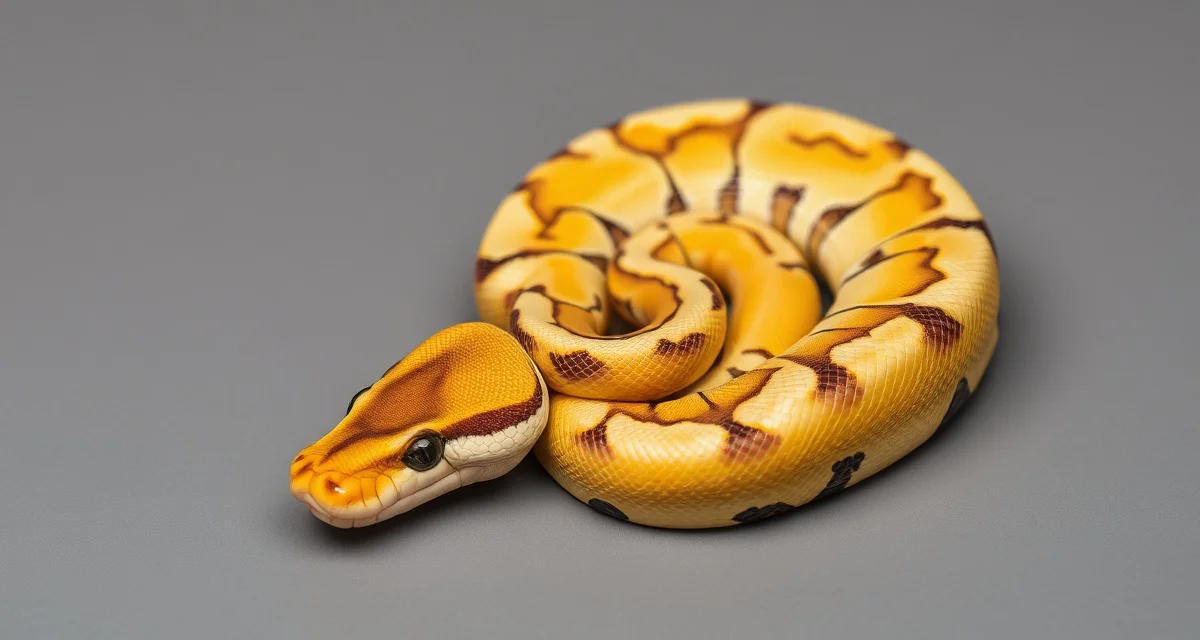
Bumble Bee is one of the most recognizable combo morphs in ball pythons, Pastel + Spider in the same animal. The name is fitting: vivid yellow base color from Pastel combined with Spider's disrupted, fragmented pattern creates an animal that genuinely looks like it belongs in the name. Bumble Bees are a natural product of Spider x Pastel pairings, widely produced, and consistently in demand in the hobby.
TL;DR
- The Bumble Bee morph is a documented genetic variant in ball pythons with established inheritance pattern and pricing history.
- Co-dominant morphs express visually in single copy and produce a distinct super form in double copy (with exceptions like Spider where the super is non-viable).
- Recessive morphs require two copies to be visually expressed; single-copy carriers (hets) look identical to normal ball pythons.
- Documented het claims backed by parentage records are worth significantly more at resale than unverified possible-het claims.
- Market prices for any given morph are heavily influenced by production volume, demand trends, and whether the morph stacks well with high-value genes.
Bumble Bee Genetics
Bumble Bee = Pastel + Spider. Two separate co-dominant genes. Producing Bumble Bees:
- Pastel x Spider: 25% Pastel, 25% Spider, 25% Bumble Bee, 25% normal
- Bumble Bee x Normal: same 25/25/25/25 distribution
- Bumble Bee x Pastel: adds Super Pastel to the clutch
- Bumble Bee x Spider: adds Super Spider, avoid Super Spider pairings (not viable)
Bumble Bee Appearance
The vivid yellow brightening from Pastel combines with Spider's pattern disruption, fragmented banding, reduced pattern, busy lateral markings. Bumble Bees are almost always bright, photogenic animals with vivid contrast. High-quality Bumble Bees are among the most recognizable animals in the hobby. Retail: $250-$450.
Spider Wobble
All Spider combos including Bumble Bee carry the neurological wobble condition. Severity varies by individual. Always disclose to buyers. This is non-negotiable if you want to maintain a reputation in the hobby.
Bumble Bee Combos
- Bumble Bee Clown: three-gene combo; vivid yellow + Spider pattern disruption + clown banding; retail $900-$1,600
- Bumble Bee Pied: white base with vivid yellow/Spider-influenced saddles; retail $700-$1,300
- Super Pastel Spider (Killer Bee-adjacent patterning): extremely reduced pattern, vivid yellow; retail $500-$800
- Bumble Bee Enchi: intense orange-yellow with disrupted pattern; retail $400-$700
Breeding Bumble Bee Ball Pythons
Setting Up Pairings
Spider x Pastel is the cleanest route to Bumble Bees. If you use a Spider female, you avoid any risk of accidentally producing Super Spider hatchlings. Some breeders prefer to use Spider as the male and Pastel-based females.
Every pairing that includes Spider should be logged with that caveat in mind. HatchLedger lets you add gene-specific notes to pairings so you can flag Spider pairings for wobble disclosure during the sales process.
Hatchling ID
Bumble Bees are easily identified at hatch, they show the bright yellow Pastel coloring with the disrupted Spider pattern. Pastels and Spiders from the same clutch are identifiable too, but compare side by side to confirm. Normals from Spider pairings are often darker than standard normals due to the Spider gene's subtle visual effect.
Incubation
88-90°F, 88-100% humidity, 55-65 days. Standard ball python parameters.
Pricing Bumble Bee Ball Pythons
| Animal | Retail Range |
|--------|-------------|
| Bumble Bee (female) | $300-$500 |
| Bumble Bee (male) | $200-$350 |
| Bumble Bee Clown | $900-$1,600 |
| Bumble Bee Pied | $700-$1,300 |
| Super Pastel Spider | $500-$800 |
| Bumble Bee Enchi | $400-$700 |
Related Articles
- Bamboo Ball Python: Genetics, Breeding Outcomes and Pricing
- Banana Ball Python: Genetics, Breeding Outcomes and Pricing
- Black Magic Ball Python: Genetics, Breeding Outcomes and Pricing
- Black Pastel Ball Python: Genetics, Breeding Outcomes and Pricing
FAQ
What makes a Bumble Bee ball python different from a Spider?
Bumble Bee = Spider + Pastel. The Pastel gene adds significant yellow brightening to the Spider pattern disruption. The result is more vivid than a plain Spider, with stronger color contrast. Both carry the neurological wobble condition.
How do professional breeders handle Bumble Bee ball python wobble?
Breeders with strong reputations disclose the Spider wobble in every listing, every buyer communication, and every buyer pack. HatchLedger's buyer pack generator supports custom disclosure text that breeders can include as standard in all Spider-gene animal documentation. This protects buyers and protects your reputation.
What is Bumble Bee Ball Python: Genetics, Breeding Outcomes and Pricing?
The Bumble Bee Ball Python is a popular combo morph combining two co-dominant genes: Pastel and Spider. Pastel intensifies the yellow base color, while Spider fragments and disrupts the pattern, producing an animal with vivid coloration and striking visual contrast. It is not a standalone morph but a predictable combination that appears in roughly 25% of offspring when pairing a Pastel with a Spider or a Bumble Bee with a normal ball python.
How much does Bumble Bee Ball Python: Genetics, Breeding Outcomes and Pricing cost?
Bumble Bee Ball Pythons typically range from around $100 to $300 depending on the breeder, lineage, and visual quality of the individual animal. Because they are widely produced from common Pastel x Spider pairings, prices have stabilized over time. Animals with cleaner pattern contrast, brighter yellow expression, or documented parentage from high-quality lines tend to command higher prices. Adding additional genes to a Bumble Bee can significantly increase value.
How does Bumble Bee Ball Python: Genetics, Breeding Outcomes and Pricing work?
Bumble Bee Ball Pythons are produced through co-dominant gene inheritance. When a Pastel and a Spider are paired, each clutch statistically yields 25% Pastel, 25% Spider, 25% Bumble Bee, and 25% normal hatchlings. The same odds apply when breeding a Bumble Bee to a normal. Both Pastel and Spider must be present in a single animal for the Bumble Bee phenotype to express visually.
What are the benefits of Bumble Bee Ball Python: Genetics, Breeding Outcomes and Pricing?
The Bumble Bee morph is one of the most versatile combo bases in ball python breeding. Its bright yellow and high-contrast pattern enhance the visual impact of nearly any added recessive or co-dominant gene. It is widely available, making it accessible for newer breeders, while remaining a reliable foundation for building more complex, high-value combos. The predictable 25% production odds also make clutch planning straightforward.
Who needs Bumble Bee Ball Python: Genetics, Breeding Outcomes and Pricing?
Bumble Bee Ball Pythons appeal to a wide range of keepers and breeders. Hobbyists looking for a visually striking animal at a reasonable price point often start here. Breeders value them as a foundation for building multi-gene projects, since Pastel and Spider both stack well with other morphs. Collectors drawn to high-contrast, pattern-heavy animals are also a natural audience for quality Bumble Bee specimens.
How long does Bumble Bee Ball Python: Genetics, Breeding Outcomes and Pricing take?
Bumble Bee Ball Pythons reach breeding maturity based on weight rather than age, typically when females reach around 1,500 grams, usually between two and four years old. Males can breed earlier, often at 18 months. From pairing to hatch, ball python eggs incubate for approximately 55 to 60 days. Producing a Bumble Bee from a planned Pastel x Spider pairing is reliable but still subject to natural clutch variation in outcome.
Sources
- USARK (United States Association of Reptile Keepers)
- World of Ball Pythons (WoBP genetics reference database)
- Association of Reptilian and Amphibian Veterinarians (ARAV)
- MorphMarket (reptile industry marketplace data)
- Ball Python community genetics documentation
Get Started with HatchLedger
Tracking Bumble Bee genetics through multiple generations requires connected records that link parent morphs, clutch outcomes, and het status for every animal in your collection. HatchLedger's genetics engine handles this automatically, making buyer documentation accurate and complete. Try it free with up to 20 animals.