Managing a Multi-Species Reptile Breeding Collection
By HatchLedger Editorial Team · Published 2025-06-03 · Updated Mar 13, 2026
Most breeders start with ball pythons and add species over time. Blood pythons. Boas. Carpet pythons. Colubrids. Each species has its own seasonal timing, incubation requirements, feeding schedules, and record-keeping needs. A multi-species collection is manageable with the right organizational system, without one, it becomes chaotic fast.
Seasonal Timing by Species
The biggest management challenge in a multi-species collection is that breeding seasons don't align. You can't apply a universal schedule to animals with different cycling requirements.
Ball pythons: Breeding season typically runs October through March in collections that do seasonal temperature drops. Eggs are laid February through June. Incubation at 88-90°F for 55-65 days.
Blood pythons (Borneo, Sumatran, Short-tailed): These are year-round breeders in the wild, but in captivity most breeders work on loose cycles. Females need rest time between clutches. Incubation at 85-88°F for approximately 75-85 days.
Boa constrictors (BCC/BCI): Livebearers, so no egg incubation. Breeding season for cycling collections is October-February. Gestation runs approximately 100+ days after successful pairing. Litter sizes 10-30+ neonates.
Carpet pythons (Morelia spilota): Breeding season typically triggered by temperature drops. Eggs laid spring/summer (adjusted for your hemisphere). Incubation at 84-88°F for 45-55 days.
Reticulated pythons: Year-round breeders. Eggs can be laid any month depending on management. Incubation at 88-90°F for approximately 85-90 days. Large clutches (30-80+ eggs from large females) require dedicated incubation space.
Corn snakes: Cool-temperature cycling (brumation) in fall/winter triggers spring breeding. Eggs in summer. Incubation at 78-82°F for 55-65 days.
Running a calendar per species helps you avoid missing cycling windows or discovering a female is in follicle development when you haven't set up any pairings.
Husbandry Differences That Affect Management
Different species in the same collection need different baseline conditions. You can't apply ball python husbandry to blood pythons and expect good results.
Blood pythons: Higher humidity (80-90% ambient), lower temperatures (82-88°F), lateral space more important than vertical. These animals are naturally found in peat swamps. Chronic dehydration is the most common health issue in captive blood pythons. Their rack or enclosure setup needs to differ fundamentally from your ball python setup.
Carpet pythons: More active, need more vertical space and environmental enrichment compared to ball pythons. Temperatures similar to ball pythons but with higher basking spots. More prone to respiratory issues if humidity is too high.
Boas: Live birth means no incubation, but neonates need individualized setup immediately after birth. Large litters require advance preparation for 20-30 individual enclosures or tubs before the birth date.
Organize your collection records to capture species-specific husbandry parameters per animal. What's normal for one species is a problem for another, and records that don't reflect this cause confusion when reviewing health notes.
Feeding Schedules Across Species
A 20-animal ball python collection on a weekly feed schedule is simple. Add blood pythons (feed every 2 weeks as adults), boas (feed every 10-14 days for adults), and corn snakes (weekly for young, every 10-14 days for adults) and the feeding schedule becomes a matrix.
The practical solution is to batch animals by feeding frequency and manage each batch as a group. All animals on 7-day rotation get fed on the same day. All animals on 14-day rotation get fed on the same day. Individual exceptions (a female recovering from a clutch who's being offered food every 5 days until she takes) are noted in that animal's record.
HatchLedger's reptile feeding schedules allow you to set feeding intervals per animal and see which animals are due on any given date. In a multi-species collection where feeding schedules vary, this removes the mental load of remembering who needs food today.
Permits and Compliance by Species
Different species have different permit requirements. This is especially important in a multi-species collection where some animals require documentation that others don't.
Ball pythons: CITES Appendix II. Captive-bred specimens typically don't require CITES permits for domestic sale, but documentation is important for interstate commerce.
Blood pythons (P. curtus complex): CITES Appendix II. Sumatran blood pythons (P. curtus) are listed, Borneo blood pythons (P. breitensteini) are also listed. Know your species identification and keep acquisition documentation.
Boa constrictors: Varies significantly by subspecies and locale. Common boas are widely captive-bred with relaxed permit requirements. Some locales (Argentine boas, Hog Island boas) have more documented breeding histories. Know your animals.
Reticulated pythons: Legal to breed and sell in most states without special permits, but some states (Florida, New York) have restrictions. Check state-level regulations in addition to federal.
Keep all acquisition documentation (receipts, CITES permits if applicable) with each animal's record. In a multi-species collection, you need to know at a glance what documentation you have for every animal.
Record-Keeping Across Species
The basic record structure, animal ID, species, morph, sex, weight, feeding log, breeding history, applies to all species. The species-specific details get added within that structure.
For each species, note in the template what's species-specific: blood python records should track humidity readings and shed dates more carefully than ball python records, since blood pythons are more sensitivity to poor humidity. Boa records should note gestation start dates and expected birth windows. Retic records should note whether the female has the enclosure space for her current size.
Using a single system for all species, rather than separate spreadsheets per species, lets you manage your full collection from one place. HatchLedger's multi-species record keeping handles collection-wide feeding schedules, weight tracking, and breeding records regardless of species.
Housing Infrastructure for Multiple Species
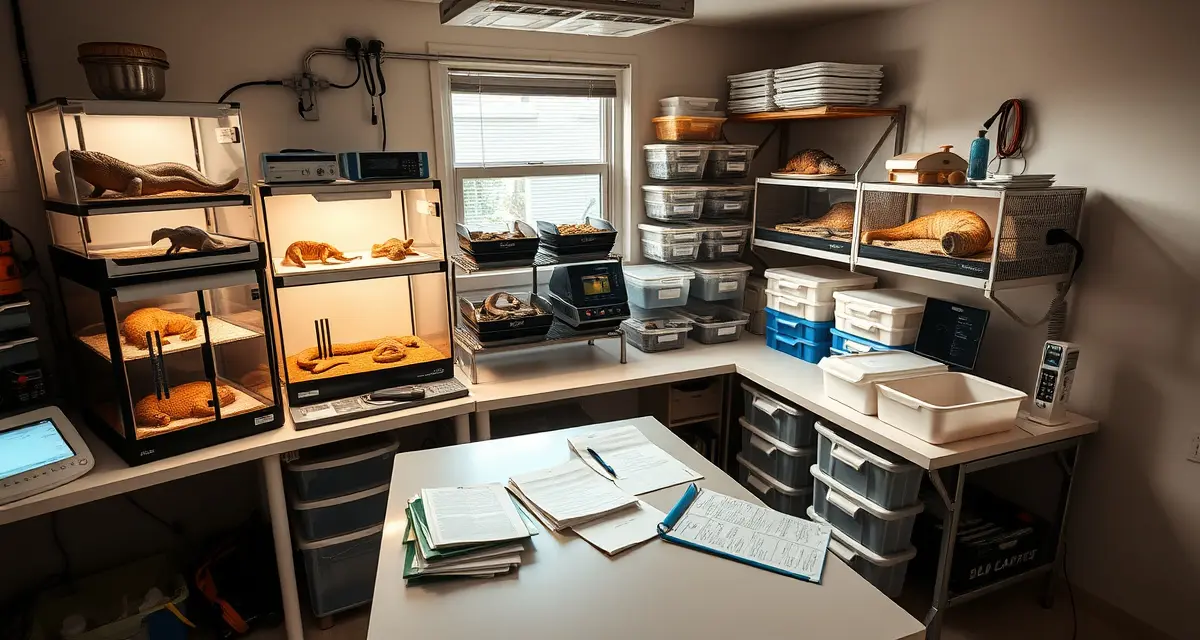
A multi-species collection often can't be entirely rack-housed. Ball pythons and hatchling colubrids work well in PVC or ABS rack systems. Blood pythons need higher humidity than most racks provide. Large boas and retics need custom or large enclosures.
Plan your housing capacity before adding species. The most common mistake is acquiring animals faster than housing is ready. A blood python or boa that sits in temporary housing for months while you build out proper enclosures is being kept poorly, which affects health and breeding performance.
Separate your collection mentally by housing type: rack animals (ball pythons, small colubrids, hatchlings of most species), large enclosure animals (adult boas, retics, carpets), and specialty enclosure animals (animals with specific humidity or temperature needs). This helps in planning facility layout and in setting up your records categories.
Successful multi-species collection management is mostly about systems that scale with your collection rather than trying to keep everything in your head. The species-specific needs are learnable. The record-keeping and scheduling challenges are solvable with the right tools.
FAQ
What is Managing a Multi-Species Reptile Breeding Collection?
Managing a multi-species reptile breeding collection means keeping, cycling, and breeding multiple reptile species simultaneously — such as ball pythons, blood pythons, boas, and carpet pythons — within a single facility. It involves coordinating different breeding seasons, incubation requirements, feeding schedules, and health monitoring across species that don't share the same biological rhythms. Tools like HatchLedger help breeders track each animal, clutch, and pairing so nothing falls through the cracks when dozens of animals are on different timelines.
How much does Managing a Multi-Species Reptile Breeding Collection cost?
There's no single price tag — costs scale with the number of species and animals you keep. Basic expenses include enclosures, heating, incubators, feeders, and veterinary care. A dedicated record-keeping platform like HatchLedger is typically low-cost relative to the time it saves. The real cost is operational: mismanaged records lead to missed pairings, mislabeled clutches, and lost lineage data, which directly reduces the value of your animals and offspring.
How does Managing a Multi-Species Reptile Breeding Collection work?
A multi-species collection works by dividing your year into species-specific cycles. Ball pythons are bred October through March; boas are paired in a similar window but gestated live; blood pythons operate on looser cycles with mandatory rest periods between clutches; carpet pythons need seasonal temperature drops to trigger breeding. Each species gets its own incubation protocol, feeding calendar, and tracking record. Success depends on a system that surfaces the right tasks at the right time for each animal.
What are the benefits of Managing a Multi-Species Reptile Breeding Collection?
A well-organized multi-species collection lets you scale revenue beyond a single market segment, reduce seasonal income gaps by staggering breeding timelines, and build expertise across multiple genetics and bloodlines. Diversification also protects against demand shifts in any one species. With proper records, you can track productivity per female, identify underperformers, and make better pairing decisions — all of which improve profitability and the quality of animals you produce over time.
Who needs Managing a Multi-Species Reptile Breeding Collection?
Anyone keeping more than one breeding species benefits from a structured management approach. Hobbyist breeders adding a second or third species, professional reptile producers running large collections, and rack-based operations scaling into new morphs all face the same challenge: complexity compounds fast. If you're tracking ball python clutches in one spreadsheet, boa litters in another, and blood python rest cycles in your head, you're already a candidate for a unified collection management system.
How long does Managing a Multi-Species Reptile Breeding Collection take?
There's no fixed duration — managing a multi-species collection is an ongoing practice that evolves with your collection. Individual breeding seasons run three to six months depending on species. Incubation periods range from roughly 55 days for ball pythons to 85 days for blood pythons. Boa gestation exceeds 100 days. Year-round, you're always in some phase of cycling, pairing, incubating, or raising neonates for at least one species, which is why persistent, organized records are essential rather than optional.
What should I look for when choosing Managing a Multi-Species Reptile Breeding Collection?
Look for a system that handles species-level differences, not just a generic animal tracker. You need per-animal records tied to pairings and clutches, customizable incubation parameters, feeding logs, and the ability to flag rest periods or reintroduction windows for each female. HatchLedger is built specifically for reptile breeders and supports the complexity of multi-species collections. Avoid generic spreadsheets that require constant manual maintenance and don't scale as your collection grows.
Is Managing a Multi-Species Reptile Breeding Collection worth it?
Yes — if you're keeping multiple breeding species, a proper management system pays for itself quickly. Missed pairings, mislabeled clutches, and undocumented lineage are expensive mistakes. A single lost pairing record or incorrectly attributed morph can reduce the sale value of an entire clutch. Beyond finances, organized records reduce daily mental load, help you make data-driven decisions about which animals to keep or sell, and position your operation as credible to buyers who value documented lineage.