Reptile Breeding Financial Tracking: Managing Money Through the Cycle
By HatchLedger Editorial Team · Published 2025-04-13 · Updated Mar 13, 2026
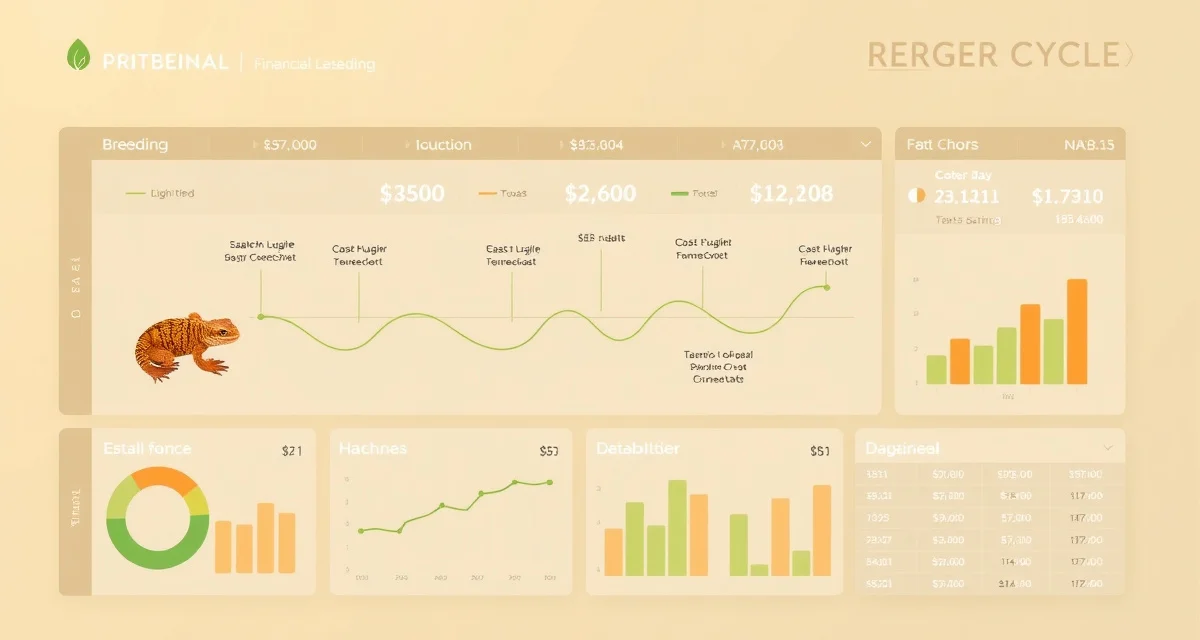
Reptile breeding finances are cyclical. Costs accumulate through the breeding and incubation period, and revenue flows in through the sales season. Managing this cycle financially requires tracking both streams and connecting them to specific breeding events.
Cost Accumulation Phase
From September through hatching (roughly September through June for a ball python operation), you're spending without receiving much revenue from the current season's production. Costs during this phase include:
Feeder costs: The largest ongoing expense for most operations. Adult ball pythons on a biweekly feeding schedule consume 26 prey items per year. At $1.50-$3.00 per large rat, annual feeding cost per adult is $40-80. Multiply by your breeder count.
Medical and husbandry supplies: Substrate, water bowls, heat tape replacement, thermostat maintenance, scale calibration, incubation supplies.
Veterinary costs: Routine fecal testing, any illness treatment.
Equipment amortization: Rack systems, incubators, thermostats, and other equipment cost spread over their useful life.
New animal acquisitions: Any animals purchased this season to add to or replace breeders.
Tracking these costs as they occur, allocated to the animals and projects they support, creates the cost side of your financial picture.
Revenue Generation Phase
Revenue from the current season typically flows in from June through October (for a ball python program), as hatchlings establish feeding, are listed for sale, and find buyers.
Track each sale:
- Sale date
- Animal ID and morph
- Sale price
- Payment received (date and method)
- Shipping cost (billed to buyer or absorbed)
- Platform fees (if using MorphMarket or similar)
Net revenue per sale = sale price minus any fees and seller-absorbed shipping.
Connecting Costs to Revenue: Clutch-Level Analysis
The most useful financial analysis connects specific costs to specific revenue. Each clutch has:
- Allocated parent costs (acquisition cost amortized over productive clutch count)
- Allocated feeding costs for those parents during the breeding season
- Incubation supply costs
- Revenue from all hatchling sales from that clutch
Clutch margin = revenue minus allocated costs.
This clutch-level analysis tells you which genetic projects are generating real returns and which are consuming resources without adequate compensation. A Pastel het Clown x het Clown clutch that produces mostly normal-looking possible het animals may generate modest revenue. A clutch that produces visual Clowns and Pastel Clowns generates significantly more. Knowing which clutches generate which margins informs next season's breeding priorities.
Season-Level Financial Summary
At season end, total:
- Total season revenue (all hatchling and breeder sales)
- Total season costs (all categories)
- Net operating income
- Revenue per clutch and per hatchling produced
Year-over-year comparison of these numbers shows whether the operation is growing, stable, or declining. If revenue per hatchling is declining, the market may be shifting, your pricing may be stale, or your morph projects are producing lower-value combinations.
Cash Flow Management
The gap between cost accumulation and revenue generation creates a cash flow challenge. For a small-scale operation, this is manageable. For larger operations investing tens of thousands in new breeders, feeders, and equipment before revenue arrives, cash flow planning is essential.
Track your projected revenue by month (based on expected hatch dates and historical sales pace) against projected expenses. This tells you whether you'll have adequate cash through the lean early season months.
HatchLedger's financial tracking module connects expenses, sales, and clutch allocations into a unified financial view, generating season summaries and clutch-level P&L without requiring separate financial software.
Related content: Breeding Program Financial Tracking | Clutch Profit Loss Tracking | Reptile Breeder Financial Tracking
Related Articles
FAQ
What is Reptile Breeding Financial Tracking: Managing Money Through the Cycle?
Reptile breeding financial tracking is the practice of monitoring all income and expenses tied to your breeding operation across its natural cycle. Because costs accumulate during breeding and incubation while revenue arrives during sales season, standard monthly budgeting fails to capture the full picture. Managing money through the cycle means recording feeder costs, veterinary bills, equipment amortization, and animal acquisitions as they occur, then connecting those costs to specific clutches or breeding pairs so you know your true profit per project.
How much does Reptile Breeding Financial Tracking: Managing Money Through the Cycle cost?
Implementing a financial tracking system for your reptile breeding operation costs very little. Basic spreadsheet setups are free, while purpose-built tools like HatchLedger offer affordable subscription tiers designed for hobbyist and professional breeders alike. The real cost is time: expect a few hours upfront to set up your cost categories and animal records, then 15-30 minutes per week to log ongoing expenses. Compare that against the thousands of dollars most breeders lose annually by not knowing which pairings are actually profitable.
How does Reptile Breeding Financial Tracking: Managing Money Through the Cycle work?
Reptile breeding financial tracking works by logging every cost against the animal or project it supports, then matching those accumulated costs to revenue when offspring sell. You track feeder purchases, substrate, vet bills, equipment wear, and acquisition costs throughout the breeding season. When hatchlings sell, that income is recorded against the same clutch. The result is a clear profit-loss picture per breeding pair, per morph project, and per season — replacing guesswork with actual data on what your operation earns.
What are the benefits of Reptile Breeding Financial Tracking: Managing Money Through the Cycle?
The core benefit is knowing which animals and projects actually make money. Many breeders discover that high-demand morphs look profitable at sale price but become marginal once feeding costs, incubation supplies, and breeder amortization are factored in. Financial tracking also smooths cash flow surprises: you anticipate the long cost-accumulation phase from September through hatching and plan for it rather than scrambling. Over multiple seasons, your data reveals trends — rising feeder costs, improving hatch rates, stronger margins on specific genetic projects.
Who needs Reptile Breeding Financial Tracking: Managing Money Through the Cycle?
Any reptile breeder maintaining more than a handful of adult breeders benefits from formal financial tracking. If you're selling offspring — whether as a side income or a primary business — you need to know your true costs. Hobbyists scaling up especially benefit, since informal mental accounting breaks down once you have multiple species, multiple clutches, and year-round expenses. Professional operations and anyone considering expanding their collection should treat financial tracking as a non-negotiable foundation before making new animal acquisitions.
How long does Reptile Breeding Financial Tracking: Managing Money Through the Cycle take?
Initial setup takes a few hours: creating your animal roster, defining cost categories, and entering any known carry-forward expenses. After that, active tracking runs in parallel with your breeding season. For a ball python operation, the cost-accumulation phase runs roughly September through June, with the sales season filling summer and fall. Plan to review your numbers monthly during the accumulation phase and weekly during peak sales. A full seasonal cycle gives you one complete dataset; two or three seasons reveals meaningful trends.
What should I look for when choosing Reptile Breeding Financial Tracking: Managing Money Through the Cycle?
Look for a system that connects costs directly to individual animals and clutches rather than lumping everything into generic categories. You want to allocate feeder costs per animal, track incubation expenses per clutch, and match revenue to the specific pairing that produced it. Mobile-friendly entry matters for logging expenses as they happen. If you breed multiple species or manage a large collection, look for multi-species support and collection-level reporting. HatchLedger is built specifically for reptile breeders with these workflows in mind.
Is Reptile Breeding Financial Tracking: Managing Money Through the Cycle worth it?
Yes — for any breeder selling offspring regularly, financial tracking pays for itself quickly. Without it, you're making expansion, pricing, and culling decisions based on incomplete information. A breeder running 20 adult ball pythons spends $800-$1,600 annually on feeders alone, before vet costs, supplies, or equipment. Knowing exactly where that money goes and what it produces lets you price offspring correctly, identify underperforming pairs, and grow the projects with genuine margin. The insight from one well-tracked season typically justifies the effort many times over.
Sources
- USARK business resources for reptile breeders
- MorphMarket pricing and market data
- Reptile industry financial planning guides