Reptile Shipping Packaging: How to Get Animals There Alive
By HatchLedger Editorial Team · Published 2025-05-21 · Updated Mar 13, 2026
Shipping live reptiles is a specialized skill with real consequences for getting it wrong. The animal's life depends on packaging that maintains appropriate temperature, prevents escape, prevents injury during transit, and meets carrier requirements. Most experienced breeders develop their packaging technique through a combination of learning from others and hard lessons from their own mistakes.
This guide covers materials, methods, and the thinking behind good reptile packaging.
Carrier Requirements
Before discussing packaging specifics, know your carrier's policies.
FedEx: The most commonly used carrier for reptile shipments. FedEx allows shipment of live reptiles under their Live Animals policy, which requires shipments to be properly packaged and labeled. FedEx does not insure live animals for DOA losses.
UPS: Also accepts live reptile shipments with proper packaging and documentation. Similar limitations on insurance.
USPS: Does not accept most live reptile shipments unless specifically permitted. Do not use USPS for live snake or lizard shipments.
Most serious breeders use Ship Your Reptiles or similar aggregated shipping platforms that provide pre-negotiated rates with FedEx and UPS and have systems designed for live animal compliance.
Ship overnight (next-day) for virtually all live reptile shipments. Ground shipping is not appropriate for live animals.
Core Packaging Components
A standard reptile shipment uses the following:
Deli cup or cloth bag: The animal's immediate container. For snakes, a cloth bag (muslin or a dedicated reptile bag) tied securely is standard. For lizards and smaller animals, a deli cup or small container with ventilation holes works well. For eggs or very delicate animals, cloth bags inside padded containers are safer.
Newspaper or paper padding: Stuff the cloth bag loosely with crumpled newspaper. This provides insulation, cushioning, and helps prevent the animal from being thrown around during transit. Do not use materials that can compact and suffocate, or materials with chemical treatments.
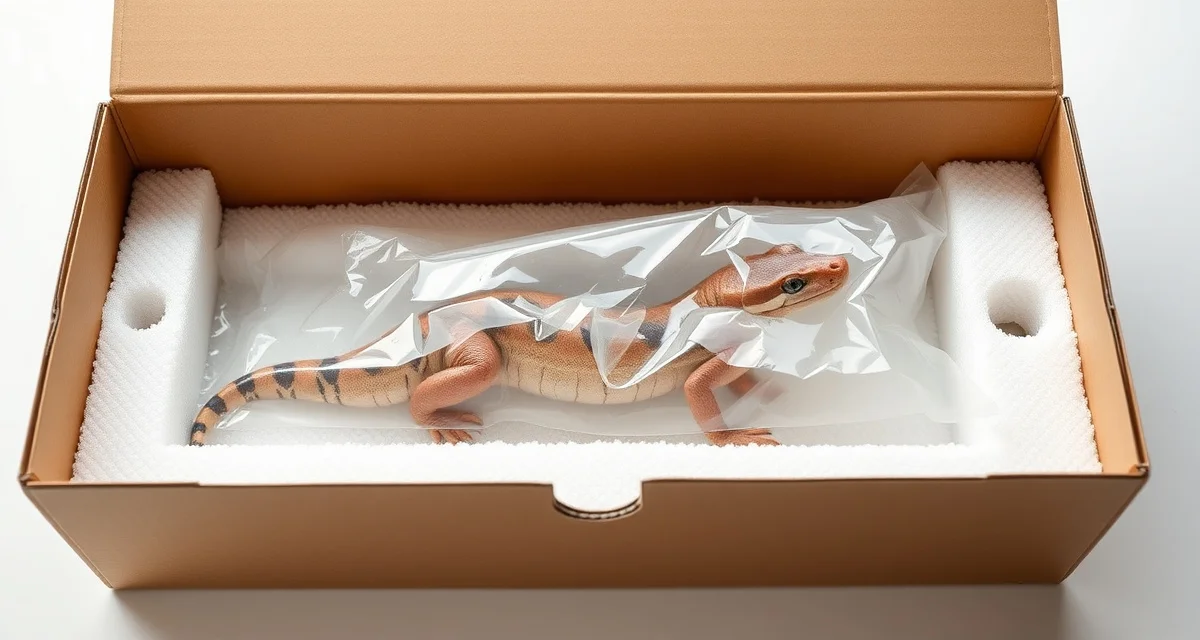
Styrofoam box: The primary thermal protection. Styrofoam boxes in the 1.5-2 inch wall thickness range are standard for overnight reptile shipments. Thinner walls don't insulate adequately in winter or summer. Many breeders use boxes designed specifically for this purpose from reptile shipping suppliers.
Heat or cold pack: Temperature management. In cold weather, heat packs (40-hour or 72-hour Uniheat packs are standard) go into the Styrofoam box. In hot weather, cool packs or frozen gel packs are used. Heat packs go below the bag, separated by a layer of newspaper so they're not in direct contact with the animal.
Outer cardboard box: The Styrofoam box goes inside a cardboard shipping box. The Styrofoam should fit snugly. Add padding (newspaper or foam) around the Styrofoam if there's any movement. The outer box takes the physical abuse of transit; the Styrofoam provides the thermal protection.
Labeling: "LIVE HARMLESS REPTILES" and "THIS SIDE UP" are standard labels on the outer box. Some shippers add directional arrows on all four sides.
Temperature Management in Cold Weather
Cold is the primary kill risk in reptile shipping during fall, winter, and spring.
Heat pack guidelines:
- 40-hour heat packs work for standard overnight shipments in mild cold (above 30F at origin and destination)
- 72-hour packs provide more margin when weather is borderline or when there's any risk of delivery delay
- For extreme cold (below 20F), two heat packs or a single pack combined with very thick Styrofoam is often necessary
- Heat packs need oxygen to activate; leave a small gap in the box to prevent depleting oxygen inside the package
How to position the heat pack: place it against the inner wall of the Styrofoam, with a layer of newspaper between the pack and the animal's bag. Direct contact between a heat pack and an animal can cause burns. Test your setup by measuring internal box temperature before shipping to confirm it's maintaining the right range.
Most professional breeders won't ship when overnight lows fall below 35-40F along the entire route, not just at origin and destination.
Temperature Management in Hot Weather
Heat is a secondary but serious risk in summer.
Frozen gel packs can be used to offset extreme heat but require careful management. A fully frozen pack can actually drop internal temps too low. Pre-thawing gel packs so they're cold but not frozen is the standard approach. The goal is to keep internal temps from exceeding 90F, not to make the box cold.
For shipping during summer, ship early in the week to avoid weekend delays, and confirm that the delivery address has someone available to receive the package immediately upon delivery.
Packaging by Animal Type
Ball pythons and similar-sized snakes: Cloth bag (animal inside, tied securely), stuffed with newspaper, placed in appropriately sized Styrofoam box with heat or cool pack as appropriate, in outer cardboard box.
Blood pythons and larger snakes: Similar to above but box size increases. A large female blood python needs a proportionally larger bag and box. Don't pack large snakes too tightly.
Small snakes (corn snakes, king snakes, hognoses): Deli cup or small bag. The smaller body mass means temperature regulation is more critical since they have less thermal mass. Confirm adequate insulation.
Geckos and small lizards: Deli cup with ventilation holes, lightly packed with moss or paper towel (damp, not wet, for tropical species). Taped securely closed.
Eggs: Eggs are typically transported in the same incubation medium, in a sealed container to maintain humidity, surrounded by padding in a Styrofoam box. Temperature stability is critical; eggs do not tolerate wide temperature swings.
What Can Go Wrong and How to Prevent It
Escape from the bag: Always double-check your bag knot or closure before boxing. An escaped animal in a transit box can die of stress, injury, or temperature exposure.
Overheating from direct heat pack contact: Always separate the heat pack from the animal with a layer of newspaper.
Insufficient insulation: Use 1.5-inch or thicker Styrofoam, always. Thin foam coolers from grocery stores are not adequate.
Overnight delay at hub: FedEx and UPS overnight can and occasionally does take longer. Packaging that maintains temperature for 24-28 hours rather than exactly 18 hours provides margin. Always ship Monday through Wednesday to minimize weekend delivery risk.
Box damage: Use a sturdy outer box. If your outer box looks borderline, use a better one. Boxes that fail in transit leave your animal exposed.
Connect your shipping records to your sale transaction in reptile sales documentation so you have a complete record of when animals shipped, via which carrier, and any outcome issues.
Good packaging is not expensive relative to the value of the animals being shipped or the cost of losing one. Take the time to do it right every time.
FAQ
What is Reptile Shipping Packaging: How to Get Animals There Alive?
Reptile shipping packaging refers to the specialized materials and methods used to safely transport live reptiles through carriers like FedEx or UPS. It encompasses insulated boxes, breathable inner containers, temperature regulation with heat or cold packs, and secure escape-proof enclosures. The goal is maintaining appropriate conditions throughout transit so the animal arrives alive, uninjured, and unstressed. Proper packaging also ensures compliance with carrier live animal policies and reduces legal and ethical liability for the shipper.
How much does Reptile Shipping Packaging: How to Get Animals There Alive cost?
Reptile shipping packaging itself costs between $5 and $30 per shipment depending on box size, insulation quality, and whether heat or cold packs are needed. Overnight shipping fees through platforms like Ship Your Reptiles typically run $40 to $80. Combined, expect $50 to $100 per shipment for a properly packaged animal. Cutting corners on materials to save a few dollars risks the animal's life and your reputation as a breeder.
How does Reptile Shipping Packaging: How to Get Animals There Alive work?
Good reptile shipping packaging works in layers. The animal goes into a secure, ventilated cloth or deli cup container. That container is placed inside an insulated box, often a styrofoam-lined cardboard box, with a heat or cold pack separated by cardboard to prevent direct contact. The box is sealed, labeled with live animal markings, and shipped overnight. Each layer addresses a specific risk: escape, temperature loss, impact injury, or suffocation.
What are the benefits of Reptile Shipping Packaging: How to Get Animals There Alive?
Proper packaging keeps animals alive in transit, protects your reputation as a responsible breeder, and reduces the chance of carrier rejection or legal issues. It also reduces buyer anxiety, since customers who receive a well-packaged animal trust you more and are more likely to buy again. For rare or expensive animals, good packaging is simply insurance. The cost of quality materials is trivial compared to the value of the animal inside.
Who needs Reptile Shipping Packaging: How to Get Animals There Alive?
Anyone shipping live reptiles needs to understand proper packaging: hobbyist breeders selling their first clutch, professional reptile operations shipping hundreds of animals per year, and importers moving animals across state lines. Buyers arranging returns also need this knowledge. Even experienced keepers who rarely ship should understand packaging basics in case of emergency rehoming situations or selling surplus animals. There is no scenario where ignorance of packaging standards is acceptable when a live animal is involved.
How long does Reptile Shipping Packaging: How to Get Animals There Alive take?
A properly packed reptile shipment takes 15 to 30 minutes to prepare once you have your materials organized. Overnight shipping typically means the animal is in transit for 12 to 24 hours from pickup to delivery. This is why overnight-only shipping is the standard — minimizing time in the box minimizes stress, temperature risk, and the chance something goes wrong. Delays from weather or carrier errors are the primary risk factor beyond your control.
What should I look for when choosing Reptile Shipping Packaging: How to Get Animals There Alive?
Look for insulated boxes rated for at least 24-hour temperature retention, secure inner containers with no escape gaps, appropriate heat or cold packs for the current season and transit region, and carriers with live animal policies. Platforms like Ship Your Reptiles simplify compliance. Avoid any packaging that relies on a single point of failure. The best setups are redundant — if one element fails, another compensates. Test your setup before using it on a valuable animal.
Is Reptile Shipping Packaging: How to Get Animals There Alive worth it?
Yes. The consequences of under-investing in reptile shipping packaging are a dead animal, a refund dispute, a damaged reputation, and potential carrier violations. Quality packaging materials cost a fraction of what most reptiles are worth. Experienced breeders universally agree that proper packaging is non-negotiable. If you cannot afford to pack an animal correctly, you cannot afford to ship it. The investment in materials and overnight shipping protects both the animal and your credibility.