How Many Eggs Does a Ball Python Lay FAQ
By HatchLedger Editorial Team · Published 2025-05-15 · Updated Mar 13, 2026
Clutch size is one of the first things new breeders want to know, and experienced breeders want to optimize. Here's the real data on ball python egg counts.
TL;DR
- The average ball python clutch contains 4 to 6 eggs, with a population average around 5 to 6.
- Female body weight is a key factor, most experienced breeders target 1,500 to 1,800 grams or more before first breeding.
- Infertile eggs (slugs) are normal; an all-slug clutch typically signals a failed breeding, not a sick female.
- Clutches of 11 to 12 eggs have been documented in captive ball pythons, but most breeders never see one that large.
- You cannot control egg count after ovulation, but year-round body condition, nutrition, and parasite management maximize a female's potential.
- Tracking clutch size, slug count, and hatch rate per female across multiple seasons reveals which animals are your best producers.
- HatchLedger logs all of this data per clutch so you can make data-driven decisions about breeding slot prioritization.
How Many Eggs Does a Ball Python Lay on Average?
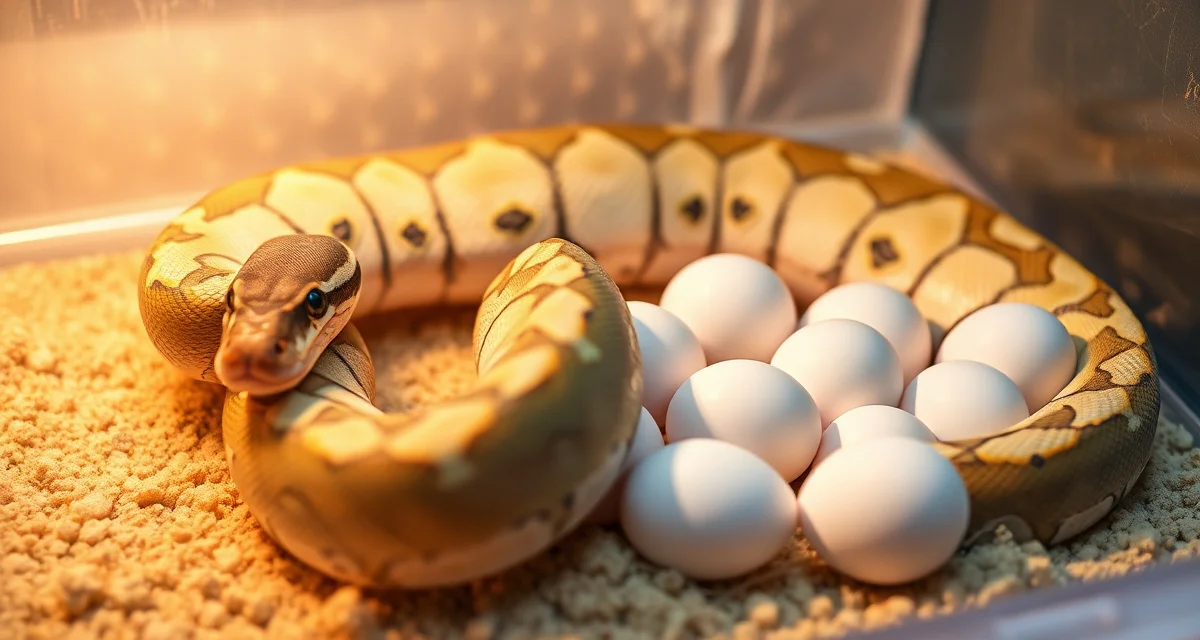
The average ball python clutch contains 4 to 6 eggs, with a population average around 5 to 6. Clutches as small as 1 or 2 eggs do happen, usually from younger or smaller females or when something went wrong in the reproductive cycle. Clutches of 9, 10, or 11 eggs are possible but less common.
A ball python doesn't have a "good" or "bad" clutch size baked in genetically. Body condition, age, and how well she was managed during the breeding season all play notable roles.
What Factors Affect Clutch Size?
Female body weight: Larger, heavier females generally produce more eggs. This is one reason experienced breeders emphasize getting females to 1,500 to 1,800 grams or more before first breeding, rather than breeding them at the minimum weight threshold.
Age: Very young females on their first clutch often produce smaller clutches. As a female matures and gains experience, average clutch size tends to increase.
Body condition: A female in excellent body condition (well-fed, healthy weight, no parasites or illness) is better positioned for a large, viable clutch.
Frequency of breeding: Some breeders report that females who are given a rest year between breeding seasons produce better subsequent clutches, though this is debated in the community.
What Is the Largest Ball Python Clutch Ever Recorded?
Clutches of 11 and 12 eggs have been documented in captive ball pythons, though these are genuinely unusual. Most breeders go their entire career without seeing a clutch that large.
For practical planning purposes, budgeting around 5 to 6 eggs per clutch is realistic. Any more is a bonus.
Do All Eggs in a Clutch Hatch?
No. Infertile eggs, called slugs, are a normal part of ball python reproduction. Slugs are typically yellow, firm, and smaller than fertile eggs. A few slugs in an otherwise healthy clutch is normal. An all-slug clutch usually indicates that breeding wasn't successful, which can happen even with observed copulations.
Slug rates across an entire season can tell you something about female health, timing of pairings, or male fertility. Tracking slug rates and hatch outcomes across clutches helps you identify patterns.
How Do You Track Clutch Sizes Over Time?
This is basic business intelligence for a breeding operation. If Female A consistently produces 3 to 4 eggs per clutch while Female B consistently produces 7 to 8, that difference matters for your financial projections.
The ball python breeding hub connects to your clutch records in HatchLedger, where you can log egg counts, slug counts, and hatch rates for every clutch. Over multiple seasons, you build a dataset showing which females are your best producers.
Your ball python morph calculator helps you plan genetics, but clutch size data tells you which females are worth prioritizing for breeding slots.
Can You Influence Clutch Size?
You can't directly control the number of eggs a female will produce once ovulation occurs. But you can maximize her potential by:
- Maintaining proper weight and body condition year-round, not just during breeding season
- Feeding appropriately to support reproductive cycling without causing obesity
- Ensuring parasites aren't an underlying drain on her condition
- Allowing adequate rest between breeding seasons if she's a prolific producer
Good nutrition and husbandry is the only real lever you have on clutch size. Keeping detailed female feeding and weight logs throughout the year makes it easier to spot condition issues before they affect a clutch.
Frequently Asked Questions
How many eggs does a ball python typically lay?
The average is 4 to 6 eggs per clutch, though healthy, well-conditioned females sometimes produce 7 to 9. Clutches outside the 4 to 8 range are less common at either extreme.
How do professional breeders handle ball python clutch size optimization?
They focus on female body condition year-round, track clutch sizes per female across multiple seasons, and use that data to identify their best producers and prioritize breeding slots accordingly.
What software helps manage ball python clutch size tracking?
HatchLedger logs egg counts, slug counts, and hatch rates for every clutch, building a dataset over time that shows which females in your collection are the most productive.
At what age do ball pythons typically produce their largest clutches?
Most breeders observe that females hit their peak clutch sizes between 4 and 8 years of age, after they have fully matured and built up body mass. First-clutch females, even when bred at appropriate weight, often produce on the lower end of the average range. Tracking clutch size by female age in your records helps confirm this pattern within your own collection.
Is a clutch of only 2 or 3 eggs a sign something is wrong?
Not necessarily. Small clutches from young or lighter females are common and not automatically a health concern. However, if a mature, well-conditioned female who previously produced normal clutches suddenly drops to 2 or 3 eggs, it is worth reviewing her body condition, recent feeding history, and whether she may have had an incomplete ovulation. Consistent small clutches across multiple seasons from the same female are worth discussing with a reptile veterinarian.
How long does it take for ball python eggs to hatch after being laid?
Ball python eggs typically hatch 55 to 60 days after being laid, assuming incubation temperatures are held consistently between 88 and 90 degrees Fahrenheit. Slight variations in temperature can shift the timeline by several days in either direction. Logging the lay date and incubation conditions for each clutch makes it straightforward to anticipate hatch windows accurately.
Does the number of copulations affect clutch size?
There is no strong evidence that more observed copulations directly increase egg count. What matters more is that at least one successful sperm transfer occurred before ovulation. Multiple pairings across the breeding season are common practice to improve the odds of a successful breeding, but they are not a reliable method for increasing the number of eggs in the resulting clutch.
What is How Many Eggs Does a Ball Python Lay FAQ?
Ball pythons typically lay 4 to 6 eggs per clutch, with the population average sitting around 5 to 6. Larger, well-conditioned females can produce clutches of 8 or more, and clutches of 11 to 12 eggs have been documented in captive breeding programs, though these are rare. Infertile eggs, called slugs, are common and normal in most clutches.
How much does How Many Eggs Does a Ball Python Lay FAQ cost?
This FAQ is free educational content published on HatchLedger. There is no cost to read it. HatchLedger provides ball python breeding data, incubation guides, and clutch tracking resources at no charge to hobbyist and professional reptile breeders.
How does How Many Eggs Does a Ball Python Lay FAQ work?
The FAQ compiles real clutch data and breeder experience to answer the most common questions about ball python egg counts. It covers average clutch sizes, how female body weight influences egg production, what slugs indicate, and the documented upper limits of clutch size in captive ball pythons.
What are the benefits of How Many Eggs Does a Ball Python Lay FAQ?
This FAQ helps breeders set realistic expectations before their first clutch, understand why clutch size varies, and recognize when an all-slug clutch signals a breeding failure versus normal infertile egg ratios. It also gives weight targets—1,500 to 1,800 grams or more—to help breeders time first breeding for optimal clutch outcomes.
Sources
- Ball Python Care and Breeding Guidelines, United States Association of Reptile Keepers (USARK)
- Reptile Breeding Biology, Reptiles Magazine (Bowtie Inc.)
- Captive Husbandry and Reproduction of Python regius, Journal of Herpetological Medicine and Surgery
- Exotic Animal Formulary and Reptile Reproduction Reference, Association of Reptilian and Amphibian Veterinarians (ARAV)
Get Started with HatchLedger
If you are tracking clutch sizes, slug counts, and hatch rates in a spreadsheet or from memory, you are leaving real production data on the table. HatchLedger gives you a dedicated record for every female in your collection, so you can see at a glance which animals are your most productive breeders and make informed decisions about who gets a breeding slot next season. Start your free trial and bring structure to your breeding records from your very first clutch log.