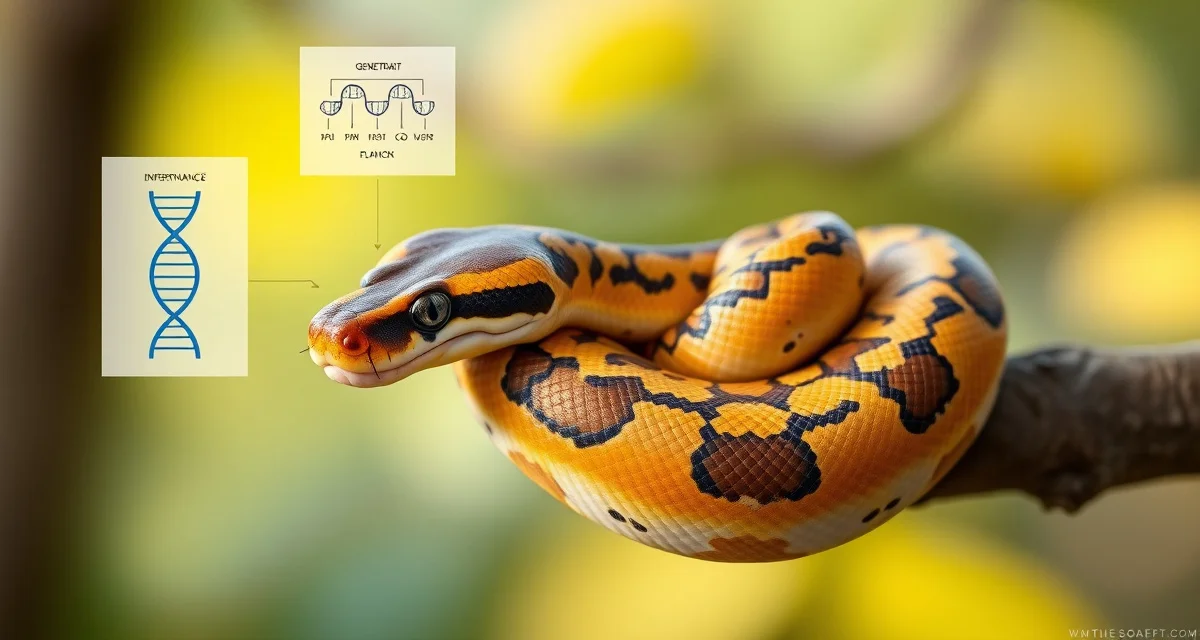
Ball Python Morph Calculator: Instant Pairing Outcomes
Planning a ball python pairing without knowing the expected genetic outcomes is like building a project without a budget. You might get what you want, but you're leaving a lot to chance. A morph calculator takes the guesswork out of predicting hatchling genetics so you can make informed decisions before the breeding season starts.
TL;DR
- A morph calculator takes two parent genetic profiles as inputs and produces expected offspring ratios for every possible phenotype, including hets and pos hets.
- For a pairing like Pastel het Clown x Banana het Clown, only 6.25% of offspring are expected to be Banana Pastel Clown, probability averages across many clutches, not within a single one.
- Allelic genes like the BEL complex (Mojave, Lesser, Butter, Russo, Phantom) require a calculator that specifically accounts for allelism, or results will be incorrect.
- Treating "possible het" animals as confirmed hets in your calculator inputs will inflate your expected visual offspring ratios and distort financial projections.
- Breeders using integrated software that connects genetic records to pairing planning tools report 30% less time on administrative tasks.
- Modeling expected revenue across the full distribution of clutch outcomes, including hets and normals, gives more reliable financial planning than focusing on best-case scenarios.
- Saving pairing plans and comparing projected vs. actual outcomes season over season helps verify the genetic integrity of your animals over time.
What a Ball Python Morph Calculator Does
A morph calculator takes the genetic profiles of two parent animals as inputs and produces the expected offspring ratios for every possible phenotype. This includes:
- Visual morphs with specific gene combinations
- Het (heterozygous) animals carrying specific genes without expressing them visually
- Possible het animals from pairings where het status is uncertain
- The percentage probability of each outcome
For a pairing like Pastel het Clown x Banana het Clown, the calculator tells you that approximately 6.25% of offspring will be Banana Pastel Clown, 6.25% will be Pastel Clown, and so on through every genetic combination those two animals can produce. Doing this math manually for a pairing with multiple genes in play is error-prone and time-consuming. A good calculator handles it instantly.
When You Need a Morph Calculator
Planning multi-gene pairings. Any pairing where one or both parents carry more than two genes benefits from calculator verification. The number of possible offspring combinations grows exponentially with each additional gene, and mental math becomes unreliable quickly.
Working with recessive genes. Recessive genetics require tracking het status and calculating expected visual ratios across generations. Calculators handle the het math accurately, including the difference between 100% het, 66% pos het, and visual animal outcomes in different pairing combinations.
Modeling allelic combinations. When two genes sit at the same locus (allelic), the pairing outcomes are different from standard co-dominant or recessive math. The BEL complex (Mojave, Lesser, Butter, Russo, Phantom) is the most important example: breeding any two allelic genes together doesn't produce standard super forms, it produces an intermediate phenotype. A calculator that understands allelism gives you accurate predictions.
Evaluating project profitability. Before committing to a pairing, modeling the expected genetic outcomes lets you estimate the value distribution of the clutch. If 15% of offspring are expected to be a high-value morph selling at $1,500, and 60% are expected to be hets selling at $150, you can calculate a rough expected revenue per egg before the season starts.
How to Use the Calculator Effectively
Step 1: Enter Accurate Parent Genetics
The output is only as good as the input. Before using a calculator, confirm the genetics of both parents as accurately as possible.
For animals with known parentage and documentation, the genetic profile should be clear. For purchased animals, rely on documentation from the seller. For animals where some genes are "possible hets" (not confirmed), use the pos het designation rather than treating them as confirmed hets.
Step 2: Run Multiple Pairing Scenarios
If you're deciding between pairing a female to male A or male B, run both scenarios through the calculator and compare outcomes. Often one pairing produces dramatically more valuable expected offspring than the other, which makes the decision straightforward.
Step 3: Understand Probability vs. Guarantee
Calculator outcomes are statistical probabilities, not guarantees. A clutch expected to produce 25% visual recessive animals might produce 0 or 4 out of 8 eggs. Probability averages out across many clutches, not within a single clutch.
Don't design your breeding finances around getting the specific high-value outcome from every clutch. Model expected revenue across multiple clutches of the same pairing to understand what average performance looks like.
Step 4: Save Your Pairing Plans
Keep records of which pairings you modeled, which ones you committed to, and what actually hatched. Comparing projected genetic outcomes against actual outcomes helps you verify the genetic integrity of your animals over time and calibrate your planning for future seasons.
Calculator Integration with Breeding Records
A morph calculator is most useful when it's connected to your actual animal records rather than being a standalone tool you use separately. If your calculator can pull parent genetics from your collection database and save the pairing model to a planned breeding record, the entire pairing planning workflow is faster and more accurate.
The HatchLedger platform integrates genetic records with pairing planning tools so your collection data informs your calculations directly. Breeders using integrated software report 30% less time on administrative tasks, and for pairing planning specifically, the time savings come from not having to manually look up parent genetics, enter them into a separate tool, and then re-enter the planned pairing into your records.
Common Mistakes to Avoid
Treating "possible het" as confirmed het. Pos het animals have a statistical probability of carrying a gene, not a certainty. Running a calculator with pos het animals treated as confirmed hets will give you inflated expectations for visual offspring ratios.
Ignoring allelism. Breeders new to genetics sometimes don't know that certain genes are allelic. Running a pairing of two allelic genes through a basic calculator that doesn't account for allelism gives incorrect results. Always confirm whether genes in your pairing are allelic before relying on calculator outputs.
Planning only for best-case outcomes. The exciting outcomes in a clutch (the rare visuals, the complex combos) are what breeders focus on. Plan your financial expectations around the full distribution of outcomes, including the hets and normals that will also be produced.
Beyond Genetics: Connecting to Financial Planning
Knowing what genetics a clutch will produce is half the picture. Knowing what those animals are worth in the current market is the other half.
The reptile breeder software comparison covers how different tools approach the connection between genetic prediction and financial tracking. The breeders who make the best pairing decisions are the ones who can compare not just genetic outcomes but expected revenue outcomes across different pairing options. Tracking hatchling sales records and pricing history alongside your genetic projections gives you the most accurate picture of each pairing's real-world value.
Frequently Asked Questions
What is the best approach to ball python morph calculator online?
Enter parent genetics accurately, including het status at the appropriate confidence level (100% het vs. pos het). Run multiple pairing scenarios to compare expected outcomes before committing. Understand that results are probabilities across many clutches, not guaranteed outcomes in a single clutch. Connect calculator use to your broader pairing records so you can compare planned vs. actual outcomes season over season.
How do professional breeders handle ball python morph calculator online?
Professional breeders use morph calculators as a standard tool in their pairing planning workflow, not an afterthought. They run calculations for every planned pairing before the season begins, model the expected revenue distribution of each pairing based on current market prices, and use the comparison to allocate their breeding females to the pairings with the best expected return on their husbandry investment.
What software helps manage ball python morph calculator online?
HatchLedger provides genetic record management that connects directly to pairing planning tools. When parent genetics are stored in individual animal records, running pairing calculations requires no manual data entry and the results can be saved as planned breeding events tied to those specific animals.
How do I confirm whether two genes in my collection are allelic?
Allelic relationships are documented in the ball python breeding community through years of test pairings and published results. The BEL complex is the most widely known example, but other allelic relationships exist. Cross-referencing your gene list against a reputable genetics reference or community database before running your calculator inputs is the most reliable approach. When in doubt, consult documentation from the original gene producers or established breeders who have worked extensively with those morphs.
Can a morph calculator help me plan pairings across multiple breeding seasons?
Yes. Running calculator scenarios for long-term projects, such as building toward a specific multi-gene combination over two or three generations, helps you map out which animals you need to produce in season one to make season three's target pairing possible. Saving those multi-season pairing plans in your breeding records lets you track progress against the original genetic roadmap and adjust if actual hatch outcomes differ from projections.
How should I handle animals with unconfirmed or disputed genetics when using a calculator?
Use the pos het designation for any gene that has not been visually confirmed or proven through test pairings. If an animal's genetics are disputed entirely, run the calculation twice: once with the gene included as pos het and once without it. Comparing both outputs shows you the range of possible outcomes and helps you decide whether the pairing is worth pursuing even under the less favorable genetic scenario.
Does clutch size affect how I should interpret calculator probabilities?
Clutch size matters significantly when interpreting probability outputs. A 25% expected ratio in a 4-egg clutch means statistically you might see one visual, but variance is high. The same 25% ratio across a 12-egg clutch gives you a more reliable expected outcome of around 3 visuals. For small clutches from first-time females, treat calculator probabilities as directional guidance rather than precise predictions, and plan your financial projections conservatively.
Sources
- World of Ball Pythons (WOBP), Genetics and morph documentation database maintained by the ball python breeding community
- United States Association of Reptile Keepers (USARK), Industry organization publishing husbandry and breeding standards for reptile keepers
- Reptiles Magazine, Industry publication covering ball python genetics, morph development, and breeding practices
- Mendelian Genetics in Reptile Breeding, Extension resources from university herpetology programs including University of Florida IFAS Extension
- National Ball Python Breeders Association, Community organization documenting morph genetics and allelic relationships
Get Started with HatchLedger
HatchLedger connects your animal genetic records directly to pairing planning tools, so you can run morph calculations, save pairing scenarios, and compare projected vs. actual hatch outcomes all in one place, no manual data re-entry between tools. If you're heading into a new breeding season and want your genetic planning and financial tracking in the same system, try HatchLedger free and see how much faster pairing decisions become when your collection data is already there.