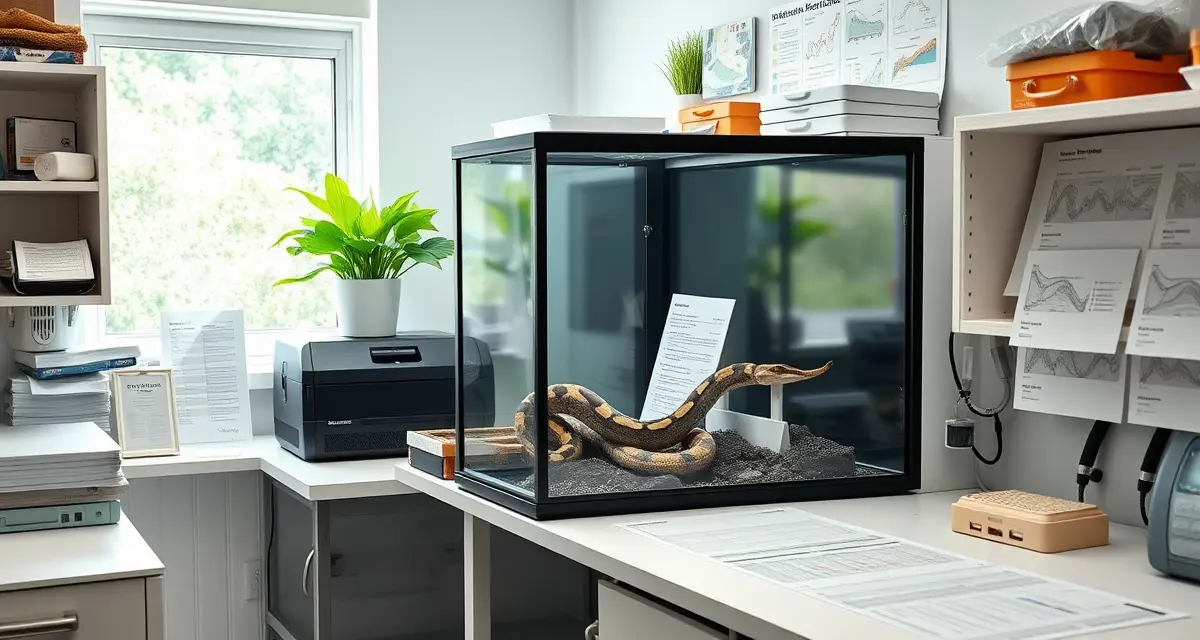
Reticulated Python Record Keeping for Breeders: Complete Breeder Guide
Reticulated python breeding at any scale beyond a handful of animals creates a record keeping challenge that informal systems can't handle reliably. The combination of large clutches, complex morph genetics, dwarf locality tracking, long reproductive lifespans, and the regulatory requirements that apply to large constrictors in many jurisdictions means the information load is genuinely substantial. Breeders using integrated software report 30% less time on administrative tasks, time that's much better spent on the hands-on management that large retics require.
TL;DR
- Reticulated pythons (Malayopython reticulatus) are the world's longest snake species, with breeding females commonly exceeding 10-14 feet.
- Clutch sizes average 30-60 eggs, making retics one of the most productive large constrictors in captive breeding.
- Temperature drops of 5-8 degrees Fahrenheit over 6-8 weeks typically trigger breeding behavior without the longer cooling required by temperate species.
- Incubation runs 80-90 days at 88-90 degrees Fahrenheit, longer than most python species due to egg size.
- Super dwarf and dwarf locality animals are bred specifically for smaller adult size and command significant premiums over standard retics.
What Records a Retic Breeder Actually Needs
Individual animal records for every snake in your collection. Each record should include acquisition date and source, morph genetics and specific lines, dwarf percentage and locale for size-line animals, all feeding history, all weight entries, all shed dates, any veterinary visits, and the animal's current status (breeding holdback, available, sold, retired, deceased).
Breeding records for every pairing. Which male was paired to which female, when introductions happened, whether copulation was observed, and the dates of the reproductive cycle events (ovulation, pre-lay shed, lay date).
clutch size records connecting to parent pair breeding records. Egg count at lay, slug count, viable egg count, incubation setup details, temperature observations through incubation, pip date, hatch count, and any clutch-level problems.
Hatchling records for every individual from a clutch. Feeding logs, weights, shed history, and the morph identity assignment as animals mature.
Sales records connecting each hatchling to its buyer, sale price, sale date, and any guarantees given.
Financial records connecting all of the above to your costs and income for each breeding season.
Morph Genetics Records
Retic morph records require more nuance than ball python records in some ways because of line-specific variants. Multiple albino lines exist with different phenotypic expressions, and documenting which specific line an animal carries matters when planning breeding projects. Crossing incompatible albino lines may not produce visual albinos, and buyers who plan to breed their purchase need accurate line information.
Document morph status as specifically as you can: visual, 100% het, proven het, possible het. Don't inflate het claims for animals where parentage doesn't support a higher confidence level. Accurate het documentation protects your reputation and gives your buyers accurate information for their own projects.
Dwarf percentage and locale documentation requires the same rigor. A "50% dwarf" from a Kayuadi female crossed to a mainland male is a specific claim with breeding implications. Know what your animals actually are based on documented lineage, not just what you've been told.
Breeding Season Records
Retics have long breeding seasons and breeding introductions happen repeatedly over weeks or months. Don't rely on memory for when pairings happened or whether copulation was confirmed.
Log every introduction: date, which animals, duration, observed behavior, copulation yes/no. A male that's being paired to multiple females needs individual pairing records against each female, not a general note that he was "in rotation."
Ovulation is a definitive reproductive event that indicates successful follicle development and (almost certainly) successful fertilization. Log the ovulation observation date. The pre-lay shed follows ovulation by approximately 2-3 weeks in retics; log that too. These dates let you project a lay window and prepare your incubation setup in advance.
Incubation and Hatch Records
Log your incubation container setup: number of containers, substrate type and moisture ratio, temperature reading at egg level, and date started. Temperature observations throughout incubation should be logged periodically rather than just at setup -- incubator equipment can drift, and a temperature log lets you investigate poor hatch rates with actual data.
At hatch, count every animal: total eggs set, pipped, hatched, dead-in-egg, slugs confirmed. Individual hatchling records should be created at or shortly after hatch with an ID system (usually a combination of clutch number and individual number, or microchip number once chipped).
HatchLedger maintains all these record categories with connections between them -- breeding records link to clutch records, clutch records link to hatchling records, hatchling records connect to sales records.
Regulatory Documentation
Many states and localities require permits for large constrictors. Some require inspection. Sales across state lines may require health certificates or export permits depending on the destination state's regulations. Shipping documentation requirements vary by carrier.
Whatever documentation your jurisdiction requires, it's easier to produce when your underlying records are organized. A health certificate request from a veterinarian for a specific animal is straightforward when you can pull that animal's feeding history, weights, and veterinary visit history from a single record.
HatchLedger connects animal records to sales and financial tracking, supporting documentation for regulatory and tax purposes.
Frequently Asked Questions
What is the best approach to reticulated python record keeping for breeders?
Start with an individual record for every animal in your collection and maintain it consistently. Log every feeding, weight, shed, veterinary visit, and breeding event. Be specific about morph genetics -- document line information for variants where multiple lines exist. Track dwarf percentage and locale for size-line animals. Connect breeding records to clutch records to hatchling records to sales records. Don't let records fall behind -- catching up on weeks of missed logging is much harder than logging consistently in real time.
How do professional breeders handle reticulated python record keeping?
Professional retic breeders treat records as a core business function rather than an afterthought. They log breeding events at the time they happen, not days later from memory. They maintain complete morph documentation that they can share with buyers confidently. They track financial performance at the clutch level and at the overall program level. Their records support transparent communication with buyers and provide the documentation base for regulatory compliance and shipping in jurisdictions that require it for large constrictors.
What software helps manage reticulated python breeder records?
HatchLedger tracks cycling records, pairing introductions, clutch documentation, locality lineage, and sale records for reticulated python breeders. With large animals, large clutches, and locality documentation all requiring careful records, having everything in one system reduces the risk of documentation errors at sale. Free for up to 20 animals.
What is the difference between standard, dwarf, and super dwarf reticulated pythons?
Standard reticulated pythons are the full-size animals from mainland Asian populations. Dwarf retics originate from island populations (Kalatoa, Kayuadi) and typically reach 8-12 feet. Super dwarf retics from Madu and Selayer islands often cap below 8 feet. These size differences are locality-based, and crossing localities produces intermediates. Locality documentation in your records is essential for accurate representation to buyers.
What are the legal considerations for keeping and breeding reticulated pythons?
Regulations vary significantly by state and municipality. Several US states restrict or ban large constrictors, and federal regulations under the Lacey Act apply to some populations. USARK maintains current regulatory information. Before breeding retics at scale, confirm that selling and shipping animals is permitted in your jurisdiction and target markets.
Sources
- USARK (United States Association of Reptile Keepers)
- Association of Reptilian and Amphibian Veterinarians (ARAV)
- Journal of Herpetology (Society for the Study of Amphibians and Reptiles)
- CITES Appendix II (international trade documentation)
- Southeast Asian Biodiversity Society
Get Started with HatchLedger
Reticulated python breeding at any scale involves large animals, large clutches, morph and locality genetics overview, and compliance records that require an organized system to manage well. HatchLedger tracks every animal, pairing, clutch, and sale record in one place. Try it free with up to 20 animals.